Dr Diaz 5 LPM vs Nareena 5 LPM Single Flow
EDITORIAL PICK
Dr Diaz 5 LPM
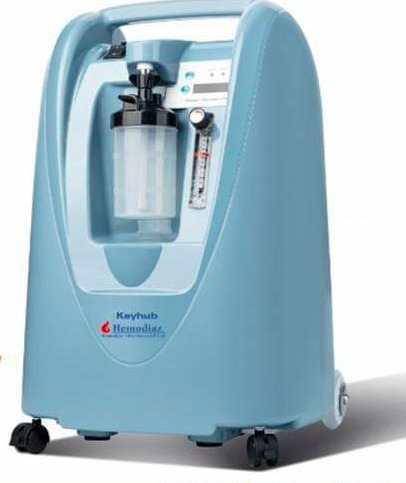
- Brand
- Hemodiaz
- Category
- 5 LPM
₹29,759.04₹40,320
Indicative pricing based on market intelligence. Varies by dealer, city, bundle, and period — confirm with a local authorised seller before buying.
HHZ SCORE 6.9/10
Nareena 5 LPM Single Flow
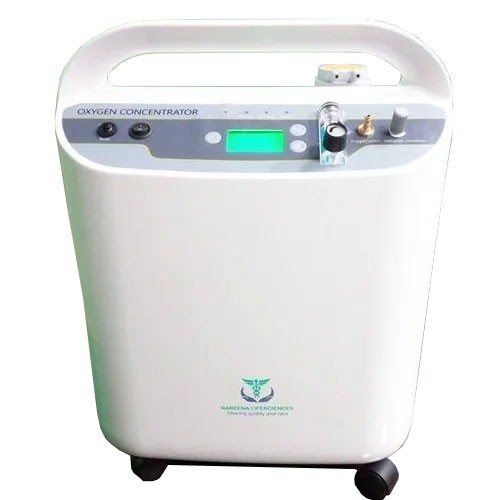
- Brand
- Nareena Lifesciences
- Category
- 5 LPM
₹35,510.40₹67,200
Indicative pricing based on market intelligence. Varies by dealer, city, bundle, and period — confirm with a local authorised seller before buying.
HHZ SCORE 7.0/10
Specifications compared
| Specification | Dr Diaz 5 LPM | Nareena 5 LPM Single Flow |
|---|---|---|
| Overview | ||
| Brand | Hemodiaz | Nareena Lifesciences |
| Category | 5 LPM | 5 LPM |
| Price | ₹29,759.04 | ₹35,510.40 |
| MRP | 40,320.00 | 67,200.00 |
| Stock | In Stock | In Stock |
| Key features | ||
| Purity | 90-96% | 90-96% |
| Type | Single Flow | Home Stationary |
| Continuous Flow | 1-5LPM | 1-5LPM |
| Weight | 16kg | 15kg |
| Oxygen Purity Indicator (OPI) | Yes | Yes |
| Power consumption | 285watts | 550watts |
| Technical details | ||
| Purity | 90-96% | 90-96% |
| Type | Single Flow | Home Stationary |
| Continuous Flow | 1-5LPM | 1-5LPM |
| Weight | 16kg | 15kg |
| Oxygen Purity Indicator (OPI) | Yes | Yes |
| Power consumption | 285watts | 550watts |
| Sound level | 48db | 50db |
| Dimensions | 21H x 12W x 11.8Dinch | 23.6H x 14.7W x 14.3Dinch |
| Operating altitude | 12000feet | — |
| Outlet pressure | 13psi | — |
| Additional details | ||
| Loss of Power Alarm | Yes | Yes |
| System Malfunction Alarm | Yes | — |
| No Flow Alarm | Yes | — |
| Indian Voltage Model | Yes | Yes |
| Company Headquarters | India | India |
Analysis
The Dr Diaz 5 LPM at ₹29,759.04 and the Nareena 5 LPM Single Flow at ₹35,510.40 sit at opposite ends of the India-brand budget segment for 5 LPM oxygen concentrators — separated by ₹5,751 on current listed prices, with Dr Diaz the cheaper option. Both publish the same 90–96% purity across 1–5 LPM continuous flow, both are India-headquartered, and both target the same price-sensitive Indian home-oxygen buyer. On every other load-bearing spec, Dr Diaz opens a significant gap: 265 W less power draw (285 W vs 550 W — the largest power gap in this entire comparison set), 2 dB lower published noise (48 dB vs 50 dB), 2 kg heavier but with a higher altitude ceiling (12,000 ft vs Nareena’s unpublished rating), and a complete three-alarm safety package against Nareena’s single loss-of-power alarm. Neither unit carries published CE certification. The call is one-sided: Dr Diaz wins, and by a wide margin.
At a glance
- Price. Dr Diaz ₹29,759.04 vs Nareena ₹35,510.40 — Dr Diaz is ₹5,751 cheaper.
- Power draw. Dr Diaz 285 W vs Nareena 550 W — Dr Diaz is 265 W (48%) lower.
- Noise (published). Dr Diaz 48 dB vs Nareena 50 dB.
- Weight. Nareena 15 kg vs Dr Diaz 16 kg — Nareena 1 kg lighter.
- Certifications. Neither publishes FDA or CE.
- Altitude rating. Dr Diaz 12,000 ft; Nareena unpublished.
- Alarms. Dr Diaz: loss-of-power, system-malfunction, no-flow. Nareena: loss-of-power only.
- Warranty. Dr Diaz 3 years (per category norm); Nareena 1 year.
Where the Dr Diaz 5 LPM wins
Dr Diaz’s wins span almost every spec-sheet category that matters in daily use.
First, price: ₹29,759.04 against ₹35,510.40 is ₹5,751 cheaper — 16% below Nareena. That’s a substantial gap in the budget segment and before even getting to feature comparisons, the Dr Diaz is buying more unit per rupee.
Second, and most dramatic: power draw. Dr Diaz publishes 285 W against Nareena’s 550 W — a 265 W gap, 48% lower at rated output. This is the largest power-draw gap in the entire comparison set. On a 12-hour-a-day usage pattern and residential tariff of ₹8–10/kWh, that’s ₹9,300–11,600 saved per year. Across 3 years of daily use, ₹28,000–35,000 — which is nearly the entire purchase price of the Dr Diaz unit. The Nareena is meaningfully more expensive to run, and the gap compounds quickly.
Third, noise. Dr Diaz publishes 48 dB against Nareena’s 50 dB. A 2 dB gap is smaller than some comparisons on this page, but it still sits on the right side of the perceived-loudness threshold for bedside use. Neither unit is especially quiet by 5 LPM standards (Everflo and Oxymed Mini both claim 45 dB), but between these two, Dr Diaz is the one you’d rather sleep next to.
Fourth, altitude rating. Dr Diaz publishes a 12,000 ft operating altitude ceiling. Nareena’s spec sheet does not publish an altitude rating at all — the field is absent from the technical details. For any buyer at altitude, Dr Diaz is the only option of the two with an explicit ceiling that extends into hill-station territory.
Fifth — and this is the safety-critical one — alarms. Dr Diaz publishes all three of loss-of-power, system-malfunction, and no-flow alarms on its additional-details table. Nareena publishes only loss-of-power; the system-malfunction and no-flow fields are blank. The no-flow alarm is the single most important one for a home-oxygen user — it catches cannula kinks, tubing disconnects, and humidifier-bottle leaks, the real failure modes that silently interrupt oxygen delivery without the patient noticing. A unit without a no-flow alarm is materially less safe for an elderly or semi-mobile patient.
Sixth, warranty. Dr Diaz follows the category 3-year warranty window. Nareena publishes a 1-year warranty. The expected-failure cluster for 5 LPM home units in daily use is months 18–36. Nareena exits warranty before that window opens; Dr Diaz is covered through it. For a buyer who plans to use the unit for 2–3 years, this is a significant ownership-cost variable.
Seventh, outlet pressure. Dr Diaz publishes 13 psi; Nareena does not publish an outlet pressure value. For tubing runs longer than 7 feet or for nebuliser pairings, Dr Diaz’s published higher pressure sustains delivered flow more reliably.
Dr Diaz’s only concession is weight: 16 kg vs Nareena’s 15 kg — a 1 kg gap in Nareena’s favour. This is the single line item where Nareena wins on the spec sheet, and it’s a marginal one.
Where the Nareena 5 LPM Single Flow wins
This section is short because the spec sheet does not give Nareena much material to work with.
The one published win is weight: 15 kg against Dr Diaz’s 16 kg. On a unit that will need periodic repositioning, 1 kg is noticeable but not decisive. For an elderly caregiver lifting or wheeling the unit, both sit in a “needs two-person assist” range; the 1 kg difference does not change that threshold.
Beyond weight, Nareena does bundle extra HEPA and HEMA filters plus a spare fuse in-box as consumables. Dr Diaz’s in-box is thinner — humidifier bottle, cannula tubing, air filter, user manual. So on “what you get in the box”, Nareena provides more spare consumables.
Nareena’s 23.6 in H × 14.7 in W × 14.3 in D footprint is taller and deeper than Dr Diaz’s 21 in H × 12 in W × 11.8 in D. On footprint-on-floor, Dr Diaz wins. On vertical space under a side table, Dr Diaz wins. Nareena does not have a dimensional advantage.
That’s the full Nareena case. No power win, no noise win, no certification win, no alarm win, no warranty win, no altitude win, no outlet-pressure win, no price win. The Nareena 5 LPM Single Flow’s only spec-sheet-visible advantage in this matchup is 1 kg of weight and a slightly better filter bundle.
Indian-market context
Both units are Indian-voltage 220–240 V machines and both are India-headquartered. Neither needs a step-down transformer. That’s where the Indian-market commonalities end.
On dealer and service depth, both sit below the established India brands (Oxymed) and the imports (Philips, DeVilbiss). Dr Diaz (Hemodiaz) has regional dealer coverage primarily in north and west India, with thinner presence in the south and east. Nareena distributes through regional dealer and e-commerce channels with variable tier-2 coverage. Neither publishes a service-centre count or a city-level installation footprint on their product pages. For buyers in non-metro India, both brands require more buyer diligence on “is there a technician reachable for service” than the Oxymed or Philips alternatives.
Warranty is where the two diverge sharply. Dr Diaz publishes a 3-year warranty in the standard India-market convention. Nareena publishes only 1 year. That gap alone changes the ownership math — through year 2, a Dr Diaz repair is an in-warranty claim; a Nareena repair is an out-of-warranty quote.
Spare-parts availability is broadly similar for both on consumables (humidifier bottles, dust filters, cannulas) through independent oxygen-equipment shops. Sieve-bed and compressor service for either brand is dealer-routed. Rupee pricing: Dr Diaz MRP ₹40,320 discounted to ₹29,759.04 current; Nareena MRP ₹67,200 discounted to ₹35,510.40 current. The Nareena MRP-to-street haircut is steeper in percentage terms but buyers should anchor on the street price alone.
On brand-level provenance, Nareena Lifesciences does have a longer history in Indian hospital-equipment supply channels (oxygen plants, hospital-grade equipment) than Hemodiaz, which has positioned more narrowly as a home concentrator brand. For institutional buyers, this provenance can be a tie-breaker — but for individual home buyers, it doesn’t translate into a device-level advantage.
Verdict — who should pick which
Pick the Dr Diaz 5 LPM for essentially every individual home-oxygen scenario at this price tier. It’s ₹5,751 cheaper upfront and ₹9,300–11,600 cheaper per year to run. It carries the complete three-alarm safety package that Nareena is missing. It publishes a 12,000 ft altitude rating that Nareena does not provide. It has a 3-year warranty against Nareena’s 1-year. And it’s 2 dB quieter on the spec sheet. For a buyer who has filtered down to the sub-₹36,000 India-brand budget segment, Dr Diaz is the substantially better-specified machine.
Pick the Nareena 5 LPM Single Flow only if you have a specific institutional or regional-procurement reason that mandates Nareena — for example, a government health-scheme contract that lists Nareena as an approved supplier but not Dr Diaz, or a dealer-network anchor in your specific tier-2 city that makes Nareena service visibly better than Dr Diaz in that zone. For individual home buyers without those constraints, there is no published spec that makes Nareena the right choice at current prices.
Default for budget-constrained buyers: Dr Diaz 5 LPM. This is one of the clearer one-sided calls in the comparison set. If the buyer’s budget can stretch to ₹35,400, a better pick than either of these is the Oxymed Mini (5L) — which beats both on domestic regulatory paperwork (clean CDSCO under the manufacturer route), service network, and noise, while keeping the complete alarm package and the 3-year warranty. But within the Dr Diaz-vs-Nareena matchup specifically, Dr Diaz is the correct answer for virtually every home-use scenario. The Nareena’s only spec-sheet win is 1 kg of weight; that does not outweigh its losses on power, noise, altitude, alarms, warranty, and price.