DeVilbiss 5 LPM vs Home Medix HM-KV 5 LPM
DeVilbiss 5 LPM
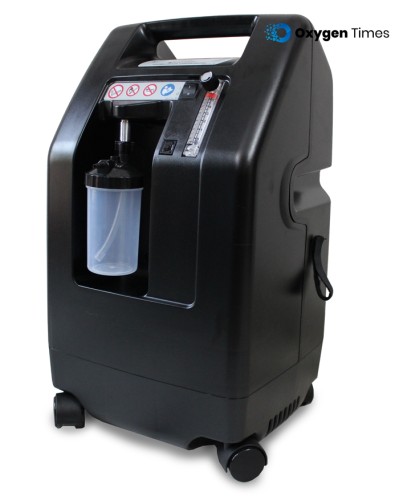
- Brand
- Drive DeVilbiss
- Category
- 5 LPM
₹45,984₹86,400
Indicative pricing based on market intelligence. Varies by dealer, city, bundle, and period — confirm with a local authorised seller before buying.
HHZ SCORE 8.0/10
EDITORIAL PICK
Home Medix HM-KV 5 LPM
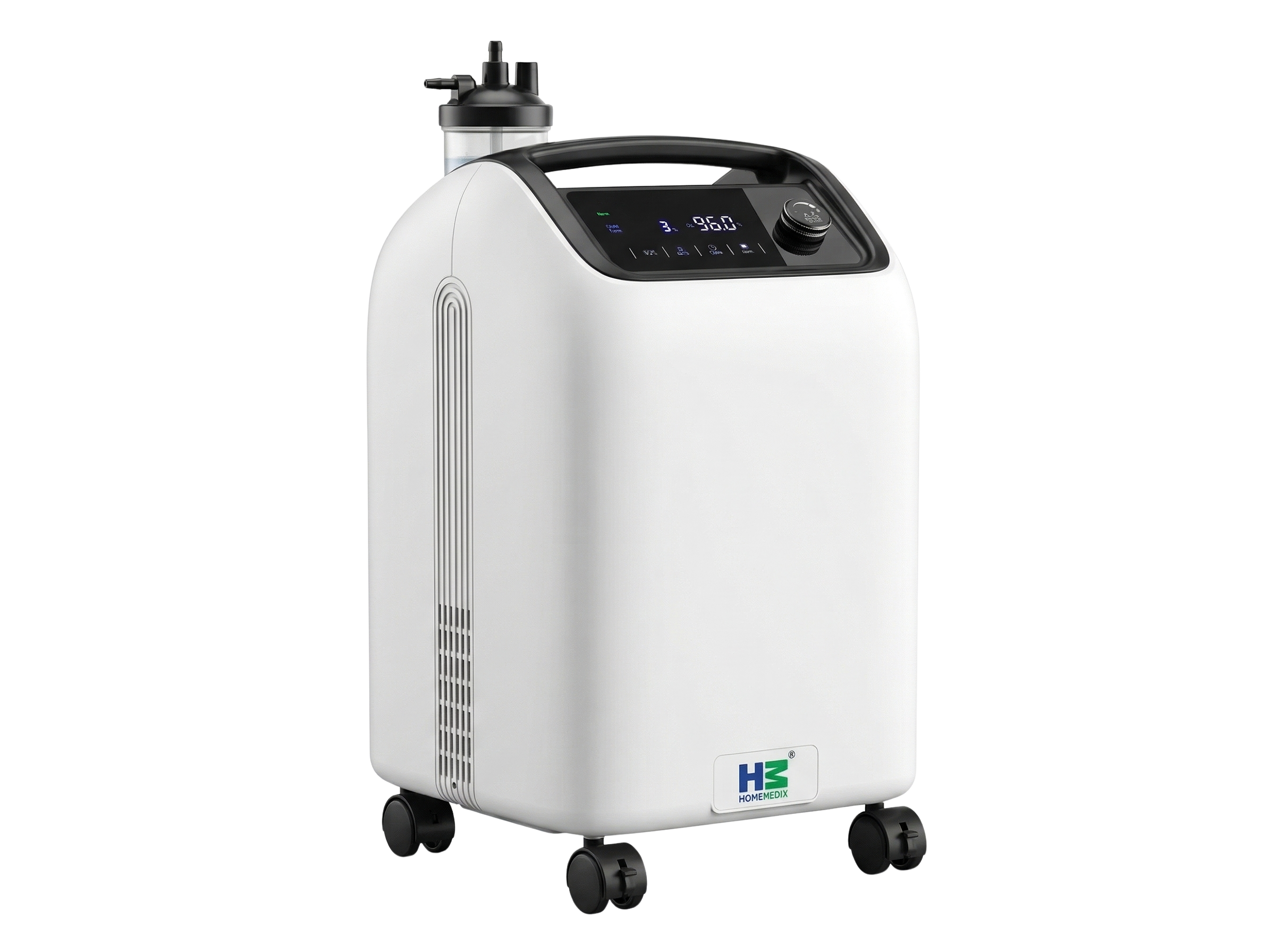
- Brand
- Home Medix
- Category
- 5 LPM
₹37,800₹54,000
Indicative pricing based on market intelligence. Varies by dealer, city, bundle, and period — confirm with a local authorised seller before buying.
HHZ SCORE 7.7/10
Specifications compared
| Specification | DeVilbiss 5 LPM | Home Medix HM-KV 5 LPM |
|---|---|---|
| Overview | ||
| Brand | Drive DeVilbiss | Home Medix |
| Category | 5 LPM | 5 LPM |
| Price | ₹45,984.00 | ₹37,800 |
| MRP | 86,400.00 | 54,000 |
| Stock | In Stock | In Stock |
| Key features | ||
| Purity | 90-96% | 93% ± 3% |
| Type | Home Stationary | Home Stationary |
| Continuous Flow | 1-5LPM | 0.5–5 L/min |
| Weight | 16.3kg | 13 kg (lightest in the 5 LPM class) |
| Oxygen Purity Indicator (OPI) | Yes | Yes |
| Power consumption | 310watts | 320 VA |
| Technical details | ||
| Purity | 90-96% | 93% ± 3% |
| Type | Home Stationary | Home Stationary |
| Continuous Flow | 1-5LPM | 0.5–5 L/min |
| Weight | 16.3kg | 13 kg (lightest in the 5 LPM class) |
| Oxygen Purity Indicator (OPI) | Yes | Yes |
| Power consumption | 310watts | 320 VA |
| Sound level | 48db | ≤ 40 dB (field-verified) |
| Dimensions | 24.4H x 13.4W x 12Dinch | Compact floor-standing form factor |
| Operating altitude | 13123feet | — |
| Outlet pressure | 8.5psi | 0.04–0.06 MPa |
| Additional details | ||
| Oxygen Purity % Analyzer | — | Yes |
| Loss of Power Alarm | Yes | Yes |
| System Malfunction Alarm | Yes | Yes (High Temperature) |
| No Flow Alarm | Yes | Yes (Low/No Flow) |
| Indian Voltage Model | Yes | Yes |
| Company Headquarters | USA | India |
| US FDA Approved | Yes | — |
| CE Certified | Yes | — |
| Home Medix differentiators | ||
| Integrated Nebulization | — | Yes |
| Precise Electronic Flowmeter | — | Yes |
| One-Touch SOS Alert | — | Yes — high-volume audible alarm button for summoning a nearby attendant (local siren; no mobile app or telecom channel) |
| Hour Counter | — | User-visible running-hour display |
| Working Voltage | — | AC 230V / 50Hz, ±10% tolerance (207–253 V) |
| Industrial-Grade Compressor | — | Yes |
| ISO 9001 | — | Yes |
| ISO 13485 | — | Yes |
| CDSCO | — | Approved |
| Warranty | — | 3 years or 10,000 hours of operation, whichever comes first |
Analysis
The DeVilbiss 525 5 LPM (indicative retail roughly ₹45,984 in 2026, listed MRP ₹86,400) and the Home Medix HM-KV 5 LPM (indicative retail roughly ₹37,800 in 2026, listed MRP ₹54,000) sit at opposite ends of the Indian 5 LPM stationary segment despite landing within ₹8,200 of each other on street price. The DeVilbiss is a US-origin, FDA-approved, CE-certified industrial-duty unit with a 16.3 kg steel chassis, 48 dB sound, and a class-leading 13,123 ft altitude ceiling. The HM-KV is a lightweight 13 kg Indian-manufactured unit with field-verified ≤ 40 dB bedside noise, CDSCO registration, and full alarm coverage. Honest call: for typical Indian home LTOT in plains altitude, the HM-KV is the better bedroom-suitable pick. The DeVilbiss is the correct unit for institutional workload, hill-station deployment, and buyers who weight FDA paperwork heavily.
At a glance
- Price (indicative retail, 2026). DeVilbiss roughly ₹45,984 vs HM-KV roughly ₹37,800 — HM-KV ₹8,184 (18%) cheaper on current street pricing. MRPs: DeVilbiss ₹86,400; HM-KV ₹54,000.
- Weight. HM-KV 13 kg vs DeVilbiss 16.3 kg — HM-KV 3.3 kg lighter, the lightest 5 LPM on the Indian market.
- Sound (published). HM-KV ≤ 40 dB(A) (field-verified) vs DeVilbiss 48 dB — HM-KV 8 dB quieter at the bedside.
- Flow. DeVilbiss 1–5 LPM vs HM-KV 0.5–5 LPM — HM-KV reaches a 0.5 LPM floor.
- Purity. DeVilbiss 90–96% vs HM-KV 93% ± 3%.
- Power draw. DeVilbiss 310 W vs HM-KV 320 VA — effectively a wash at Indian tariffs.
- Operating voltage. DeVilbiss published as Indian-voltage model; HM-KV specifies AC 230V / 50Hz with ±10% tolerance (207–253 V).
- Outlet pressure. DeVilbiss 8.5 psi (~0.059 MPa) vs HM-KV 0.04–0.06 MPa — comparable, with DeVilbiss at the top of the HM-KV’s band.
- Altitude ceiling. DeVilbiss 13,123 ft vs HM-KV not separately published.
- Alarms. Both cover Loss-of-Power, System-Malfunction, No-Flow. HM-KV adds a documented Low Oxygen Concentration alarm and one-touch SOS audible siren.
- Regulatory. DeVilbiss US FDA + CE + Indian-voltage. HM-KV ISO 9001 + ISO 13485 + CDSCO. DeVilbiss has CE/FDA; HM-KV has neither.
- Warranty. Both 3 years. HM-KV additionally caps at 10,000 hours of operation.
Where the Home Medix HM-KV wins
13 kg — the lightest 5 LPM on the Indian market. The HM-KV sits 3.3 kg below the DeVilbiss 525. On an absolute basis that’s a 20% reduction in unit mass, and in practice it flips the device from a two-person-lift-up-stairs into a single-adult-carry. For any Indian home-oxygen setup where the concentrator moves between the patient’s bedroom and a shared day-use area, or where the caregiver is elderly or small-framed, this is load-bearing.
Field-verified ≤ 40 dB(A) vs 48 dB published. An 8 dB gap is roughly a doubling-and-a-half in perceived loudness. The DeVilbiss at 48 dB sits above the common 45 dB bedside threshold and is the loudest unit in this three-way import comparison; many households end up siting the DeVilbiss in an adjacent room and running longer cannula from a distance. The HM-KV at ≤ 40 dB ties the quietest published spec in the 5 LPM class (Nidek Nuvo Lite) and is genuinely suitable for same-room overnight use without secondary masking. Home Medix additionally flags the figure as field-verified rather than a paper ceiling.
Lower flow floor. HM-KV delivers from 0.5 LPM upward; DeVilbiss starts at 1 LPM. For paediatric cases, very mild COPD, or post-surgical oxygen tapering prescribed below 1 LPM, the HM-KV can deliver the prescribed rate directly. The DeVilbiss forces the patient to run at twice the prescribed rate or accept bleeding-tube workarounds.
Documented AC ±10% voltage tolerance (207–253 V). The HM-KV specifies a ±10% AC tolerance in its published spec sheet — the device will shut down on out-of-tolerance voltage rather than degrade the compressor. The DeVilbiss lists an Indian-voltage variant but does not publish an explicit tolerance band; buyers in Tier-2 and Tier-3 Indian cities with mains swings are paying for a separate servo stabiliser in either case, but the HM-KV’s published band is the more honest number.
Price — ₹8,184 cheaper at street. At roughly ₹37,800 indicative retail, the HM-KV undercuts the DeVilbiss by about 18%. For first-time LTOT buyers on a budget, the difference funds a year or more of consumables, a servo stabiliser, and still leaves change.
Full alarm suite plus one-touch SOS. Both units run Loss-of-Power, System-Malfunction, and No-Flow alarms. The HM-KV additionally publishes a Low Oxygen Concentration alarm and a one-touch SOS button that triggers a high-volume local audible siren for summoning a nearby attendant — a real-world useful feature for a bedridden patient who cannot shout for help. It is a local siren, not a mobile-app or telecom channel, and should not be confused with a cellular emergency device.
User-visible hour counter. The HM-KV’s running-hour display lets the patient track how close they are to the 10,000-hour warranty clause without calling service. The DeVilbiss does not publish a user-visible hour counter on its spec sheet.
ISO 9001 + ISO 13485 + CDSCO. The minimum credibility stack for a medical device sold in India is present. That said, the DeVilbiss’ US FDA + CE is a superset for buyers who weight export-grade paperwork; HHZ treats this as a wash at the Indian regulatory floor and a DeVilbiss advantage when CE/FDA paperwork is specifically required.
Where the DeVilbiss 5 LPM wins
13,123 ft altitude ceiling — the highest in this comparison set. DeVilbiss publishes a 13,123 ft (4,000 m) operating altitude — unmatched by any other 5 LPM we compare. For Leh (11,500 ft), Tawang (10,000 ft), Spiti Valley, and the higher Himalayan hill stations, this is decisive: the DeVilbiss is the only unit in the 5 LPM class that operates comfortably above 10,000 ft without unpublished derating. The HM-KV spec sheet does not separately publish an altitude ceiling. For any setup above 7,500 ft, the DeVilbiss is the lower-risk pick.
US FDA approval and CE marking. The DeVilbiss carries both US FDA listing and CE certification. The HM-KV carries ISO 9001, ISO 13485, and CDSCO registration — the applicable Indian regulatory gate — but neither CE nor FDA. For institutional tenders that explicitly require FDA/CE paperwork, for hospitals that audit to US standards, or for buyers who place measurable trust in those stamps, the DeVilbiss is the defensible pick.
Industrial-duty compressor reputation. The DeVilbiss 525 has a long installed base in Western respiratory home-care and institutional rental fleets, with a reputation for long compressor service life under continuous duty. The 16.3 kg mass is largely structural — reinforced chassis, heavy compressor mounts, industrial-grade wheels. For nursing-home deployment, rental-fleet workload, or 24/7 institutional duty cycles where the unit is rarely powered down, this matters. The HM-KV’s compressor platform does not yet have the same installed-base history to reference.
Broader metro-service footprint and higher outlet pressure headroom. DeVilbiss routes service through established respiratory-equipment dealers in Indian metros, with the usual Western-brand service ecosystem — technicians trained on the platform, sieve-bed supply chain mature. The HM-KV’s authorised-dealer network is strongest in South and West India and thins outside Home-Medix-served cities. DeVilbiss also publishes 8.5 psi (~0.059 MPa) outlet pressure at the top of the HM-KV’s 0.04–0.06 MPa band — marginal headroom for long tubing runs, humidifier-bottle setups, or nebuliser pairings.
Secondary-market resale. A DeVilbiss 525 typically retains a stronger second-hand value in India than a Home Medix unit does — the Western import brand badge carries measurable resale premium. For short-term use (post-operative, temporary respiratory episode, rental fleets), the DeVilbiss’ stronger resale recovery narrows the upfront price gap.
Brand recognition among pulmonologists. DeVilbiss is familiar to Indian respiratory physicians through its Drive DeVilbiss catalogue. Home Medix sits lower on prescription-channel recognition than the US import trio. For buyers whose pulmonologist explicitly recommends a specific brand, this friction is real.
Indian-market considerations
Both units ship on Indian-voltage variants. The HM-KV at 320 VA draw wants a 500 VA minimum servo stabiliser (750 VA where mains routinely swings outside 207–253 V); the DeVilbiss at 310 W wants similar stabiliser sizing. Budget ₹3,000–6,000 for a servo stabiliser in either case and factor it into the all-in cost.
Altitude derating: the DeVilbiss 525 is the clear pick above 7,500 ft with its 13,123 ft ceiling. For plains-India buyers (below 3,000 ft — Mumbai, Delhi, Chennai, Bengaluru, Kolkata, Hyderabad, Pune, Ahmedabad, and the entire Gangetic basin), altitude is not a decision factor and the HM-KV’s other advantages dominate. For Shimla (~7,200 ft), Ooty (~7,300 ft), Manali (~6,700 ft), Mussoorie (~6,500 ft), Darjeeling (~6,700 ft), Gangtok (~5,400 ft), Srinagar (~5,200 ft), either unit works with the DeVilbiss running more comfortably. For Leh (~11,500 ft), the DeVilbiss is effectively the only option in this pair.
Humidifier and tubing: both need a separately-purchased humidifier bottle (₹400–800), nasal cannula (₹80–200 per unit, plan on monthly replacement), and potentially a longer-run tubing setup for patients who move between rooms.
GST reimbursement: CGHS, ECHS, ESIC, and most private insurance home-medical-equipment clauses reimburse against properly GST-invoiced concentrator purchases at 12%. Both brands are compliant; HM-KV’s dealer channel is comfortable with CGHS paperwork and Home Medix documents ISO + CDSCO openly. DeVilbiss routes through its distributor chain.
Service reach: DeVilbiss has broader institutional-metro presence; HM-KV is strongest in Home-Medix-served cities (primarily South and West India). For non-metro buyers, verify authorised-dealer proximity before committing — a warranty claim that requires shipping the unit to another city is a 2–3 week downtime event for either brand.
Who should pick which
Pick the Home Medix HM-KV 5 LPM if: the patient is on standard plains-India LTOT, the concentrator lives in the bedroom overnight, weight and bedside noise matter for caregiver ergonomics and patient sleep quality, the prescribed flow is between 0.5 and 5 LPM, the purchase budget is tight, or authorised Home Medix service is reachable from your pincode. For the standard Indian home LTOT buyer in a Tier-1 or Tier-2 plains city, the HM-KV’s weight, sound, voltage-tolerance, and price advantages compound into the better bedroom-suitable pick.
Pick the DeVilbiss 5 LPM if: the setup is above 7,500 ft (Shimla, Ooty, Manali, Mussoorie, Darjeeling, Leh, Tawang), the unit is going into institutional duty (nursing home, rental fleet, hospital ward, NGO elder-care), the buyer’s pulmonologist or institutional procurement specifies FDA/CE paperwork, or 24/7 continuous-duty workload is the operating pattern. The DeVilbiss’ 13,123 ft altitude ceiling, industrial-duty compressor reputation, and FDA/CE stack justify the ₹8,184 premium and the 8 dB noise cost in those specific contexts.
Verdict
The HM-KV is the better pick for the default Indian home LTOT buyer. Lightest in class at 13 kg, quietest published spec in the class at ≤ 40 dB(A), full alarm suite plus one-touch SOS siren, documented AC voltage tolerance, and a street price ₹8,184 below the DeVilbiss — these are real, measurable advantages for bedroom use. The remaining gap to the DeVilbiss is altitude ceiling (for hill-station use above 7,500 ft), FDA/CE paperwork (for institutional tender), and industrial-duty installed-base reputation (for 24/7 rental-fleet workload). None of those matter for a typical Indian plains-city LTOT prescription.
For institutional buyers, hill-station setups above 7,500 ft, or pulmonologist-specified FDA/CE procurement, the DeVilbiss 525 is the correct unit despite the weight and noise cost. For everyone else, the HM-KV is the better buy.
If you are weighing whether 5 LPM is enough headroom for the clinical trajectory, read our 5 LPM vs 10 LPM guide before buying either unit.