DeVilbiss 5 LPM vs Dr Diaz 5 LPM
EDITORIAL PICK
DeVilbiss 5 LPM
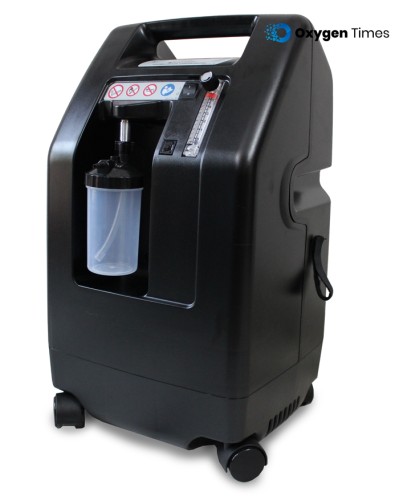
- Brand
- Drive DeVilbiss
- Category
- 5 LPM
₹45,984₹86,400
Indicative pricing based on market intelligence. Varies by dealer, city, bundle, and period — confirm with a local authorised seller before buying.
HHZ SCORE 8.0/10
Dr Diaz 5 LPM
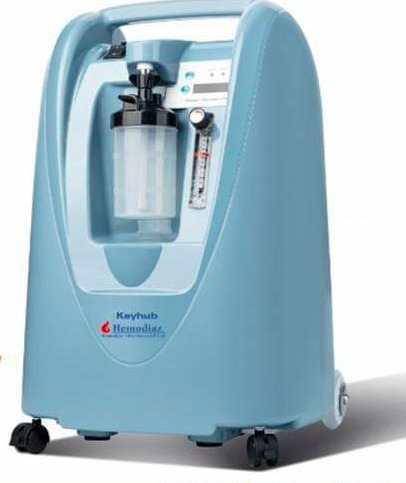
- Brand
- Hemodiaz
- Category
- 5 LPM
₹29,759.04₹40,320
Indicative pricing based on market intelligence. Varies by dealer, city, bundle, and period — confirm with a local authorised seller before buying.
HHZ SCORE 6.9/10
Specifications compared
| Specification | DeVilbiss 5 LPM | Dr Diaz 5 LPM |
|---|---|---|
| Overview | ||
| Brand | Drive DeVilbiss | Hemodiaz |
| Category | 5 LPM | 5 LPM |
| Price | ₹45,984.00 | ₹29,759.04 |
| MRP | 86,400.00 | 40,320.00 |
| Stock | In Stock | In Stock |
| Key features | ||
| Purity | 90-96% | 90-96% |
| Type | Home Stationary | Single Flow |
| Continuous Flow | 1-5LPM | 1-5LPM |
| Weight | 16.3kg | 16kg |
| Oxygen Purity Indicator (OPI) | Yes | Yes |
| Power consumption | 310watts | 285watts |
| Technical details | ||
| Purity | 90-96% | 90-96% |
| Type | Home Stationary | Single Flow |
| Continuous Flow | 1-5LPM | 1-5LPM |
| Weight | 16.3kg | 16kg |
| Oxygen Purity Indicator (OPI) | Yes | Yes |
| Power consumption | 310watts | 285watts |
| Sound level | 48db | 48db |
| Dimensions | 24.4H x 13.4W x 12Dinch | 21H x 12W x 11.8Dinch |
| Operating altitude | 13123feet | 12000feet |
| Outlet pressure | 8.5psi | 13psi |
| Additional details | ||
| Loss of Power Alarm | Yes | Yes |
| System Malfunction Alarm | Yes | Yes |
| No Flow Alarm | Yes | Yes |
| Indian Voltage Model | Yes | Yes |
| Company Headquarters | USA | India |
| US FDA Approved | Yes | — |
| CE Certified | Yes | — |
Analysis
The matchup
The DeVilbiss 5 LPM (the Compact 525) and the Dr Diaz 5 LPM are 5 LPM stationaries separated by pedigree, certification, and ₹16,000 of indicative retail price. The DeVilbiss is the long-established USA-origin 5 LPM concentrator that has been supplied into Indian hospital and home markets for more than a decade, with a documented 13,123 ft altitude envelope and the class’s only published “turn-down” power-efficiency technology. The Dr Diaz is an Indian-origin 5 LPM from Hemodiaz that undercuts the import brands on price (₹29,759 indicative retail) while claiming comparable 1–5 LPM flow, 90–96% purity, and a higher published outlet pressure (13 psi) than any imported competitor in the segment. Our verdict: on every dimension that meaningfully affects long-term clinical outcomes — FDA approval, altitude envelope, published efficiency technology — the DeVilbiss is the better pick. The Dr Diaz is a defensible choice only when price is the binding constraint and altitude, certification, and published efficiency headroom are not.
At-a-glance spec differences
- Price (indicative retail): DeVilbiss ₹45,984 vs Dr Diaz ₹29,759 — a ₹16,225 gap
- Altitude envelope (published): DeVilbiss 13,123 ft vs Dr Diaz 12,000 ft — both are hill-station capable, but the DeVilbiss has the widest published envelope in the 5 LPM class
- Power draw (published): DeVilbiss 310 W vs Dr Diaz 285 W — Dr Diaz is nominally lower, but DeVilbiss publishes turn-down technology that reduces power at lower flow rates; Dr Diaz does not
- Outlet pressure (published): DeVilbiss 8.5 psi vs Dr Diaz 13 psi — Dr Diaz has meaningfully more headroom for long cannula runs and accessory attachments
- Weight (published): DeVilbiss 16.3 kg vs Dr Diaz 16 kg — effectively identical
- Certifications: DeVilbiss US FDA approved and CE certified; Dr Diaz neither FDA nor CE
- Sound (published): Both rated 48 dB — at the edge of the 50 dB bedside threshold; neither is whisper-quiet
- Warranty channel: DeVilbiss 3-year manufacturer warranty via Drive India channel; Dr Diaz manufacturer warranty via Hemodiaz direct channel
Where the DeVilbiss 5 LPM wins
Altitude envelope is the DeVilbiss’s single strongest clinical edge. The 13,123 ft (4,000 m) published operating altitude is the highest of any 5 LPM in the Indian market — higher than the Airsep Visionaire (10,000 ft), the Philips Everflo (7,500 ft), and the Nidek Nuvo Lite (7,500 ft). That matters for Indian buyers in Himachal, Uttarakhand, Sikkim, Ladakh, and the hill routes of Arunachal. Leh town sits at 11,500 ft; the Dr Diaz’s 12,000 ft envelope is a tight fit there with no margin for altitude-adjacent variation (atmospheric pressure fluctuations, air-conditioning load on the compressor). The DeVilbiss at 13,123 ft gives that margin.
Turn-down technology is a structural efficiency advantage the Dr Diaz does not match. The DeVilbiss 525 publishes “energy-efficient turn-down technology” — the compressor output reduces when the patient is prescribed a flow rate below 5 LPM. Most home patients are on 2–3 LPM, not 5 LPM. The published nameplate 310 W is the full-flow rating; actual average draw at 2–3 LPM is lower. The Dr Diaz publishes a flat 285 W nameplate with no turn-down mechanism; at 2–3 LPM it draws that same 285 W. The published 25 W nameplate gap is misleading — real-world on a 2 LPM prescription, the DeVilbiss likely runs cooler and cheaper.
FDA approval and CE certification are clinical signals the Dr Diaz lacks. For buyers where a prescribing physician specifies FDA-approved equipment, for hospital-discharge handoffs where the ward rental equipment is required to carry FDA marks, or for households that simply use FDA as a general quality proxy, the DeVilbiss closes the question. The Dr Diaz publishes neither certification. For buyers to whom this matters institutionally, the gap is not negotiable at any price.
Auxiliary oxygen port is a documented feature unique to the class. The DeVilbiss 525 ships with an auxiliary oxygen port usable to fill portable oxygen cylinders with an FDA-cleared cylinder-filling device. For buyers who maintain a cylinder backup (recommended in Indian tier-2 cities where power reliability is limited), this auxiliary port is useful. The Dr Diaz does not publish this feature.
Where the Dr Diaz 5 LPM wins
Price is the single biggest and cleanest advantage. At ₹29,759 indicative retail vs ₹45,984 on the DeVilbiss, the Dr Diaz is roughly 35% cheaper — a ₹16,225 gap that buys a meaningful second machine, a year of electricity, or the full backup-cylinder-plus-oximeter accessory kit. For first-time oxygen buyers in Indian households without private insurance coverage for durable medical equipment, this gap is the conversation.
Outlet pressure of 13 psi is the highest in the 5 LPM stationary class. The Dr Diaz publishes 13 psi outlet pressure vs the DeVilbiss’s 8.5 psi. For patients using long cannula extensions (bedroom-to-living-room runs exceeding 10 feet), for accessory attachments that draw pressure (humidifier bottles plus inline filters plus nebulizer connections in series), and for buyers where a stable outlet pressure under varying load matters, the Dr Diaz’s 13 psi gives more headroom. This is not a showstopper for the DeVilbiss at 8.5 psi — standard 7-foot cannula runs are fine — but it is a concrete Dr Diaz advantage.
Nominal power draw is lower on the nameplate. At 285 W full-flow vs 310 W on the DeVilbiss, the Dr Diaz is the lower published-nameplate unit. This advantage narrows or reverses at partial load because of the DeVilbiss’s turn-down technology, but on a full-flow 5 LPM prescription, the Dr Diaz is the lower-draw machine.
Indian-origin service channel is often faster for straightforward repairs. Hemodiaz’s Indian service footprint is not as wide as Oxymed’s, but for straightforward compressor and filter service, the Hemodiaz parts and technician chain runs faster than Drive DeVilbiss’s India channel. For buyers in tier-2 cities where Drive service is thin, a Dr Diaz may be easier to keep running than a DeVilbiss whose parts have to be ordered from a metro.
Indian-market context
Both machines run on 230 V / 50 Hz Indian Voltage Models as published. Both are typical 16 kg stationary trolley-chassis units. Neither is FAA approved, so neither travels on flights. Both publish 48 dB sound — at the edge of the 50 dB threshold that becomes disruptive at bedside placement. For bedroom placement, a 45 dB Everflo or Visionaire is the quieter choice; the DeVilbiss and Dr Diaz are paired equivalents in this respect.
On service: the DeVilbiss is typically supplied into India through Drive India’s channel and through online retail. Drive India supports major metros with authorised service; tier-2 city support is typically via third-party dealers. Parts availability in tier-3 cities is slow. The Dr Diaz via Hemodiaz has a narrower but more consistent service channel — Hemodiaz publishes direct support in roughly 30 Indian cities and handles replacement filters and sieve beds via courier. Neither compares to Oxymed’s 50-city footprint or Philips’s ubiquity.
On pricing mechanics: the DeVilbiss is typically discounted 5–15% from MRP (₹86,400) at online retail, bringing it to the ₹45,984 indicative retail point. Hospital procurement deals for fleet purchases go lower still. The Dr Diaz is typically discounted 20–30% from MRP (₹40,320) at online retail, bringing it to ₹29,759. Dealer-channel pricing on both varies by city; Mumbai and Delhi-NCR typically run at online parity, while tier-2 cities often see 5% dealer margins above online indicative retail.
GST at 12% on Class B medical devices is included in listed prices. Neither machine’s manufacturer runs a comprehensive Indian installation-and-training program comparable to Oxymed’s or Philips’s; both are typically sold and delivered with a humidifier bottle and a user manual, with installation expected to be self-managed or arranged by a local dealer.
Verdict
Our recommendation is the DeVilbiss 5 LPM for any buyer who can stretch the ₹16,000 price gap. The clinical advantages are not marginal: FDA approval closes the institutional-acceptability question, the 13,123 ft altitude envelope is the widest in the class, turn-down technology reduces real-world running cost at typical 2–3 LPM prescriptions, and the auxiliary oxygen port is a useful backup pathway. The DeVilbiss 525 has been in Indian hospital fleets for over a decade; that track record is worth paying for if the household can.
Buy the Dr Diaz 5 LPM instead if the price gap is the binding constraint and three conditions hold. First, the household is in the plains — no hill-station use above 7,500 ft, no plans to travel to Himachal or Uttarakhand with the machine. Second, the prescribing physician has not specified FDA-approved equipment and institutional certification is not a hard requirement. Third, the expected use duration is measured in months to two years rather than five-plus years — the DeVilbiss’s pedigree pays off most in years three through seven when the sieve beds are being stressed. For shorter-horizon use, the Dr Diaz’s ₹16,000 saving is genuinely worth capturing.
The tie-breaker for buyers exactly on the edge — a Delhi-NCR household, moderate expected use, general-medicine adult prescription, no hill travel planned — we still tilt to the DeVilbiss. The 13 psi outlet pressure and the 285 W nominal are real Dr Diaz advantages, but in a 5 LPM stationary the cheaper unit with no certifications is more likely to be the one that turns into an expensive repair in year three. The DeVilbiss is the default pick; the Dr Diaz is the budget exception. A gets the win.