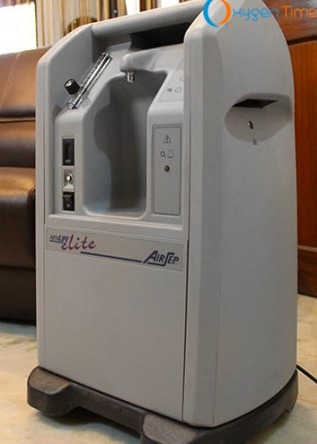
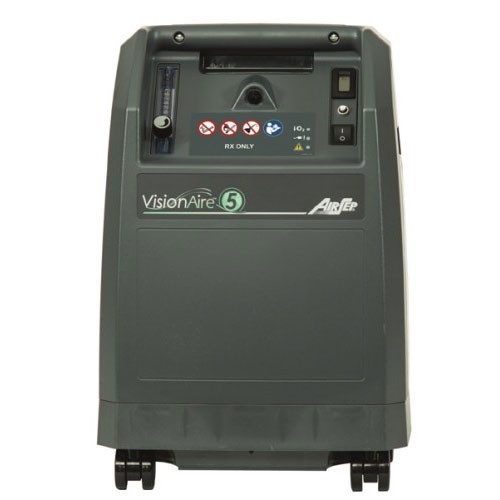
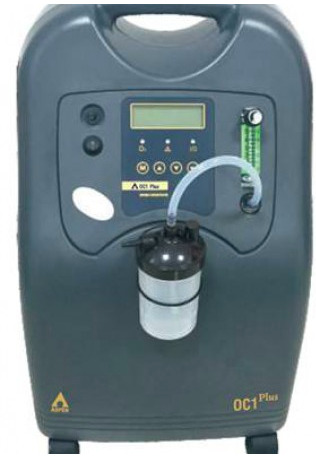
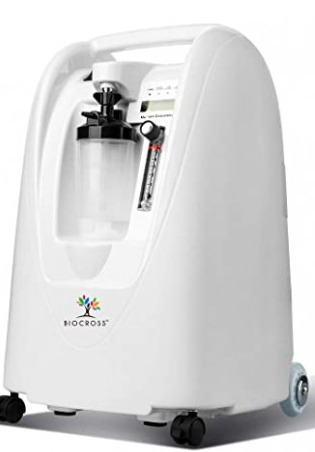
Yuwell 7F 5 LPM
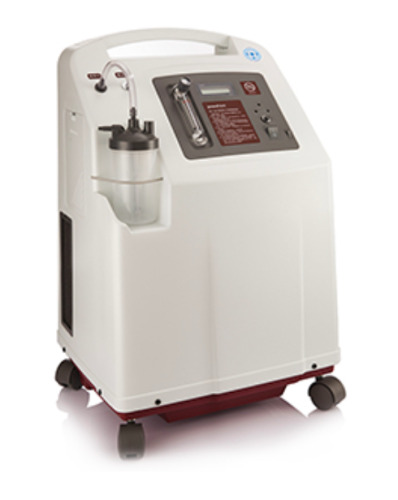
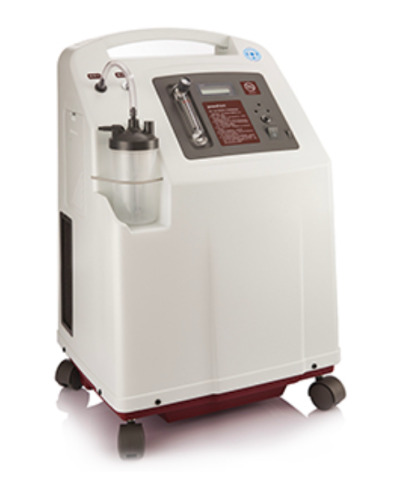
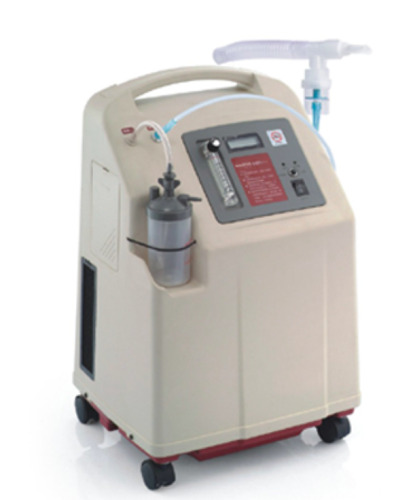
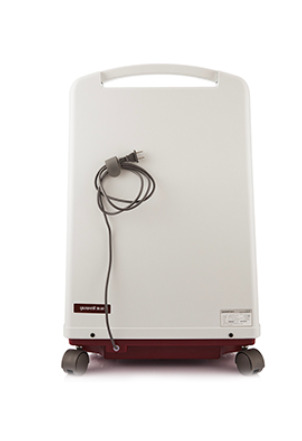
Key features
- Purity 90-95%
- Type Home Stationary
- Continuous Flow 0.5-5LPM
- Weight 27kg
- Oxygen Purity Indicator (OPI) No
- Power consumption 500watts
Specifications
| Purity | 90-95% |
|---|---|
| Type | Home Stationary |
| Continuous Flow | 0.5-5LPM |
| Weight | 27kg |
| Power consumption | 500watts |
| Sound level | 53db |
| Dimensions | 36.7H x 17.5W x 14.6Dinch |
| Operating altitude | 6000feet |
| Outlet pressure | 10psi |
| Loss of Power Alarm | Yes |
|---|---|
| System Malfunction Alarm | Yes |
| Indian Voltage Model | Yes |
| Company Headquarters | China |
Pros and cons
PROS
- Robust, serviceable PSA design with 6,000 ft operating altitude
- Yuwell brand recognition and metro-city service footprint
- Indian-voltage model with 53 dB sound rating on brochure
- Three-alarm backbone (power loss, system malfunction) on spec sheet
CONS
- 27 kg — among the heaviest single-user 5 LPM units ever sold in India
- 500 W continuous draw — roughly 70 % higher than a Nidek Nuvo Lite
- Discontinued status on main Indian listing means unreliable new-unit supply
- No published FDA, FAA or CE certification on the Indian spec sheet
- No OPI, no purity analyzer despite the 5 LPM home-stationary positioning
Why the 7F still shows up in Indian buying conversations
The Yuwell 7F predates the 8F and 9F and was, for several years in the mid-2010s, one of the more widely distributed Chinese 5 LPM units in India. It was sold into hospitals, nursing homes and retail channels before Yuwell modernised the lineup. The manufacturer brochure and e-commerce product listings HHZ pulled mark this unit as “Discontinued”, and the last published Indian street price was around ₹47,040. It is reviewed here because three sets of buyers keep encountering the 7F: households that inherited one, resellers who still clear old stock at heavy discount, and clinic operators who bought fleets in 2020 and want to know whether repair or replacement is the better play.
There is no live case for buying a new 7F in 2026. The unit was built around a 27 kg tower compressor platform that is now two generations behind even Yuwell’s own current products. The 7F Mini and 8F took its core and shrank it; the 9F added a touchscreen. The value of this review is in setting the baseline against which those newer units improved — and in being honest about what a 7F is worth today.
What the specs actually mean
Six load-bearing numbers shape any 5 LPM buying decision. The 7F loses on most of them.
Continuous flow 0.5–5 LPM, purity 90–95 %. Brochure value, standard for zeolite-PSA units. No per-flow purity table is published, so as with every machine in this class assume the 95 % is at 2–3 LPM and 90 % is the worst case at the top of the flow range. For a 2 LPM patient the number is adequate. For a patient running at 5 LPM for active spells this is the floor of acceptability, and the absence of an oxygen purity indicator on the front panel means you cannot verify it in service.
Weight 27 kg. This is the 7F’s dealbreaker spec. 27 kg is heavier than any current 10 LPM unit in this review cycle — the Yuwell 10 LPM itself is 33 kg, the AAYOU 10L is 21 kg, the Oxybliss 10 LPM is 18.8 kg. A 27 kg 5 LPM in 2026 is simply an anachronism. Two people are needed to move it; one person cannot relocate it from bedroom to drawing room safely.
Power 500 W. This is 70 % higher than a Nidek Nuvo Lite (290 W), 43 % higher than a Philips Everflo (350 W), and 25 % higher than a BPL Oxy 5 Neo (400 W). At a 16-hour-a-day prescription and ₹7 per unit that is roughly ₹950 a month of electricity — close to three times what a Nidek Nuvo Lite costs to run. Over three years of LTOT the 7F eats its own purchase-price in electricity relative to the Nidek.
Noise 53 dB. Higher than Tier-1 peers (Philips 45 dB, Nidek 40 dB) but comparable to most Chinese OEMs at this weight class. For bedroom use, 53 dB is audible but not the worst in the category.
Operating altitude 6,000 ft. This matters only for buyers in Shimla, Manali, Leh, the Sikkim valleys, Munnar hills — the 7F holds its rated purity up to roughly 1,800 m. Above that the purity starts to drop. Everflo is rated 7,500 ft, Nidek 7,500 ft. If you live above 2,000 m the 7F is a poor fit by design.
Certifications: blank. The brochure’s FDA, FAA and CE fields are all empty for this Indian SKU. This is a bigger problem for the 7F than for the 9F because the 7F was the unit most commonly cited by hospital-procurement teams in 2020–2021 as “Yuwell-branded and compliant” — the brochure does not back that up. If your procurement department is buying under CDSCO MD-15 or a similar framework, ask for written certification by serial-number batch.
Dimensions are 36.7 × 17.5 × 14.6 inches (H×W×D), a full-height tower.
Who should buy it
Practically nobody in 2026. If you are reading this section at all, these are the narrow cases:
Buyers who can get a new-in-box 7F at or below ₹25,000 from liquidated stock. If a distributor is clearing warehouse inventory and the unit is visibly sealed with a factory date within the last 24 months, a 7F can be pressed into service as a backup unit for a household that already has a good primary concentrator. The value argument only works well under half of list.
Institutional buyers consolidating an existing 7F fleet. Hospitals and nursing homes that bought 7Fs in 2020 and have their own biomed team may rationally choose to buy a few more matching units at discount to simplify spares and training. This is the “fleet standardisation” argument, and it holds only if you already own the platform.
Used-unit buyers who understand they are buying a used machine. There is a second-hand market for 7Fs in India. If you are that buyer, budget for sieve-bed service, compressor capacitor replacement and a new intake filter at minimum before trusting the unit clinically.
Who should not buy it
Any first-time home-oxygen buyer. There is no scenario in which a new 7F is the right first concentrator for a household in 2026. The newer Yuwell 8F, the Philips Everflo, the Oxymed Mini and the BPL Oxy 5 Neo all exist at comparable prices with better specs.
LTOT patients on 15+ hours/day. The power-draw math is decisive. Running a 7F for three years of LTOT costs thousands of rupees more in electricity than any Tier-1 equivalent.
Buyers in apartments or small rooms. 27 kg and 53 dB is a poor combination in a 150-square-foot bedroom. The chassis cannot be moved easily; the noise cannot be separated from the patient.
Buyers outside metro cities. Yuwell’s service network is thinner than Philips’s or BPL’s. For a discontinued model, spare parts availability degrades further the further from a metro you are.
Alternatives that beat the 7F on specific axes
Yuwell 8F, ~₹20,000 list (with nebuliser), often cheaper in deals. Yuwell’s own successor to the 7F is 15.5 kg and 400 W — roughly half the weight and 20 % less electricity. For a buyer who specifically wants a Yuwell, the 8F is the rational upgrade from the 7F and at current street prices it is often significantly cheaper than the 7F ever was. There is no reason to pick the 7F over the 8F.
Philips Respironics EverFlo, ~₹43,700–50,000 street. 14 kg, 350 W, 45 dB, FDA-approved, CE-marked, OPI present, 3-year Indian warranty through Philips Home Healthcare. Against the 7F the Everflo is a different class of machine. If the budget is in 7F territory, the Everflo is the default answer for any long-term user.
BPL Oxy 5 Neo, ~₹32,000 street. The BPL is not a light machine (25 kg) but it is lighter than the 7F, quieter (55 dB on the brochure for the 5 Neo — effectively the same), and critically, BPL’s nationwide service network is one of the strongest in Indian medical electronics. An Indian brand with pan-India support is the correct choice over a discontinued Chinese SKU at the same budget.
Oxymed Mini 5 LPM, ~₹35,000–45,000 street. 13.9 kg, 45 dB, OPI and digital purity analyser present, CDSCO registered with a 3-year warranty, large Indian service footprint. On every axis except brand heritage the Oxymed Mini dominates the 7F. For a 2026 buyer at the same budget, the choice is not close.
Indian-market considerations
Because the 7F is flagged discontinued, the most important question for any buyer is whether the importer and dealer can still supply spare parts and service for the next three to five years. Sieve beds, compressor and valve blocks are generic on this Chinese platform and can be sourced from cross-compatible units (many Niscomed, Konsung and Eloxy 5 LPM machines share the same OEM tooling and parts), but you should confirm this in writing with your dealer before relying on it. Compressor replacement is a ₹6,000–10,000 job in Indian service centres for a Yuwell-class 5 LPM, and sieve-bed regeneration runs ₹4,000–7,000. On a unit that cost ₹47,000 new, two such repairs put you into break-even territory against a new Tier-1 purchase.
CDSCO import registration for oxygen concentrators was tightened under the 2022 medical-devices framework. Older 7F imports may or may not have been brought in under the current regime; buyers should ask for the importer’s CDSCO MD-14/MD-15 registration number. For used-unit purchases, ask for the original import documentation where possible. (CDSCO)
Warranty claims on a discontinued SKU are rarely worth the paper they are printed on. If a dealer is selling a 7F with a “1 year warranty” sticker in 2026 you should assume the warranty will not outlast the dealer. Any buyer who still wants this unit should budget for out-of-pocket service from day one and treat the warranty as a nominal courtesy.
The other structural reality: Yuwell’s Indian distribution was built during the 2020–2021 oxygen demand cycle when dozens of importers, large and small, brought in the brand. Many of those importers have since exited the category. Buying a 7F in 2026 means dealing with the residual ecosystem of small distributors who hold old stock. Their service capability is not Yuwell’s service capability.
Verdict
The Yuwell 7F is a historical artifact. It was a competent mid-2010s Chinese 5 LPM home stationary that shipped in reasonable numbers into Indian hospitals and homes during the 2020–2021 surge. In 2026 it is discontinued on every major Indian listing and its own successor, the 8F, weighs less, draws less power, and sells for less. There is no scenario in which a first-time home-oxygen buyer should prefer the 7F to a new Yuwell 8F, a Philips Everflo, a BPL Oxy 5 Neo or an Oxymed Mini. The only rational buyers are institutional fleet operators standardising on an existing 7F base, or used-unit buyers who understand the trade-offs. For everybody else, skip it.