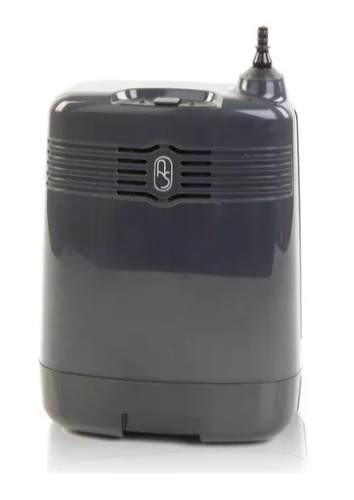
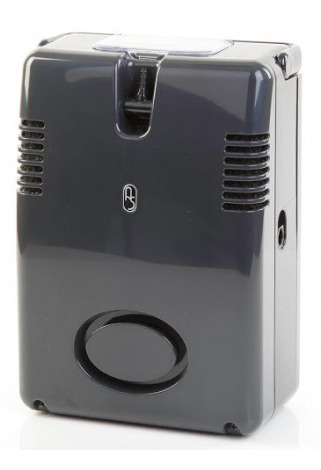
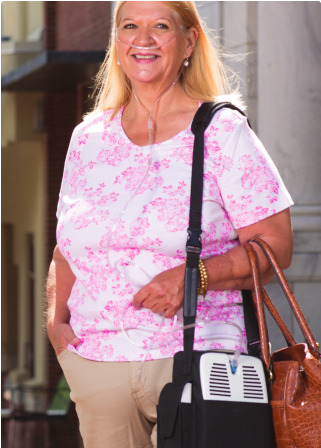
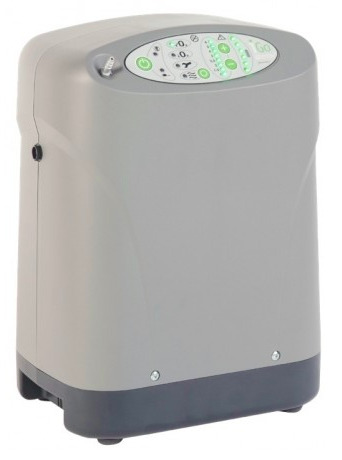
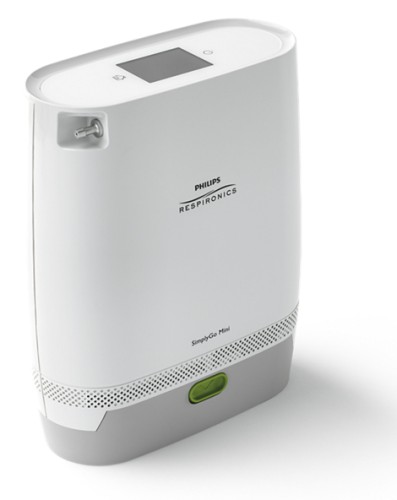
Philips SimplyGo Mini Portable Oxygen Concentrator
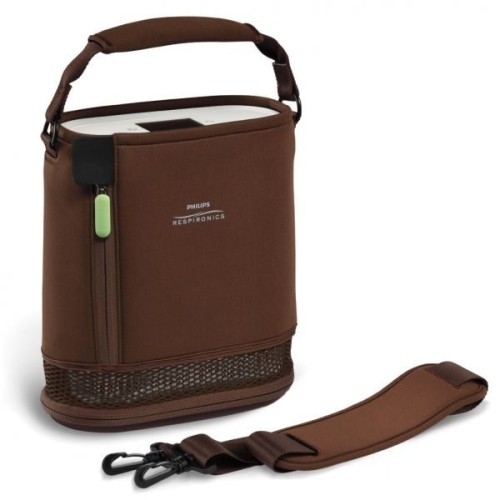
Key features
- Purity 90-96%
- Type Portable (Battery powered)
- Pulse Flow 1-5Pulse setting
- Weight 2.3kg
- Oxygen Purity Indicator (OPI) Yes
- Battery backup (at 2 pulse setting) 4.5hours
Specifications
| Purity | 90-96% |
|---|---|
| Type | Portable (Battery powered) |
| Pulse Flow | 1-5Pulse setting |
| Weight | 2.3kg |
| Oxygen Purity Indicator (OPI) | Yes |
| Battery backup (at 2 pulse setting) | 4.5hours |
| Recharge time | 4hours |
| Backup with external battery pack | 9hours |
| Sound level | 52db |
| Dimensions | 9.4H x 8.3W x 3.6Dinch |
| Operating altitude | 10000feet |
| Outlet pressure | 20psi |
|---|---|
| Loss of Power Alarm | Yes |
| System Malfunction Alarm | Yes |
| Indian Voltage Model | Yes |
| Company Headquarters | USA |
| US FDA Approved | Yes |
| FAA Approved | Yes |
| CE Certified | Yes |
Pros and cons
PROS
- 2.3 kg unit weight is under the 2.5 kg threshold most buyers consider 'actually carryable all day' in a side bag
- 4.5 hour published battery at pulse setting 2 with single battery, 9 hours with extended — day-trip capable without AC access
- 10,000 ft operating altitude covers all of India's major hill destinations except Leh and Spiti's highest villages
- FAA approved for carry-on, Indian voltage model, and backed by Philips Respironics India service network
CONS
- 52 dB published sound level is noticeably higher than the SimplyGo's 43 dB and the G5's 38 dB — not ideal for in-bedroom placement
- Pulse-only delivery (1–5 settings) — no continuous flow mode, so cannot substitute for a home unit on a continuous prescription
- ₹2,10,700 indicative retail is a premium over the G5 at similar spec
The Philips SimplyGo Mini Portable Oxygen Concentrator is the small sibling to the dual-mode SimplyGo — a 2.3 kg pulse-flow-only machine aimed squarely at patients who need oxygen on the move but don’t need continuous-flow delivery. At indicative retail ₹2,10,700 (varies by region/dealer), it sits in the premium pulse-only segment alongside the Inogen One G5 and Caire Freestyle Comfort 5, and competes on the combination of weight, service depth, and regulatory approvals. It is FAA approved, FDA approved and CE certified per manufacturer brochure and e-commerce product listings, and ships as an Indian Voltage Model.
What the specs actually mean
The 90–96% published purity range is the standard envelope for a PSA-based pulse-flow portable in this weight class. At settings 1–3 — where most home-oxygen prescriptions sit — the machine’s duty cycle allows it to maintain the upper end of that range; at settings 4–5, the internal compressor is working harder and purity tends to sit closer to the 90% floor. The SimplyGo Mini carries an Oxygen Purity Indicator (OPI) flagged “Yes” in the spec tables, which alarms below roughly 82% purity — critical for a battery unit that sees temperature shocks.
The 1–5 pulse setting range delivers pulses that the unit triggers on breath detection. Pulse settings are not LPM equivalents — a setting of 2 delivers roughly 16 mL of 90%+ oxygen per breath, and at a resting breath rate of 15 breaths per minute that works out to a flow-equivalent closer to 1.5 LPM continuous. Above pulse setting 3, the delivered bolus gets harder to coordinate with slow or shallow breathing, which is why many pulmonary patients end up on settings 1–3 in practice regardless of what the prescription says.
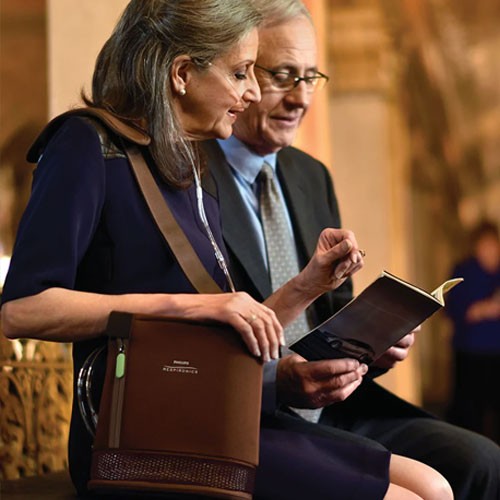
The 2.3 kg weight is class-leading for FAA-approved pulse-only portables. Inogen One G5 is 2.6 kg, Caire Freestyle Comfort 5 is 2.3 kg, Inogen One G4 is 1.27 kg (discontinued). Under 2.5 kg is the rough threshold most buyers can sustain in a side bag for a full day of urban mobility — malls, markets, hospital visits, train journeys. Above that, they end up rolling a cart.
Battery backup at pulse setting 2 is published at 4.5 hours with the standard battery, extending to 9 hours with the external extended battery. At pulse setting 1 the figures jump to 6 hours and 12 hours respectively. At pulse 5, the standard battery gives 2 hours. For a patient on pulse 2, the 9-hour figure with the external battery clears most domestic flight routes with time to spare — Delhi-Mumbai is ~2.5 hours, Delhi-Bangalore ~3 hours, Mumbai-Guwahati ~3.5 hours.
Recharge time is a published 4 hours from empty to full — slightly slower than the G5’s 3 hours. Between flight connections of more than 4 hours, the Mini can fully recharge; for same-day return travel with minimal layover, plan to carry the extended battery regardless.
Sound level at 52 dB — the compromise
The 52 dB published sound level is the SimplyGo Mini’s main compromise vs peers. It is meaningfully higher than the SimplyGo’s 43 dB and the G5’s 38 dB. In absolute terms, 52 dB is comparable to a quiet refrigerator — not loud by any reasonable metric, but for bedside or small-room use it is noticeably audible. If the primary use case is day-time mobility, 52 dB is fine. If the buyer is also planning overnight bedside use on battery, this is the wrong portable — look at the G5 or the Freestyle Comfort 5.
The altitude and travel envelope
10,000 ft (3,048 m) operating altitude matches the SimplyGo and the G5. It covers Shimla (7,100 ft), Manali (6,700 ft), Gangtok (5,400 ft), Darjeeling (6,700 ft), Ooty (7,300 ft), Nainital (6,800 ft), Mussoorie (6,600 ft), Munnar (5,200 ft), Kodaikanal (7,200 ft), Mount Abu (3,940 ft) — effectively the full Indian hill-station circuit below Leh-Spiti. FAA approval covers carry-on for most international airlines.
Who should buy it
The SimplyGo Mini is the right buy for an ambulatory home-oxygen patient on a pulse-setting prescription (settings 1–3 primarily) who travels often — whether that is daily commutes, weekly hospital visits, or occasional long-distance trips. The 2.3 kg weight is low enough that it doesn’t dominate the daily routine, and the 4.5-hour battery at setting 2 covers most out-of-home trips without requiring AC access.
It is the right buy for patients who want the Philips Respironics service network behind their portable — Philips has the deepest India service coverage of any imported-concentrator brand, and while portable service is universally weaker than stationary service, Philips is still ahead of Inogen in most tier-2 Indian cities. For a buyer in Bhopal, Indore, Jaipur, Lucknow, Nagpur or similar, the “nearest authorised service partner” math usually favours Philips.
It is the right buy for flyers: FAA approval is confirmed in published specs, and the documentation to present at check-in is easy to produce from the manufacturer’s India channel. The 9-hour extended-battery duration plus a mid-flight change window makes most single-leg domestic and most 1-stop international trips feasible.
For a household already on a 5 LPM Everflo at home who wants a complementary portable for the patient’s mobility, the Mini is the closest thing to a plug-and-play second unit — same manufacturer, same service channel, same warranty paperwork flow.
Who shouldn’t
Anyone on a continuous-flow prescription should not buy the Mini. The Mini is pulse-only. If the prescription is continuous 0.5–2 LPM on the move, the SimplyGo (4.5 kg, dual-mode) is the right buy. If the continuous prescription is above 2 LPM, the SeQual Eclipse 5 (8.3 kg, up to 3 LPM continuous) is the only option that covers it on battery.
Anyone who primarily needs the portable for overnight bedside use should not buy the Mini. At 52 dB it is audibly louder than the G5 (38 dB) and the Freestyle Comfort 5 (39.9 dB) — in a quiet bedroom, that difference is the difference between “unnoticed” and “distracting.” The Mini is a day-time device.
Anyone who considers the Inogen One G5’s 6.5-hour battery at pulse 2 (vs Mini’s 4.5 hours) a load-bearing spec should buy the G5 instead. For longer single-battery runs — 6+ hour flights, longer train legs without AC outlet access — the G5 is the stronger platform.
And anyone whose patient profile includes a very soft or shallow breathing pattern (late-stage ILD, severe COPD with poor inspiratory effort) should be cautious — pulse triggering depends on breath detection, and a shallow breath may not consistently trigger a pulse at any portable. Clinical fit matters more than spec here.
How it compares to real alternatives
SimplyGo Mini vs Inogen One G5
The G5 is 2.6 kg, 1–6 pulse settings (vs Mini’s 1–5), 6.5 hours battery at pulse 2 (vs Mini’s 4.5 hours), 38 dB (vs Mini’s 52 dB), 90–93% purity range (narrower than Mini’s 90–96%), ₹2,14,999 indicative (Mini is ₹2,10,700). The G5 wins on battery and sound; the Mini wins on weight and Philips service depth. Pick the G5 if battery life and sound level are load-bearing (i.e., flights or bedside use). Pick the Mini if Philips service coverage in your city matters more than an extra 2 hours of battery.
SimplyGo Mini vs Caire Freestyle Comfort 5
The Freestyle Comfort 5 is 2.3 kg (tied with Mini), 1–5 pulse settings (same), 4 hours battery at pulse 2 (close to Mini’s 4.5), 39.9 dB (vs Mini’s 52 dB — big gap), 8-hour default battery and 16-hour external backup (Mini: 4.5/9), ₹2,48,640 indicative retail (stock: Out of stock). The Freestyle Comfort 5 wins on sound level and battery endurance at a premium price; the Mini wins on current stock availability and Philips service depth. Pick the Freestyle Comfort 5 over this if sound is load-bearing and stock is available locally; pick the Mini for practical availability and Philips service coverage.
SimplyGo Mini vs Philips SimplyGo
Same manufacturer, different delivery profile. The SimplyGo is 4.5 kg, dual-mode (continuous up to 2 LPM and pulse 1–6), 43 dB, ₹2,10,700 same price. The Mini is 2.3 kg, pulse-only 1–5, 52 dB, same price. Pick the SimplyGo if you need continuous-flow oxygen on the move. Pick the Mini if pulse is sufficient — the 2.2 kg weight difference is felt on every outing.
Indian-market considerations
The Mini is an Indian Voltage Model per published additional details — direct 220V/50Hz compatible without a step-down transformer. A small inline stabiliser (1 kVA, ₹1,500–2,500) is advisable for home AC charging in tier-2 cities with voltage variability, but not strictly required.
CDSCO status is not stated in the published key features or additional details for this SKU in the data we reviewed (CDSCO Medical Device Registry). Check the specific SKU with your supplier before any hospital-channel purchase.
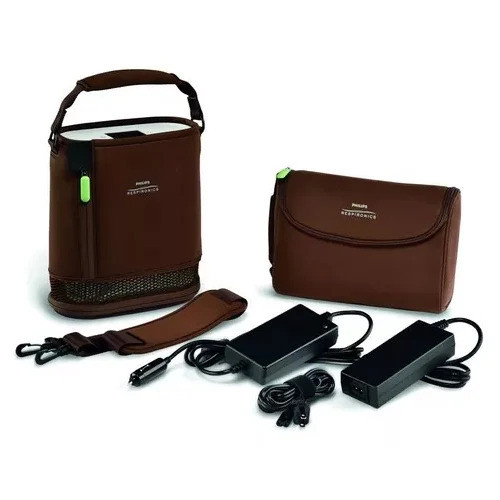
Service network: SimplyGo Mini uses the same Philips Respironics India service infrastructure as the Everflo and SimplyGo. Portable-specific spares — batteries, carrying cases, sieve cartridges — have longer lead times than stationary spares (2–4 weeks typical) because they are imported per order rather than stocked in India. The 2-year warranty on the machine and 3 months on battery per the published description is consistent with global Philips portable warranty terms.
The Indian online-vs-hospital channel price gap on portables is narrow — typically sub-10% — and hospital channels often do not carry current-gen portables at all. The Mini is generally an online-dealer purchase. Ask about the availability and price of a spare battery at purchase time — retrofit pricing on Philips portable batteries is often 25–30% higher than the initial-purchase add-on price.
Verdict
The Philips SimplyGo Mini is the strongest pulse-only portable concentrator with active Indian distribution for buyers who value weight, FAA approval, and Philips service depth. It is not the quietest or the longest-running battery in its class — the G5 and Freestyle Comfort 5 both edge it on those axes — but it is the right buy for a buyer who values an established Indian service network over an incremental battery spec.
Score it 7.8 out of 10. Points off for the 52 dB sound level (the weakest spec in the premium pulse-only segment), the 4.5-hour base battery that is shorter than the G5’s 6.5 hours, and the pulse-only ceiling that rules out continuous-flow prescriptions. For a pulse-flow-compatible patient at settings 1–3 who travels regularly within a 10,000 ft altitude envelope, this remains a very defensible premium portable buy in the Indian market.