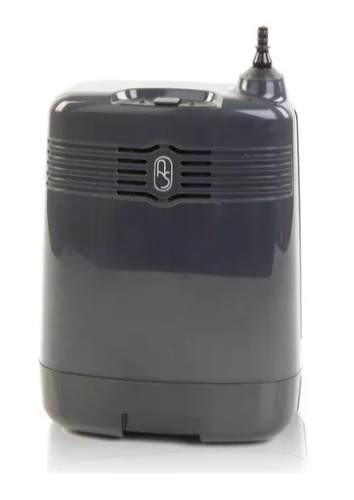
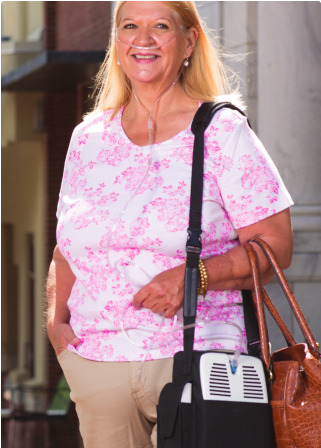
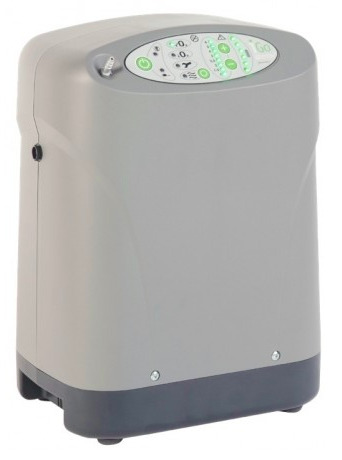
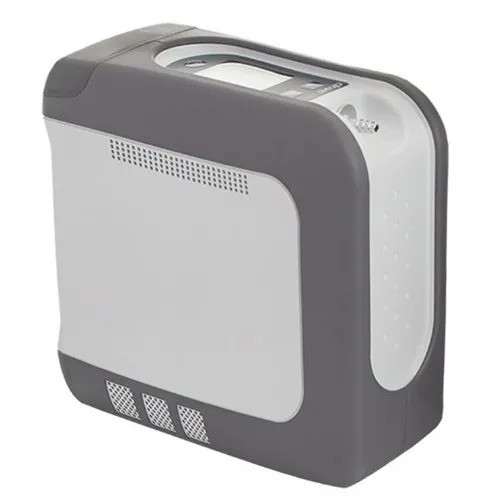
Airsep Freestyle 3
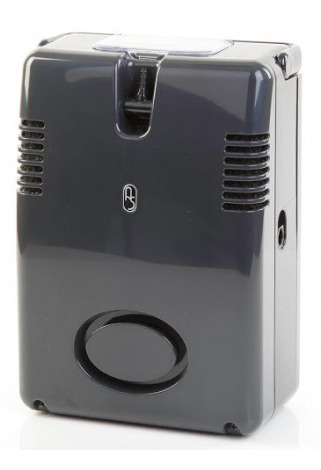
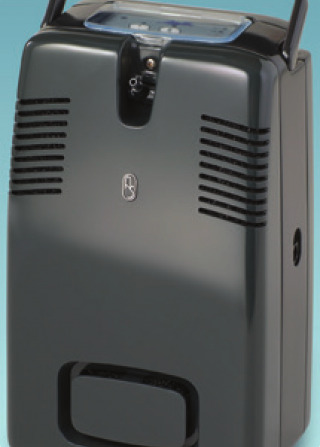
Key features
- Purity 90-95%
- Type Portable (Battery-powered)
- Pulse Flow 1-3Pulse setting
- mL dose 8.75mL
- Weight 2kg
- Oxygen Purity Indicator (OPI) No
Specifications
| Purity | 90-95% |
|---|---|
| Type | Portable (Battery-powered) |
| Pulse Flow | 1-3Pulse setting |
| mL dose | 8.75mL |
| Weight | 2kg |
| Battery backup (at 2 pulse setting) | 2.5hours |
| Recharge time | 4hours |
| Backup with external battery pack | 10hours |
| Sound level | 41db |
| Dimensions | 8.6H x 6.1W x 3.6Dinch |
| Operating altitude | 12000feet |
|---|---|
| Loss of Power Alarm | Yes |
| System Malfunction Alarm | Yes |
| No Flow Alarm | Yes |
| Indian Voltage Model | Yes |
| Company Headquarters | USA |
| US FDA Approved | Yes |
| FAA Approved | Yes |
| CE Certified | Yes |
Pros and cons
PROS
- 12,000 ft operating altitude is the highest in the pulse-only POC class, covering Spiti village-level deployments
- 2 kg published weight is competitive with the Inogen One G4 (1.27 kg) and beats most active-SKU portables
- 41 dB published sound level is among the quietest POCs in any generation
- FAA approved and Indian Voltage Model — no step-down transformer, carry-on compliant
CONS
- Stock: Discontinued per manufacturer brochure and e-commerce product listings — parts and battery supply is closing
- No Oxygen Purity Indicator (OPI) — gap for unattended or travel use where sieve-bed contamination goes undetected
- 1–3 pulse setting range is narrow vs the 1–5 and 1–6 ranges that competing active SKUs offer
The Airsep Freestyle 3 is a pulse-flow-only portable oxygen concentrator at indicative retail ₹1,58,400 (varies by region/dealer), now listed as Discontinued per manufacturer brochure and e-commerce product listings. It was positioned in its active-SKU years as the lighter, lower-setting companion to the Airsep Freestyle 5, targeting patients on mild pulse-flow prescriptions (effective 1–3 setting range) who valued weight and quietness over broader setting coverage. At 2 kg published weight with a 41 dB sound level and 12,000 ft operating altitude, the Freestyle 3 genuinely stood out in its generation. In 2026, the discontinuation and the absent OPI narrow the buy profile significantly.
What the specs actually mean
Published purity is 90–95% — the standard envelope for pulse-flow PSA portables. The Freestyle 3 does not have an OPI per published technical details — the “Oxygen Purity Indicator (OPI)” field is empty. What it does have is a fuller alarm package than the Airsep Focus: loss of power, system malfunction and no-flow alarms are all flagged “Yes” in additional details. The no-flow alarm in particular catches a situation where the cannula becomes blocked or disconnected — a meaningful safety backstop even without OPI.
The 1–3 pulse setting range defines the prescribing envelope. A setting of 1 delivers the smallest pulse volume, 2 is the most common home-prescription setting, and 3 is the ceiling. Unlike the Focus’s fixed single-dose output, the Freestyle 3 titrates across three levels — but the ceiling at setting 3 limits it to relatively low effective oxygen demand. Above setting 3 effective need, the Airsep Freestyle 5 or Inogen G5 are needed.
The 8.75 mL mL dose is published in the key features — this is roughly half of the Eclipse 5’s low-end dose and just over half of the Focus’s 17.25 mL. At 20 breaths per minute, 8.75 mL per breath is an LPM-equivalent of about 0.18 LPM, which positions this clearly as a mild-prescription device.
The 2 kg weight is good but not class-leading. The Focus (1 kg, also discontinued) and the Inogen One G4 (1.27 kg, also discontinued) sit below it; the Inogen One G5 (2.6 kg) and Philips SimplyGo Mini (2.3 kg) sit above. Practically, 2 kg is inside the all-day-wearable envelope for most adults.
Battery backup at pulse setting 2 is a published 2.5 hours from the internal battery, extending to 10 hours with the external battery pack — the external-pack endurance is notably strong, better than the SimplyGo Mini’s 9-hour extended-battery rating. Recharge time is 4 hours, consistent with the Airsep portable line.
12,000 ft altitude — the unusual spec
The Freestyle 3 is rated to 12,000 ft (3,658 m) operating altitude — higher than any other currently-active POC in the Indian market except the SeQual Eclipse 5 (13,123 ft). 12,000 ft clears every major Indian hill-station destination including Auli (8,530 ft), Rohtang approach (up to ~13,000 ft at the pass), and the approach road to Leh up to just below the final mountain passes. For a specific travel profile — pilgrimage routes to Kedarnath area, Valley of Flowers treks, or domestic tourism to Auli / Munsiyari — the 12,000 ft rating is materially useful.
Who should buy it
The Freestyle 3 fits a very specific buyer: a patient on a mild pulse-flow prescription (setting 1–3 effective), who travels to high-altitude destinations above 10,000 ft, who is willing to operate a pulse-flow machine without OPI and compensate with SpO2 monitoring, and who has a parts and service pathway for a discontinued unit in writing. That buyer exists — the Indian pilgrimage trail includes several high-altitude destinations where the 12,000 ft rating is clinically meaningful — but it is a narrow audience.
For residual-stock buyers who specifically need the 12,000 ft altitude envelope and do not want the 8.3 kg weight of the SeQual Eclipse 5, the Freestyle 3 is the only pulse-only portable that crosses the 10,000 ft ceiling. The SeQual Eclipse 5 is 13,123 ft but much heavier; the active-SKU lightweights (SimplyGo Mini, G5) cap at 10,000 ft.
For households that already own an active-SKU home concentrator (say a Philips Everflo) and are looking for a small, lightweight, high-altitude-capable portable for occasional travel, the Freestyle 3 at ₹1,58,400 is defensible if inventory is available and service assurances are in writing.
Who shouldn’t
Anyone whose effective pulse-flow requirement is at setting 4 or 5 should not buy the Freestyle 3 — the 1–3 ceiling is a hard constraint. The Airsep Freestyle 5 (1–5, also discontinued) or active-SKU portables are required.
Anyone for whom OPI is clinically important should not buy any pulse-only portable without it — including the Freestyle 3. This is particularly relevant for patients in Indian coastal cities (Mumbai, Chennai, Kolkata) where sieve-bed contamination risk is higher, or for unattended overnight bedside use.
Anyone whose primary use case is urban mobility below 10,000 ft should buy an active-SKU portable (G5, SimplyGo Mini, Freestyle Comfort 5) instead of residual-stock Freestyle 3. The altitude advantage is only meaningful if you will actually be at altitude.
And anyone looking for a warranty-backed premium portable should not buy discontinued stock. A new-sale Inogen One G5 at ₹2,14,999 comes with 2-year manufacturer warranty on the machine; the Freestyle 3 at ₹1,58,400 comes with whatever the residual-stock dealer commits to in writing, which is generally much less.
How it compares to real alternatives
Freestyle 3 vs Inogen One G4
Both discontinued. G4: 1.27 kg, 1–3 pulse, 2.7 hours battery at pulse 2, 40 dB, 10,000 ft altitude, has loss-of-power / system-malfunction / no-flow alarms but no OPI, ₹2,11,200. Freestyle 3: 2 kg, 1–3 pulse, 2.5 hours at pulse 2 internal plus 10 hours external, 41 dB, 12,000 ft altitude, same alarm package, ₹1,58,400. Pick the G4 if weight is load-bearing (27% lighter) and altitude below 10,000 ft is adequate. Pick the Freestyle 3 if high-altitude (above 10,000 ft) travel is the primary use case and the price delta matters — Freestyle 3 is 25% cheaper.
Freestyle 3 vs Airsep Freestyle 5
Same manufacturer family. Freestyle 5: 2.8 kg, 1–5 pulse, 2 hours battery at pulse 2, 41 dB, 12,000 ft altitude, also Discontinued, ₹1,72,800. Pick the Freestyle 5 if settings 4–5 are needed; pick the Freestyle 3 if 1–3 are adequate and the 800 g weight saving matters.
Freestyle 3 vs Inogen One G5 (active SKU)
The G5 (In Stock, ₹2,14,999) is the currently-active premium pulse portable. G5: 2.6 kg, 1–6 pulse, 6.5 hours battery at pulse 2, 38 dB, has OPI, 10,000 ft altitude, active 2-year manufacturer warranty. Pick the G5 over the Freestyle 3 in almost every case — the only exception is a buyer who specifically needs the 12,000 ft altitude rating and accepts the discontinued-unit risk to get it.
Freestyle 3 vs SeQual Eclipse 5
Different weight tier. Eclipse 5: 8.3 kg, dual mode (pulse 1–9 + continuous 0.5–3 LPM), 5.4 hours at pulse 2, 40 dB, has OPI, 13,123 ft altitude, ₹2,87,040. Freestyle 3: 2 kg, pulse 1–3, 2.5 hours at pulse 2, 41 dB, no OPI, 12,000 ft altitude, ₹1,58,400. Pick the Eclipse 5 for genuinely demanding altitude or continuous-flow prescriptions that exceed the Freestyle 3’s pulse-only 1–3 ceiling. Pick the Freestyle 3 only if the 6.3 kg weight saving is load-bearing and altitude above 10,000 ft is specifically required.
Freestyle 3 vs Philips SimplyGo Mini
Active SKU premium alternative. SimplyGo Mini: 2.3 kg, 1–5 pulse, 4.5 hours base / 9 hours extended at pulse 2, 52 dB, has OPI, 10,000 ft altitude, ₹2,10,700, In Stock, Philips India service. Freestyle 3: 2 kg, 1–3 pulse, 2.5 hours base / 10 hours extended at pulse 2, 41 dB, no OPI, 12,000 ft altitude, ₹1,58,400, Discontinued. SimplyGo Mini wins on setting range (1–5 vs 1–3), base battery, OPI presence, active warranty and service; Freestyle 3 wins on weight (300 g less), sound (11 dB lower), altitude (2,000 ft more), extended-battery duration (10 vs 9 hours), and price. For most buyers the SimplyGo Mini is the correct pick in 2026 because the active-SKU support outweighs the spec differences.
Indian-market considerations
The Freestyle 3 is Indian Voltage Model per published additional details — tolerates 220V/50Hz directly. On the AC charging side, the concerns are identical to any portable: a small inline stabiliser (1 kVA, ₹1,500–2,500) for home charging in tier-2 cities with voltage variability is advisable, though the unit’s own AC adaptor has its own wide-input tolerance.
CDSCO approval status is not stated in the published key features or additional details for this SKU in the data we reviewed (CDSCO Medical Device Registry). Discontinued SKUs commonly have lapsed Indian registration; verify with the dealer before hospital-channel purchase.
Airsep (under CAIRE) has a thinner India service network than Philips Respironics or Inogen. For a discontinued SKU, the service situation is worse — specialised parts (batteries, sieve cartridges, pulse valves) have lead times that can stretch to 6–8 weeks because they are sourced from residual manufacturer inventory. For a patient who depends on the portable daily, this is a real risk. Ask for written parts-availability assurance and a replacement-battery quote at the time of purchase.
Online-vs-hospital channel price gap is wide for discontinued portables — hospital channels generally do not stock them. The ₹1,58,400 indicative retail is a historical benchmark; current market pricing on residual inventory can swing ±15–20%.
Clinical workflow considerations
For patients on pulse-flow prescriptions, the transition from a home stationary (Everflo, Visionaire 5) to a portable (Freestyle 3 or any pulse-only unit) requires a titration visit with the pulmonologist. Pulse-setting numbers do not map linearly to LPM equivalents — a patient prescribed 2 LPM continuous may need anywhere from pulse setting 2 to pulse setting 4 depending on breath pattern. The Freestyle 3’s 1–3 ceiling therefore only works for patients titrated at or below setting 3. Before purchasing the Freestyle 3 as a travel companion to a home stationary, confirm with the prescribing physician that setting 3 is adequate — if the patient’s effective need is setting 4 or above, a different portable is required.
The no-flow alarm — present on the Freestyle 3 per published additional details — is specifically valuable during air travel where cabin vibration, turbulence, or boarding-related cannula disturbance can cause momentary disconnections. The alarm is audible in a seated position and is generally loud enough to alert a sleeping patient, though individual sensitivity varies. Combined with the 2.5-hour base battery, an in-flight routine of one battery rotation per 2.5 hours plus a backup battery is the practical playbook for most domestic Indian flights.
Verdict
The Airsep Freestyle 3 is a historically well-specified pulse-only portable whose 12,000 ft altitude rating and 2 kg weight made it a sensible niche buy in its active-SKU years. In 2026, the discontinuation status plus the absence of OPI narrow the buy profile to residual-stock buyers who specifically need the high-altitude envelope and are willing to accept the service-and-parts risk.
Score it 6.4 out of 10. Points off for the discontinued status, the missing OPI, and the narrow 1–3 pulse setting range. Points on for the 12,000 ft altitude envelope and the genuinely light 2 kg weight. For a Kedarnath/Auli/Munsiyari-class travel use case with a mild pulse prescription, with written parts and service commitments from the dealer, this can still be a defensible buy. For everyone else, the active-SKU Inogen One G5 is the right portable to buy in 2026.