Airsep Focus
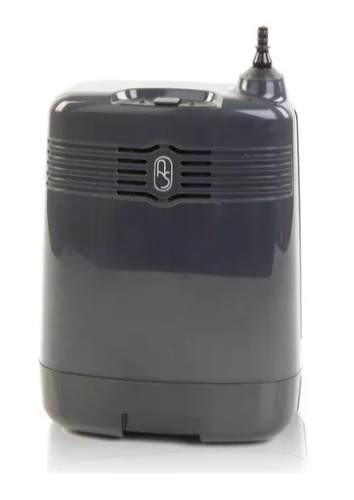
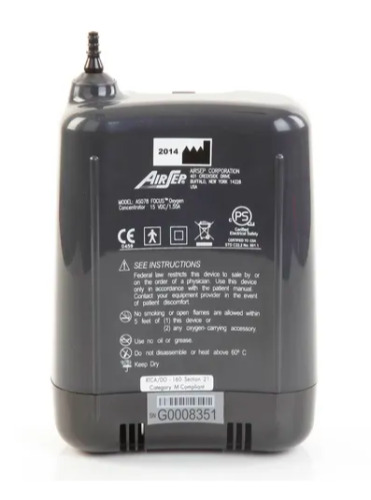
Key features
- Purity 90-95%
- Type Portable (Battery-powered)
- mL dose 17.25mL
- Weight 1kg
- Oxygen Purity Indicator (OPI) No
- Battery backup (at 2 pulse setting) 3hours
Specifications
| Purity | 90-95% |
|---|---|
| Type | Portable (Battery-powered) |
| mL dose | 17.25mL |
| Weight | 1kg |
| Battery backup (at 2 pulse setting) | 3hours |
| Recharge time | 4hours |
| Backup with external battery pack | 7hours |
| Sound level | 42db |
| Dimensions | 6.4H x 4.8W x 2.5Dinch |
| Operating altitude | 10000feet |
|---|---|
| System Malfunction Alarm | Yes |
| Indian Voltage Model | Yes |
| Company Headquarters | USA |
| US FDA Approved | Yes |
| FAA Approved | Yes |
| CE Certified | Yes |
Pros and cons
PROS
- 1 kg published weight is the lightest of any POC ever sold in India — a category outlier
- 42 dB published sound level is below the 45 dB threshold that many bedside users consider the quiet cut-off
- FAA approved and 10,000 ft operating altitude covers the full Indian hill-station circuit below Leh
- Indian Voltage Model per manufacturer brochure and e-commerce product listings — no step-down transformer required
CONS
- Stock: Discontinued — current inventory is residual, and parts supply is deteriorating rapidly
- No Oxygen Purity Indicator (OPI) — the machine cannot alarm on sieve-bed contamination, a serious gap for a travel unit
- 17.25 mL single-dose output is low — unsuitable for most patients above equivalent pulse setting 2
The Airsep Focus was, at one point, the lightest portable oxygen concentrator in the world — a 1 kg unit that at ₹1,63,200 indicative retail (varies by region/dealer) made ultra-discreet oxygen delivery possible for patients who would otherwise not have carried oxygen at all. It is now listed as Discontinued per manufacturer brochure and e-commerce product listings, and the Indian stock that remains is residual inventory. It carries FDA approval, FAA approval, and CE certification per the published additional details; it is an Indian Voltage Model; and it does not have an Oxygen Purity Indicator (OPI), a gap that matters more on a travel unit than on a home machine.
What the specs actually mean
The 90–95% published oxygen purity range is standard for a small-form-factor PSA portable. What is non-standard is the absence of an OPI. Without an oxygen purity indicator, the machine cannot alarm the user if its sieve beds become contaminated — and for a device used in Indian monsoon-humidity coastal cities or high-pollution winter Delhi, that is a real gap. The user’s SpO2 monitor becomes the purity backstop, which is an uncomfortable place for a travel unit to sit.
The 1 kg weight is the defining spec, and there is no peer in the Indian market at that weight. The Inogen One G4 (discontinued) was 1.27 kg; the SimplyGo Mini is 2.3 kg; the Inogen One G5 is 2.6 kg. 1 kg is the weight of a large smartphone plus a water bottle — genuinely wearable as a neck-strapped unit for extended periods without fatigue. For a patient who would not otherwise carry oxygen — a mobile older adult embarrassed about visible medical equipment, or a patient with advanced osteoporosis who cannot shoulder anything heavier — the Focus filled a niche nothing else filled.
The 17.25 mL dose is the single pulse volume delivered per breath at the machine’s output setting. This is substantially lower than the ~16–192 mL range of the SeQual Eclipse 5 or the 16 mL per pulse of the SeQual Equinox at setting 1. In LPM-equivalent terms at 20 breaths per minute, 17.25 mL / breath works out to roughly 0.35 LPM — meaning the Focus is clinically useful only for the mildest end of the pulse-flow prescribing range. At higher effective flow requirements, the Focus simply cannot deliver enough oxygen per breath.
Battery backup at pulse setting 2 is published at 3 hours from the internal battery and 7 hours with the external battery pack. Recharge time is 4 hours — slower than the G5’s 3 hours and slightly slower than most contemporary portables.
The 42 dB published sound level is genuinely quiet — under the 45 dB threshold that many bedside users consider the line for “quiet enough to sleep with.” This is one of the Focus’s better specs, and it partially offsets the gap in OPI.
The altitude and certifications story
10,000 ft operating altitude covers the full Indian hill-station circuit from Shimla through to Nainital, Mussoorie, and Darjeeling. FAA approval means carry-on legal for most international airlines, and the Indian Voltage Model designation means no step-down transformer for AC charging.
The certifications are genuine — FDA, FAA, CE all flagged “Yes” in the published additional details. The gap is not on paperwork; it is on clinical capability (single dose volume) and on indicator robustness (no OPI).
Who should buy it
Realistically, almost no one in 2026, now that stock is listed as Discontinued. The narrow residual fit is a patient whose prescription calls for very low pulse-flow output, whose primary barrier to carrying oxygen is weight or visibility rather than battery life, and who has access to residual-inventory units plus a parts-and-service pathway in writing.
That patient profile exists — late-stage respiratory disease with very low effective oxygen demand, social context where a visible oxygen bag is a daily barrier, a caregiver willing to monitor SpO2 manually to compensate for the missing OPI. For that patient, the 1 kg weight is genuinely irreplaceable, and the Focus is defensible.
For everyone else, the discontinuation and the absence of OPI pull this off the recommendation list. A lightly-specced buyer who thinks the Focus is a general-purpose portable will be disappointed — 17.25 mL per dose is not enough for most prescriptions.
Who shouldn’t
Anyone whose effective oxygen requirement exceeds roughly pulse-equivalent setting 2 should not buy the Focus — the 17.25 mL single-dose output is the ceiling. The Airsep Freestyle 3 (1–3 settings, also discontinued) and the Inogen One G4 (1–3 settings, also discontinued) cover broader output ranges in similar weight classes.
Anyone for whom OPI is clinically important should not buy the Focus. That includes any patient in a coastal Indian city (Mumbai, Chennai, Kolkata, Kochi, Visakhapatnam) where sieve-bed contamination risk is higher, and any caregiver who does not have the training or bandwidth to compensate via frequent SpO2 monitoring.
Anyone considering the Focus as a new-sale purchase at ₹1,63,200 should compare it with the currently-shipping Inogen One G5 at ₹2,14,999. The G5 is 2.6 kg heavier but has OPI, 6.5-hour battery at pulse 2, and is an active-SKU machine with active service coverage. The weight premium buys a meaningfully safer device.
Anyone whose buy is motivated by a thin-margin price discount on the Focus should walk away. A discontinued portable without parts pathway is not a bargain — it is a time-limited appliance.
How it compares to real alternatives
Focus vs Inogen One G4
The Inogen One G4 (also Discontinued, ₹2,11,200 indicative retail) is the closest historical peer. The G4 is 1.27 kg (27% heavier than Focus), 1–3 pulse settings (vs Focus’s fixed output), 2.7 hours battery at pulse 2, 40 dB sound, and includes alarms for loss of power, system malfunction and no-flow — a more complete alarm package than the Focus. Pick the G4 over the Focus if pulse settings above effectively 1 are needed and both are discontinued; pick the Focus if weight is genuinely the only thing that matters.
Focus vs Airsep Freestyle 3
The Airsep Freestyle 3 (also Discontinued, ₹1,58,400 indicative retail) is in the same manufacturer family. Freestyle 3 is 2 kg (double the Focus), 1–3 pulse settings, 2.5 hours battery at pulse 2, 41 dB sound, 12,000 ft altitude, and has a more complete alarm package. Pick the Freestyle 3 over the Focus if you want settings 2–3 and altitude above 10,000 ft; pick the Focus only if 1 kg is the single decision criterion.
Focus vs Philips SimplyGo Mini (active SKU)
The SimplyGo Mini (active, In Stock, ₹2,10,700) is the currently-shipping pulse-only portable in the premium segment. Mini is 2.3 kg, 1–5 pulse settings, 4.5 hours battery at pulse 2, 52 dB, has OPI, 10,000 ft altitude, FAA approved, Philips service coverage. Pick the SimplyGo Mini over the Focus in 2026 unless the 1 kg weight is genuinely irreplaceable — in every other respect (output range, battery, OPI, stock, service) the Mini is the safer buy at a 30% price premium.
Focus vs Inogen One G5 (active SKU)
The G5 is the currently-active benchmark. G5: 2.6 kg, 1–6 pulse, 6.5 hours at pulse 2, 38 dB, has OPI, full alarm suite, 10,000 ft altitude, 2-year manufacturer warranty, ₹2,14,999. Focus: 1 kg, fixed 17.25 mL dose output, 3 hours at pulse 2, 42 dB, no OPI, system-malfunction alarm only, 10,000 ft altitude, no active warranty, ₹1,63,200. The G5 is 2.6x heavier but wins on every other comparable axis: titratable pulse settings, longer battery, quieter operation, OPI, complete alarm package, active warranty, active stock. Pick the G5 unless 1 kg is the overriding decision criterion.
Indian-market considerations
The Focus is Indian Voltage Model per published additional details. The AC input tolerates 220V/50Hz directly. The primary Indian-market issue is not voltage — it is service coverage for a discontinued unit. Airsep’s India service footprint was always thinner than Philips’s, and the discontinuation compresses it further. Any buyer of residual stock should insist on written confirmation of parts availability and service turnaround from the dealer before purchase.
CDSCO approval status is not stated in the published key features or additional details for this SKU in the data we reviewed (CDSCO Medical Device Registry). For a discontinued unit, the registration state may also have lapsed — a separate check with the dealer is advisable.
Online-vs-hospital channel price gap is wider than normal for discontinued portables because hospital channels generally do not stock them. Almost all residual-inventory sale is through online dealers or specialised channels. The ₹1,63,200 indicative retail is a historical pricing benchmark; current market pricing on residual stock can vary ±20%.
Battery replacement is the most common portable-unit service event, and Airsep batteries in India are harder to source than Philips or Inogen batteries — expect 3–6 week turnaround for replacement, and verify spare battery availability at time of purchase.
Practical deployment notes
The Focus’s 1 kg form factor enables use cases that no heavier portable can support — neck-strap wear for short durations, belt-clip wear with a light shirt, and genuinely pocket-adjacent stowage in a jacket. In Indian urban contexts, this means the Focus can be worn on a market visit or a hospital OPD trip without signalling oxygen dependence the way a larger shoulder-slung unit does. For patients whose daily social contexts make visible medical equipment a real barrier — older relatives at family gatherings, working-age adults at offices that aren’t fully accessibility-aware — the discretion afforded by the 1 kg weight has non-spec-sheet value.
Against this, the 17.25 mL fixed dose means the Focus does not scale with changing prescriptions. A patient whose oxygen requirement increases over time (progressive disease, seasonal exacerbations, post-infection recovery) cannot titrate up on the Focus — they need a new portable. For short-term use cases or stable mild prescriptions, that is acceptable; for progressive disease trajectories it is a structural limitation.
The AC charging approach is a compact standard adaptor — easy to carry, operates on any Indian outlet, compatible with most generic-replacement cables if the original fails. Travel chargers and car-adaptor chargers for the Focus are harder to find in India than for the Inogen or Philips portables, but they do exist through residual-stock dealers.
Verdict
The Airsep Focus was a category-defining product — the only 1 kg portable oxygen concentrator ever widely sold in India — but its discontinued status, absence of OPI, and single-dose output ceiling put it in a very narrow recommendation slot for 2026 buyers.
Score it 6.5 out of 10. Points off for the discontinuation, the missing OPI, the 17.25 mL ceiling on output, and the eroding parts pathway. Points on for the unique weight and the genuine clinical niche it served. If you are a residual-stock buyer who specifically needs 1 kg and nothing else, and you have written parts and service assurances, this can still be a defensible purchase. For everyone else, the active-SKU Philips SimplyGo Mini or Inogen One G5 is the right portable to buy in 2026.
Related products
Airsep Freestyle 3
Portable (Battery-powered)₹158,400
Airsep Freestyle 5
Portable (Battery-powered)₹172,800
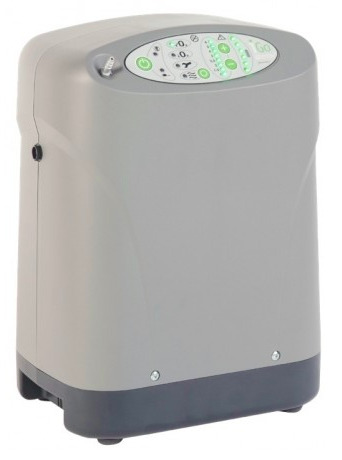
Devilbiss iGo
Portable (Battery-powered)₹120,000₹211,200
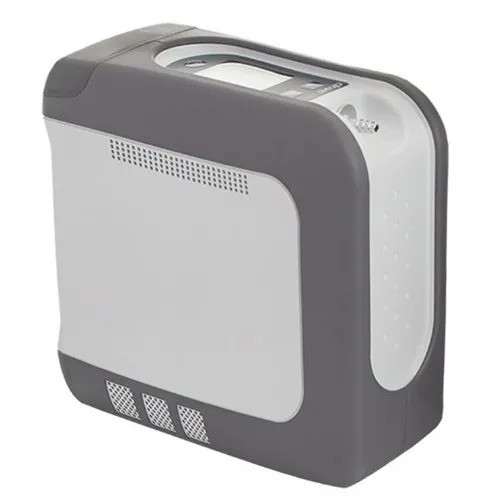
Devilbiss iGo2 Portable Oxygen Concentrator
Portable (Battery-powered)₹172,780.80₹225,600