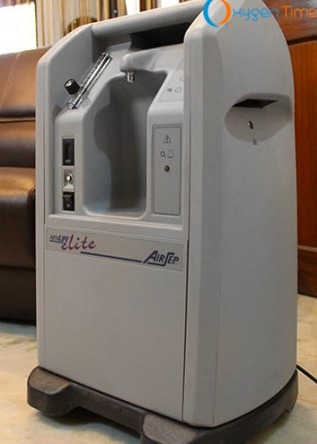
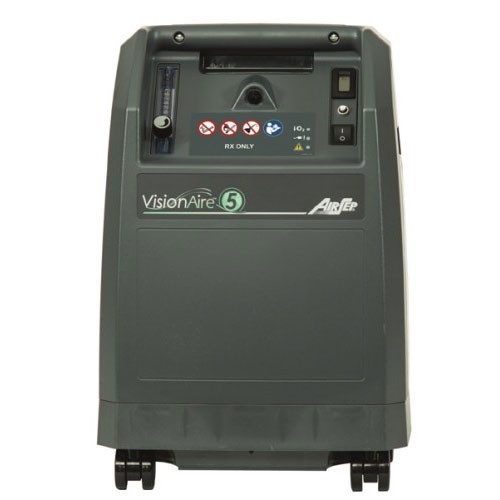
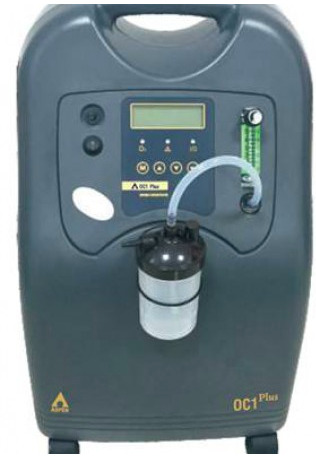
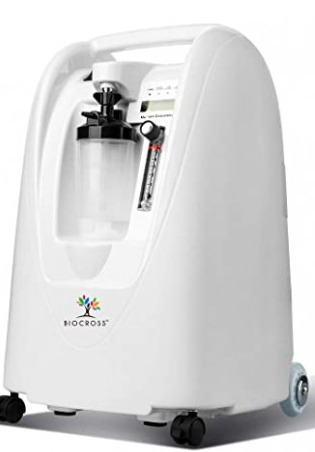
OxyPure 5 LPM Oxygen Concentrator
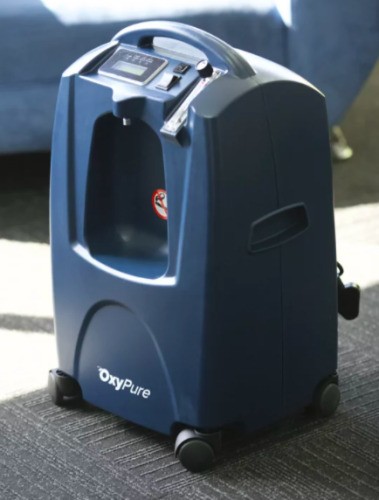
Key features
- Purity 90-96%
- Type Home Stationary
- Continuous Flow 1-5LPM
- Weight 15.2kg
- Oxygen Purity Indicator (OPI) No
- Power consumption 350watts
Specifications
| Purity | 90-96% |
|---|---|
| Type | Home Stationary |
| Continuous Flow | 1-5LPM |
| Weight | 15.2kg |
| Power consumption | 350watts |
| Sound level | 40db |
| Outlet pressure | 8.5psi |
| Loss of Power Alarm | Yes |
|---|---|
| Company Headquarters | India |
Pros and cons
PROS
- 40 dB noise spec is class-leading for 5 LPM stationary — bedroom-placement viable
- 15.2 kg chassis is the lightest in sub-Philips Indian market
- 2-year manufacturer warranty declared in product description
- India-assembled (Sanrai) with declared local service network
- 90-96% oxygen purity claim across full flow range
CONS
- US FDA, FAA, CE rows all blank on spec sheet
- Indian Voltage Model row is blank (not declared Yes)
- System-malfunction and no-flow alarms not declared
- 1 LPM flow floor excludes paediatric 0.5 LPM prescriptions
- 350 W power draw is higher than Oxyflow's 300 W at similar price
The OxyPure 5 LPM is the Sanrai brand’s quieter sibling to the Oxyflow 5 LPM. Both are India-assembled 5 LPM stationary concentrators, both priced almost identically (OxyPure ₹57,590, Oxyflow ₹57,600), both at the 90-96% purity claim. The OxyPure differentiates on two specific specs: lower weight (15.2 kg vs 16 kg) and dramatically lower noise (40 dB vs 50 dB). The trade-off is in the compliance section — where Oxyflow declares US FDA and CE approvals, the OxyPure spec sheet leaves both blank. For an Indian buyer choosing between these two Sanrai units, the decision turns on whether quiet operation or declared regulatory compliance matters more.
What the specs actually mean in Indian homes
The OxyPure 5 LPM delivers 90-96% oxygen purity at a continuous flow range of 1 to 5 LPM. The 96% ceiling matches the Oxyflow and is marginally tighter than the typical 95% class standard. The 1 LPM floor is identical to Oxyflow, and excludes 0.5 LPM paediatric and lowest-dose adult nocturnal prescriptions.
Weight is 15.2 kg — the lightest 5 LPM in the Indian sub-Philips mainstream market. Lighter than Keyhub 5 at 16 kg, Oxyflow at 16 kg, Companion 5 at 16.3 kg, Fitmate 5 at 18 kg. Comparable to Philips EverFlo at 14 kg. One-person moves up stairs are manageable with the 15.2 kg chassis — a meaningful quality-of-life factor for Indian flats with limited elevator access.
Power consumption of 350 W is competent but not class-leading. Lower than 390 W units (Eloxy, Equinox), higher than 300 W leaders (Oxyflow, Oxybliss). At Indian domestic tariff of ₹8-10 per kWh, 350 W continuous is ₹67-84 per day or ₹20,500-25,500 per year at 12 hours/day. Over a 3-year service life this is ₹60,000-75,000 in electricity. Interesting arithmetic: OxyPure at 350 W costs roughly ₹8,000 more than Oxyflow at 300 W in 3-year electricity, which is meaningful against the near-identical purchase price.
Noise at 40 dB is the OxyPure’s distinctive strength. This matches the brochure claims of Eloxy, Equinox, and Oxybliss (all 40 dB) and is class-leading. 40 dB is below conversational volume and enables bedroom placement for all but the lightest sleepers. The OxyPure description text explicitly calls this out: “the sound emitted by the device is 40 decibels and is one of the quietest oxygen concentrators available.” For an Indian patient who places the machine beside the bed at night, 40 dB versus 48-55 dB is the difference between sleeping through the machine’s operation and being kept awake by it.
Outlet pressure of 8.5 psi is slightly higher than Oxyflow’s 7.3 psi. Both are adequate for standard cannula use; neither matches Keyhub at 13 psi for extended-tubing headroom.
Dimensions are not fully declared on the spec sheet (height/width/depth row is blank) — a minor but unusual brochure gap. The product description mentions the machine is one of the quietest available but does not give physical footprint.
Compliance: US FDA blank. FAA blank. CE blank. Loss of Power Alarm declared Yes. System Malfunction Alarm blank. No Flow Alarm blank. Indian Voltage Model blank (NOT declared Yes — this is notable). Company Headquarters: India.
The Indian Voltage Model blank is unusual. Most Chinese and Taiwan imports specifically declare Indian voltage compatibility; for an India-assembled unit to leave this row blank is either a brochure oversight or a signal that the unit requires an external voltage stabiliser as mandatory setup (not optional). Buyers should specifically ask Sanrai whether the unit auto-adjusts for 180-260 V input voltage or whether it requires a regulated 220 V supply. The answer determines whether a ₹4,000 stabiliser is optional or required.
The US FDA blank on OxyPure versus the US FDA Yes on Oxyflow is the key compliance difference. Sanrai produces both units; the FDA approval is specific to the Oxyflow model (possibly a different product registration number or a different internal revision that went through FDA clearance). The OxyPure has not been through that process, or has not had its status declared.
Who should buy the OxyPure 5 LPM
The OxyPure 5 LPM suits a buyer who prioritises bedroom-placement noise (40 dB is the specific strength), who values lightweight chassis for in-home mobility, and who has a local Sanrai dealer for service. It fits patients who use oxygen at night during sleep, where the machine sits 3-6 feet from the bed and noise determines whether the therapy is tolerable. It also fits patients or caregivers who will move the machine between rooms daily — 15.2 kg is genuinely one-person portable. Two-year warranty from Sanrai (declared in the description) is more generous than the typical 1-year from Chinese imports and suggests manufacturer confidence in durability.
Who should not buy the OxyPure 5 LPM
Buyers who specifically need US FDA or CE declaration — use Oxyflow (same manufacturer, FDA-declared) or Yuwell 7F (CE-declared). Buyers in power-unstable environments where the blank Indian Voltage Model row is a concern — verify with Sanrai before purchase. Paediatric users on 0.5 LPM prescriptions — the 1 LPM floor does not serve. Users who need full alarm coverage for unsupervised or sleeping patient monitoring — the blank no-flow alarm is a gap. Buyers looking for lowest total cost over 3 years — Oxyflow at 300 W saves ₹8,000 in electricity over OxyPure’s 350 W at nearly identical purchase price.
How it compares: OxyPure vs Oxyflow vs Yuwell 7F vs Oxybliss
OxyPure 5 vs Oxyflow 5 LPM (Sanrai) — Near-identical price (₹57,590 vs ₹57,600). OxyPure is 0.8 kg lighter (15.2 vs 16 kg), 10 dB quieter (40 vs 50 dB), but Oxyflow has US FDA and CE declared while OxyPure has both blank. Oxyflow also has 300 W power (50 W lower than OxyPure) and declared Indian Voltage Model Yes. Verdict: OxyPure wins for noise and weight; Oxyflow wins for compliance, power efficiency, and voltage-tolerance declaration. For noise-priority buyers OxyPure; for everyone else Oxyflow.
OxyPure 5 vs Yuwell 7F — Yuwell 7F at ₹45,000-55,000 (₹2,600-12,600 cheaper). Yuwell has CE declared, full alarm coverage, Chinese national medical device registration, Indian service network in 40+ cities, 14-15 kg weight (comparable), 43 dB noise (3 dB louder than OxyPure), 300-350 W power. Yuwell wins on alarm coverage and service network; OxyPure wins on noise (40 vs 43 dB) and manufacturing origin (India vs China). At lower price Yuwell is generally the rational choice. Verdict: Yuwell 7F wins for most buyers; OxyPure wins for noise-priority buyers who prefer India-assembled.
OxyPure 5 vs Oxybliss 5 LPM — Oxybliss at ₹36,480 (₹21,110 cheaper). Oxybliss is Taiwan-assembled, has 40 dB noise (identical), 300 W power (50 W lower), similar weight profile, but has all compliance and alarm rows blank. OxyPure has loss-of-power declared plus India manufacturing plus 2-year warranty. The ₹21,110 price gap buys India-assembled, declared loss-of-power alarm, and 2-year vs 1-year warranty. Verdict: Oxybliss wins for lowest up-front cost; OxyPure wins for manufacturer presence and warranty.
Indian-market considerations
Sanrai’s Indian headquarters and declared service network are meaningful differentiators. For tier-2 city buyers (Pune, Ahmedabad, Hyderabad, Jaipur, Lucknow, Bhubaneswar), a product with declared Indian manufacturer presence typically has better service reach than dealer-only imported brands. Sanrai products are distributed through a structured network; spare parts turnaround is 1-2 weeks for most standard components. This compares favourably to Chinese imports at 4-8 weeks.
The blank Indian Voltage Model row is the specific question buyers should resolve before purchase. If the unit requires a regulated 220 V input (which would be unusual for an India-assembled medical device), a 1 kVA AVR stabiliser is mandatory (₹3,000-4,500). If the unit auto-adjusts across 180-260 V, the stabiliser is optional for voltage-stable metro locations but still recommended for tier-2 cities.
Power infrastructure: 350 W needs 1 kVA AVR stabiliser for tier-2 city power supply. A 1 kVA inverter UPS with 30-minute backup is ₹10,000-15,000.
CDSCO notification: not explicitly declared in public OxyPure listing. Sanrai as an India-based manufacturer-importer typically holds relevant registrations; buyers should request notification number (CDSCO).
Warranty at 2 years (declared in product description text) is better than the 1-year standard on imported competitors. Sanrai’s Indian presence makes this warranty practically enforceable, unlike 2-3 year offers from dealer-only importers where the dealer may not be in business by year two.
Verdict
The OxyPure 5 LPM is the noise-and-weight-optimised variant in the Sanrai lineup, and on those two specs it is class-leading. The 40 dB noise claim and 15.2 kg chassis make it the best-positioned 5 LPM for bedroom-placement nocturnal use in the sub-Philips price bracket. The compliance gaps — blank US FDA, blank CE, and notably blank Indian Voltage Model — are the price of that optimisation compared to its own sibling Oxyflow which has the certifications but slightly worse noise and weight. For Indian buyers where sleep quality is the binding constraint (patient on nocturnal oxygen who needs to sleep through the machine’s operation), the OxyPure is the strongest pick in the ₹55,000-60,000 bracket. For every other constraint, the Oxyflow or Yuwell 7F is the rational choice. The 2-year warranty and Indian manufacturer presence add genuine value. Score: 6.2 out of 10.