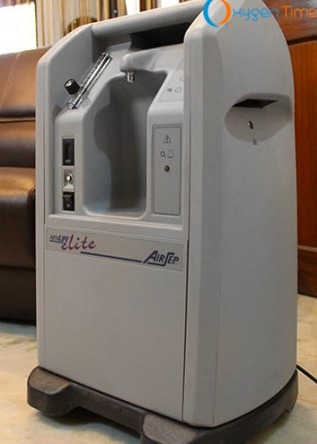
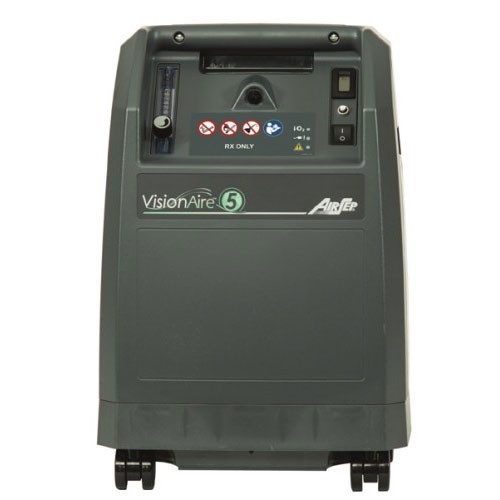
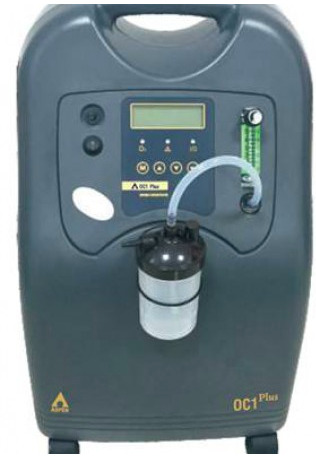
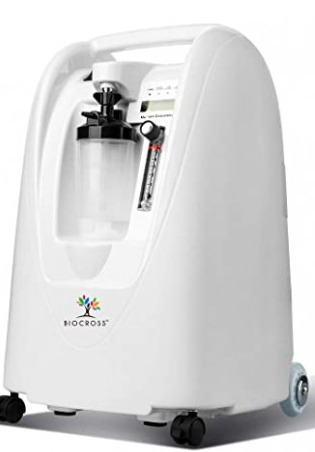
Oxymed Mini 3 Litres
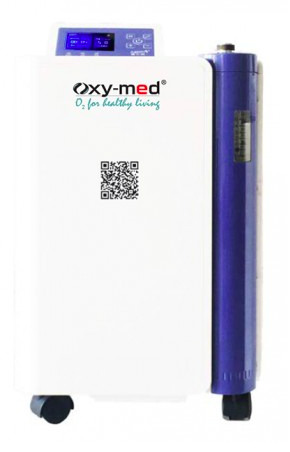
Key features
- Purity 90-95%
- Type Home Stationary
- Continuous Flow 1-3LPM
- Weight 13.9kg
- Oxygen Purity Indicator (OPI) No
- Power consumption 390watts
Specifications
| Purity | 90-95% |
|---|---|
| Type | Home Stationary |
| Continuous Flow | 1-3LPM |
| Weight | 13.9kg |
| Power consumption | 390watts |
| Sound level | 45db |
| Dimensions | 20.27H x 12.36W x 9.44Dinch |
| Operating altitude | 7500feet |
| Outlet pressure | 10psi |
| Loss of Power Alarm | Yes |
|---|---|
| System Malfunction Alarm | Yes |
| Indian Voltage Model | Yes |
| Company Headquarters | China |
Pros and cons
PROS
- 13.9 kg chassis is light for daily in-home handling
- Low 390 W power draw manageable on a 1 kVA UPS
- 45 dB sound claim is bedroom-friendly
- Same Oxymed dealer and service footprint as the current 5 LPM line
CONS
- Discontinued — no fresh warranty sales, parts eventually constrained
- No oxygen purity indicator (OPI) or purity analyser on this SKU
- No CE marking and no US FDA listing on record — CDSCO registration is the applicable Indian regulatory gate; also listed as China-origin assembly
The Oxymed Mini 3 Litres is a 3 LPM home-stationary concentrator rated for 90–95% oxygen purity across a 1–3 LPM continuous flow range, 13.9 kg chassis weight, 45 dB sound, 390 W power consumption and a 7,500 ft operating altitude. The manufacturer brochure and e-commerce product listings we reviewed now mark this SKU as discontinued, with indicative pricing of roughly ₹57,600 MRP and a current price of ~₹60,000 at the point listings were captured — prices that no longer reflect fresh sales. In 2026 the only realistic buying route for this specific model is the used market, which changes the review entirely: we are not recommending or discouraging a current purchase, we are explaining what the unit is worth to a buyer who encounters one secondhand.
What the specs mean
The spec sheet has five load-bearing items. Three of them read well for a low-flow home prescription; two of them are where this SKU loses to its own 5 LPM sibling.
1–3 LPM continuous flow at 90–95% purity. For adult patients on a stable long-term oxygen therapy prescription in the 1–2 LPM band (typical for COPD on home O₂), a 3 LPM machine is the right category — it runs the compressor at a lower duty cycle than a 5 LPM unit set to 2 LPM, which in principle extends compressor life and reduces noise. The 90–95% purity window is the standard ISO 80601-2-69 therapeutic range on the low end (ISO 80601-2-69). But the spec sheet does not commit to “purity at all flow rates” the way the current Oxymed Mini 5 LPM does, and there is no OPI on this model — so the end user has no visual indication if purity drifts below therapeutic.
13.9 kg, 20.27 × 12.36 × 9.44 inches. Identical chassis to the 5 LPM sibling, so the household handling experience is the same — light enough to move between rooms, narrow enough to fit beside a bedside cabinet. This is the single strongest point of the SKU.
45 dB sound level. Bedroom-friendly on paper. The same compressor class as the 5 LPM unit is used, running at a lower effective load, so noise should be at or slightly below the 45 dB claim in practice. This is the right machine for overnight use in shared sleeping quarters — in the abstract.
No oxygen purity indicator, no purity analyser. The Oxymed Mini 3 Litres spec sheet leaves the OPI and Oxygen Purity % Analyser fields blank. That is a real downgrade from the current 5 LPM version, which ships with both. Without an OPI, the household will not know if sieve beds have degraded and the machine is silently delivering sub-therapeutic oxygen — and sieve degradation is a real 24-to-36-month failure mode on two-bed PSA concentrators. The “No Flow Alarm” field on the additional-details table is also blank.
390 W power consumption, 10 psi outlet, 7,500 ft altitude. These are identical or nearly identical to the 5 LPM sibling. The power line is consistent with a ~1 kVA UPS bridging scheme, and the altitude rating covers Shimla / Manali but not Ladakh.
The company-headquarters field is listed as “China” on this SKU (the 5 LPM Mini is “India”) and the device carries neither CE marking nor US FDA listing on record; CDSCO registration is the applicable Indian regulatory gate. We do not read “company headquarters: China” as a negative per se — many Oxymed Mini-class devices are assembled in China from PSA modules common to multiple brands — but it is worth noting the paperwork gap: on the current Mini 5 LPM the headquarters field reads India, and on this discontinued 3 LPM model it reads China, which suggests a different assembly line or a different generation of the SKU.
Who should buy
Only one realistic buyer profile in 2026: a used-market shopper with a stable low-flow prescription and a very specific budget. If an Oxymed Mini 3 Litres turns up at a dealer consignment or through a family handover at ~₹15,000–20,000 with 6–12 months of visible service history, it can serve a stable 1–2 LPM home prescription adequately for the remaining life of the compressor — typically another 18–36 months of continuous use before sieve replacement or compressor overhaul is economic.
Rental houses may still hold this model in their back-line fleet for short-duration rentals (1–3 months post-discharge) where installing the current 5 LPM Mini is not justified. For that use it is fine — the rental operator absorbs the maintenance tail.
There is effectively no reason for a new buyer to seek this SKU out at full price in 2026. If your prescription is 1–2 LPM, the current-production Oxymed Mini 5 LPM (at 1–5 LPM) is the correct purchase — set it to 2 LPM and you have a larger safety margin, OPI, a purity analyser and three-year warranty coverage for a marginal price premium.
Who shouldn’t
Any buyer being quoted MRP prices for a new unit. If a dealer is still listing this SKU at ₹57,600 MRP in 2026, walk away. The equivalent budget buys a current-production Oxymed Mini 5 LPM, an Evox 5 LPM or a BPL Oxy 5 Neo — all of which have fresher warranty paperwork, OPI on board and active supply chains for consumables.
Any buyer on a variable or escalating flow prescription. A patient starting at 2 LPM but with a realistic probability of needing 4–5 LPM during exacerbations (common in advanced COPD) should not buy a 3 LPM machine. The safety envelope is too narrow for an acute episode.
Altitude users and travel-flexible patients. The usual constraints apply — 7,500 ft ceiling, no FAA approval, not a portable unit.
Buyers who want purity visibility. The absence of an OPI is a real issue on a home-stationary unit used for multi-year therapy. It means the household has no at-home way to know if oxygen purity is drifting, and service-call cadence must substitute for device-level monitoring. For a three-year therapy that is a lot of trust to put in a dealer relationship.
Head-to-head alternatives
Oxymed Mini 3 Litres vs Oxymed Mini 5 LPM (current production). This is the comparison the spec sheet asks for. On chassis they are identical — 13.9 kg, same dimensions, same 45 dB, same 390 W, same 7,500 ft altitude. The 5 LPM sibling adds: OPI, oxygen purity analyser, no-flow alarm, system malfunction alarm, 1–5 LPM flow range (vs 1–3 LPM), three-year warranty on current production, and active-supply consumables. Street price on the 5 LPM Mini is roughly ₹35,000–45,000 indicative. Verdict: if the 5 LPM is available new at anything under ₹45,000 and the 3 LPM is only available used at over ~₹20,000, buy the 5 LPM. The 3 LPM only makes sense at deep used-market discounts.
Oxymed Mini 3 Litres vs Philips EverFlo 5 LPM. Philips EverFlo is a 5 LPM continuous-flow unit at roughly 14.0 kg, ~350 W, ~40 dB claim, with US FDA and CE certification and a broad global installed base. It is specced higher than the Oxymed Mini 3 Litres on every meaningful axis and carries active warranty support. The realistic frame here is: if you are considering a used Oxymed 3 LPM at ₹15,000–20,000 and a used Philips EverFlo at ₹30,000–35,000 on the same used market, EverFlo is the better purchase — stronger build, better certification paperwork, better resale if the patient’s therapy ends early. The Oxymed is only defensible when the budget caps the decision at the lower band.
Oxymed Mini 3 Litres vs Nidek Mark 5 Nuvo 3 LPM. Nidek’s 3 LPM Mark 5 Nuvo is the direct category peer in the international market — Japanese engineering, ~16 kg, solid reliability record, US FDA cleared, typically priced around ₹45,000–60,000 used in India when available. Against a discontinued Oxymed Mini 3 Litres at used-market pricing, the Nidek is the clear upgrade for clinicians who specifically want a 3 LPM machine. Verdict: if the prescription genuinely requires 3 LPM (rare — most clinicians now default to 5 LPM units for headroom), buy the Nidek.
Indian-market considerations
The paradox of the Oxymed Mini 3 Litres in 2026 is that even though the SKU is discontinued, Oxymed’s service footprint still applies — the sieve modules, filters, compressor parts and cannula fittings used in the 3 LPM unit overlap with the currently-shipping 5 LPM Mini, so a local Oxymed authorised service partner can usually service this unit out of warranty.
That said, the economics change with discontinuation. Replacement sieve beds for a discontinued SKU typically shift from “stocked locally” to “order from Chennai or Delhi”, adding one to two weeks of downtime on a service call. For a long-term oxygen therapy patient who cannot go a week without the machine, this is not acceptable — either the household needs a backup (cylinder, portable, or a second concentrator) or the patient needs to be on a current-production model with locally-stocked parts.
Rental ecosystems in Indore, Nagpur, Coimbatore and similar Tier-2 cities still hold some back-line Oxymed Mini 3 Litres stock for short-term rentals. Monthly rentals of ₹4,000–6,000 are typical for this back-line equipment, which undercuts current-production rental rates by ₹1,500–3,000 per month. For a 1–3 month post-discharge rental where the cost sensitivity is high and the patient is actively monitored, that delta matters.
On power and regulatory: 220 V / 50 Hz Indian voltage model is confirmed. Stabiliser and 1 kVA UPS handling is trivial at 390 W. CDSCO registration status for discontinued SKUs is not always carried forward in current listings — buyers should assume the paperwork required for institutional or insurance-reimbursed use may not be available.
Verdict
The Oxymed Mini 3 Litres was a reasonable choice in its active years; in 2026, with the SKU discontinued and the OPI-equipped current-production Mini 5 LPM available at a comparable street price, there is no case for buying this specific model new. On the used market, at a meaningful discount (under ₹20,000) and with visible recent service history, it can serve a stable low-flow therapy adequately for another 18–36 months — but the absence of an OPI and the thinner alarm set are a real cost that the buyer has to accept eyes-open.
If you have this machine already and it is working, keep running it, confirm local parts availability with your Oxymed dealer, and pencil in a replacement plan for the end of its compressor life. If you are shopping new or even recent used, spend the additional margin on the 5 LPM Mini or a Philips / Nidek equivalent. Score: 5.2.