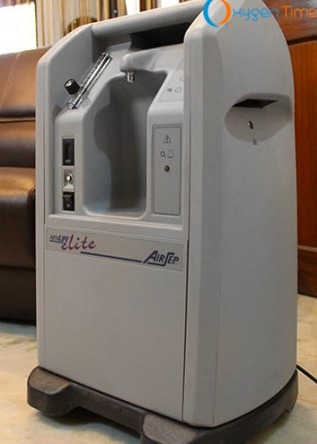
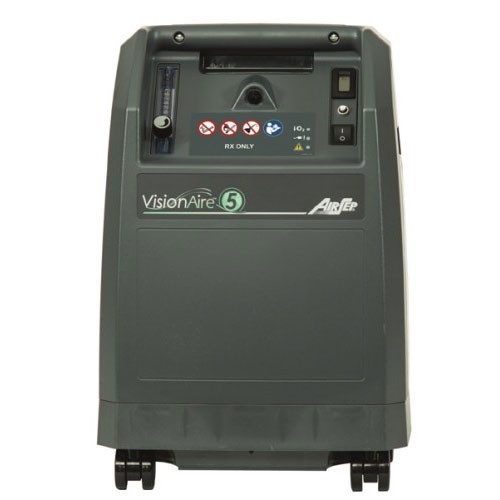
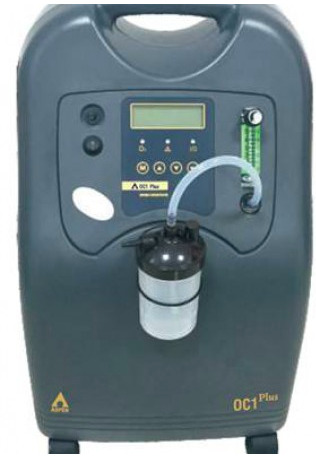
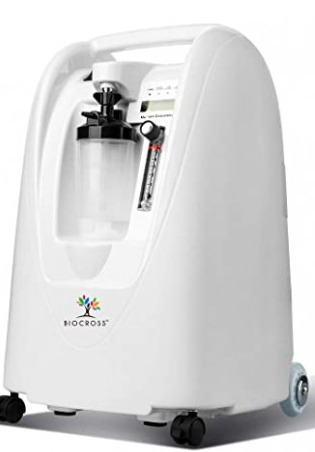
Oxymed Eco 5 LPM
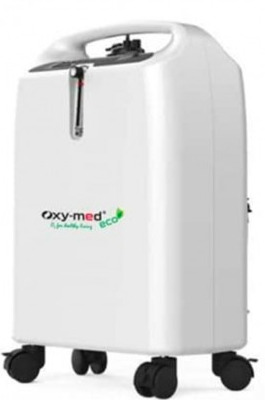
Key features
- Purity 90-95%
- Type Home Stationary
- Continuous Flow 0.5-5LPM
- Weight 13.5kg
- Oxygen Purity Indicator (OPI) No
- Power consumption 390watts
Specifications
| Purity | 90-95% |
|---|---|
| Type | Home Stationary |
| Continuous Flow | 0.5-5LPM |
| Weight | 13.5kg |
| Power consumption | 390watts |
| Sound level | 45db |
| Dimensions | 24.5H x 13.5W x 12Dinch |
| Outlet pressure | 8.15psi |
| Loss of Power Alarm | Yes |
|---|---|
| Indian Voltage Model | Yes |
| Company Headquarters | China |
Pros and cons
PROS
- 13.5 kg chassis slightly lighter than the current Oxymed Mini 5 LPM
- 0.5–5 LPM continuous flow with purity 90–95% across range
- 390 W power draw and 45 dB sound claim are appropriate for home use
- Same Oxymed dealer network supports servicing out-of-warranty
CONS
- Discontinued SKU — no fresh warranty, parts supply tightening
- No oxygen purity indicator (OPI), no system-malfunction alarm
- CE Certified field blank; company-headquarters listed China
The Oxymed Eco 5 LPM is a 13.5 kg home-stationary concentrator specced for 0.5–5 LPM continuous flow at 90–95% oxygen purity, a 45 dB sound claim, 390 W draw and 8.15 psi outlet pressure. The SKU is listed as discontinued in manufacturer brochure and e-commerce product listings. Indicative pricing at the time listings were captured ran to roughly ₹40,000 current against a ₹53,760 MRP; those numbers should be treated as historical reference, not as a live quote. Structurally this was Oxymed’s budget answer — same basic PSA architecture as the Mini line, with alarms, purity indication and certification paperwork trimmed to hit a lower price. This review evaluates what the unit is worth to a used-market buyer in 2026.
What the specs mean
Five items on the Eco 5 LPM spec sheet dictate whether it is worth considering.
0.5–5 LPM continuous flow at 90–95% purity. The flow window is actually slightly better than the current Oxymed Mini’s 1–5 LPM, because it extends down to 0.5 LPM — useful for pediatric or low-flow geriatric prescriptions where fine-grained titration matters. Purity is rated 90–95%, which falls inside the ISO 80601-2-69 therapeutic window (ISO 80601-2-69). There is no per-LPM purity curve published, and critically no OPI on board, so purity drift cannot be detected at home.
13.5 kg chassis, 24.5 × 13.5 × 12 inches. Slightly lighter than the current Mini 5 LPM but with a taller and deeper footprint — the form factor is upright-tower rather than square-box. Mobility between rooms is comparable; placement options are narrower because of the deeper footprint.
45 dB sound claim, 390 W power draw. Identical to the Mini line and consistent with the same compressor class. At 390 W the electricity cost on 24/7 operation works out to ~₹2,000–2,500 a month at typical Indian residential tariffs, and a 1 kVA UPS is sufficient to bridge grid blips.
8.15 psi outlet pressure. This is the one meaningful downgrade from the current Mini 5 LPM, which rates 10 psi. For a plain nasal cannula the difference is invisible — both deliver adequate downstream flow. For long cannula runs (>7 feet) or any downstream accessory that prefers slightly higher back-pressure (some CPAP-enrichment circuits), 10 psi is safer. For standard home therapy, 8.15 psi is fine.
No OPI, no CE Certified flag, blank System Malfunction Alarm field. This is where the SKU gets demoted. The manufacturer brochure’s additional-details table shows blank entries for Oxygen Purity % Analyzer, System Malfunction Alarm, No Flow Alarm and CE Certified — all of which are marked “Yes” on the current Mini 5 LPM. Only Loss of Power Alarm and Indian Voltage Model are ticked. For a home-stationary unit that will run continuously for years, missing purity monitoring and system malfunction alarm coverage is a real safety gap. If the sieve beds degrade, the machine will keep running at reduced purity with no audible or visual indication — the patient and household simply get less effective oxygen therapy, silently.
No operating altitude is published on this SKU; we assume it is comparable to the Mini (7,500 ft) given shared compressor architecture, but the conservative read is “not rated for altitude”.
Who should buy
The honest answer is: very few new buyers in 2026. The SKU is discontinued, and the entire reason it existed — to hit a lower price point — is now filled by other current-production budget units like the Evox 5 LPM and BPL Oxy 5 Neo with live warranty, active CDSCO-listed distribution and CE certification. A discontinued unit only beats a current unit on one axis, which is absolute price on the used market.
Used-market buyer at a steep discount. If the Eco 5 LPM appears on a dealer consignment or household handover at ₹12,000–18,000 with recent service history, it can serve a stable home oxygen prescription for another 18–30 months of continuous use before major service. The buyer has to accept the missing alarms and purity indication, and should pair the unit with a separate oximeter protocol — daily or twice-daily SpO₂ readings will catch purity drift indirectly by showing falling saturation.
Rental fleet back-line inventory. Some rental operators still hold Eco 5 LPM units for short-duration post-discharge rentals at ₹4,000–6,000 per month. For 1–3 months of therapy with active clinical oversight, the unit is fine — the operator carries the maintenance tail and any safety gap is covered by the clinician’s monitoring.
Backup-unit buyer. Households that already run a primary Philips, Nidek or current-Oxymed-Mini concentrator and want a second unit as acute-phase backup can consider an Eco 5 LPM at used pricing. Backup units see lower duty-cycle and the missing alarms are tolerable given the primary unit is the real-time workhorse.
Who shouldn’t
Any new-unit buyer at MRP. If a dealer is listing this SKU at or near ₹53,760 MRP in 2026, walk away — the same money buys a current-production unit with live warranty.
Patients on a long (>2 year) LTOT prescription. The absence of OPI and system-malfunction alarm means purity drift goes unnoticed. On a two-plus-year therapy this is statistically likely to happen at least once. A current-generation unit with OPI is the right purchase for extended-duration therapy.
Altitude users. No altitude rating published, and with a lower 8.15 psi outlet pressure the unit is less forgiving at elevation. Not the right machine for Himachal above ~6,000 feet.
Anyone whose household cannot reliably do twice-daily oximetry. Without an OPI, patient-side monitoring is the substitute. Households that cannot commit to daily SpO₂ checks with a pulse oximeter should not buy a concentrator without purity indication, full stop.
Head-to-head alternatives
Oxymed Eco 5 LPM vs current Oxymed Mini 5 LPM. The direct comparison. Current Mini is 13.9 kg (vs Eco 13.5 kg — essentially tied), with OPI, purity analyser, no-flow alarm, system-malfunction alarm and CE certification. Mini is 10 psi outlet vs Eco’s 8.15 psi. Mini ships with a three-year warranty on new units; Eco warranty is not available on new supply. Street price on the Mini is roughly ₹35,000–45,000 indicative. Verdict: the Mini wins on every meaningful dimension. The Eco is only defensible at used pricing below ₹20,000.
Oxymed Eco 5 LPM vs Evox 5 LPM. Evox is a current-production Indian budget 5 LPM at around ₹32,000–35,000 street price, 15.6 kg, 350 W, 90–96% purity, OPI on board, CE certified, two-year warranty. On the used market the Eco might be available at ₹15,000 while Evox new is ₹32,000 — at that gap, Eco is tempting for cost-constrained buyers. On specs and paperwork Evox wins clearly: OPI, CE, fresh warranty, no-flow alarm and system-malfunction alarm all present. Verdict: if the budget stretches to ₹32,000, buy the Evox new. If it caps at ₹15,000–18,000, the Eco used is workable with the caveats above.
Oxymed Eco 5 LPM vs BPL Oxy 5 Neo. BPL Oxy 5 Neo is a current-production 5 LPM at around ₹31,000–32,000 street price, 25 kg (much heavier — this matters day to day), 55 dB sound claim (louder), 400 W, OPI on board, two-year warranty. BPL is Indian-branded with good national service access through BPL’s broader medical-devices book. On chassis the Eco wins clearly on weight and sound; on certification, warranty and OPI presence the BPL wins. Verdict: for new-unit buyers, BPL is the straighter choice despite the weight penalty; for used-market hunting, either is defensible at steep enough discount.
Indian-market considerations
The Oxymed dealer network — roughly 40 authorised service centres and home-installation support in about 50 cities — still covers this discontinued SKU on an out-of-warranty basis. Parts overlap with the current Mini line means sieve beds, compressor parts and filters are stocked at most Oxymed service points for common service needs, though some Eco-specific housing parts may be order-only.
Rental-house economics work in the Eco 5 LPM’s favour. With used units circulating through dealer trade-ins and rental returns, a back-line Eco 5 LPM is a good fit for rental fleets serving short-duration post-acute respiratory patients in Indore, Lucknow, Patna, Bhubaneswar and similar Tier-2 cities. Monthly rental rates of ₹4,000–6,000 make the unit accessible for families who cannot absorb a ₹35,000+ purchase.
Power, voltage and altitude — 220 V / 50 Hz confirmed (Indian Voltage Model field ticked), 390 W draw handled by any 1 kVA UPS, no published altitude. Stabiliser is prudent in voltage-unstable areas. CDSCO registration status on a discontinued SKU should be confirmed in writing from the dealer if the purchase is for institutional or insurance-reimbursed use.
The big caveat specific to this model: with purity indication absent, the household has to implement a monitoring protocol that substitutes. A fingertip pulse oximeter (₹1,500–3,000) used twice daily on a stable patient will catch purity drift indirectly — SpO₂ falling below the patient’s baseline on the same flow setting is usually the first sign that sieve beds are degrading. Any buyer seriously considering the Eco 5 LPM used should commit to this monitoring discipline before buying.
Verdict
The Oxymed Eco 5 LPM was a budget play in its active years — Oxymed’s way of serving a lower price point with a leaner alarm and certification package. In 2026 that price-point niche is better filled by current-production units from Evox, BPL and the Oxymed Mini itself, all of which carry live warranty, OPI, more complete alarm packages and active distribution. The Eco only makes sense as a deeply-discounted used purchase, and only when the buyer understands and accepts the missing safety features.
For most readers the correct framing is: if someone is offering you an Eco 5 LPM at ₹15,000 or less with recent service paperwork, it is a defensible budget backup or short-duration primary. Anything closer to ₹25,000 or more, walk to the Mini 5 LPM or an Evox instead. Score: 4.9.