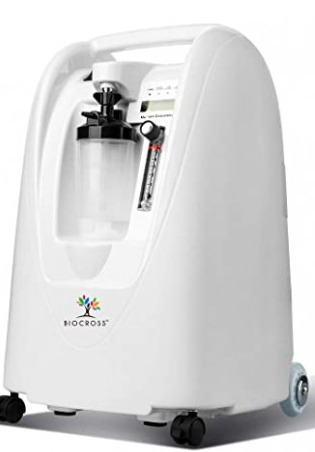
Oxybliss 5 LPM
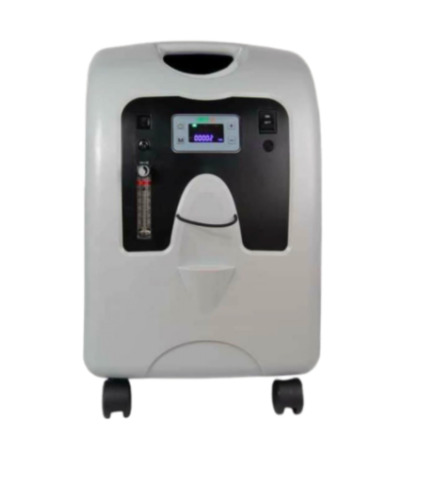
Key features
- Purity 90-95%
- Type Home Stationary
- Continuous Flow 0.5-5LPM
- Oxygen Purity Indicator (OPI) No
- Power consumption 300watts
- Sound level 40db
Specifications
| Purity | 90-95% |
|---|---|
| Type | Home Stationary |
| Continuous Flow | 0.5-5LPM |
| Power consumption | 300watts |
| Sound level | 40db |
| Dimensions | 22.5H x 14.4W x 13.46Dinch |
| Outlet pressure | 8.5psi |
| Indian Voltage Model | Yes |
|---|---|
| Company Headquarters | Taiwan |
Pros and cons
PROS
- 40 dB noise floor — among the quietest 5 LPM units in this review cycle
- 300 W power draw is class-leading among non-Tier-1 units
- Taiwan-origin rather than mainland China — sometimes associated with better component quality
- Compact chassis with 22.5 × 14.4 × 13.46 inch form factor
- Indian-voltage 230 V model confirmed on the brochure
CONS
- Brochure shows no power-loss, no-flow or system-malfunction alarms — unusual for medical oxygen
- No FDA, FAA or CE certifications published on the Indian spec sheet
- No OPI or purity analyser — cannot verify 90–95 % output in service
- Near-zero structured Indian service network — Oxybliss is a thin-distribution brand
- Stock marked Out of stock on the source listing
Oxybliss is a niche Taiwan-origin brand with low Indian visibility
Oxybliss is one of the less-visible concentrator brands sold into India. The manufacturer brochure and e-commerce product listings HHZ reviewed show the company headquartered in Taiwan rather than mainland China — a distinction that sometimes correlates with better component sourcing but does not guarantee it. The 5 LPM model is priced at ₹36,480 on the source listing with stock marked Out of stock. Physical-retail presence in India is limited; the brand is carried mostly by small medical-equipment importers rather than any pan-India distributor network.
The Oxybliss 5 LPM’s spec sheet is in some ways better than most Chinese OEMs in this cohort — 40 dB noise, 300 W power, compact form factor. In other ways it is notably worse — the alarm fields are all blank on the brochure, which for a medical oxygen unit is a significant omission. The Oxybliss is a unit that would be easy to recommend if the clinical safety features were properly documented and the service network existed. Neither is the case, which puts the unit in the “spec-sheet appeal, operational skepticism” tier.
What the specs actually mean
Continuous flow 0.5–5 LPM, purity 90–95 %. Standard PSA spec. Per-flow purity table not published. 90 % floor at peak should be assumed. 95 % at 2–3 LPM is the typical middle-flow performance.
Weight: not published on the Indian brochure. The weight field is absent from the Oxybliss 5 LPM spec sheet HHZ reviewed. This is unusual for a medical device and should be confirmed with the seller before purchase — expect 13–17 kg based on the chassis dimensions, consistent with the Chinese-Taiwanese compact 5 LPM platform. For a spec-table review, the absence of weight is a meaningful data gap.
Power 300 W. Class-leading. Matches the OxyPure 5 LPM and the Oxyflow 5 LPM. Beats the Philips Everflo (350 W) and the Nidek Nuvo Lite (290 W by a narrow margin). At 16 hrs/day and ₹7/unit this is ~₹580/month electricity — genuinely efficient. This is the Oxybliss’s strongest spec.
Noise 40 dB. Bedroom-acceptable. Matches the Nidek Nuvo Lite’s rating. For a 300 W compact unit this is the expected acoustic profile and it is the second strongest Oxybliss spec. Verify the measured number in your unit — Indian field testing of Chinese OEM concentrators shows brochure-vs-actual gaps of 3–7 dB are common.
Dimensions 22.5 × 14.4 × 13.46 inches (H×W×D). Compact vertical box. Similar footprint to the Oxymed Mini. Apartment-deployable.
Alarms: all blank. This is the most concerning data point on the brochure. The loss-of-power, system-malfunction and no-flow alarm fields are all empty. For any oxygen concentrator deployed overnight unsupervised, the alarm set is a mandatory safety feature. The brochure’s silence could reflect either the unit truly lacking alarms (unacceptable for medical use) or an incomplete spec sheet (irresponsible documentation). Either way, the buyer should not assume alarms are present without explicit written confirmation from the seller.
Certifications: blank. No FDA, no FAA, no CE published. This is a harder sell given Oxybliss’s Taiwan-origin marketing — buyers might reasonably expect CE or TFDA (Taiwan FDA) certification on a unit from Taiwan and it is not documented in the Indian brochure.
Outlet pressure 8.5 psi. Adequate for standard single-patient cannula delivery.
Who should buy it
Buyers who specifically prefer Taiwan-sourced products on country-of-origin grounds. Some Indian buyers prefer Taiwan-made to mainland-China-made on quality-perception grounds. If that is your framework, Oxybliss is one of the few respiratory-device brands in India that trades on Taiwan origin.
Electricity-cost-constrained buyers with a strong budget ceiling. The 300 W draw genuinely matters over three years of LTOT. If the unit were available with proper alarm documentation, the electricity savings over a 400 W peer would be material — ₹4,000–6,000 over three years.
Quiet-bedroom deployments where alarm absence is acceptable because the patient is supervised. This is a narrow case but legitimate: a patient who is always accompanied by a caregiver, where the concentrator is never run overnight unsupervised, can trade the alarm set for the 40 dB noise level. Most buyers cannot.
Who should not buy it
Unsupervised overnight users. Without published alarms the unit cannot fail safely. Pick any Tier-1 or Indian-branded unit with a published alarm set instead.
LTOT patients in any standard deployment. The electricity savings do not compensate for the service-network and alarm-documentation risks.
Remote buyers without access to independent biomed technicians. Service on an Oxybliss in Tier-2 cities relies on generic Chinese-OEM parts cross-compatibility, which most dealer-side technicians cannot execute.
Buyers who require FDA/CE documentation. Not published.
Critical-care step-down or high-dependency deployments. Clinical-grade certification and alarm documentation are mandatory and not met here.
Alternatives that beat the Oxybliss on specific axes
Oxymed Mini 5 LPM, ~₹35,000–45,000 street. Similarly compact (13.9 kg), similar noise (45 dB), similar price, but with published OPI, digital purity analyser, full alarm set (power loss, system malfunction, no-flow all Yes), CDSCO registration, a 3-year warranty and roughly 50-city Indian service network. For the same rupee outlay the Oxymed Mini is a categorically better buy. There is no argument for the Oxybliss here.
Philips Respironics EverFlo, ~₹43,700–50,000 street. At a modest premium the Philips gives you FDA + CE + OPI + full alarm set + 3-year warranty through Philips Home Healthcare. The noise level (45 dB) is only 5 dB louder than the Oxybliss’s claimed 40 dB, which in practice is indistinguishable.
OxyPure 5 LPM, ~₹57,000 street. Indian-assembled by Sanrai with near-identical spec to the Oxybliss (15.2 kg, 350 W, 40 dB). Sanrai’s Indian service is thin but better documented than Oxybliss’s. Not a strong alternative, but directionally similar and easier to obtain service for.
Yuwell 8F, ~₹20,000 street. Loses on noise (52 dB) and power (400 W) but has a real Indian service network and is cheaper. For a budget buyer who prioritises service over noise the 8F is the answer.
Indian-market considerations
Oxybliss’s Indian distribution is a small-importer category. The brand does not have a structured authorised-service-centre network. Field service depends entirely on who imported the specific unit and whether that importer is still active — both open questions for a 2026 buyer.
CDSCO MD-14 compliance is the minimum documentation to verify before purchase. Ask the dealer for the importer’s MD-14 licence number and the specific batch/import date. For Taiwan-origin devices the Indian customs clearance path is generally cleaner than for mainland China imports, but the CDSCO licensing is the same. (CDSCO)
Spare-parts supply for the Oxybliss 5 LPM depends on platform cross-compatibility. The chassis and compressor pattern is similar to several other small-compact Chinese/Taiwanese 5 LPMs — competent independent biomed shops in Mumbai, Delhi-NCR, Bengaluru, Hyderabad and Chennai can source functional equivalents. Outside these cities the service proposition degrades quickly.
Typical out-of-warranty service cost on an Oxybliss 5 LPM is: sieve-bed rebuild ₹4,000–6,000, compressor replacement ₹6,000–9,000 (compact compressors are less expensive than tower-chassis compressors), filter replacement ₹300–500. Warranty from the importer is typically 1 year, occasionally 2 years with extended paid coverage. Warranty claim cycle is 3–6 weeks because parts ship from Taiwan.
One genuine advantage: Oxybliss’s parts supply from Taiwan has been more consistent than from some mainland-China suppliers who saw supply disruptions in 2020–2022. For a small-brand buyer who prefers a stable sourcing story, Taiwan-origin has been more reliable. That is a genuine qualitative positive.
Verdict
The Oxybliss 5 LPM is a competent compact 5 LPM on paper — quiet, energy-efficient, Taiwan-origin — but the Indian brochure’s silence on alarms and certifications, combined with an almost non-existent Indian service footprint, put it in the “interesting specifications, difficult ownership” tier. At its ₹36,480 list price it is priced into a market segment where the Oxymed Mini, Philips Everflo and BPL Oxy 5 Neo all exist with better documentation and substantially better support. The Oxybliss earns a 5.5 score by having a defensible spec sheet and losing points on the operational realities of Indian ownership. If you have a specific reason to prefer Taiwan-origin and understand the trade-offs, it is a tolerable buy at steep discount. For most buyers, pick one of the Indian-branded or Tier-1 alternatives at similar pricing.