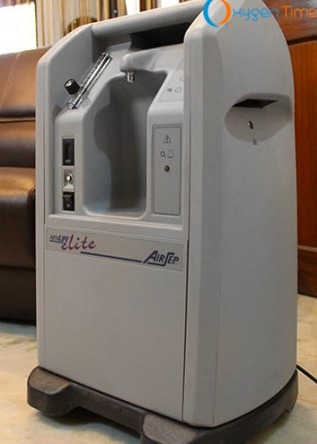
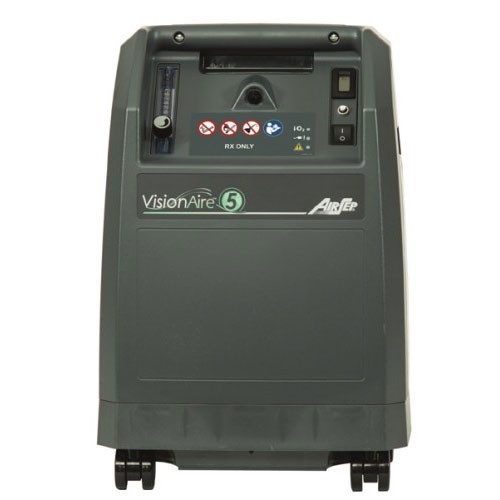
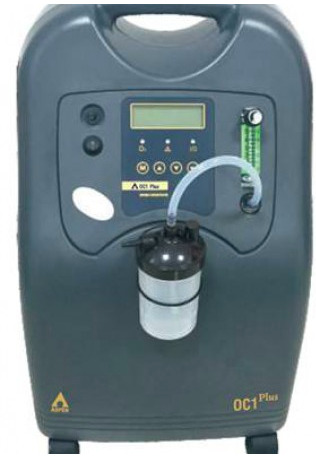
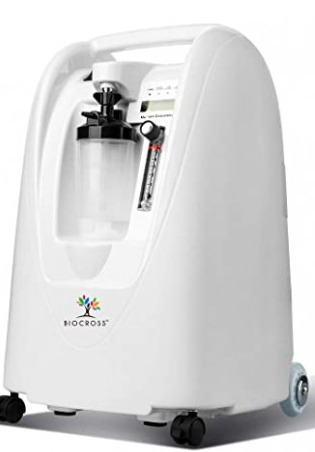
Olex 5 LPM
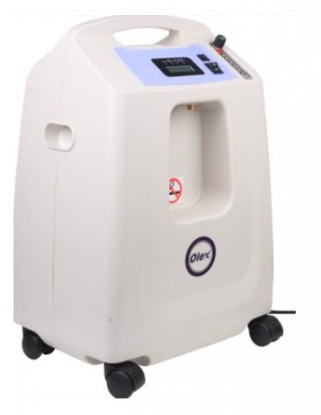
Key features
- Purity 90-95%
- Type Home Stationary
- Continuous Flow 1-5LPM
- Weight 15.9kg
- Oxygen Purity Indicator (OPI) No
- Power consumption 320watts
Specifications
| Purity | 90-95% |
|---|---|
| Type | Home Stationary |
| Continuous Flow | 1-5LPM |
| Weight | 15.9kg |
| Power consumption | 320watts |
| Sound level | 45db |
| Outlet pressure | 8.5psi |
| Loss of Power Alarm | Yes |
|---|---|
| System Malfunction Alarm | Yes |
| Indian Voltage Model | Yes |
| Company Headquarters | China |
Pros and cons
PROS
- Dual alarms confirmed — loss-of-power and system-malfunction
- 45 dB sound is below Chinese-OEM class average
- 15.9 kg chassis is portable between rooms
- 8.5 psi outlet pressure supports standard cannula delivery with headroom
CONS
- No OPI on the brochure — the critical safety gap
- 'Waterless Humidification' field blank — inconsistent with claim
- No CE, FDA, or CDSCO markers; China-headquartered
- No operating altitude or no-flow alarm published
Olex is another sub-₹40,000 Chinese-OEM 5 LPM brand circulating in the Indian emerging-brand home-oxygen market. Listed at ₹37,440, it sits in the ₹36-42K cluster alongside Biocross, Keyhub, Dynmed, and Healthgenie. Spec summary: 1–5 LPM continuous flow, 90–95% purity, 15.9 kg chassis, 320 W power draw, 45 dB sound, 8.5 psi outlet pressure, dual alarms (loss-of-power + system-malfunction) confirmed. The dual-alarm configuration is better than most competitors at this price, but the missing OPI, missing altitude rating, and missing certifications make Olex a middle-tier pick rather than a standout.
What the specs mean
The 1–5 LPM flow range is standard but note the 1 LPM minimum — higher than the 0.5 LPM floor of most Chinese-OEM 5 LPM units. This rules out the lowest-flow paediatric or adult prescriptions. Patients on a 0.5 LPM long-term prescription cannot run Olex at that setting.
Purity at 90–95% is the category baseline.
The 320 W power draw is moderate. Similar to Home Medix HM-KV (320 VA), Dynmed, Biocross, Keyhub, and Oxyflow; less efficient than Dr Diaz (285 W) or GVS Oxypure (300 W); more efficient than Dr Trust (390 W) or Nareena (550 W). At 16 hours/day × ₹9/kWh, 320 W is ₹1,400/month in electricity — acceptable.
The 15.9 kg chassis is class-competitive. Matches Dynmed, and is similar to Nareena (15 kg) and Dr Trust (15 kg). Lighter than Aspen (21 kg), but heavier than Home Medix HM-KV (13 kg).
The 45 dB sound level is one of the quieter specs in the Chinese-OEM cluster. Matches Vandelay and approaches Philips EverFlo (45 dB). For shared-bedroom use this is tolerable; for a light-sleep patient or noise-sensitive household, Nidek’s 40 dB or Aspen’s 40 dB claim remain quieter.
Outlet pressure at 8.5 psi is slightly above the 8 psi class norm. Adequate for standard nasal cannula delivery with a small amount of headroom for longer tubing.
The dual alarm suite — loss-of-power and system-malfunction — is the product’s real differentiator. Most sub-₹40,000 Chinese-OEM competitors confirm at most one alarm or leave all fields blank. Olex confirming two is a meaningful patient-safety step up. It does not confirm a no-flow alarm, however, which is the third standard alarm in the class (Dr Diaz has all three).
The dimensions in the brochure show H and W but no depth field — a minor documentation gap.
The critical gaps: no OPI confirmed. This is the category-wide problem in the sub-₹40,000 Chinese-OEM segment, and Olex does not escape it. At ₹37,440 the dual-alarm improvement partially compensates, but a patient on LTOT still lacks real-time purity monitoring.
The brochure also lists a “Waterless Humidification” field, which is blank — so the brochure implies the feature might exist but does not confirm. Ask the dealer.
No CE, no FDA, no FAA, no CDSCO. Indian voltage confirmed. China HQ.
No operating altitude rating.
Who should buy it
Buyers who value the dual-alarm configuration at a sub-₹40,000 price and can accept the no-OPI, no-altitude-rating trade-offs. The Olex unit’s combination of 45 dB sound, dual alarms, and 15.9 kg chassis makes it one of the more livable picks in the emerging-brand bracket for bedroom-adjacent placement.
Short-term post-discharge users (3-9 months) where the machine sees moderate daily load.
Buyers whose local dealer specifically stocks Olex with documented service commitment, and where Dr Diaz or Oxymed are not locally available.
Who shouldn’t
Long-term LTOT patients — no OPI is not acceptable for multi-year use.
Patients with 0.5 LPM prescriptions — the 1 LPM floor rules this out.
Buyers in hill stations — no altitude rating.
Insurance-reimbursement cases requiring CDSCO.
Head-to-head alternatives
Dr Diaz 5 LPM (₹29,759 current). Lower price, OPI, three alarms, India HQ, 12,000 ft altitude, 13 psi outlet. Against Olex at ₹37,440, Dr Diaz is ₹7,681 cheaper and materially better on OPI, alarms (three vs two), altitude, outlet pressure, and certification trail. Unless Dr Diaz is unavailable at your dealer, it is strictly the better buy.
Oxymed Mini 5 LPM (₹32,000-38,000). Indian-manufactured, Chennai-based assembly, OPI usually included, stronger service network. Against Olex, Oxymed is ₹2,000-5,000 cheaper (at the low end) or similar-priced (at the high end) and better supported for warranty claims in most Indian cities. For a buyer in Bangalore, Chennai, Hyderabad, Mumbai, or Pune, Oxymed wins.
Nidek Nuvo Lite 5 LPM (₹55,000-65,000). Japanese reference. 40 dB, 290 W, OPI, full alarms, 14 kg. Against Olex, Nidek is 47-74% more expensive but dramatically better on every axis. For multi-year LTOT, Nidek is the correct buy and Olex is not.
Indian-market considerations
Olex has thin Indian market presence. No documented authorised-service-centre list, no dealer network directory. Warranty-claim reality depends on the specific seller.
Stock: out of stock on source listing. Availability is inconsistent.
Spare parts: no publicly documented Indian distribution channel. Compressor, sieve beds, valves, filters are Chinese-OEM sourced with uncertain lead times.
Warranty: not explicitly stated on source listing. 1 year from seller is the category standard.
Voltage: Indian voltage confirmed. 500 VA stabiliser adequate at 320 W draw.
Altitude: not listed. Do not deploy above ~1,500 m without derating confirmation.
CDSCO: not indicated. Verify for insurance.
Accessory bundle: the description mentions 1 Main Unit, 1 Bottle, 1 Cannula, 1 Power Cable, 1 User Manual — no nebulizer kit. If you need a nebulizer as well, budget ₹2,000-3,500 extra.
Additional Olex-specific considerations for the Indian buyer
Noise in practice. The 45 dB spec is a laboratory or factory-floor measurement. In real Indian homes — hard floors, concrete walls, minimal acoustic damping — the perceived noise is typically 3-5 dB higher than the brochure figure due to reverberation. For a bedroom at 4 m distance from the machine, expect 38-42 dB audible at the sleeping position. This is comparable to a quiet office ambient and generally compatible with sleep for most adults, though light sleepers or patients with pre-existing insomnia may find the continuous low-frequency compressor hum disruptive.
Chassis vibration. At 15.9 kg with a non-reinforced mounting surface, the Olex transmits compressor vibration into whatever surface it stands on. On a hard tile or stone floor this produces a low-frequency standing wave audible throughout adjacent rooms. Olex ships without anti-vibration pads — budget ₹300-500 for a set of rubber feet or a 10 mm EPDM mat to place under the machine. This reduces transmitted noise by 2-4 dB and extends the compressor’s bearing life by reducing harmonic resonance.
Filter maintenance. The inlet gross filter is the first consumable — typically needs replacement every 2-3 months of daily use. Price in India varies widely by dealer but typical third-party equivalents run ₹300-800. The internal fine filter (HEPA-grade) needs replacement annually. The bacterial filter between the molecular-sieve and the humidifier bottle is the expensive item — ₹1,800-3,000 per unit per year. None of these are documented in the Olex product literature; ask the dealer for the specific service schedule before purchase.
Humidifier bottle. The bundled humidifier is a simple passive-pass-through design — adequate for standard 1-3 LPM delivery but produces noticeable back-pressure at 4-5 LPM that may reduce effective delivered flow by 0.5-1 LPM. For patients with high-flow prescriptions, either skip the humidifier (drying effects acceptable at short runs) or use a proper bubble humidifier designed for concentrator use.
Long-term sieve life. Molecular-sieve degradation at 5 LPM continuous is a function of run-hours, inlet-air quality, and humidity exposure. Typical degradation curve on a well-maintained unit: <2% purity drop in year 1, 3-5% drop by year 2, 5-10% drop by year 3. Without an OPI, the patient has no real-time visibility into this drift. Plan to have the machine’s output purity verified with a handheld oxygen analyser (₹3,500-7,500 for a basic analyser) once every 4-6 months after year 1 of daily use.
Commentary on Olex brand provenance
The Olex brand name is not publicly associated with a documented parent manufacturer in India. The spec sheet lists China as the country of headquarters. This is consistent with a pattern common in the Indian emerging-brand home-oxygen space: a distributor or small-scale importer sources a Chinese OEM 5 LPM chassis, applies their own brand label, and sells through medical-equipment channels. The underlying hardware is almost certainly shared with one or more other Chinese-branded 5 LPM units on the Indian market — the identical 45 dB / 8.5 psi / 320 W spec fingerprint maps to multiple apparent competitors, suggesting a shared ODM source.
Implications for the buyer:
- Spare parts are likely sourceable from any technician who services the underlying Chinese OEM family, not just an “Olex-authorised” service centre.
- Reliability track record is whatever the underlying OEM’s record is; the Olex brand label adds no independent quality-control step.
- Warranty coverage is whatever the specific Indian importer offers, not what the OEM manufacturer would offer directly.
For a buyer who is philosophically comfortable with this kind of rebadged-OEM purchase, Olex is fine. For a buyer who wants a brand with genuine manufacturing accountability, Oxymed (Chennai), Philips (global), and Nidek (Japan) all offer documented end-to-end manufacturer relationships that Olex does not.
Post-purchase service realities
A buyer who commits to Olex should plan for post-purchase service with eyes open.
Filters. Inlet gross filter needs replacement every 2-3 months. Internal HEPA or bacterial filter needs replacement annually. The inlet gross filter is typically a 5 cm x 5 cm sponge element — generic and interchangeable with many Chinese-OEM 5 LPM units. Budget ₹300-500 per inlet filter, ₹1,800-3,000 per HEPA/bacterial filter per year.
Compressor capacitor. The compressor run capacitor is the most common failure item on Chinese-OEM 5 LPM concentrators in the 18-36 month range. Symptoms: compressor fails to start, or starts intermittently, or starts with a hum before fully running. Replacement cost: ₹1,500-2,500 for the capacitor plus labour. Turnaround at a competent medical-equipment technician in a metro: 1-3 days.
Sieve beds. Molecular sieve degradation is inevitable on any PSA concentrator. At 5 LPM continuous use, expect meaningful degradation by month 24-36. Without an OPI, the Olex buyer has no real-time visibility. Plan to verify output purity with a handheld oxygen analyser twice a year after month 18. Sieve replacement on Chinese-OEM shared chassis: ₹6,000-10,000 including labour.
Solenoid valves. The PSA cycle depends on solenoid valves that switch pressure between the two sieve towers every few seconds. Over 24,000 hours of operation these solenoids accumulate wear and eventually fail. Replacement typically triggers during a service event rather than as a standalone repair. Cost: ₹1,000-2,000 per valve plus labour.
Fan and cooling. The internal cooling fan dies before the compressor does on most Chinese-OEM units. Symptoms: chassis gets noticeably warmer, sound changes tonally. Replacement: ₹500-1,500 plus labour. This is the cheapest and most-frequently-needed service item.
Power-supply board. Catastrophic failure possible but uncommon. When it occurs, repair cost exceeds replacement cost for budget units — plan to replace the machine rather than repair the power board.
Over a 3-year ownership cycle on Olex, expect one filter-replacement cycle annually (₹2,000-4,000/year total), potentially one capacitor failure (₹1,500-2,500), and one sieve service event (₹6,000-10,000). Total 3-year service costs: ₹14,000-22,000 on top of the ₹37,440 capital cost. This pushes total cost of ownership to ₹51,000-60,000 — which is exactly where a Nidek Nuvo Lite starts at its purchase price.
Does the shared-chassis hypothesis hold for Olex?
Olex’s 15.9 kg weight, 45 dB sound, 320 W draw, and 8.5 psi outlet pressure fingerprint does not cleanly match either the Longfian-family cluster (which would be 16 kg, 48 dB, 285 W, 13 psi) or the Keyhub / Biocross cluster (16 kg, 48 dB, 320 W, 12-13 psi). The 45 dB sound and 8.5 psi outlet look more like a smaller Chinese OEM family — possibly shared with Dynmed (15.9 kg, 45 dB, 320 W, 8.4 psi), which matches almost exactly.
If Olex and Dynmed share the same underlying chassis, then:
- Spare parts for Olex likely fit Dynmed and vice versa — useful post-warranty flexibility
- The reliability track record of one predicts the other
- The practical service knowledge at Indian technician level is pooled across both brands
This is helpful context for a buyer who is stuck between Olex and Dynmed at similar price points — they are plausibly the same physical machine with different branding, which makes the decision a brand-preference decision rather than a product-quality decision.
Verdict
Olex 5 LPM at ₹37,440 is a middling pick in a crowded field. The dual-alarm configuration is a real positive vs most Chinese-OEM competitors in the sub-₹40,000 bracket, and the 45 dB sound plus 15.9 kg chassis make it livable. The missing OPI, 1 LPM minimum flow floor, absent altitude rating, and invisible service network are all constraints that a serious buyer should weigh against Dr Diaz 5 LPM at ₹29,759 (with OPI, three alarms, altitude rating, and India HQ) — which is simply a better-specced unit at lower price. Olex makes sense only if your local dealer stocks it, Dr Diaz is not available, and you need the quiet sound profile for bedroom-adjacent placement. In all other cases, alternatives win. Score: 5.9/10.