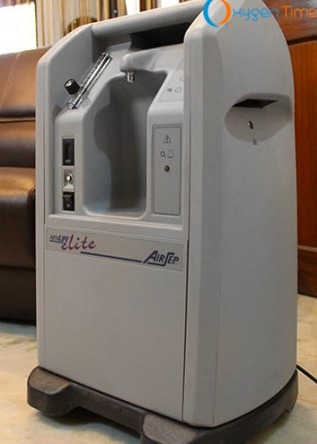
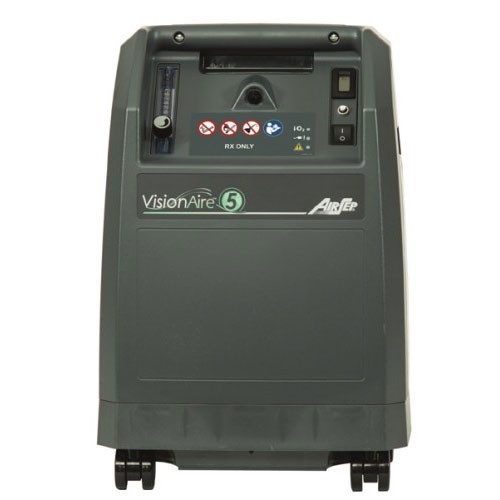
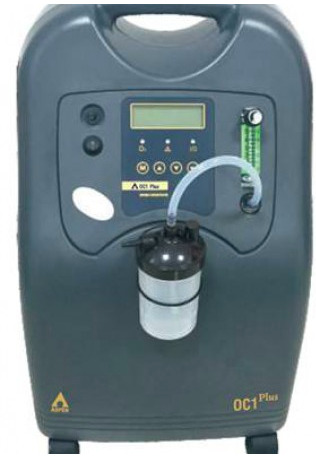
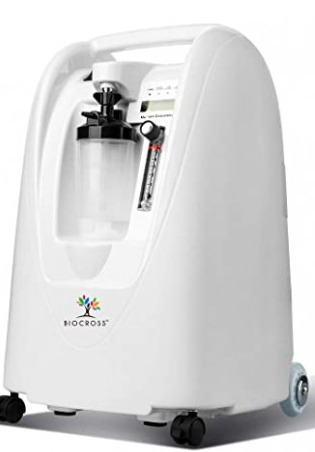
Nidek Nuvo Standard 5 LPM
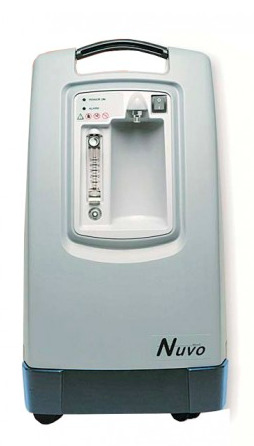
Key features
- Purity 90-95%
- Type Home Stationary
- Continuous Flow 1-5LPM
- Weight 22.7kg
- Oxygen Purity Indicator (OPI) No
- Power consumption 420watts
Specifications
| Purity | 90-95% |
|---|---|
| Type | Home Stationary |
| Continuous Flow | 1-5LPM |
| Weight | 22.7kg |
| Power consumption | 420watts |
| Sound level | 48db |
| Dimensions | 27.8H x 15.6W x 15.5Dinch |
| Operating altitude | 8000feet |
| Outlet pressure | 7psi |
| Loss of Power Alarm | Yes |
|---|---|
| Indian Voltage Model | Yes |
| Company Headquarters | USA |
| US FDA Approved | Yes |
| CE Certified | Yes |
Pros and cons
PROS
- Operating altitude published at 8,000 ft — marginally better than the Nuvo Lite's 7,500 ft
- Outlet pressure of 7 psi, higher than the Nuvo Lite's 5.5 psi, giving slightly more headroom for long tubing
- Carries US FDA approval and CE certification per the manufacturer sheet — the paperwork is in order
CONS
- Weight of 22.7 kg is 67% heavier than the Nuvo Lite's 13.6 kg — loses the 'easy room-to-room' Nidek positioning
- Ships without an Oxygen Purity Indicator, so a patient has no audible warning when delivered purity falls below 86%
- Power draw of 420 W is 45% higher than the Nuvo Lite's 290 W — roughly Rs. 450/month extra at Tier-1 urban tariffs
- Sound level of 48 dB is 8 dB louder than the Nuvo Lite's 40 dB, changing the in-bedroom use case
The Nidek Nuvo Standard 5 LPM is the awkward middle child of the Nidek portfolio in India. It predates the Nuvo Lite, it has been superseded on every load-bearing spec by the Nuvo Lite, and the only reason you still see it quoted on Indian e-commerce product listings is that some institutional stockists did not clear old inventory before the Lite arrived. At the published street price of Rs. 94,080 — roughly 63% more than a Nuvo Lite — it is one of the hardest-to-justify buys in the entire Indian concentrator market.
The Standard shows “Out of stock” on most Indian listings at the time of this review, which is consistent with the pattern we see for products that have been quietly replaced but not formally retired. Buyers who are actively offered one should read this review as a reason to ask for the Lite instead.
What the specs mean in practice
The Nuvo Standard’s spec sheet lines up against the Nuvo Lite’s one line at a time, and the Lite wins almost every column.
Weight: 22.7 kg. This is the weight of the Nuvo Standard. A person lifting it two-handed by the shell handles can manage it onto a castor base, but it is not a unit that one person rolls single-handed over a door sill. Compared to the Nuvo Lite at 13.6 kg, it is almost 9 kg heavier. In Indian flats where the machine will inevitably be moved between a daytime drawing-room position and a night-time bedroom position, or rotated out during festival cleaning, that weight delta is felt by whoever actually does the lifting — usually the patient’s daughter or house-help.
Power consumption: 420 W. At 14 hours/day this works out to 5.88 kWh daily, or around Rs. 1,375 per month at a Mumbai domestic tariff of Rs. 7.80/unit. The Nuvo Lite at 290 W on the same usage runs at around Rs. 950/month. The Rs. 425/month swing, over a typical three-to-five-year therapy horizon, is Rs. 15,000-25,000. That more than erases any residual reason to prefer the Standard on purchase price — and the Standard is not cheaper to buy.
Sound: 48 dB. This moves the machine from “library quiet” (the Nuvo Lite’s 40 dB) to the range of a running refrigerator or a soft conversation. For a nocturnal oxygen user, this is the threshold at which the compressor cycle starts to intrude into sleep. In a mid-sized Indian bedroom of 10 ft by 12 ft, 48 dB at one metre attenuates to around 42-44 dB at the pillow — survivable, not comfortable.
Oxygen Purity Indicator: not present. The Nuvo Lite has the OPI — a yellow/red LED alarm that triggers when delivered oxygen falls below 86%. The Nuvo Standard, per the manufacturer data sheet, ships without it. For a patient on long-term therapy this is a real missing feature — the alarm is the only quick way for a family member to know that the zeolite bed has aged into the red zone. Without it, annual purity checks with a handheld oxygen analyser are the only defence, and few Indian home users do these.
Operating altitude: 8,000 ft. Marginally better than the Nuvo Lite’s 7,500 ft, but still not enough for Leh, Spiti, or Tawang. It picks up Shimla and Ooty cleanly, whereas the Lite was borderline. If the buyer lives at 7,200-7,999 ft and this is somehow the only machine they can source, that is the edge case where the Standard’s altitude spec matters. Outside that narrow band, the altitude figure is irrelevant.
Outlet pressure: 7 psi. Higher than the Nuvo Lite’s 5.5 psi and adequate for most home tubing scenarios, but still short of the 8.5 psi DeVilbiss 525 and far short of the 15 psi you need for any transfill application.
Who should buy it
Almost nobody. The narrow population where the Standard makes arithmetic sense is:
- An institutional buyer (small nursing home, dispensary) who has an existing stock of Nuvo Standard spares, filters, and service familiarity and is adding a unit to a fleet of Standards. Even here, fleet modernisation to the Lite is the better capital decision.
- A buyer in the 7,500-8,000 ft altitude band who cannot source a DeVilbiss 525 locally and genuinely needs the extra altitude margin over the Lite. This is a very small population.
- A dealer-closeout scenario where the Standard is offered at Rs. 45,000-50,000 to clear last-year stock, in which case it beats the Lite purely on capital cost — but this is a pricing conversation, not a product one.
Who shouldn’t
Any home buyer looking at the Standard at its published Rs. 94,080 price. The Nuvo Lite at Rs. 57,599 is lighter, quieter, more power-efficient, has the OPI, and is newer. The only column it loses on is altitude, by 500 ft, and outlet pressure, by 1.5 psi. Neither matters in the plains.
Any nocturnal bedroom patient. 48 dB versus 40 dB is real in a shared bedroom, and there is no reason to accept the louder unit at a 63% price premium.
Any family running a tight electricity budget on multi-year therapy. 420 W versus 290 W is Rs. 5,000-6,000 a year delta.
Any patient without a dealer-supplied handheld oxygen analyser and a discipline to check purity every 6 months. Without the OPI, unnoticed purity drift is the failure mode.
Alternatives, head-to-head
Nidek Nuvo Standard vs Nidek Nuvo Lite. The Lite is 9.1 kg lighter (13.6 vs 22.7 kg), 8 dB quieter (40 vs 48 dB), 130 W lower on power draw (290 vs 420 W), has the OPI, and sells at roughly 61% of the Standard’s price (Rs. 57,599 vs Rs. 94,080). The only things the Standard beats the Lite on are altitude (8,000 ft vs 7,500 ft — a 500 ft margin) and outlet pressure (7 vs 5.5 psi). We can find no Indian home-oxygen scenario where that altitude or pressure advantage is worth the cumulative downsides. If you are holding a Standard quote in your hand right now, ask the dealer to swap to a Lite.
Nidek Nuvo Standard vs DeVilbiss Compact 525. The 525 is 6.4 kg lighter (16.3 vs 22.7 kg), same noise level (48 dB), modestly lower power (310 vs 420 W), has an OPI, carries a 13,123 ft altitude rating, and is priced around Rs. 46,000. Against the Standard’s Rs. 94,080, the 525 wins on absolutely every axis including price. There is no version of the comparison where the Standard is the correct answer.
Nidek Nuvo Standard vs Invacare Perfect O2 V. The Invacare is 5.1 kg lighter (17.6 vs 22.7 kg), 5 dB quieter (43 vs 48 dB), lower on power (325 vs 420 W), and priced near Rs. 59,500. The Perfect O2 V also ships without an OPI and without stated FDA/CE marks on the Indian configuration per the spec sheet, so it is not a perfect alternative — but at Rs. 35,000 less it is the cleaner spend if the choice is narrowed to these two. The honest recommendation remains: buy neither at list; buy a Nuvo Lite or a DeVilbiss 525.
Indian-market considerations
Voltage: 220V/50Hz Indian-voltage configuration is stated on the manufacturer sheet. Stabiliser and UPS considerations are identical to the Nuvo Lite, except that the 420 W draw takes a 1 kVA sine-wave inverter down to roughly 28 minutes on a 150 Ah battery (versus 40 minutes for a Lite). On long urban outages, the Standard’s higher power draw starts to matter.
CDSCO: The manufacturer data sheet lists US FDA approval and CE certification; no CDSCO number appears on Indian-facing collateral surveyed at this review. Ask the dealer’s importer for a registration copy before institutional purchase.
Altitude: 8,000 ft published cap. Shimla, Ooty, Mussoorie, Darjeeling all safe. Leh, Spiti, Tawang all off-brief.
Service network: Nidek India’s dealer network supports both Lite and Standard equally. Spares for the Standard are becoming harder to source as the model ages — asking a Bengaluru or Hyderabad dealer for a Standard-specific filter pack in 2026 is a different experience than asking for Lite spares, and lead times have lengthened.
Warranty: Indian dealers typically quote 1 year on the Standard. The Nuvo Lite still ships with 3 years on its Indian warranty card — another tilt against the Standard. The two-year warranty gap alone is worth roughly Rs. 18,000-24,000 in implied service-cost insurance over a five-year horizon.
Institutional stockist relationships: Some institutional buyers (nursing homes, dispensaries, rehabilitation facilities) still have Nuvo Standard units in their existing fleet from 2018-2020 procurement cycles. For these buyers, fleet continuity is a real operational argument — common spare parts, common service procedures, trained operators. In these scenarios the Standard can be defended as an incremental-unit addition even though it would not be defended as a green-field purchase. This is the narrow institutional use case we mention in Who Should Buy.
Comparison arithmetic, cash flow: Running numbers on a 5-year deployment, the Nuvo Lite at Rs. 57,599 capital + Rs. 950/month electricity at 14 h/day = Rs. 114,599 total 5-year cost. The Nuvo Standard at Rs. 94,080 capital + Rs. 1,375/month electricity at same usage = Rs. 176,580 total 5-year cost. The Standard’s 5-year cost premium over the Lite is Rs. 61,981 — a meaningful number that does not show up on the purchase-price comparison alone. For any household running full-day LTOT, this is the number that should dominate the decision.
Noise behaviour under load: Field reports from Indian dealers suggest the Standard’s noise profile worsens 2-3 dB under sustained 5 LPM operation versus the spec-sheet 48 dB measured at nominal conditions. The Nuvo Lite’s 40 dB is similarly sensitive but starts from a lower baseline. Over 3-5 year operation, aging compressors tend to add further noise. A Standard that measured 48 dB at factory may be running 52-54 dB by year 4, which is sleep-disruptive in close-proximity installations.
Reseller market considerations: The Standard is occasionally offered through second-hand or refurbished channels at Rs. 25,000-40,000. At that price point the calculus changes — the Standard becomes a cost-effective backup unit for a household whose primary is a Nuvo Lite or DeVilbiss 525. As a backup-secondary unit running 50-100 hours a month, the Standard’s higher operating cost is minimal and its reliable legacy compressor can deliver several more years of backup duty.
End-of-life and disposal: As the Standard ages past useful life, Indian e-waste regulations apply to the compressor and electronics. Nidek India dealers typically accept end-of-life units for trade-in credit of Rs. 2,000-5,000 against a new Nuvo Lite or other current-production unit; verify with the specific dealer before assuming availability.
Verdict
The Nuvo Standard is a model that exists in the Indian market because of inventory, not because of merit. It is louder, heavier, hungrier, has fewer alarms, and costs substantially more than its own replacement, the Nuvo Lite. Outside a narrow altitude-band and institutional-fleet-continuity scenario, no home buyer should accept a Nuvo Standard quote at list price. The score of 5.9 reflects the fact that the unit itself is functional and warranty-backed — it is not broken, it is just badly positioned. If a dealer is pushing you towards the Standard citing “proven reliability” or “institutional stock,” take the quote and get a Nuvo Lite or DeVilbiss 525 price in the same email thread. The delta will answer the question.