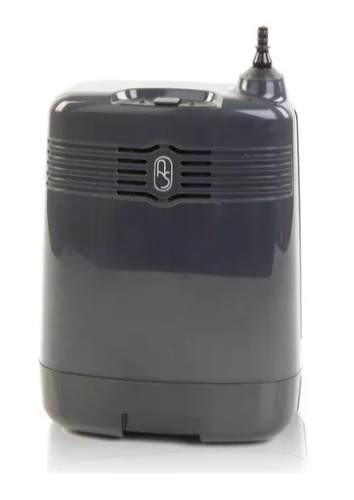
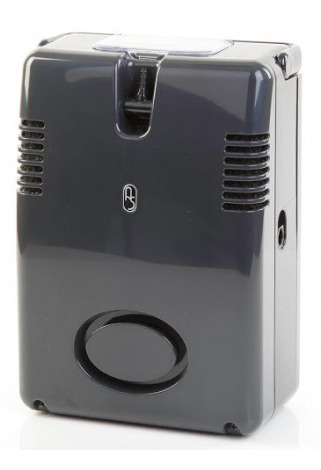
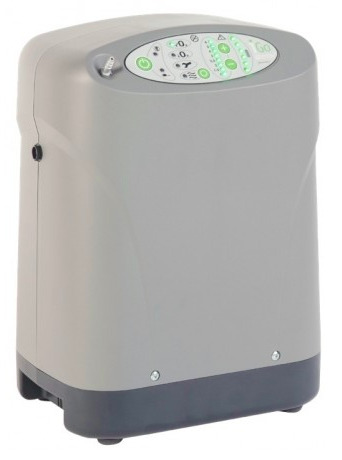
Invacare XPO2
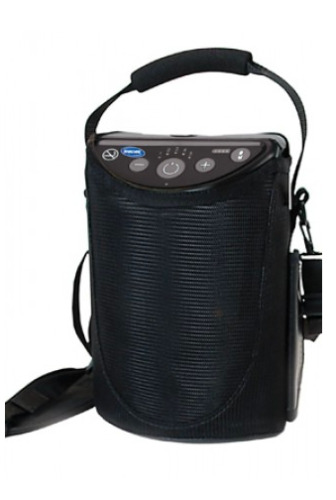
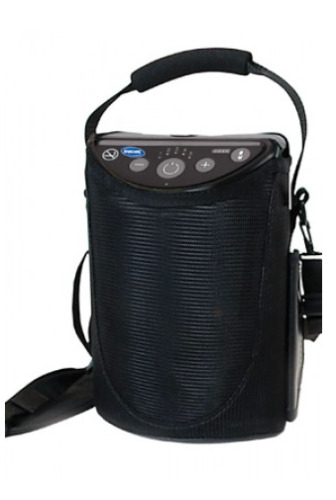
Key features
- Purity 90-95%
- Type Portable (Battery-powered)
- Pulse Flow 1-5Pulse setting
- mL dose 15mL
- Weight 2.7kg
- Oxygen Purity Indicator (OPI) No
Specifications
| Purity | 90-95% |
|---|---|
| Type | Portable (Battery-powered) |
| Pulse Flow | 1-5Pulse setting |
| mL dose | 15mL |
| Weight | 2.7kg |
| Battery backup (at 2 pulse setting) | 2.5hours |
| Recharge time | 4hours |
| Backup with external battery pack | 7.5hours |
| Sound level | 45db |
| Dimensions | 10H x 7W x 4Dinch |
| Operating altitude | 10000feet |
|---|---|
| System Malfunction Alarm | Yes |
| Indian Voltage Model | Yes |
| Company Headquarters | USA |
| US FDA Approved | Yes |
| FAA Approved | Yes |
| CE Certified | Yes |
Pros and cons
PROS
- Full certification stack — US FDA, FAA, and CE all confirmed on the manufacturer sheet
- Operating altitude of 10,000 ft is the same as current-generation portables — not obsolete on altitude
- Single-breath pulse dose of 15 mL is competitive with current pulse-dose portables
- Indian-voltage configuration confirmed — not a grey-market parallel import
CONS
- Stock status is Discontinued — new-unit warranty pipeline from Invacare India is no longer standard
- Battery backup of 2.5 hours at pulse setting 2 is the shortest among portables in this review
- Sound level of 45 dB is 5-7.5 dB louder than the Platinum Mobile (40 dB) and iGo2 (37.5 dB)
- Weight of 2.7 kg is 0.5 kg heavier than current-stock portables — noticeable over long shoulder wear
The Invacare XPO2 was the original ambulatory pulse-dose portable in the Invacare Indian lineup and has now been formally superseded by the Platinum Mobile. Its current market status is Discontinued, and Indian e-commerce product listings show it as archival inventory rather than active stock. The Rs. 153,600 price on the few remaining listings reflects end-of-line closeout rather than current-market pricing.
For 2026 buyers, the XPO2 is a reasonable consideration only in refurbished form from an authorised Invacare dealer with a written warranty covering compressor and battery pack. New-unit purchase decisions should default to the Platinum Mobile or the DeVilbiss iGo2.
What the specs mean in practice
Weight: 2.7 kg. Heavier than the current Platinum Mobile (2.18 kg) and iGo2 (2.2 kg) by roughly half a kilogram. For shoulder-strap carry over multiple hours, 0.5 kg is felt. For cabin-bag transport or short-duration walks, negligible.
Pulse flow: 1-5 settings. Matches current-stock portables. Pulse 3 typical for rest, pulse 4-5 for exertion.
mL dose: 15 mL. Competitive with current units. The iGo’s 14 mL and the iGo2’s published specs are in the same range.
Battery backup: 2.5 hours at pulse setting 2. This is the XPO2’s weakest spec. The Platinum Mobile at 5 hours single is twice as good. The iGo2 at 3.5 hours is 40% better. For any ambulatory use beyond an hour or two, the XPO2’s battery is inadequate without the external backup pack.
Backup with external battery pack: 7.5 hours. This is the saving grace — dual-pack operation pushes runtime to 7.5 hours, which approaches the Platinum Mobile’s 10-hour dual. External packs for the XPO2 are now difficult to source new; refurbished packs may or may not be available through Invacare India service partners.
Recharge time: 4 hours. Faster than the iGo2’s 5 hours, slower than the Platinum Mobile’s 2 hours. Same-day discharge-recharge cycle is borderline practical.
Sound: 45 dB. 5 dB louder than the Platinum Mobile and 7.5 dB louder than the iGo2. Not quiet enough for restaurant or conference use without drawing attention.
Operating altitude: 10,000 ft. Matches current-stock portables.
Oxygen Purity Indicator: blank. No in-built purity monitoring.
Certifications: US FDA, FAA, CE — all confirmed. The XPO2’s paperwork stack is actually complete, including CE (which is blank on the current Platinum Mobile). For EU travel, this matters.
Indian Voltage Model: Yes. Confirmed.
Who should buy it
Buyers who find refurbished XPO2 units through an authorised Invacare dealer at Rs. 60,000-80,000 with a one-year refurbishment warranty covering the compressor and a newly-rebuilt battery pack. At that price and with that warranty, the XPO2 is a reasonable value buy for occasional-use portable oxygen — roughly Rs. 12 per usage hour across a typical three-year refurbished lifespan, which competes favourably with cylinder rental economics for patients who leave the house 2-3 times a week.
Patients travelling to EU destinations where CE certification is actively checked at boarding or customs — the XPO2’s CE mark is confirmed where the newer Platinum Mobile’s is blank. For the small number of Indian LTOT patients who make annual trips to the UK, Germany, France, or Schengen-zone destinations for family visits or medical tourism, this certification continuity is occasionally decisive.
Existing XPO2 users whose unit is aging and who have access to refurbished replacement packs and service — continuity buyers who already know the machine, its quirks, its pulse-delivery timing. For these users, switching to a new Platinum Mobile or iGo2 means re-learning bolus cadence and pulse-setting-to-clinical-effect mapping, which for a comfortable existing XPO2 user is friction that may not be worth the upgrade.
Price-sensitive buyers in the secondary market where an authorised-dealer refurbishment at Rs. 60,000-80,000 represents roughly a 60% discount versus a new Platinum Mobile. For a terminally-ill patient on a known short prognosis where the unit only needs to perform for 6-12 months, the refurbished XPO2 is arithmetic-appropriate.
Who shouldn’t
Anyone buying a new portable in 2026. The XPO2 is superseded. The Platinum Mobile or iGo2 is the current answer. The Rs. 153,600 list price for remaining new stock is not competitive against either successor, and new-unit warranty coverage is uncertain.
Buyers unable to find authorised refurbished stock with warranty. Non-warranty second-hand XPO2 units have unknown battery condition and sieve-bed age, and these are the expensive failure modes. A private-sale XPO2 at Rs. 40,000 that turns out to need a Rs. 20,000 battery pack plus Rs. 25,000 sieve-bed service is net-more-expensive than a new iGo2 with a 2-year factory warranty.
Active ambulatory patients needing genuine full-day battery capability. The XPO2’s 2.5 hour single / 7.5 hour dual is inferior to the Platinum Mobile’s 5 hour / 10 hour. For a patient commuting to an office, spending 8-10 hours out of the house, or travelling for weekend family events, the XPO2 forces mid-day mains charging in a way the Platinum Mobile does not.
Anyone planning to fly international long-haul in 2026-2027. Most international carriers are tightening portable oxygen concentrator model lists and phasing out older generation units. Check the specific carrier’s POC-accepted list before relying on an XPO2 for long-haul travel — Emirates, Singapore Airlines, and Lufthansa have been updating their lists annually and the XPO2 is on the edge of being phased out.
Alternatives, head-to-head
Invacare XPO2 vs Invacare Platinum Mobile. The Platinum Mobile at Rs. 210,240 is the direct successor. Lighter (2.18 vs 2.7 kg), quieter (40 vs 45 dB), twice the single-battery life (5 vs 2.5 hr), dual-battery capability (10 vs 7.5 hr), fast recharge (2 vs 4 hr), OPI confirmed. The XPO2 wins only on CE marking. For new-unit purchase, the Platinum Mobile is the obligatory choice.
Invacare XPO2 vs DeVilbiss iGo2. The iGo2 at Rs. 172,781 is lighter (2.2 vs 2.7 kg), quieter (37.5 vs 45 dB), better single-battery (3.5 vs 2.5 hr), slower recharge (5 vs 4 hr — XPO2 wins here), same altitude, 2-year warranty. CE marking: both confirmed. For current-market ambulatory purchase, the iGo2 is the cleaner buy.
Invacare XPO2 vs DeVilbiss iGo (original). Both discontinued. The iGo is dual-mode (continuous + pulse), heavier (8.6 vs 2.7 kg), longer battery (4.7 vs 2.5 hr single), higher altitude (13,123 vs 10,000 ft). Between two discontinued units, the iGo’s altitude and dual-mode capability make it the better refurbished buy if those features are needed; the XPO2 is the lighter pulse-only alternative at a lower refurbished price point. For the specific niche of an occasional-use pulse-only Indian traveler at plains altitude, a refurbished XPO2 at Rs. 60,000 competes with a refurbished iGo at Rs. 80,000 — the XPO2 wins on weight, the iGo wins on battery and altitude, and the choice comes down to whether hills or weight are the bigger constraint.
Indian-market considerations
Voltage: 220V/50Hz AC charging confirmed. DC car adapter included in original packaging.
Stabiliser/UPS: Not relevant to battery use.
CDSCO: FDA, FAA, CE all confirmed on the manufacturer sheet. CDSCO import status at the time of original sale was current; for refurbished units the original import paperwork may or may not transfer. Verify with the refurbisher.
Altitude: 10,000 ft. Most Indian hill destinations covered. Leh marginal.
Service: The XPO2 is in end-of-service-life transition at Invacare India. Parts availability is declining. Battery replacement with original-spec packs is uncertain — some authorised service centres have stock, others have transitioned fully to Platinum Mobile parts. Confirm before refurbished purchase.
Warranty: Refurbished-unit warranty is dealer-dependent. Insist on written coverage for compressor and battery. Factory warranty does not apply.
Airline use: FAA certification confirmed. Indian carriers still accept XPO2 units with standard notice. International carriers have largely moved to requiring current-generation portables — check with specific carrier for long-haul flights.
Spares availability: The critical concern. Sieve bed, battery, and charger adapter become progressively harder to source as the model ages. Buyers should plan for a 2-3 year useful life from refurbishment rather than the 8-10 years typical for current-stock units.
Pulse-delivery calibration: The XPO2’s pulse delivery algorithm is an older generation than the Platinum Mobile’s — the bolus timing is calibrated to a less-responsive inspiratory trigger threshold, which for shallow-breathing patients or those with chronic neuromuscular weakness can produce missed triggers. For standard COPD or ILD adults with normal breathing mechanics, this is not usually a clinical problem; for edge-case patients, clinician review of pulse-delivery adequacy at the target pulse setting is recommended before committing to refurbished XPO2 purchase.
Travel documentation: Indian travellers should carry the XPO2 manufacturer’s FAA compliance statement (still downloadable from Invacare’s regulatory archive), a physician’s letter specifying the pulse-setting prescription, a recent arterial blood gas or pulse-oximetry report, and a copy of the original factory purchase invoice if available. Indian customs occasionally ask for these on return-entry when the unit is visible in hand baggage; the documentation stack eases that conversation.
Battery handling for air travel: Lithium-ion batteries for the XPO2 fall under standard IATA dangerous-goods handling. Carrying spare packs in checked baggage is prohibited — always cabin baggage. Most Indian carriers require the battery to be externally visible during boarding and in-flight for cabin-crew verification. Brief the traveller on this before check-in; unexpected surrender of spare packs at security is a meaningful disruption for a pulse-dose oxygen-dependent patient.
Verdict
The XPO2 is a competent machine at end-of-life. For a new-unit purchase decision it is the wrong answer — the Platinum Mobile is the direct successor, the iGo2 is a cheaper competitive alternative, and both are fully supported where the XPO2 is not. The XPO2 becomes a reasonable buy only in a specific refurbished-market scenario: authorised Invacare dealer, one-year warranty, fully rebuilt battery pack, price under Rs. 80,000. In that scenario the XPO2 is a fair-value portable for occasional use. Outside that narrow scenario, skip it. The score of 5.8 reflects a product that was solid in its time and is now a legacy buy only. If you have been quoted an XPO2 at anything approaching the Rs. 153,600 list price for a new unit, ask the dealer why they are not quoting the Platinum Mobile — the honest answer will be dealer inventory, not clinical fit.
For Indian buyers evaluating second-hand portable oxygen concentrator market listings, the XPO2 is one of the most-traded units on the informal secondary market due to its 2015-2020 deployment volume. Prices in that channel range from Rs. 30,000 (no warranty, unknown battery condition) to Rs. 70,000 (dealer refurbishment with partial warranty). The risk calculus at the lower end of this range is unfavourable — a Rs. 30,000 unit with a failing battery that needs a Rs. 18,000 replacement plus Rs. 25,000 of sieve-bed work is not a bargain. The rational refurbished-XPO2 buyer insists on the authorised-dealer pathway with its higher price but its real warranty.
One final consideration: for a patient whose travel needs are evolving — perhaps a newly-diagnosed LTOT patient whose clinician has flagged occasional need for portable oxygen but has not yet established frequency or duration of use — a refurbished XPO2 at the right price point can serve as a “trial portable” that lets the patient establish actual usage patterns before committing to the Rs. 172,000-210,000 capital outlay for a new iGo2 or Platinum Mobile. If the XPO2 turns out to be overused (genuine frequent-portable need), upgrade to the Platinum Mobile; if underused (rare-use sufficient), the low XPO2 capital cost means the unit served its purpose without over-investment. This “progressive upgrade” strategy is one of the few legitimate reasons for a 2026 buyer to consider an XPO2 at all.