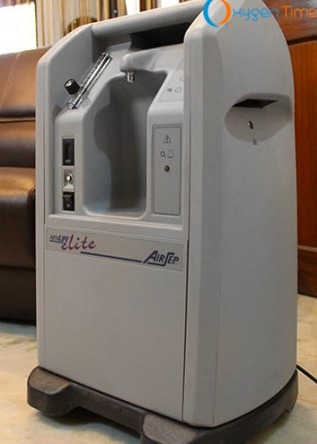
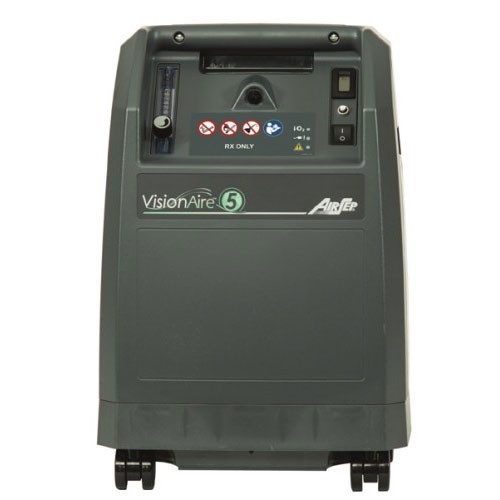
Invacare Perfect O2 V
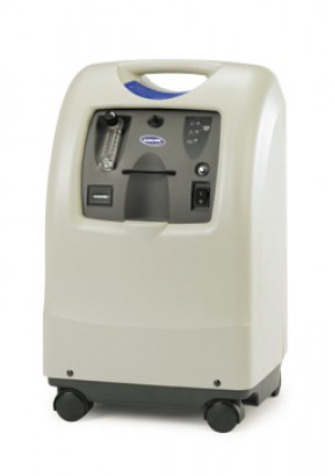
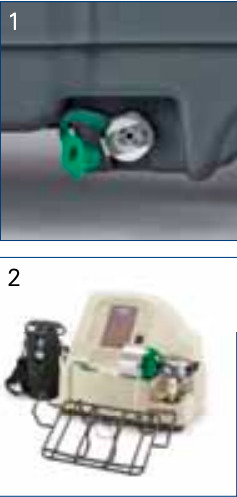
Key features
- Purity 90-95%
- Type Home Stationary
- Continuous Flow 0.5-5LPM
- Weight 17.6kg
- Oxygen Purity Indicator (OPI) No
- Power consumption 325watts
Specifications
| Purity | 90-95% |
|---|---|
| Type | Home Stationary |
| Continuous Flow | 0.5-5LPM |
| Weight | 17.6kg |
| Power consumption | 325watts |
| Sound level | 43db |
| Dimensions | 23H x 13W x 11.5Dinch |
| Operating altitude | 8000feet |
| Outlet pressure | 5psi |
| Loss of Power Alarm | Yes |
|---|---|
| System Malfunction Alarm | Yes |
| No Flow Alarm | Yes |
| Indian Voltage Model | Yes |
| Company Headquarters | USA |
Pros and cons
PROS
- Sound level of 43 dB is quieter than the DeVilbiss 525 (48 dB) and the Biocross 5 LPM (48 dB) — a valid mid-bedroom choice
- Flow floor of 0.5 LPM is adequate for most adult LTOT titration needs
- Power draw of 325 W is competitive in the 5 LPM class — only 15 W above the DeVilbiss 525
- Full alarm set — loss of power, system malfunction, and no-flow all listed
CONS
- Ships without an Oxygen Purity Indicator — no in-built warning when delivered purity falls below 86%
- Indian-configuration spec sheet does not confirm US FDA or CE marks — a problem for institutional buyers and a caution for home buyers
- Stock status is Out of stock on Indian e-commerce listings surveyed — new-unit availability is unreliable
- Operating altitude of 8,000 ft cuts off Leh, Spiti, and upper Himachal like its Nidek counterparts
The Invacare Perfect O2 V is a competent-on-paper 5 LPM stationary concentrator that has been caught by Invacare’s ongoing global parent-company restructuring and the consequent thinning of its Indian distribution network. At Rs. 59,520 it is priced slightly above the Nuvo Lite (Rs. 57,599) and materially above the DeVilbiss 525 (Rs. 45,984), and on the spec sheet it trades some quiet (43 dB) for missing the OPI and the certification marks that both competitors confirm.
Stock status is listed as Out of stock on Indian product listings at the time of this review, which is a consistent pattern for Invacare’s non-current stationary line in India through 2024-2026. Buyers should verify availability and dealer servicing capability before committing.
What the specs mean in practice
Weight: 17.6 kg. 4 kg heavier than the Nuvo Lite and 1.3 kg heavier than the DeVilbiss 525. This puts the Perfect O2 V at the heavier end of the 5 LPM class. For a single-person lift on castors it is manageable, but for multi-room relocation it is less convenient than the Nuvo Lite.
Sound: 43 dB. The quiet Invacare signature — 5 dB below the DeVilbiss 525 and 3 dB above the Nuvo Lite. In absolute terms, 43 dB is comfortably bedroom-compatible. At a pillow 3 metres away in a typical Indian bedroom, 43 dB attenuates to 37-39 dB, which is perceptibly below normal breathing sound.
Power: 325 W. At 14 h/day, about 4.55 kWh/day, roughly Rs. 1,065/month on Mumbai tariffs. Within Rs. 50 of the Nuvo Lite’s monthly cost and Rs. 115 above it on the DeVilbiss 525.
Oxygen Purity Indicator: not present. The manufacturer sheet shows the OPI field blank for the Indian configuration. This is the single most consequential miss on the spec sheet. For a 5 LPM machine on long-term therapy, the OPI is the in-built early warning system for sieve-bed aging. Without it, the patient has no audible alert when delivered purity drops below 86% — the failure is only detected when a clinician runs a handheld analyser check, which in Indian home practice rarely happens more than once a year.
Certifications: US FDA Approved, FAA Approved, CE Certified — all listed as blank on the manufacturer sheet. This is unusual and concerning. The parent brand Invacare’s US variants are FDA-cleared, and the Indian configuration may have been shipped without formal import marking on this particular spec sheet. Buyers intending to use the machine in institutional or insurance-reimbursed contexts need the paperwork. Home buyers have somewhat more latitude but should still ask the dealer for written confirmation.
Operating altitude: 8,000 ft. Same as the Nuvo Standard. Covers Shimla, Ooty, Mussoorie. Fails for Leh, Spiti, Tawang. The DeVilbiss 525 at 13,123 ft is the altitude answer; the Perfect O2 V is a plains machine.
Outlet pressure: 5 psi. The lowest in the 5 LPM class in this review. Below the Nuvo Lite’s 5.5 psi and well below the DeVilbiss 525’s 8.5 psi. For short tubing in a compact room this is adequate; for long-tubing installations or transfill this is inadequate.
Full alarm set: loss-of-power, system-malfunction, no-flow. All three confirmed on the sheet. This is actually better than the Nuvo Lite’s published alarm set (only loss-of-power is explicit) — but the absence of the OPI itself nullifies much of the benefit.
Who should buy it
Home buyers who already have an Invacare service relationship — a dealer in their city who stocks Invacare parts, has run-time experience with the Perfect O2 V, and offers in-home service within 48 hours — and who have a stable 0.5-4 LPM prescription at plains altitude. These criteria together describe a small population, and for most Indian Tier-2 and Tier-3 cities the service prerequisite is not met in 2026.
Buyers who specifically want the 43 dB noise signature (quieter than the 525) and are willing to accept the OPI gap with a plan to run 6-month purity checks with a dealer-supplied analyser. The 5 dB noise advantage over the DeVilbiss 525 is real for sensitive bedroom installations — patients with pre-existing sleep disorders, or those in small bedrooms where the machine sits within 2 metres of the bed — and for these narrow use cases the Perfect O2 V is defensible.
Hand-me-down or secondary-market scenarios where a Perfect O2 V becomes available at a substantial discount (Rs. 35,000-40,000) from an authorised source — at that price it becomes a rational value buy. At this discount the price gap versus the Biocross 5 LPM closes, and the Perfect O2 V’s more robust alarm set and slightly quieter signature justify a Rs. 3,000-5,000 premium over the Chinese-OEM alternative.
Institutional buyers running small respiratory wards who need a quieter 5 LPM signature than the 525 allows and who have internal purity-monitoring discipline that compensates for the missing OPI. Clinics and outpatient pulmonary rehabilitation facilities often fit this profile and have the infrastructure (handheld analyser, regular equipment checks) to manage the safety gap.
Who shouldn’t
Any institutional buyer. The missing FDA/CE/FAA marks on the Indian sheet are disqualifying for most procurement checklists.
Hill-station buyers above 7,500 ft. Same altitude limitation as most plains units.
Buyers who want a machine with in-built purity monitoring. No OPI means reliance on external measurement discipline that most Indian families do not maintain.
Buyers unable to confirm local Invacare service capability. Without dealer support, spares and service for this model are difficult to arrange in 2026.
Alternatives, head-to-head
Invacare Perfect O2 V vs Nidek Nuvo Lite. The Nuvo Lite at Rs. 57,599 is Rs. 1,921 cheaper, 4 kg lighter (13.6 vs 17.6 kg), 3 dB quieter (40 vs 43 dB — narrow margin), has the OPI, has the FDA+CE marks, and comes with a 3-year Indian warranty against the Invacare’s 1-year. The only two axes on which the Perfect O2 V competes are noise (marginal lead over DeVilbiss but loses to Nuvo Lite) and alarm set (has the no-flow alarm that Nuvo Lite’s sheet doesn’t explicitly confirm). At parity price, the Nuvo Lite is the cleaner buy.
Invacare Perfect O2 V vs DeVilbiss 525. The 525 at Rs. 45,984 is Rs. 13,536 cheaper, has the OPI, has the FDA+CE marks, has a 13,123 ft altitude cap, has an 8.5 psi outlet, and comes with a 3-year warranty. The Perfect O2 V is quieter (43 vs 48 dB) and draws slightly more power (325 vs 310 W). For the noise-only argument, the Perfect O2 V wins; on every other axis the 525 wins by wide margins. A home buyer choosing between these two should pick the 525 unless 5 dB of noise is a decisive bedroom issue.
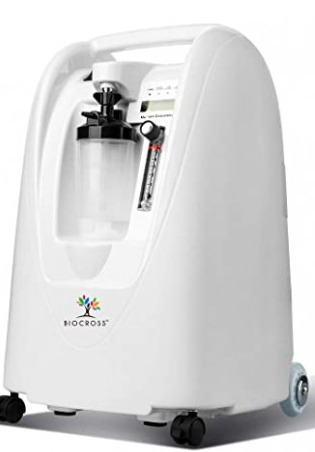
Invacare Perfect O2 V vs Biocross 5 LPM. The Biocross at Rs. 36,480 is Rs. 23,040 cheaper — a real gap — but also has no OPI, no FDA/CE marks, and a Chinese OEM origin with thin Indian service. In terms of paperwork gaps and service risk they are similar; the Perfect O2 V’s Invacare brand still carries some residual service weight versus the Biocross. For cost-only buyers choosing between these two, the Biocross is the cheaper buy and neither is a first recommendation — go to a Nuvo Lite or 525 instead.
Indian-market considerations
Voltage: 220V/50Hz Indian configuration stated. A 500 VA servo stabiliser handles the 325 W draw — budget Rs. 2,800-3,500.
UPS/inverter: 325 W is comfortable for a 1 kVA sine-wave inverter. 150 Ah battery gives approximately 40 minutes full-load backup.
CDSCO: The spec sheet does not confirm US FDA, CE, or FAA marks for the Indian configuration. This is a red flag that goes beyond a missing CDSCO number — it suggests the unit may have shipped as a parallel-import or grey-market variant without the full Indian registration stack. Institutional buyers should walk away. Home buyers should at minimum insist on a written Invacare-branded commercial invoice and importer declaration.
Altitude: 8,000 ft. Plains and low-hill use only.
Service: Invacare India’s service network has thinned since 2023 as the parent company has been through a restructuring. Authorised service points are fewer and response times are typically 5-10 days in 2026, against 2-3 days for Nidek or Drive service. This is the single strongest reason to avoid Invacare stationary units for patients in Tier-2 and Tier-3 cities unless a local Invacare dealer with confirmed in-stock spares exists.
Warranty: 1 year typically quoted by Indian dealers. Verify in writing.
Spares: Sieve-bed replacement lead times for Invacare units in India have been running 4-8 weeks in 2026. Filter replacement is less affected. Plan accordingly — for a Perfect O2 V as the primary LTOT unit, consider maintaining a secondary unit (even a Biocross at Rs. 36,480) as backup during extended service periods. The alternative is cylinder rental during the service window, which runs Rs. 1,500-3,000 per week depending on city and supplier.
Dealer-side confirmations before purchase: Before committing, the Indian buyer should obtain written confirmation from the dealer on (a) the specific unit’s FDA and CE certification status — ask for the original factory spec sheet for that serial number, (b) Indian-voltage configuration confirmed, (c) warranty duration and whether in-home service is included, (d) typical sieve-bed spare lead time, (e) availability of a handheld oxygen analyser for periodic purity checks. A dealer unable or unwilling to provide these confirmations in writing is not a dealer to buy from.
Purity-check discipline: For long-term use without an in-built OPI, the household should establish a quarterly purity verification routine — a 30-second check with a dealer-supplied handheld analyser at the delivery tubing end, with results logged in a paper or digital record. Handheld analysers with medical-grade accuracy are available in the Indian market at Rs. 12,000-22,000 from respiratory-care suppliers, a one-time investment that provides the monitoring function the machine lacks.
Flow-setting calibration: The Perfect O2 V’s flowmeter is a traditional ball-type float gauge. Over years of use these can drift — the indicated flow can read 5-10% higher or lower than actual. Pair the machine with a disposable flow-check device during annual service to verify calibration. Dealer service typically includes this but only if explicitly requested.
Verdict
The Invacare Perfect O2 V is a unit that would have been competitively positioned in 2019 when Invacare’s India service network was stronger and the competing Nidek and DeVilbiss units were at higher price points. In 2026, with Invacare service thinned, the Nuvo Lite at nearly the same price point and with better paperwork, and the DeVilbiss 525 at Rs. 13,500 less with altitude headroom, the Perfect O2 V has no clear niche. Buyers should default to either of the other two. The score of 5.5 reflects the gap between the machine’s on-paper capability and its actual purchasability and supportability in the Indian market at the time of this review. If Invacare’s India footprint recovers, a higher score may be warranted on re-review — for now, skip.