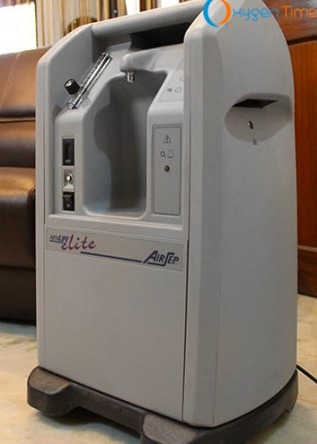
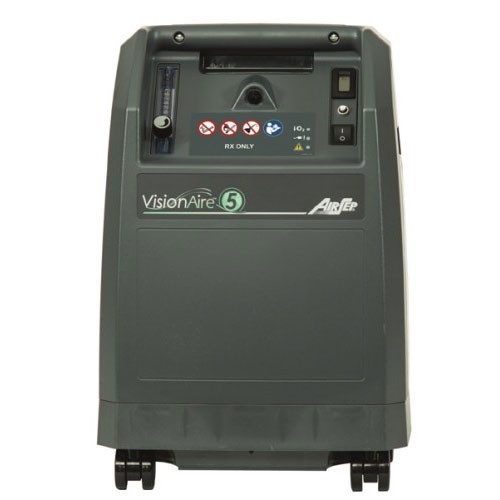
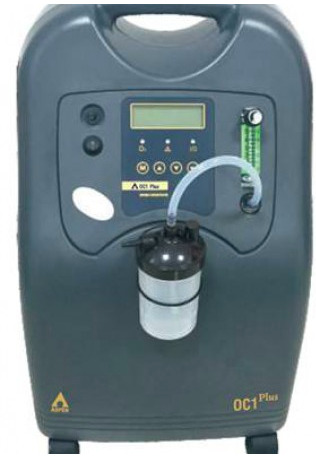
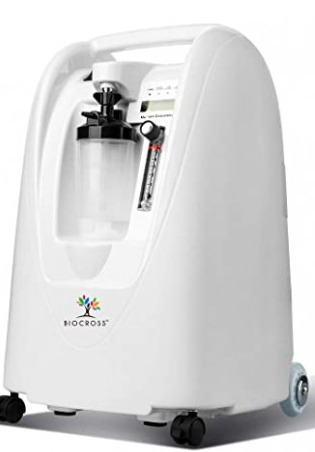
Healthgenie 5 LPM
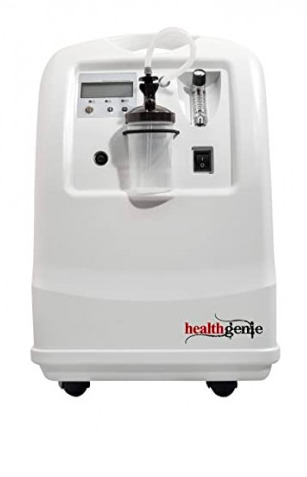
Key features
- Purity 90-95%
- Type Home Stationary
- Continuous Flow 0.5-5LPM
- Weight 21kg
- Oxygen Purity Indicator (OPI) No
- Power consumption 350watts
Specifications
| Purity | 90-95% |
|---|---|
| Type | Home Stationary |
| Continuous Flow | 0.5-5LPM |
| Weight | 21kg |
| Power consumption | 350watts |
| Sound level | 55db |
| Dimensions | 19.6H x 14.17W x 14.17Dinch |
| Indian Voltage Model | Yes |
|---|---|
| Company Headquarters | China |
| CE Certified | Yes |
Pros and cons
PROS
- ₹34,560 listed price is the lowest in the functional 5 LPM class
- CE certification is declared on the spec sheet
- 0.5-5 LPM continuous flow range supports paediatric and low-dose adult prescriptions
- Indian-voltage model per brochure
- 350 W power draw is efficient for the class
CONS
- All alarm rows (power, malfunction, no-flow) blank on brochure
- 21 kg chassis is heavier than 16-18 kg competitors
- 55 dB noise makes bedroom placement difficult
- No US FDA, no FAA on spec sheet
- No oxygen purity indicator or analyzer declared
The Healthgenie 5 LPM is the price-floor 5 LPM stationary concentrator available through mainstream Indian e-commerce listings at ₹34,560 per the manufacturer brochure and e-commerce product listings. It is a Chinese-origin unit branded under the Healthgenie name, a brand that also sells weighing scales, thermometers, and general health accessories in the Indian D2C space. The concentrator is priced below ₹35,000, which is the practical lower bound for any 5 LPM PSA-architecture unit that will pass basic electrical safety testing. Below this price, units in the Indian market are typically refurbished legacy stock, unsafe imports, or repackaged industrial oxygen generators. The Healthgenie sits at the legitimate floor. The question is whether the floor is worth it.
What the specs actually mean in Indian homes
The Healthgenie 5 LPM delivers 90-95% oxygen purity at a continuous flow range of 0.5 to 5 LPM. That purity band is the standard PSA-zeolite-bed output and matches every 5 LPM competitor. The 0.5 LPM floor is clinically important for paediatric and low-dose adult prescriptions — the Healthgenie covers this range where the Equinox 5 LPM does not (Equinox starts at 1 LPM).
Weight is 21 kg. This is the heaviest 5 LPM in our comparison set — heavier than the Eloxy at 19 kg, the Fitmate 5 at 18 kg, the Keyhub at 16 kg, and significantly heavier than branded competitors like the Philips EverFlo at 14 kg. The 21 kg weight is a proxy for older-generation PSA chassis designs with steel housings rather than the newer aluminium-and-plastic composites that modern 5 LPM units use. Two-person moves are the norm, and the unit will not traverse stairs easily without tipping. For a fixed-location use in one room this is not a problem; for a machine that must move between rooms or floors it is a daily friction point.
Power consumption of 350 W is good — identical to the Fitmate 5, the OxyPure 5, and the Yuwell 7F. Running cost at Indian domestic tariff of ₹8-10 per kWh is ₹67-84 per 24-hour day, or ₹20,000-25,000 per year at continuous 12-hour use. Over the likely 2-3 year service life of a budget-tier Chinese import, electricity cost exceeds purchase price.
Noise at 55 dB is loud. The Healthgenie at 55 dB, the Fitmate 5 at 55 dB, and the Niscomed at 50 dB all sit in a bracket that is not acceptable for bedroom placement. The Eloxy, Equinox, and Oxybliss all claim 40 dB (lower-class compressor isolation). At this price, noise is one of the first corners cut — the Healthgenie uses a less-damped compressor and a simpler sound enclosure. Place the unit in a hallway, adjacent room, or utility space.
Outlet pressure is not declared on the Healthgenie spec sheet — a blank row. This is unusual and suggests the spec was either not measured or not disclosed. For standard 7-foot cannula use this is usually fine (the machine will deliver flow regardless), but for extended tubing runs (25-50 feet) the buyer has no data to predict flow drop. If a humidifier is used inline, outlet pressure matters more — inadequate pressure will cause the humidifier bottle to not bubble properly and supplementary humidification becomes ineffective.
Dimensions at 19.6 × 14.17 × 14.17 inches are relatively compact — shorter than the Eloxy (23.6 inches tall) but deeper. The unit will fit under a standard hospital bedside table and beside most Indian home beds.
Compliance rows on the brochure: US FDA blank, FAA blank, CE declared Yes. Indian Voltage Model declared Yes. Loss of Power Alarm, System Malfunction Alarm, and No Flow Alarm all blank. This is the pattern that matters: the Healthgenie has a CE mark but zero declared alarms. A concentrator with no alarms is a concentrator where the patient or caregiver has to constantly visually verify that the unit is running, that flow is occurring, and that purity is adequate. For a conscious awake adult patient using the unit during the day, this is tolerable. For a sleeping patient, for a patient alone in a room, for an unconscious patient, no-alarm operation is a serious safety risk.
Who should buy the Healthgenie 5 LPM
The Healthgenie 5 LPM is a crisis-purchase unit. Its legitimate use case is a short-term, 2-6 week requirement — a post-hospital-discharge patient who needs supplemental oxygen at home for immediate post-acute recovery and will transition off oxygen within a few weeks, where buying a higher-priced branded unit is not justifiable because the use will end soon. In that scenario, the ₹34,560 price and the “some CE certification” on the label give the buyer a barely-defensible purchase. The buyer must be supervised — a family member awake and attentive during all oxygen use — because the absent alarms require human monitoring. At the end of 2-6 weeks the unit can be sold for roughly 50-60% of purchase price on OLX or Facebook Marketplace to another crisis-purchase buyer, making the effective rental cost ₹13,000-15,000, which is in line with short-term dealer-rental rates for branded units.
Who should not buy the Healthgenie 5 LPM
Long-term domiciliary oxygen users should not. Nocturnal-only oxygen users must have at least a loss-of-power alarm — the Healthgenie has none declared. Elderly-alone users and those with dementia or confusion cannot be trusted to monitor an alarm-less machine. Paediatric use should prefer machines with declared alarm coverage and demonstrable service networks. High-altitude users (any hill station above 4,000 feet) should verify operating altitude with the manufacturer, which the brochure does not declare. Any user whose prescription requires humidification should choose a machine with declared outlet pressure — the Healthgenie’s blank pressure row is a material gap.
How it compares: Healthgenie vs Oxybliss vs Eloxy vs Yuwell
Healthgenie vs Oxybliss 5 LPM — Oxybliss is listed at ₹36,480, roughly ₹1,920 more expensive. Oxybliss is Taiwan-headquartered, weighs less (not declared precisely, but physically similar dimensions), runs at 40 dB (15 dB quieter), and draws 300 W (14% more efficient). Both have blank compliance rows across US FDA/FAA, but Oxybliss is also blank on CE where Healthgenie is declared Yes. For the ₹1,920 price gap, buyers trade away a CE mark for a significantly quieter and more power-efficient machine. Verdict: Oxybliss wins for users prioritising noise and efficiency; Healthgenie wins only if CE is specifically required.
Healthgenie vs Eloxy 5 LPM — Eloxy is listed at ₹37,440 (₹2,880 more than Healthgenie). Eloxy runs at 40 dB (vs 55 dB), weighs 19 kg (vs 21 kg), draws 390 W (vs 350 W — Healthgenie wins on power). Neither has alarms declared. Eloxy has all compliance rows blank; Healthgenie has CE declared. Verdict: Healthgenie wins on CE mark and power; Eloxy wins on noise and weight. Marginal call — for bedroom placement Eloxy; for running cost and CE, Healthgenie.
Healthgenie vs Yuwell 7F 5 LPM — At roughly ₹45,000-55,000 the Yuwell 7F is ₹10,000-20,000 more expensive. It has full alarm coverage declared, Yuwell’s Chinese national registration, Indian service network in 40+ cities, weighs 14-15 kg, runs at 43 dB, and draws 300-350 W. Across every single dimension the Yuwell 7F is better than the Healthgenie. The ₹10,000-20,000 price gap is the cost of a unit that will actually last three years reliably with declared alarms and a service network. Verdict: Yuwell 7F wins by a wide margin for any use beyond 3 months.
Indian-market considerations
The Healthgenie brand’s broader presence in Indian retail (Amazon India, Flipkart, and Healthgenie’s own D2C site for blood pressure monitors, thermometers, weighing scales) gives it more consumer-facing visibility than pure-import brands like Eloxy. This visibility is both an advantage and a risk. The advantage is that Healthgenie has a defined returns policy and a customer service channel for its accessory products, which sometimes extends to its concentrator line. The risk is that the accessory-brand customer service may not be equipped to handle medical-device service requests — sending a concentrator back through an Amazon return channel is not the same as engaging a medical device service technician. For service needs the buyer is still dependent on the importing distributor’s technical team, which is not a Healthgenie corporate function.
Voltage stabiliser requirement: a 350 W concentrator needs a 1 kVA stabiliser (₹3,000-4,500) in most Indian urban supply environments. A small UPS (₹10,000-15,000 for 30-minute backup) is optional but recommended for metros with frequent cuts. CDSCO notification is not declared on the public Healthgenie concentrator listing (CDSCO); demand the notification number at purchase.
Service network reality: the Healthgenie concentrator has no declared national service network. Warranty claims route through the importing distributor. In tier-2 and tier-3 Indian cities, the effective service relationship is with whichever local dealer sold the unit. Typical service turnaround is 1-3 weeks for minor issues, 4-8 weeks for major component replacement. For a 2-month crisis-purchase window, this may be tolerable; for any longer horizon, not.
GST is 12%, typically inclusive in listed prices. The listed ₹34,560 is the customer-facing MRP. Some dealers will negotiate 5-10% off for cash purchases; online listings generally do not discount below MRP.
Verdict
The Healthgenie 5 LPM is the cheapest functional 5 LPM stationary in the Indian market that still carries a CE mark. It is heavy at 21 kg, loud at 55 dB, and has no declared alarms. For a very specific 2-6 week crisis purchase where the alternative is no machine at all, it is defensible. For literally any other use case — nocturnal oxygen, long-term domiciliary, elderly care, hospice, paediatric — it is not appropriate. The Yuwell 7F at ₹10,000-20,000 more money is a dramatically better machine and worth the stretch for almost any buyer. The Oxybliss at ₹1,920 more is a quieter and more power-efficient alternative at the same budget tier. The Healthgenie exists to fill the price floor, and once the buyer realises that the actual effective cost of operation (including stabiliser, UPS, and risk-adjusted failure cost) is 2x the headline price, the rational choice shifts upward by one tier. Score: 4.9 out of 10.