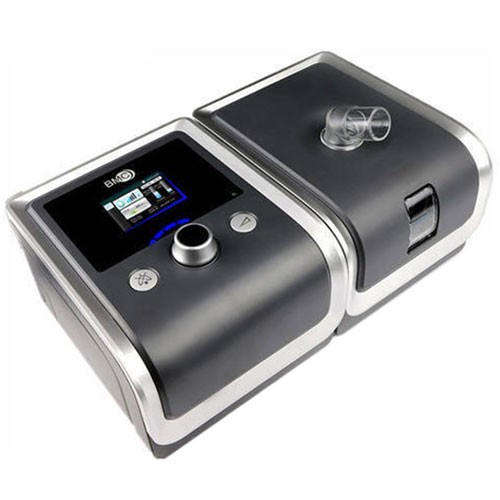
Wellel iX Auto CPAP Machine
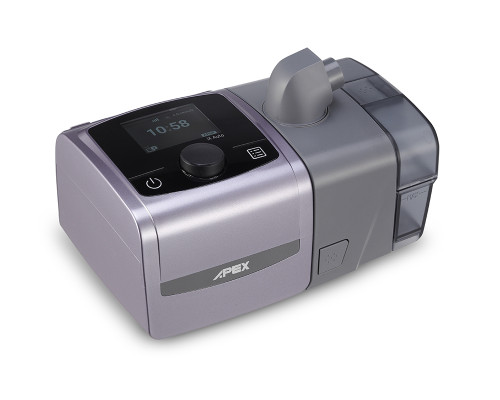
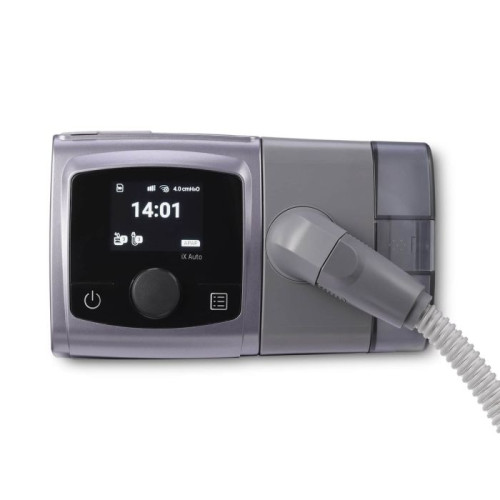
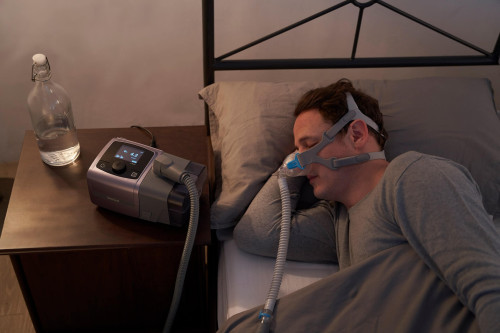
Key features
- Type Auto CPAP
- Modes CPAP, APAP
- Algorithm Advanced
- Turbine Made in Taiwan
- Pressure Range 4-20cmH₂O
- Ergonomic Tilted Display No
Specifications
| Type | Auto CPAP |
|---|---|
| Modes | CPAP, APAP |
| Algorithm | Advanced |
| Turbine | Made in Taiwan |
| Pressure Range | 4-20cmH₂O |
| Detachable Design | Yes |
| Sound level | 28dB |
| Weight | 1.49Kg |
| Dimensions | 235 x 145 x 147mm |
| Company Headquaters | Taiwan |
| Auto On/Off | Yes |
| Ramp Duration | 0-45min. |
| EPR | Yes |
| Humidifier | Heated |
| Adaptive Humidification | Yes |
| Central Apnea Detection | Yes |
|---|---|
| Leak Alert | Yes |
| Altitude Compensation | Yes |
| Leakage Compensation | Yes |
| SD card | Yes |
| Cloud connectivity/Wifi | Yes |
Pros and cons
PROS
- 1.49 kg is the lightest APAP chassis in the Indian market within ₹100 g of the ResMed AirSense 11 (1.24 kg without humidifier)
- Wi-Fi cloud connectivity is marked on the spec sheet — a feature not offered by the Oxymed SleepEasy, BPL Harmony or Deckmount VT50 at any Indian price point
- Adaptive humidification + CSA detection + leak compensation are all marked — a premium-APAP feature cluster rare at sub-₹70,000
- Taiwan-made turbine (the same quality tier as German turbines; substantially better than unbranded Chinese components)
CONS
- Currently listed as Out of Stock — a dominant practical limitation for any buyer who needs a machine now
- ₹65,280 price point offers uncertain value against the ResMed AirStart 10 / AirSense 10 for ₹45,000–₹65,000 street
- Warranty length, CE and FDA status are not stated in the published key features or additional details
The Wellell iX Auto CPAP (correctly spelled “Wellell” per the brand’s Taiwan corporate parent; Indian listings sometimes render it as “Wellel”) is the quiet premium-spec APAP in the Indian market’s middle tier. At 1.49 kg with a 28 dB published sound level, 4–20 cmH2O pressure envelope, Taiwan-made turbine, Wi-Fi cloud connectivity, adaptive humidification, central-sleep-apnea detection and leak compensation, its spec sheet is closer to ResMed AirSense 11 territory than to the Oxymed or BPL Indian-brand tier. The street price is ₹65,280 against an MRP of ₹86,400, which places it ~₹30,000 above the Oxymed SleepEasy and ~₹30,000 below a ResMed AirSense 11. At the time of review the machine is listed as Out of Stock on the Indian dealer channel — a significant practical problem for any buyer evaluating it today.
What the specs actually mean
The 4–20 cmH2O pressure envelope is standard adult APAP. The algorithm is labelled Advanced by Wellell. Taiwan’s CPAP/BiPAP engineering lineage — Wellell, BMC (Chinese but Taiwan-engineered for much of its mid-to-high tier), Apex Medical and a handful of OEMs — has been credible in the global market for fifteen-plus years, and Wellell specifically has a track record supplying OEM components into European and Asian sleep-therapy brands. A Taiwan-engineered Advanced algorithm is a meaningfully more credible claim than an unbranded Chinese-assembled device at the same price.
Central-apnea detection is marked. Leak compensation is marked. Adaptive humidification is marked. These three together are the premium-APAP feature cluster that distinguishes the ResMed AirSense 11 and Philips DreamStation Auto from the Indian-brand mid-tier. Wellell including all three on the iX Auto at this price is a genuine premium-feature-at-mid-price value proposition — on paper.
The 1.49 kg weight is the lightest APAP chassis you can buy through an Indian dealer that is not a travel-form-factor device. It is 60 g heavier than the BPL Harmony (1.55 kg), 310 g lighter than the Deckmount VT50 (1.8 kg), 510 g lighter than the Oxymed SleepEasy (2.0 kg), and roughly 250 g heavier than the ResMed AirSense 11 base unit (1.24 kg without humidifier). For a patient who plans to travel with the CPAP — weekend trips, domestic business travel, visits to family in a different city — that weight delta matters across repeated trips.
The 28 dB published sound level matches the BPL Harmony (28 dB), sits 2 dB quieter than the Oxymed SleepEasy (30 dB), and is 1 dB louder than the ResMed AirSense 11 (27 dB). It is class-competitive with the premium tier.
Wi-Fi cloud connectivity is the headline data-infrastructure feature. Wellell pushes compliance, pressure and AHI data to a cloud platform that the patient’s clinician can access. This is the capability that ResMed myAir pioneered and that Philips DreamMapper offers; the Indian-brand APAPs (Oxymed, BPL, Deckmount) do not yet offer this level of data integration. For a pulmonology practice running a remote-compliance monitoring programme, the iX Auto is one of the few sub-premium devices that plugs into that workflow.
Heated humidifier with adaptive humidification is marked. This is the algorithm that dynamically adjusts humidifier output based on measured ambient humidity and flow-rate data — a feature that reduces rainout during Indian winter without requiring manual humidifier-level adjustment by the patient.
EPR, leak alert, altitude compensation, SD card, SpO2 monitoring compatibility are all marked. Heated-tube compatibility is not marked — an inconsistent omission given that Wellell offers heated tubing on some of their other markets’ SKUs.
What is NOT on the spec sheet: ergonomic tilted display, mask-fit feedback, climate control, preheat (other than the implicit heated-humidifier preheat), trigger/cycle sensitivity (which is APAP-appropriate — these are Bi-Level parameters), back-up rate, and any ST-mode options (again, correct for an APAP).
CE and FDA are not stated in the published key features or additional details for this SKU. Warranty length is not stated in the listing data we reviewed.
Who should buy it
The iX Auto is the right machine for a first-time OSA patient who wants premium APAP features at a mid-tier price, whose pulmonologist wants Wi-Fi cloud compliance data integration, and whose budget falls in the ₹60,000–₹70,000 band. That profile lives between the Indian-brand mid-tier (Oxymed, BPL, Deckmount) where features are narrower and cloud data is absent, and the ResMed AirSense 11 premium tier where price is higher but algorithmic and service-network depth are best-in-class.
It is the right machine for a weight-conscious traveller — the 1.49 kg chassis is the best you can do outside the dedicated travel-CPAP category (Breas Z2 at 299 g, ResMed AirMini at 300 g).
It is the right machine for a household where the patient’s clinician specifically wants to monitor compliance remotely via a cloud platform. That is a narrow but growing segment in Indian pulmonology practice, and Wellell’s Wi-Fi infrastructure plugs into it cleanly in a way that no Indian-brand APAP does.
Who shouldn’t
Anyone who needs a machine now should not buy the iX Auto today. The Out-of-Stock status is the dominant practical limitation. For a patient discharged from a sleep study this week with a CPAP prescription, the machine’s availability window matters more than its spec sheet.
Anyone on a budget below ₹50,000 should not buy the iX Auto. The Oxymed SleepEasy at ₹28,499 and the BPL Harmony at ₹35,519 cover uncomplicated OSA perfectly well; the Wellell’s premium feature set is worth it only if the cloud data, adaptive humidification and CSA detection are genuinely used by the clinician.
Anyone whose budget stretches to ₹90,000–₹1,00,000 should consider the ResMed AirSense 11 instead. For the extra ₹25,000–₹35,000, ResMed delivers Easy-Breathe pressure waveform, deeper clinical-validation literature on the AutoSet algorithm, myAir cloud data with PAN-India clinician access, and the best service-network depth in the country. For long-horizon OSA therapy (10+ years), ResMed’s post-sale support ecosystem is worth the premium.
Anyone whose pulmonologist does not use cloud-based remote monitoring should not pay the Wellell premium over an Indian-brand APAP for the Wi-Fi feature they will never actually use.
Anyone who needs heated-tube compatibility for north-Indian winter should confirm with the dealer whether the specific Indian iX SKU ships with that option before purchase. It is not marked on the published spec data.
How it compares to real alternatives
iX Auto vs Oxymed SleepEasy
Oxymed SleepEasy is ₹28,499, 30 dB, 2.0 kg, German turbine, mobile-app data (Bluetooth, not Wi-Fi cloud), 3-year PAN-India home-service warranty. iX Auto is ₹65,280, 28 dB, 1.49 kg, Taiwan turbine, Wi-Fi cloud data, warranty terms unstated. Oxymed wins decisively on price and warranty; iX wins on weight, data infrastructure and adaptive humidification. For a buyer who will not use cloud compliance data, Oxymed is the better-value machine. For a buyer whose clinician uses cloud data, iX delivers genuine additional clinical integration.
iX Auto vs BPL Harmony
BPL Harmony is ₹35,519, 28 dB, 1.55 kg, 2-year warranty, SD-card data only, no CSA detection marked. iX Auto is ₹65,280, 28 dB, 1.49 kg, Wi-Fi cloud data, CSA detection marked, adaptive humidification marked. BPL wins on price by ~₹30,000; iX wins on every feature dimension — CSA detection, cloud data, adaptive humidification, slightly lighter chassis. For a buyer who values the BPL brand relationship, Harmony is the fit. For any feature-led comparison at this price band, iX is substantially ahead.
iX Auto vs ResMed AirStart 10 / AirSense 10 / AirSense 11
ResMed AirStart 10 is the closest ResMed price-match at ₹45,000–₹55,000 (where stocked). It offers Easy-Breathe waveform, ClimateLineAir heated-tube compatibility, myAir cloud, and the best Indian service network. iX Auto is ₹15,000–₹20,000 more expensive than AirStart 10 and ₹25,000+ cheaper than AirSense 11. For a buyer considering iX, AirStart 10 is the correct ResMed comparator — it is cheaper, is better-integrated into Indian sleep-medicine workflows, and carries the service-network advantage. iX wins on weight (1.49 kg vs ~1.24 kg for AirSense 11 / ~1.2 kg AirStart base) by a narrow margin; on every other dimension ResMed is ahead. At roughly the same price band, AirStart is the defensible buy over iX unless the Wellell-specific Wi-Fi data or adaptive-humidification implementations are specifically preferred.
iX Auto vs Philips DreamStation Auto
DreamStation Auto Indian supply continuity is the dominant issue post-2021 recall. Where available, prices hold ₹55,000–₹70,000. Philips’s DreamMapper cloud data and algorithm heritage are strong; the iX Auto has the weight, sound and adaptive-humidification advantages. For 2026 new purchases, we would not recommend DreamStation Auto over iX Auto on supply-continuity grounds.
Indian-market considerations
Wellell is a Taiwanese corporate entity; the iX Auto is Taiwan-engineered and Taiwan-manufactured. Turbine provenance matches the German-turbine standard that Oxymed claims on its SleepEasy family. For buyers who weight component provenance heavily (reasonable at the ₹65,000 price point), Taiwan manufacture is a defensible premium component.
Voltage: 220V/50Hz, 1-kVA stabiliser recommended. Same standard as any imported-or-premium CPAP in Indian residential supply.
CE and FDA are not stated in the published key features or additional details for this SKU (CDSCO Medical Device Registry). Wellell as a corporate parent has CE marking across its European-distributed SKUs; the specific Indian SKU’s current registration should be confirmed with the dealer. For hospital-channel or CGHS/ECHS reimbursement purchases, CDSCO Class B registration documentation will be required — confirm before purchase.
Service network: Wellell’s Indian service footprint is substantially thinner than Oxymed’s, BPL’s or ResMed’s. Wellell is distributed in India through a smaller dealer network with service concentrated in top-4 metros. For a tier-2 or tier-3 city buyer, this is a material post-sale support disadvantage. For a metro buyer, the distribution is adequate but not deep.
Wi-Fi data infrastructure: confirm with the dealer that the Indian SKU’s cloud platform is active, accessible in India, and supported for long-term data retention. Some Taiwanese/Chinese-branded CPAPs list Wi-Fi on the spec sheet but the associated cloud platform is region-locked or has uncertain service continuity. The Wellell cloud platform is documented for European and Asian markets; Indian specifics should be verified at point of sale.
Stock status: currently Out of Stock on the Indian dealer channel at the time of review. Before committing to the iX Auto, confirm dealer stock availability — buying a machine that takes 3–6 weeks to ship from Taiwan-via-Indian-distributor against a ResMed AirStart/AirSense unit available immediately is a meaningful practical trade-off.
Warranty length: not clearly stated in the listing data we reviewed. Confirm with the dealer. 2 years would place it below Oxymed’s 3-year home service; 3 years would place it at parity. This is load-bearing information for the purchase decision.
Verdict
The Wellell iX Auto CPAP is a Taiwan-engineered APAP with a genuinely impressive feature set for its ₹65,280 price — 1.49 kg weight, 28 dB sound, adaptive humidification, CSA detection, leak compensation, Wi-Fi cloud data. It is the best-featured sub-premium APAP available from the Indian dealer channel that is neither a ResMed nor a Philips. The three structural problems are the current Out-of-Stock status, the thin Indian service footprint outside the top-4 metros, and the narrow price gap to ResMed AirStart 10 (which wins on service network and algorithm heritage).
Score it 7.6 out of 10 on the spec sheet. Points off for current stock unavailability, the unclear warranty length, the unstated CE/FDA status on this SKU, and the service-network disadvantage versus domestic Indian brands in tier-2/tier-3 cities. If the machine is in stock at a specific dealer, your clinician wants cloud data, you live in a top-4 metro with Wellell service access, and your budget sits firmly in the ₹60,000–₹70,000 band, buy it. Otherwise, stretch the budget ₹15,000–₹20,000 to a ResMed AirStart or AirSense, or drop to the Oxymed SleepEasy for similar essential function at half the price.