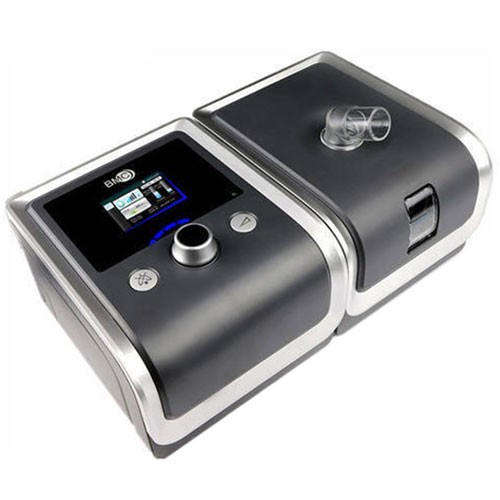
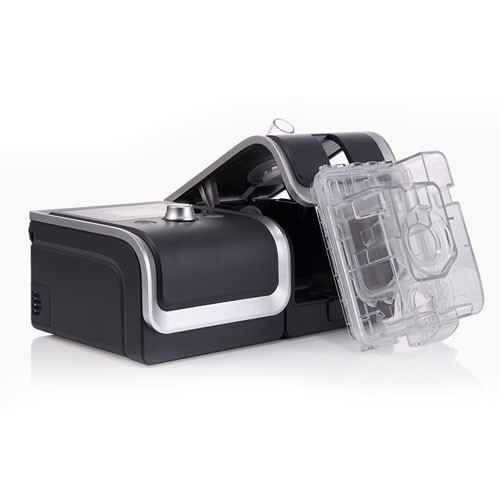
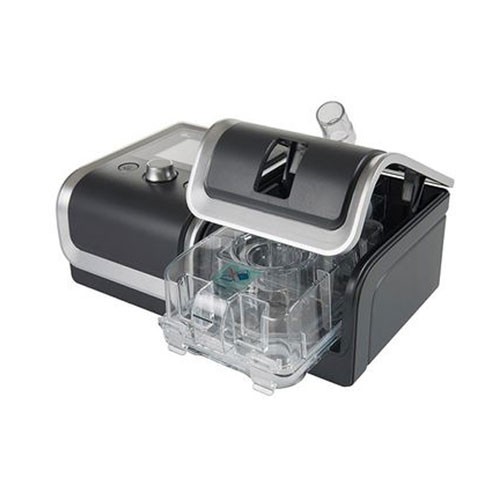
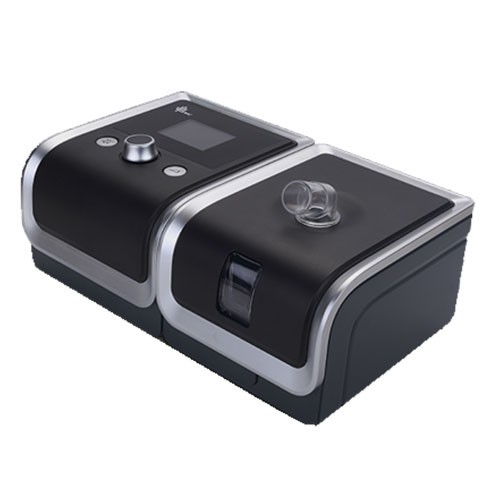
BMC RESmart GII Auto CPAP Machine (G2)
Key features
- Type Auto CPAP
- Modes CPAP, AUTO
- Algorithm Standard
- Turbine Made in China
- Pressure Range 4 - 20cmH₂O
- Ergonomic Tilted Display No
Specifications
| Type | Auto CPAP |
|---|---|
| Modes | CPAP, AUTO |
| Algorithm | Standard |
| Turbine | Made in China |
| Pressure Range | 4 - 20cmH₂O |
| Detachable Design | Yes |
| Sound level | 30dB |
| Weight | 2.5Kg |
| Dimensions | 290 x 180 x 134mm |
| Company Headquaters | China |
| Auto On/Off | Yes |
| Ramp Duration | 0 – 60min. |
| Ramp Down | No |
| EPR | Yes |
| Humidifier | Heated |
| Leak Alert | Yes |
|---|---|
| Altitude Compensation | Yes |
| Leakage Compensation | No |
| SD card | Yes |
| Cloud connectivity/Wifi | No |
| QR code | Yes |
| CE | Yes |
Pros and cons
PROS
- ₹17,490 indicative street price lands roughly 35–45% under a comparable ResMed AirSense 11 AutoSet, making first-year therapy committable without a ₹40,000+ bet
- 4–20 cmH2O pressure envelope covers the full clinical range used in Indian adult OSA titrations, not a cut-down travel band
- 30 dB published sound level is inside the bedside-tolerable range for small Indian bedrooms and partners sleeping within arm's reach
- Integrated heated humidifier is bundled in the base SKU, not a ₹6,000–9,000 add-on as on several competitor machines
CONS
- No Wi-Fi or cellular — compliance data off-loads only via SD card or QR-code iCode screen, which breaks remote titration workflows Indian sleep clinics have adopted post-2022
- 2-year warranty sits below the 3-year ResMed standard, and BMC service is concentrated in tier-1 cities with uneven coverage below Pune-Ahmedabad-Indore
- No central-apnea detection or RERA reporting — the machine will happily pressurise through complex events without flagging them, which matters in patients with cardiac or neurological comorbidity
The BMC RESmart GII Auto CPAP (often listed as the G2 or GII-Auto) is the machine most Indian first-time sleep-apnea patients end up buying when the prescription arrives and the household price ceiling is set somewhere below ₹25,000. At 2.5 kg with a published 30 dB sound level, a 4–20 cmH2O pressure envelope, a heated humidifier included in the base SKU, and iCode QR-code compliance readout, it targets the bulk of Indian adult obstructive-sleep-apnea prescriptions where budget is the binding constraint and the patient is being asked to commit to a device they may or may not tolerate past week three. Indicative street price sits at ₹17,490 against a ₹28,800 MRP per manufacturer brochure and e-commerce product listings, the unit is currently In Stock across most Indian dealer channels, and it ships with CE certification as its primary regulatory marker — FDA registration is not stated in the published additional details for this SKU.
What the specs actually mean
The 4–20 cmH2O pressure range is the most load-bearing spec on any Auto CPAP, and the GII covers the full clinical band Indian pulmonologists and sleep labs prescribe into. Most Indian adult OSA titrations land between 6 and 14 cmH2O, and the patient who needs 18+ cmH2O is either severely obese or has concurrent REM-predominant collapse — both rare but real presentations. The GII will pressurise into that territory without clipping, which is a meaningful distinction from travel CPAPs that cap at 12 or 15 cmH2O.
Auto mode is the whole point of buying an Auto CPAP rather than a fixed CPAP — the device titrates breath-by-breath between a lower and upper bound that the clinician sets after the first sleep study. BMC’s implementation is labelled “Standard” algorithm in the published key features, which is worth reading honestly: it is a competent but conservative auto-titration. It tends to chase events rather than pre-empt them, so a patient with heavy REM-predominant apnoea may feel the device is lagging compared to a ResMed AutoSet with its more aggressive response curve. For 80% of routine OSA cases this difference is not clinically meaningful; for the remaining 20% it is the reason the patient switches machines in year two.
The 2.5 kg weight is middling — lighter than legacy desktop CPAPs at 3–4 kg, heavier than the 1.2–1.5 kg travel-class machines, and the right target for a machine that will live on a bedside table for years rather than move. Dimensions of 290 × 180 × 134 mm are compact enough to fit on most Indian bedside furniture without displacing a water glass or a phone charger, which is a more important spec than it sounds — sleep-therapy adherence dies when the machine is inconvenient to reach at 2 am.
Published sound level is 30 dB, which puts it inside the whisper-quiet band — below the 32 dB most ceiling fans push at the lowest setting and safely under the 40 dB point at which partners start complaining. In a 10 × 12 ft Indian bedroom the GII at its prescribed pressure should be audible but not disruptive; the primary noise source in real installations is almost always the mask seal, not the blower.
The heated humidifier bundled into the base SKU is a genuine cost advantage in the Indian market. Comparable ResMed AirSense 11 and Philips DreamStation units quote their humidifier as a separate or optional component, and the delta runs ₹6,000–9,000. For Indian winter months — Delhi, Chandigarh, Jaipur, any north-Indian address — heated humidification is not optional; dry-mucosa side effects destroy therapy adherence in the first week. Having the humidifier in the box is a real buying-decision anchor.
The 0–60 minute ramp window and EPR (Expiratory Pressure Relief) are both present. Ramp eases the patient into therapy pressure gradually, which is the single biggest comfort feature for new users; EPR drops pressure fractionally on exhale to reduce the “fighting the machine” sensation. Auto Ramp is not listed, which is a small gap — the machine will ramp on a timer rather than detecting sleep onset. Ramp Down is not supported.
Altitude compensation is listed as Yes, which matters for Indian hill-station travel (Shimla, Manali, Nainital, Munnar) where atmospheric-pressure changes would otherwise skew delivered pressure. Leak Alert is present. Central Apnea Detection is not — the device will not flag complex or mixed apnoeas distinct from obstructive events, and that is a real gap in any patient with cardiac comorbidity, chronic opioid therapy, or a history of stroke.
Warranty is 2 years on the machine per the published FAQ. That is the standard BMC position in India and trails ResMed’s 3-year warranty by a year. For the buyer paying ₹17,490, the extra year is not usually worth the ₹20,000+ upgrade to a ResMed AutoSet — but it is a real gap, especially given BMC’s thinner authorised service footprint below the top six metros.
iCode and the data-off-load question
BMC’s iCode is a QR-code-based compliance readout — the machine computes a compressed summary (usage hours, AHI, leak) into a QR code the patient can show their physician, who scans it and reads the data off the BMC web portal. This is meaningfully better than no data at all, and it works offline, which matters in households with unreliable broadband. But it is not equivalent to ResMed’s myAir or Philips’s Care Orchestrator cloud workflow, where the physician pulls overnight data remotely and titrates without the patient visiting clinic. The SD card is also present, which is the backup for detailed waveform data that iCode strips away.
For Indian sleep clinics that adopted cloud-titration workflows post-2022 — and that is increasingly the tier-1-metropolitan standard — the GII’s lack of Wi-Fi or cellular connectivity is a real friction point. For clinics still working on in-person follow-up (tier-2 and tier-3), iCode is workable.
Who should buy it
The GII is the right machine for a newly-diagnosed adult OSA patient with AHI in the 15–35 range, on a budget that rules out the ₹40,000+ imported-brand CPAPs, where the sleep clinician is comfortable managing therapy on SD-card or iCode data rather than cloud feeds. That description covers a large fraction of Indian first-time CPAP buyers — the patient is uncertain about long-term adherence, the spouse is nervous about cost, and the household wants a credible machine without overcommitting.
It is the right machine where the pressure prescription lands in the 6–14 cmH2O band (which is the majority of Indian OSA titrations), where heated humidification matters (which is most Indian winters north of Mumbai), and where the 30 dB noise floor is acceptable to the bed partner. It is the right machine where the local authorised BMC service channel exists — which is dependable in Delhi NCR, Mumbai, Pune, Bangalore, Hyderabad, Chennai, Ahmedabad, Kolkata and Chandigarh, and progressively thinner from tier-2 cities downward.
It is also a defensible first machine for a patient who may upgrade to a ResMed or Philips in year two if BMC under-delivers — the ₹17,490 outlay is small enough that a planned two-machine path still nets out under the cost of a single ResMed AirSense 11 with humidifier.
Who shouldn’t
Anyone with central-apnea features on the diagnostic polysomnography — CompSA, cardiac-origin central events, opioid-induced central pattern — should not buy the GII. The absence of central-apnea detection means the machine will not flag the therapeutic failure mode that matters in these patients. They need a ResMed AirCurve or Philips DreamStation ASV class device.
Anyone whose sleep clinician runs a cloud-titration workflow should not buy the GII without first confirming that iCode-via-QR-code is acceptable to the clinic. If the clinic needs nightly cloud data for the first 90 days, the machine is structurally wrong.
Anyone with a pressure prescription above 18 cmH2O — severe obesity, REM-collapse, high-altitude residence pushing titration — should not buy the GII. It will work at 18–20, but the algorithm headroom and the comfort features (heated tube, climate control) of a higher-tier machine are worth the premium at that end of the pressure band.
And anyone travelling frequently for work — domestic flights, hotel nights, train overnighters — should look at the BMC M1 Mini travel unit rather than carry the 2.5 kg GII. The travel compromise is real only if it is made deliberately.
How it compares to real alternatives
GII vs ResMed AirSense 11 AutoSet
The ResMed AirSense 11 AutoSet is the premium reference point. It ships at a street price roughly 2.2–2.5× the GII, carries a 3-year warranty, includes Wi-Fi with myAir cloud as standard, uses the AutoSet algorithm that responds a half-cycle faster to events, and has the widest authorised service network in India among imported CPAPs. It clearly wins on data workflow, algorithm, warranty, and service depth. The GII wins on price — a ₹20,000+ gap that funds two years of filter and mask-cushion consumables — and on bundled humidifier. Pick the AirSense 11 if budget permits and the clinic runs cloud workflows; pick the GII if budget is binding or the patient is uncertain about long-term adherence.
GII vs Philips DreamStation 1 (legacy post-recall)
The Philips DreamStation 1 Auto CPAP sits between the two on price in India post-2023, once the recall-replacement stock cleared. It carries FAA approval and a more featureful cloud workflow via Care Orchestrator, but Indian buyers should be aware the 2021 DreamStation 1 foam recall damaged the DreamStation brand equity for an extended period. DreamStation 2 hardware (a distinct platform with a different foam) is what Philips is shipping new; older DreamStation 1 stock should be inspected for its service history before purchase. The GII has a cleaner regulatory history; the DreamStation has a deeper feature set. Pick the DreamStation 2 if the post-recall remediation gives the buyer confidence and the clinic uses Care Orchestrator; pick the GII if regulatory cleanliness and budget both matter.
GII vs BMC G3 B30VT
The BMC G3 B30VT is a higher-end sibling in the BMC lineup — 1.7 kg, 26 dB, 4–30 cmH2O, climate control, central-apnea detection, Wi-Fi-ready per the published spec table — but it is a BiPAP rather than an Auto CPAP. Pick the G3 B30VT only if the prescription has actually called for BiPAP (higher pressure, COPD overlap, high BMI, complex events). For straightforward OSA, the GII is the cleaner match; spending up to the G3 for a CPAP prescription is overbuying.
Indian-market considerations
BMC is a Shenzhen-headquartered company that ships into India through a distributor network rather than a direct Indian subsidiary. The practical consequence is that authorised service in India is routed through a handful of tier-1 city partners rather than a Philips-scale captive field force. Warranty claims work reliably when the buyer is in a tier-1 city with a named BMC partner; they take longer when the buyer is two states removed from that partner. The import-reality point matters: a GII bought from a grey-market Amazon reseller without a valid Indian invoice may be uninsurable under warranty even inside the 2-year window, and this is the single largest preventable mistake in Indian BMC purchases.
CDSCO registration is not stated in the published additional details for this specific SKU in the data we reviewed (CDSCO Medical Device Registry). Buyers working through hospital or institutional channels should confirm current registration with the supplier before issuing a PO.
Indian voltage tolerance is built into the machine — it ships as a universal-input 100–240V unit (standard for modern CPAPs of this class), so no step-down transformer is needed. A 1–2 amp voltage stabiliser in line with the CPAP is still recommended in tier-2 and tier-3 Indian cities where residential supply swings routinely; budget ₹1,500–2,500. Running without one is a real gamble on any imported CPAP left plugged in for 8 hours a night.
The price gap between online retail (₹17,490 indicative) and hospital-channel supply runs 10–20%. The hospital channel usually bundles the first titration visit, mask fitting, and 90-day check-in, which online purchase does not. For a first-time CPAP patient, the hospital bundle is often worth the premium; for a returning buyer replacing a well-understood prescription, online wins.
Verdict
For a newly-diagnosed Indian adult OSA patient with an AHI in the 15–35 range, a pressure prescription between 6 and 14 cmH2O, no central-apnea comorbidity, and a household budget ceiling below ₹25,000, the BMC RESmart GII Auto CPAP is the right first machine. It is not the best CPAP sold in India — that is the ResMed AirSense 11, unambiguously — but it is the most defensible entry point. The 30 dB sound floor, 4–20 cmH2O envelope, bundled heated humidifier, and 2-year warranty together cover the therapy profile most Indian first-timers actually need.
Score it 7.2 out of 10. Points off for the missing Wi-Fi cloud workflow, the absence of central-apnea detection, the thinner-than-Philips service network outside metros, and the algorithm’s conservative titration response compared to ResMed’s AutoSet. If the clinic insists on cloud data or the patient has central-apnea features, step up to a ResMed AirSense 11 or move to a full BiPAP. For everyone else, the GII is the cheapest credible therapy starter still shipping in India.
Frequently asked questions
What is the warranty of BMC RESmart GII Auto CPAP?
The warranty of BMC RESmart GII Auto CPAP is 2 years.
What are the top features of BMC RESmart GII Auto CPAP?
BMC RESmart GII Auto CPAP is an Auto CPAP machine and following are the few top features of this device are - Reslex Pressure Relief Ramp time Altitude Compensation Leak Compensation iCode for sleep data