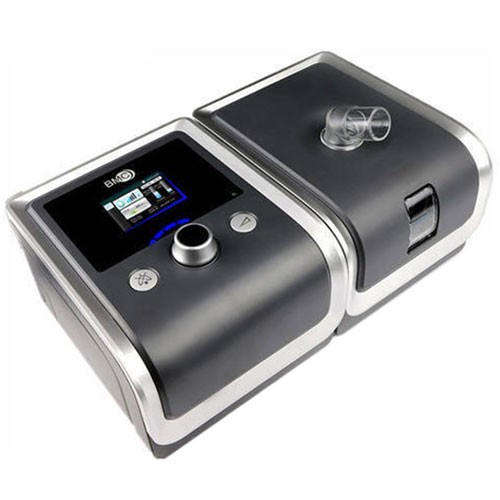
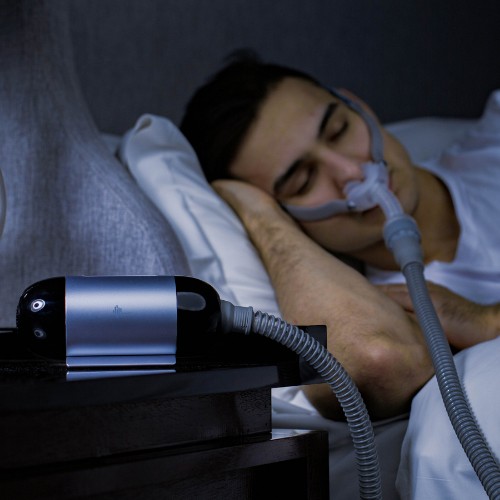
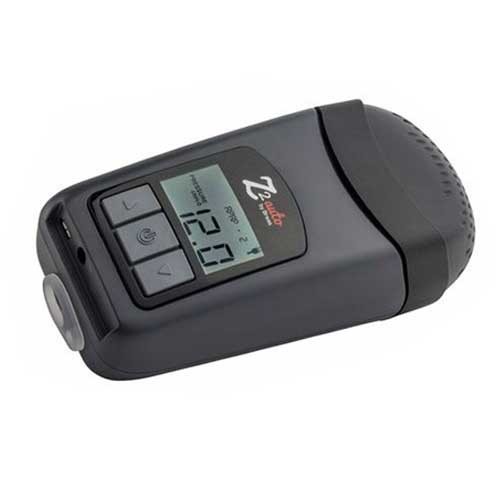
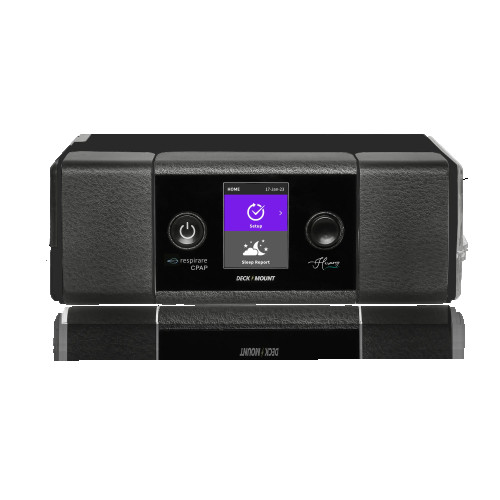
BPL Harmony Auto CPAP Machine
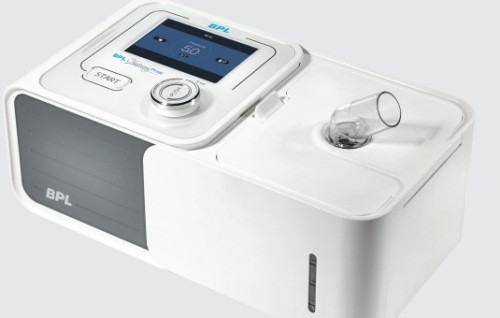
Key features
- Type APAP
- Modes CPAP, AUTO CPAP
- Algorithm Standard
- Pressure Range 4-20cmH₂O
- Ergonomic Tilted Display No
- Detachable Design Yes
Specifications
| Type | APAP |
|---|---|
| Modes | CPAP, AUTO CPAP |
| Algorithm | Standard |
| Pressure Range | 4-20cmH₂O |
| Detachable Design | Yes |
| Sound level | 28dB |
| Weight | 1.55Kg |
| Dimensions | 238 x 178 x 128mm |
| Company Headquaters | Bengaluru |
| Auto On/Off | Yes |
| Ramp Duration | 0-60min. |
| Ramp Down | No |
| EPR | Yes |
| Humidifier | Heated |
| Preheat | Yes |
| Leak Alert | Yes |
|---|---|
| Altitude Compensation | Yes |
| Leakage Compensation | Yes |
| SD card | Yes |
Pros and cons
PROS
- 28 dB published sound level is class-competitive with ResMed AirSense 11 (27 dB) and quieter than Oxymed SleepEasy (30 dB)
- 1.55 kg weight is meaningfully lighter than the 1.8–2.0 kg Indian-brand APAP pack; close to ResMed AirSense 11's 1.24 kg without humidifier
- BPL Medical brand heritage — the biomedical footprint hospital-channel buyers already know — gives this SKU real service-network credibility
- DC brushless motor rated by BPL at 20,000-hour service life, with a claimed 0.2-second pressure response time
CONS
- 2-year machine warranty is a full year shorter than the Oxymed 3-year PAN-India home-service commitment
- Algorithm is described in the spec sheet as Standard (not Advanced) — and central-apnea detection is not marked on the spec table
- CE and FDA approvals are not stated in the published key features or additional details for this SKU
The BPL Harmony Auto CPAP is the CPAP most Indian hospital-channel buyers consider when the brand name matters as much as the feature set. BPL Medical is a Bengaluru-headquartered Indian medical-device company with a multi-decade footprint in monitors, ECG, ultrasound and respiratory equipment sold into public and private hospital channels — and the Harmony Auto is their consumer-facing sleep-therapy entry. At 1.55 kg with a 28 dB published sound level and a 4–20 cmH2O pressure envelope, it targets the first-time OSA patient whose purchase decision is shaped by their clinician recommending a “known Indian brand” rather than by head-to-head spec shopping. The machine has a current street price of ₹35,519 against an MRP of ₹62,400, is listed as In Stock, and ships with a 2-year warranty per manufacturer brochure and e-commerce product listings.
What the specs actually mean
The 4–20 cmH2O pressure envelope is the standard adult APAP range. That envelope covers essentially every OSA prescription outside of obesity-hypoventilation territory (where you would be on a BiPAP anyway). In practice the 90th-percentile pressure on an Indian adult OSA APAP prescription lives in the 8–14 cmH2O band — the Harmony’s envelope has meaningful headroom both below and above that typical operating range.
BPL labels the algorithm “Standard” in the spec sheet — a notable honest-labelling decision, given that most sub-₹40,000 APAPs in India label themselves as Advanced regardless of actual algorithm sophistication. Standard here means the Harmony implements the basic APAP-titration loop (detect obstructive event → raise pressure → relax when the airway stays open) without the CSA-detection, event-classification or pressure-waveform-shaping that the premium class (ResMed AirSense 11, Philips DreamStation Auto) implement. For a simple uncomplicated OSA patient, that is clinically sufficient. For a patient with any hint of treatment-emergent CSA or complex sleep apnea, it is not.
Central-apnea detection is not marked on the spec table. Neither is RERA reporting. Both are features that matter for a subset of OSA patients — not the majority, but the subset where buying the wrong machine is a clinical error. Confirm with the prescribing pulmonologist whether the patient’s AHI breakdown shows any central component before specifying the Harmony.
The 28 dB published sound is genuinely class-competitive. ResMed AirSense 11 is 27 dB, BMC GII Auto is 26 dB, Philips DreamStation Auto is 26 dB — the Harmony sits within 1–2 dB of the premium class and 2 dB below the Oxymed SleepEasy (30 dB). In a typical Indian bedroom, 28 dB is bedside-acceptable even on silent nights.
The 1.55 kg chassis is meaningfully lighter than the 1.8 kg Deckmount VT 50, the 2.0 kg Oxymed SleepEasy, and the 1.7 kg typical BMC/Philips mid-tier. It matches the Wellel iX (1.49 kg) and approaches the ResMed AirSense 11’s 1.24 kg (without humidifier). For domestic travel or bedroom repositioning, the 300–450 g difference from heavier Indian competitors is a real practical advantage.
Heated humidifier with preheat is published. EPR (exhalation pressure relief) is published — but only as a yes/no on the spec table, with no indication of the pressure-relief step sizes or whether the relief is active across all auto-titration pressures. Leak compensation is marked yes; SD card data logging is marked yes. Bluetooth/Wi-Fi and mobile app connectivity are not marked on the spec table — the data infrastructure for the Harmony appears to be SD-card only, which is a step behind the Oxymed SleepEasy (app-connected) in the same price band.
Heated-tube compatibility is not marked. Climate control, adaptive humidification and mask-fit feedback are not marked. These are all comfort and first-week-of-therapy adherence features where the Harmony specifies lower than both Oxymed’s equivalent and ResMed’s equivalent.
The turbine is unspecified in the published data (neither “Made in Germany” nor “Made in Taiwan” nor any other provenance marker). BPL claims a DC brushless motor rated at 20,000 hours of service life with a 0.2-second pressure response time. 20,000 hours at 8 hours/night is roughly 7 years of continuous use — a defensible claim if the component spec holds.
CE and FDA are not stated in the published key features or additional details for this SKU.
Who should buy it
The Harmony Auto is the right machine for a first-time OSA patient whose clinician specifically recommended BPL as a trusted Indian medical-device brand. For many Indian pulmonologists, BPL Medical is a 15-plus-year relationship — their ECG machine, their patient monitor, their multi-para system in the ward — and the trust that clinician-brand relationship generates carries over to the sleep-therapy SKU. If that relationship is a factor, the Harmony is the right choice.
It is the right machine for a hospital-channel purchase where procurement familiarity with BPL matters. CGHS, ECHS and PSU hospital procurement processes favour established Indian medical-device brands; BPL fits that profile cleanly. Oxymed and Deckmount do not have the same procurement-channel footprint.
It is the right machine for a household that prioritises a quiet, lightweight APAP and is not shopping on warranty length or on cloud-data integration. 28 dB and 1.55 kg are genuinely good specs for the price, and for a patient who just wants a quiet, light APAP from a brand they already know, the Harmony delivers that honestly.
It is the right machine for a patient whose AHI is in the mild-to-moderate band with no central-apnea component and whose clinician is happy with a Standard APAP algorithm. Not every OSA case needs a premium algorithm; this one handles the uncomplicated 80% well.
Who shouldn’t
Anyone with a sleep study showing even modest central-apnea events should not buy the Harmony. Central-apnea detection is not marked on this SKU, and a Standard algorithm that responds to any apnea event with pressure escalation can worsen treatment-emergent CSA. The ResMed AirSense 11 (with AutoSet for Her and CSA-aware titration) or Philips DreamStation Auto (with CSA event identification) are the defensible category.
Anyone whose pulmonologist runs a cloud-based compliance-monitoring programme should not buy the Harmony. The data infrastructure is SD-card only per the published spec; there is no myAir-style cloud upload, and no app-based Bluetooth data export is marked.
Anyone who needs heated-tube compatibility for north-Indian winter operation without rainout should not buy the Harmony. That feature is not listed. For Delhi/Lucknow/Chandigarh December-February use, this limits the humidifier output you can safely run.
Anyone shopping purely on price-to-feature ratio should compare the Harmony to the Oxymed SleepEasy (₹28,499 with mobile app and 3-year warranty) before committing. The Harmony costs ₹7,000 more for a shorter warranty and narrower data infrastructure — the case for paying that premium has to be the BPL brand factor, not the spec sheet.
Anyone whose prescription is “BiPAP-class” (pressures above 18 expected, CPAP intolerance documented) should not buy an APAP at all; step up to a Bi-Level device. BPL’s own BiPAP line (LifePAP) is the same-brand step-up.
How it compares to real alternatives
Harmony Auto vs Oxymed SleepEasy
This is the most common head-to-head for an Indian buyer in the ₹25,000–₹40,000 APAP band. Oxymed SleepEasy is ₹28,499, 30 dB, 2.0 kg, German turbine, 3-year warranty with PAN-India home service, mobile-app data, Advanced algorithm labelling with FlowSens-style CSA detection. BPL Harmony is ₹35,519, 28 dB, 1.55 kg, unspecified turbine, 2-year warranty, SD-card data, Standard algorithm labelling, no CSA detection marked. SleepEasy wins on price (₹7,020 cheaper), warranty (1 year longer), turbine provenance, algorithm sophistication, and data infrastructure. Harmony wins on sound (2 dB quieter), weight (450 g lighter), and brand heritage. For a pure feature-per-rupee calculation, SleepEasy is ahead. For a clinician-recommended-BPL purchase, Harmony wins the relationship argument.
Harmony Auto vs ResMed AirStart 10 / AirSense 11
ResMed’s entry and premium APAP tier sits at ₹45,000–₹90,000 street depending on SKU. For the extra ₹10,000–₹55,000, ResMed delivers Easy-Breathe waveform, ClimateLineAir heated-tube compatibility, myAir cloud data, documented algorithm with peer-reviewed validation, and the largest service network in India. If budget allows, AirSense 11 is the defensible buy for any serious OSA prescription. The Harmony is a legitimate cheaper alternative if budget binds and the clinician is comfortable with a Standard algorithm.
Harmony Auto vs Philips DreamStation Auto
Post-2021 recall, Indian availability of DreamStation Auto is inconsistent. Where still available, it prices in the ₹55,000+ band. The Harmony’s price advantage is large; Philips’s data and algorithm story is stronger but supply risk is real. We would not recommend DreamStation over Harmony as a new 2026 purchase on supply-continuity grounds.
Harmony Auto vs BMC GII Auto
BMC GII Auto is ₹38,000–₹45,000 street with a 26 dB sound, Advanced algorithm labelling, heated-tube compatibility on its higher SKUs, and OEM pedigree from global Bi-Level supply relationships. BPL Harmony is cheaper, BPL-branded, and has a more recognisable Indian footprint for hospital-channel buyers. For a feature-led purchase, BMC wins marginally on heated tube and algorithm labelling. For a brand-led purchase, BPL wins on Indian-market recognition.
Indian-market considerations
BPL Medical is headquartered in Bengaluru. The service network is the second-broadest among Indian-brand CPAP manufacturers (behind Oxymed), with authorised service centres in all top-12 metros and most tier-2 cities. Warranty claim turnaround is typically 7–10 days from the time the machine reaches the service centre; home service is not standard on this SKU per the published details — a key difference from Oxymed’s 3-year home-service offering.
Voltage: 220V/50Hz. Use a 1-kVA stabiliser ahead of the adapter. Any CPAP should be voltage-conditioned at the wall in Indian residential supply; BPL’s adapter is no more forgiving of voltage swings than any other brand’s.
CE and FDA status is not stated in the published key features or additional details for this SKU. BPL Medical as a company has a strong Indian regulatory footprint with CDSCO across its broader medical-device portfolio; confirm the specific registration for this Harmony SKU with the dealer at point of sale, particularly for any hospital-channel or CGHS/ECHS-reimbursed purchase.
Data infrastructure: SD card is the published data path. For a clinician reviewing downloaded reports in OSCAR or a similar tool, this is workable but friction-heavy — the patient must remove the SD card, bring it to the clinic, and wait for the clinician to download. The Oxymed SleepEasy’s Bluetooth-app pathway is operationally much smoother for ongoing remote compliance tracking.
Warranty: 2 years on the machine. FAQ data on the product listing confirms 2 years as the warranty length. That is 1 year shorter than the Oxymed SleepEasy and 1 year shorter than the Deckmount 3-year offering where applicable. For a device that will run 3,000 hours a year, the difference between a 2-year and 3-year warranty is real insurance value — roughly ₹4,000–₹6,000 of expected-repair cost. Factor that into the price comparison.
Verdict
The BPL Harmony Auto CPAP is the right choice for a first-time Indian OSA patient whose purchase decision is materially influenced by BPL Medical as a trusted brand, whose AHI is in the mild-to-moderate uncomplicated band, and whose clinician is comfortable with a Standard APAP algorithm on an SD-card data infrastructure. For that profile, the 28 dB sound, 1.55 kg weight and BPL service network deliver real value at ₹35,519.
Score it 7.1 out of 10. Points off for the shorter 2-year warranty against Oxymed’s 3-year home service, for the missing CSA-detection on the spec sheet, for the unstated CE/FDA status, and for the SD-card-only data infrastructure that is materially behind the app-connected Oxymed alternative at a lower price. If the BPL brand factor is the reason you are shopping, buy it. If you are shopping by spec-per-rupee, the Oxymed SleepEasy is the cheaper and more featureful alternative; and if budget allows, the ResMed AirSense 11 is the long-horizon buy.
Frequently asked questions
What is the warranty of BPL Harmony Auto CPAP Machine?
The warranty of BPL Harmony Auto CPAP Machine is 2 years.