ResMed AirSense 10 Auto Set CPAP Machine
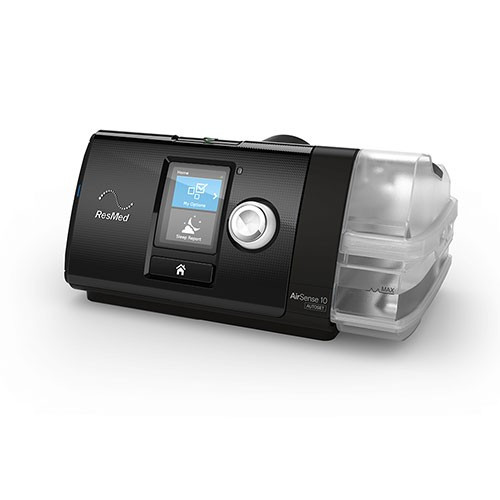
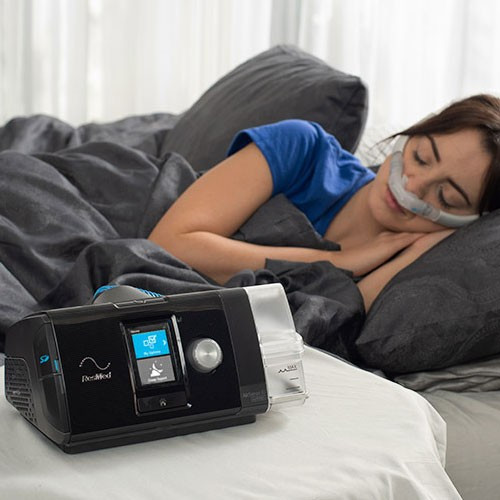
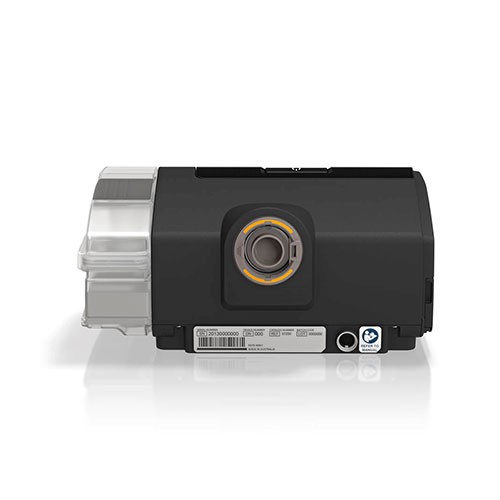
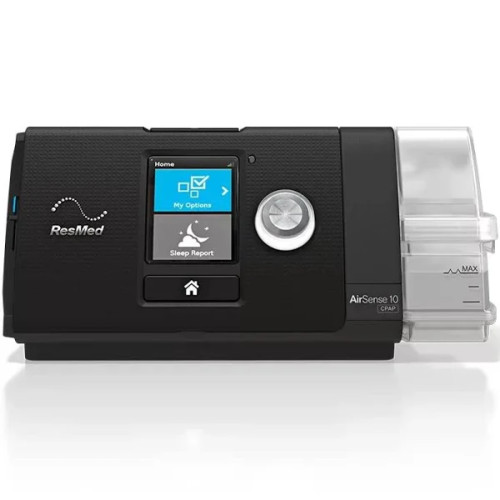
Key features
- Type Auto CPAP
- Modes 4-30
- Algorithm Advanced
- Turbine Made in Australia
- Pressure Range 4-20cmH₂O
- Ergonomic Tilted Display Yes
Specifications
| Type | Auto CPAP |
|---|---|
| Modes | 4-30 |
| Algorithm | Advanced |
| Turbine | Made in Australia |
| Pressure Range | 4-20cmH₂O |
| Ergonomic Tilted Display | Yes |
| Sound level | 25dB |
| Weight | 1.24Kg |
| Dimensions | 116 x 255 x 150mm |
| Company Headquaters | California |
| Auto On/Off | Yes |
| Ramp Duration | 0-45min. |
| Auto Ramp | Yes |
| EPR | Yes |
| Humidifier | Heated |
| Heated Tube Compatibility | Yes |
| Climate control | Yes |
| Preheat | Yes |
| Adaptive Humidification | Yes |
| Mask Fit | Yes |
| Central Apnea Detection | Yes |
| Leak Alert | Yes |
|---|---|
| Altitude Compensation | Yes |
| SpO2 Monitoring Compatibility | Yes |
| Leakage Compensation | Yes |
| SD card | Yes |
| Cloud connectivity/Wifi | Optional |
| FAA | Yes |
| FDA | Yes |
| CE | Yes |
Pros and cons
PROS
- 25 dB published sound level is 2 dB quieter than the AirSense 11 and genuinely below bedside-disruption threshold
- Same AutoSet and AutoSet for Her algorithms as the AirSense 11 flagship at ₹17,000 lower retail
- Cellular modem and AirView compatibility available as SKU option, preserving the remote-titration workflow
- Published 1.24 kg weight and 116 × 255 × 150 mm footprint fits standard Indian bedside-table real estate
CONS
- Button-and-knob interface is a half-generation behind the AirSense 11 touchscreen and slower to navigate for first-time users
- Cloud connectivity is published as Optional — the base SKU ships without a modem, so data upload defaults to SD-card shuttle
- No Bluetooth — no myAir phone-app direct pairing on base units, which removes the nightly therapy-score feedback loop
The ResMed AirSense 10 AutoSet was ResMed’s flagship auto-adjusting CPAP from its 2014 introduction until the AirSense 11 superseded it in 2021, and in the Indian market it is still — as of 2026 — the APAP we recommend first for a cost-conscious but clinically serious OSA buyer. It delivers auto-titrating pressure within a 4-20 cmH2O envelope, runs the same “Advanced” AutoSet and AutoSet for Her algorithms that ship on the AirSense 11, and ships at a published 1.24 kg, 25 dB, and an indicative retail of ₹45,999 with cloud connectivity optional (varies by region/dealer). The device carries US FDA approval, CE marking, and FAA approval per the manufacturer brochure and e-commerce product listings, and comes in the box with a HumidAir heated humidifier and ClimateLineAir heated tubing on the standard Indian-market SKU. ResMed has not announced an end-of-life date for the AirSense 10 platform, and the existing Indian service network stocks full spares.
What the specs actually mean
The 4-20 cmH2O auto pressure range is the clinically load-bearing specification, and it is identical to the AirSense 11. Adult OSA titration in Indian sleep labs converges on a modal requirement in the 8-14 cmH2O range, with 90th-percentile patients reaching 15-17 cmH2O during REM or in supine-dominant phenotypes (AASM Practice Guidelines). The 20 cmH2O ceiling preserves headroom for positional or REM-heavy events without the pressure clipping that a 4-15 cmH2O APAP would impose. Any serious APAP platform for adult OSA should deliver the full 4-20 cmH2O window; the AirSense 10 delivers it exactly as the AirSense 11 does.
The AutoSet algorithm is the real differentiator between ResMed and every other brand in this price band. Per the manufacturer’s published behaviour, AutoSet responds to apnoeas, hypopnoeas, and flow limitation — the flow-limitation response is the load-bearing feature. Flow limitation is the pre-clinical precursor to a full apnoea, and raising pressure to eliminate flow limitation before the event fully forms is what produces the quieter pressure trace and lower residual AHI the AutoSet is known for. Competing algorithms — BMC’s iCode-H, Philips’ OptiStart — are more conservative and produce higher residual flow-limitation scores on matched patients in the clinical comparison literature.
Advanced Event Detection is published on the AirSense 10 spec sheet. The device flags central sleep apnoea, Cheyne-Stokes respiration, and by extension identifies the clinical case where the patient needs escalation off APAP onto a BiPAP or ASV platform. The AirSense 10 does not treat centrals — it flags them so the clinician can change the prescription.
AutoRamp with sleep-onset detection is published as Yes. The device starts at 4 cmH2O, waits for stable sleep breathing, then ramps to the configured minimum therapy pressure. Without this feature, a patient is falling asleep at full therapy pressure — which is the single most common reason for CPAP abandonment in the first 7-14 days of use in Indian adherence data. Ramp duration is 0-45 minutes.
EPR — Expiratory Pressure Relief — drops pressure 1, 2, or 3 cmH2O at exhalation onset. It is the comfort feature most directly correlated with 90-day adherence in the first-month titration window, and it is on the AirSense 10 unchanged from the AirSense 11.
The published sound level is 25 dB, which is 2 dB quieter than the AirSense 11’s 27 dB. In the physics of the situation, 2 dB is not a lot, but it is measurable, and it puts the AirSense 10 in the quietest tier of APAPs currently shipping. The unit is quiet enough to sit 60-100 cm from a sleeper’s head in a small Indian bedroom without producing audible fan noise above ambient fan or AC hum.
Altitude compensation is published as Yes. The blower sensor-loop closes on delivered pressure, not fan RPM, so a patient using the AirSense 10 in Shimla, Darjeeling, Gangtok, Leh or on an overnight train crossing high passes will get compensated delivered pressure without any settings change. This matters in an Indian context where patients routinely travel with the machine to family homes at 1,500-2,500 m altitude.
Central Apnea Detection, SpO2 monitoring compatibility (via the ResMed oximeter accessory), and leak alerts are all on the AirSense 10 base specification. RERA reporting is not — that was added in the AirSense 11 generation, and clinicians who specifically need respiratory effort-related arousal visibility in their remote titration workflow should note this.
The connectivity story is where the AirSense 10 most clearly trails the AirSense 11. The published base SKU has an SD card for therapy data and Cloud connectivity/Wifi listed as “Optional” — meaning the cellular modem is a separately-specified variant. The non-modem SKU requires the patient to physically return the SD card to the clinic (or post it in) for download; the modem SKU uploads nightly to AirView in the same way the AirSense 11 does. The AirSense 10 does not have Bluetooth at all on any SKU, which means no direct phone-app pairing via ResMed’s myAir — another workflow the AirSense 11 added.
Mask compatibility is the standard ResMed ecosystem — AirFit N20, N30i, F20, F30, P10 pillows, AirTouch memory-foam variants. Mask-fit verification is on the base device and runs a pre-therapy leak check through the prescribed mask.
HumidAir heated humidification with ClimateLineAir tubing is integrated, Climate Control is available for auto temperature/humidity regulation, and the tub is the older-generation HumidAir (not the HumidAir 11 used on the AirSense 11). The two humidifier tubs are not interchangeable, which matters for replacement sourcing.
Who should buy it
The AirSense 10 AutoSet is the correct buy for an adult OSA patient newly starting CPAP therapy where the AHI is in the 15-50 range (moderate to severe), the sleep study does not show significant central apnoea, and the budget is genuinely constrained. Indian pulmonology and sleep-medicine prescribing practice still leans heavily on the AirSense 10 — most clinics have been prescribing it since 2014 and their titration database is built around its AutoSet output.
It is the right machine for a patient who will collect the device, take it home, and return for a 3-month follow-up visit where the clinic pulls data off the SD card. That is the majority of tier-2 Indian practice, where remote AirView titration is not set up and the patient-clinic relationship is built around in-person visits. For that workflow, the optional-cellular-modem SKU adds no value.
It is the right machine for an Indian buyer who values the quieter 25 dB blower acoustic over the touchscreen interface and 4G data upload of the AirSense 11. The difference is genuine in a shared-bed scenario — a partner sensitive to night-time fan or AC noise will hear the 2 dB delta.
And it is the right machine where the buyer is replacing an end-of-life older CPAP, is already trained on the ResMed interface, and does not want to learn a new device. The AirSense 10 interface — dial, rocker button, 2.5-inch colour LCD — has been stable for a decade. A patient on a 5-year-old AirSense 10 whose machine has reached end-of-service-life can buy a new AirSense 10 and carry forward every setting without retraining.
Who shouldn’t
Anyone whose prescription explicitly requires remote titration through AirView — increasingly common in tier-1 metro sleep practices — should specify the modem-included SKU or move up to the AirSense 11, where 4G cellular is native on the India spec. Buying the base AirSense 10 SKU and expecting AirView integration is a workflow failure.
Anyone who wants the myAir phone-app therapy-score feedback loop — the gamified compliance dashboard that improves long-term adherence — should buy the AirSense 11. The AirSense 10 has no Bluetooth and no way to pair directly with myAir on any SKU.
Anyone whose study shows a meaningful central apnoea component or Cheyne-Stokes pattern should not buy an APAP at all, AirSense 10 or AirSense 11 — that is the indication for an AirCurve VAuto, ST, or ASV, not a CPAP.
And any OHS or neuromuscular or COPD-OSA-overlap patient needs a BiPAP, not an AirSense. Pressure-support delivery (the numerical difference between IPAP and EPAP) is the clinical feature the AirSense 10 does not provide — EPR is not the same thing. EPR is cosmetic exhalation relief; pressure support is a ventilatory augmentation that changes tidal volume. For hypoventilation phenotypes, a Lumis 100 or 150 VPAP ST is the correct class.
How it compares to real alternatives
ResMed AirSense 11 AutoSet (₹63,390). The AirSense 11 is the direct successor. Same 4-20 cmH2O pressure range, same AutoSet algorithm, same AutoSet for Her variant, same AutoRamp, same EPR, same climate control. The AirSense 11 adds RERA reporting, native Bluetooth, standard-on-base-SKU 4G cellular for AirView upload, a touchscreen interface, and a slightly more compact chassis at 1.1 kg vs 1.24 kg. The AirSense 11 is 2 dB noisier at a published 27 dB vs the AirSense 10’s 25 dB. For an uncomplicated OSA patient in an Indian tier-2 city paying out of pocket, the AirSense 10 at ₹45,999 is the clinically equivalent device at the lower price. The ₹17,000 difference is better kept in the patient’s pocket than spent on a touchscreen. Our call: AirSense 10 unless the clinic is specifically running AirView-based remote titration and requires native cellular upload.
Philips DreamStation 2 Auto. The DreamStation 2 is Philips’ current-generation response to the AirSense 10/11 and competes on similar 4-20 cmH2O auto-pressure specs and integrated heated humidification. Philips’ algorithm behaves more conservatively in raising pressure, which some patients find more comfortable but which can produce higher residual AHI in moderate-severity patients — a real clinical delta, not a marketing one. The larger issue for Indian buyers is service-network confidence: the 2021 Respironics foam-degradation recall affected the earlier DreamStation generation and, while the DreamStation 2 is not a recalled device, Indian dealer confidence in the Philips CPAP platform has not fully recovered. Our call: AirSense 10 over DreamStation 2 for most Indian buyers.
BMC G3 A20 APAP. BMC’s G3 A20 is the Chinese-manufactured competitor in the sub-₹35,000 bracket. It has a 4-20 cmH2O pressure range, built-in heated humidifier, and Bluetooth app connectivity. The auto-adjust algorithm is a younger codebase than AutoSet, and the published pressure traces are noisier — in practice meaning the patient feels more pressure-swing overnight. For a patient who has been titrated to a fixed pressure and wants a fixed-CPAP-with-EPR machine, the G3 is a defensible ₹30,000 buy. For treatment-naive APAP where the algorithm is doing real work, the AutoSet is worth the ₹15,000 delta.
ResMed AirStart 10 Auto (₹24,430). The AirStart 10 sits below the AirSense 10 in the ResMed lineup. It has the same 4-20 cmH2O pressure range, the same heated humidifier, and runs an older “Standard” (not “Advanced”) algorithm. The AirStart 10 lacks central apnoea detection, AutoRamp, Climate Control, and Leakage Compensation — and has no cloud connectivity at all. It is a stripped-down mass-market APAP for a clinic-titrated patient who just needs a fixed-pressure-equivalent machine. The AirSense 10 at ₹45,999 is the better buy for any patient who will actually benefit from auto-titration, because the AutoSet algorithm is what makes an APAP clinically different from a CPAP.
Indian-market considerations
AirView availability in India is confirmed — ResMed India operates AirView for Indian clinics, and any AirSense 10 with the cellular modem SKU uploads nightly. The critical buyer-facing question is which SKU is being sold: the base AirSense 10 AutoSet without modem is roughly ₹45,999; the version with cellular is typically ₹2,000-3,000 more. The online retailers do not always disambiguate clearly, so the buyer should confirm “With Cellular” explicitly if they need AirView integration.
Voltage tolerance is a non-issue. The external power supply is universal 100-240 V AC input, and the mains brick absorbs Indian grid fluctuations (210-250 V) inside its headroom. The device itself sees a clean DC rail. Basic surge protection at the wall outlet is still a good idea in tier-2 cities.
Altitude compensation works automatically in the 0-2,591 m range per the published spec. For patients routinely travelling between coastal cities and hill stations — Delhi to Nainital, Mumbai to Mahabaleshwar, Bengaluru to Ooty — the AirSense 10 adjusts without user intervention. Above 2,591 m the device goes out of spec, which affects Leh at 3,500 m and most Spiti addresses.
Prescription portability: the device requires a valid physician prescription for initial purchase through authorised Indian channels, as ResMed India is compliance-strict on this. Grey-market imports bought overseas will typically not register for Indian warranty service, and the SD-card-based settings file will need to be re-issued by an Indian clinic to pair with their software.
Pricing at ₹45,999 on the e-commerce channel is roughly at MRP minus 44% against the ₹82,560 list; authorised-dealer pricing typically runs 3-8% above the online rate but comes with in-home setup and a local service relationship that is worth something in tier-2 cities. Hospital-channel pricing — where the device is sold as part of a sleep-study bundle — is typically higher still.
Humidity considerations in coastal Indian climates are handled well. Adaptive humidification on the AirSense 10 will drop output humidity to near zero on 85% RH nights in Mumbai monsoon, which is the correct behaviour. Climate Control with the ClimateLineAir heated tube prevents rainout (condensation in the hose that drips into the mask) in AC-cooled bedrooms, which is the bigger nightly comfort issue than raw humidification level.
Warranty is 2 years manufacturer on the device, sometimes extended to 3 years by dealer promotion in India per the manufacturer brochure and e-commerce product listings. The service-network reality in India is strong — ResMed authorised service centres are present in every metro and most tier-2 cities, and turnaround for warranty repairs is typically 7-10 working days with loaner units available at larger dealers.
Verdict
The AirSense 10 AutoSet is the smarter ResMed APAP buy for most Indian OSA patients in 2026, and it earns its 8.4 — slightly above the AirSense 11’s 8.3 on pure value grounds. It delivers the same AutoSet algorithm, the same 4-20 cmH2O auto-pressure range, a quieter 25 dB blower, the same heated humidification and climate-control ecosystem, and compatibility with the same AirView platform — all at ₹17,000 less than the flagship.
What you give up is worth cataloguing: no native Bluetooth, no myAir phone-app direct pairing, the cellular modem as an SKU option rather than default, no RERA reporting, and a button-and-knob interface instead of a touchscreen. For a patient whose clinic workflow is built around in-person follow-up — which is most Indian tier-2 practice — none of those losses matter. For a patient in a tier-1 metro whose clinic is on AirView and who wants a phone-based compliance dashboard, the AirSense 11 earns its premium.
Buy the AirSense 10 if price matters, if the clinic works on SD-card data downloads, and if the patient values blower quietness over touchscreen polish. Step up to the AirSense 11 if the clinic is on AirView and wants native 4G upload, or if the patient specifically wants the myAir phone-app feedback loop. Either way, step away from both and into an AirCurve if the sleep study shows centrals.
Frequently asked questions
What is the warranty of Resmed Airsense 10 Autoset?
The warranty of Resmed Airsense 10 Autoset is 3 years.
What are the top features of Resmed Airsense 10 autoset?
Resmed Airsense 10 Autoset is the premium CPAP machine and has lots of advanced features like- Autoset Algorithm, Advanced event detection, Auto Ramp, Heated humidification with Heated tube, Climate control, Cellular connectivity etc.