Nareena 5 LPM Single Flow vs Philips Everflo 5 Liter Oxygen Concentrator
Nareena 5 LPM Single Flow
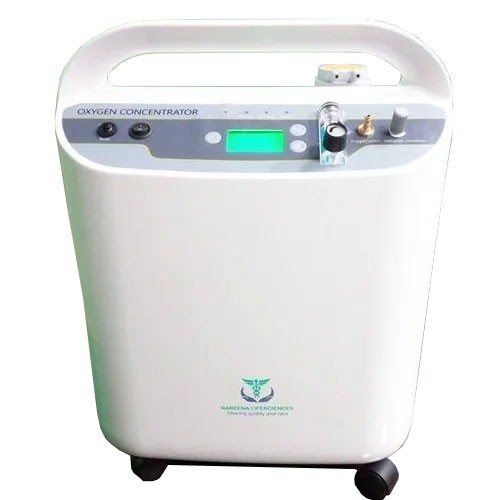
- Brand
- Nareena Lifesciences
- Category
- 5 LPM
₹35,510.40₹67,200
Indicative pricing based on market intelligence. Varies by dealer, city, bundle, and period — confirm with a local authorised seller before buying.
HHZ SCORE 7.0/10
Philips Everflo 5 Liter Oxygen Concentrator
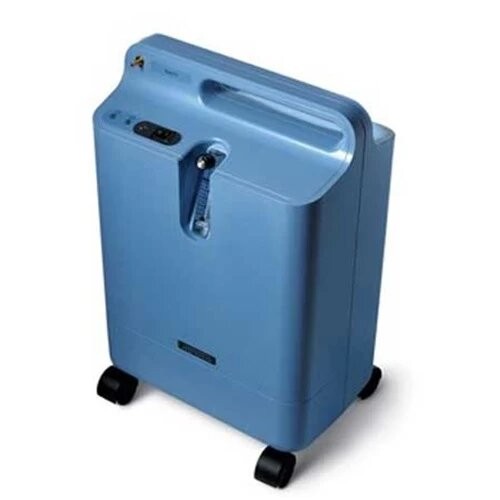
- Brand
- Philips Respironics
- Category
- 5 LPM
Discontinued
Indicative pricing based on market intelligence. Varies by dealer, city, bundle, and period — confirm with a local authorised seller before buying.
HHZ SCORE 8.2/10
Specifications compared
| Specification | Nareena 5 LPM Single Flow | Philips Everflo 5 Liter Oxygen Concentrator |
|---|---|---|
| Overview | ||
| Brand | Nareena Lifesciences | Philips Respironics |
| Category | 5 LPM | 5 LPM |
| Price | ₹35,510.40 | — |
| MRP | 67,200.00 | — |
| Stock | In Stock | DISCONTINUED WORLDWIDE |
| Key features | ||
| Purity | 90-96% | 90-96% |
| Type | Home Stationary | Home Stationary |
| Continuous Flow | 1-5LPM | 1-5LPM |
| Weight | 15kg | 14kg |
| Oxygen Purity Indicator (OPI) | Yes | Yes |
| Power consumption | 550watts | 350watts |
| Technical details | ||
| Purity | 90-96% | 90-96% |
| Type | Home Stationary | Home Stationary |
| Continuous Flow | 1-5LPM | 1-5LPM |
| Weight | 15kg | 14kg |
| Oxygen Purity Indicator (OPI) | Yes | Yes |
| Power consumption | 550watts | 350watts |
| Sound level | 50db | 45db |
| Dimensions | 23.6H x 14.7W x 14.3Dinch | 23H x 15W x 9.5Dinch |
| Operating altitude | — | 7500feet |
| Outlet pressure | — | 5.5psi |
| Additional details | ||
| Loss of Power Alarm | Yes | Yes |
| System Malfunction Alarm | — | Yes |
| No Flow Alarm | — | Yes |
| Indian Voltage Model | Yes | Yes |
| Company Headquarters | India | USA |
| US FDA Approved | — | Yes |
| CE Certified | — | Yes |
Analysis
Editor’s note — Everflo discontinued. Philips has discontinued the Everflo worldwide; it is no longer in production and remaining units are end-of-line stock. For an in-production 5 LPM alternative available in India, consider the Home Medix HM-KV (up to 5 L/min, 93% ±3%, ≤40 dB, 3-year warranty). The comparison below is retained for reference.
The Nareena 5 LPM Single Flow and the Philips Everflo 5 Liter Oxygen Concentrator are both 5 LPM home concentrators sitting in roughly the same price region — Nareena at a listed ₹35,510.40 against Everflo’s ₹43,699 (since discontinued) — and both quote the same headline purity range of 90–96% across the 1–5 LPM continuous-flow window. That is where the similarities end. On every other load-bearing spec, the Everflo opens a clear gap: 200 W less power draw at rated output (350 W vs 550 W), 5 dB lower published noise (45 dB vs 50 dB), a 3-year warranty against Nareena’s 1-year, US FDA + CE certifications against Nareena’s zero published approvals, and a complete alarm package where Nareena publishes only a loss-of-power alarm. The headline verdict is unusually blunt for a 5 LPM matchup: Everflo wins, and Nareena’s ₹8,189 price advantage does not close the gap on published specs.
At a glance
- Price. Nareena ₹35,510.40 vs Everflo ₹43,699 (since discontinued) — Nareena is ₹8,189 cheaper on current list.
- Power draw. Everflo 350 W vs Nareena 550 W — Everflo is 200 W (36%) lower.
- Noise (published). Everflo 45 dB vs Nareena 50 dB — a 5 dB gap, which is near-doubling of perceived loudness.
- Weight. Everflo 14 kg vs Nareena 15 kg — Everflo is 1 kg lighter.
- Warranty. Everflo 3 years vs Nareena 1 year.
- Certifications. Everflo: US FDA + CE. Nareena: none published.
- Alarms. Everflo: loss of power + system malfunction + no-flow. Nareena: loss of power only.
Where the Nareena 5 LPM Single Flow wins
The Nareena’s case rests almost entirely on one variable: listed price. At ₹35,510.40 current against Everflo’s ₹43,699 (since discontinued), the Nareena is ₹8,189 cheaper — about 19% below Everflo on sticker. For a first-time buyer whose budget is hard-capped at ₹35,000–36,000, and for whom the concentrator is for short-term or light-duty use (a few weeks of post-operative recovery, an occasional oxygen-on-exertion need), that price advantage is the only reason to consider it.
Second, the Nareena is an India-headquartered brand (per its published “Company Headquarters: India” field). For buyers who prefer domestic-manufacturing options on principle or on policy grounds — including some institutional buyers and government-funded healthcare schemes — that provenance can be a tie-breaker. Parts replacement for body panels, humidifier bottles, and standard consumables is also straightforward through independent oxygen-equipment stockists.
Third — and this is a narrow advantage — Nareena’s published 23.6 in H × 14.7 in W × 14.3 in D footprint puts it in a similar footprint class to Everflo’s 23 in H × 15 in W × 9.5 in D, though Nareena’s 14.3 in depth is noticeably deeper. This is not a win so much as a “not a dealbreaker”. On every other spec-sheet comparison, the Nareena is behind.
In practical terms, the Nareena 5 LPM Single Flow is the budget escape-hatch — if Everflo is genuinely out of reach and the user’s daily runtime is moderate (6–8 hours a day, not 16+), the machine will deliver oxygen at its published 90–96% purity. But the spec sheet does not support it as the better choice at current listed prices.
Where the Philips Everflo 5 LPM wins
The Everflo wins on almost every metric that matters in daily use. Start with power. At a published 350 W against the Nareena’s 550 W, the Everflo pulls 200 W less at rated output — a 36% reduction. On a 12-hour-a-day usage pattern and residential power tariff of ₹8–10/kWh, that’s a saving of ₹7,000–8,800 a year in electricity. Over Everflo’s 3-year warranty window, that’s ₹21,000–26,400 — several times the ₹8,189 upfront price premium. On operating economics alone, Everflo is the cheaper machine to own.
Second, noise. Everflo publishes 45 dB against Nareena’s 50 dB. A 5 dB gap in a published spec sheet is not cosmetic — it is approximately a doubling of perceived loudness, because the decibel scale is logarithmic. For a concentrator that sits in the same room as the user overnight, the Everflo is the difference between a background hum and an obtrusive presence. For a patient with COPD trying to sleep next to the unit, that gap is load-bearing.
Third, the alarm and safety package. Everflo’s published spec lists loss-of-power, system-malfunction, and no-flow alarms — the standard three. Nareena publishes only the loss-of-power alarm, with system-malfunction and no-flow alarms blank in its additional-details table. This is not a small gap. No-flow alarms catch cannula kinks, humidifier-bottle leaks, and tubing-disconnect events — the failure modes that actually kill oxygen delivery without the user noticing. A concentrator that doesn’t warn when flow stops is a significantly more dangerous device for an elderly or semi-mobile patient.
Fourth, warranty. Everflo’s 3-year warranty against Nareena’s 1-year is a 3× coverage difference. The expected-failure window for a 5 LPM concentrator — compressor bearings, sieve-bed degradation, fan failure — clusters in months 18–36. The Nareena unit enters that failure window already out of warranty; the Everflo is covered through it.
Fifth, certifications. Everflo is US FDA approved and CE certified per its published technical details; Nareena’s spec sheet publishes neither. For home use in India the CE mark is the more relevant one — absence of any certification on the Nareena spec sheet is a red flag.
Sixth, the Everflo wins on Oxygen Purity Indicator status — both publish OPI, but Everflo’s is a documented, well-understood LED indicator that trips below 82%; Nareena’s is listed but the behaviour is not specified. On weight, Everflo’s 14 kg against Nareena’s 15 kg is a minor but consistent win. On operating altitude, Everflo publishes 7,500 ft; Nareena does not publish an altitude rating at all.
Indian-market context
Both units are sold as Indian-voltage 220–240 V models and neither needs a step-down transformer. Where they diverge is the post-sale ecosystem. Philips Respironics has an authorised-dealer network in Indian metros and tier-1 cities, with access to OEM sieve beds, filters, and service parts routed through the Philips India distributor channel. Turnaround on warranty claims is slower in non-metros than with Indian-headquartered brands, but the parts supply is consistent.
Nareena Lifesciences distributes primarily through e-commerce and regional dealer channels. Parts availability is adequate for consumables (humidifier bottles, dust filters, HEPA filters — Nareena actually bundles extra HEPA and HEMA filters in-box), but compressor-level and sieve-bed service depth is thinner than for Everflo or for the established Indian brands like Oxymed. The 1-year warranty is not the fatal flaw alone — but combined with the weaker parts-ecosystem depth, it means that a Nareena unit that fails in year two is a more complicated repair path than an Everflo that fails in year two.
Rupee pricing: Nareena MRP ₹67,200 discounted to ₹35,510.40 current — a steep MRP-to-street haircut that buyers should not read as a unique discount; it’s the standard India-market concentrator pricing convention. Everflo MRP ₹63,228.48 discounted to ₹43,699 (since discontinued) is a more modest haircut and tracks closer to realistic street prices.
Verdict — who should pick which
Pick the Philips Everflo 5 LPM for virtually every standard home-oxygen use case. If the user is an elderly parent with mid-stage COPD, a post-operative recovery patient who’ll use the unit for 8–12 weeks, or a chronic-respiratory patient on 12+ hours of daily oxygen, Everflo is the right answer. The 200 W power gap alone pays for the ₹8,189 price premium in under 18 months of heavy use. The 3-year warranty versus Nareena’s 1 year means the unit is covered through the failure window, not just before it. The 5 dB noise advantage is load-bearing for sleep. And the complete alarm package — loss-of-power, system-malfunction, no-flow — is the difference between a concentrator that warns you and one that doesn’t.
Pick the Nareena 5 LPM Single Flow only if the user’s budget is hard-capped below ₹36,000, Everflo is genuinely out of reach, and daily runtime is moderate (6–8 hours), not continuous. The machine will deliver its published 90–96% purity at 1–5 LPM — but the user will be running it louder, hotter on the power bill, and through fewer warranty months than the Everflo alternative. If the budget is tight but can stretch, the better budget-pick is the Oxymed Mini (5L) at ₹35,400, which matches the Nareena on street price but beats it comprehensively on power (390 W vs 550 W), noise (45 dB vs 50 dB), alarms, and warranty.
Default for most buyers: Philips Everflo 5 LPM. The Nareena is not a recommended pick at current listed prices unless the buyer has a specific rupee-constraint reason that rules out the Oxymed Mini as well. Everflo is the spec-sheet winner and the operating-economics winner on a 3-year ownership horizon.