Nareena 5 LPM Single Flow vs Nidek Nuvo Lite 5 LPM
Nareena 5 LPM Single Flow
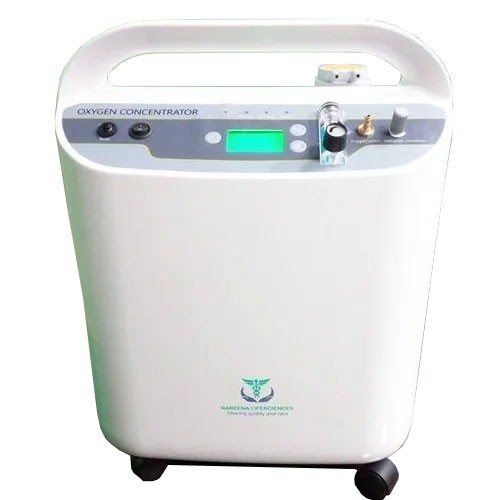
- Brand
- Nareena Lifesciences
- Category
- 5 LPM
₹35,510.40₹67,200
Indicative pricing based on market intelligence. Varies by dealer, city, bundle, and period — confirm with a local authorised seller before buying.
HHZ SCORE 7.0/10
EDITORIAL PICK
Nidek Nuvo Lite 5 LPM
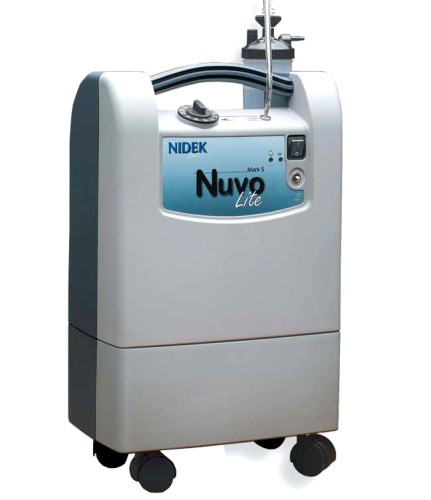
- Brand
- Nidek Medical
- Category
- 5 LPM
₹57,599.04₹66,240
Indicative pricing based on market intelligence. Varies by dealer, city, bundle, and period — confirm with a local authorised seller before buying.
HHZ SCORE 7.8/10
Specifications compared
| Specification | Nareena 5 LPM Single Flow | Nidek Nuvo Lite 5 LPM |
|---|---|---|
| Overview | ||
| Brand | Nareena Lifesciences | Nidek Medical |
| Category | 5 LPM | 5 LPM |
| Price | ₹35,510.40 | ₹57,599.04 |
| MRP | 67,200.00 | 66,240.00 |
| Stock | In Stock | In Stock |
| Key features | ||
| Purity | 90-96% | 90-96% |
| Type | Home Stationary | Home Stationary |
| Continuous Flow | 1-5LPM | 1-5LPM |
| Weight | 15kg | 13.6kg |
| Oxygen Purity Indicator (OPI) | Yes | Yes |
| Power consumption | 550watts | 290watts |
| Technical details | ||
| Purity | 90-96% | 90-96% |
| Type | Home Stationary | Home Stationary |
| Continuous Flow | 1-5LPM | 1-5LPM |
| Weight | 15kg | 13.6kg |
| Oxygen Purity Indicator (OPI) | Yes | Yes |
| Power consumption | 550watts | 290watts |
| Sound level | 50db | 40db |
| Dimensions | 23.6H x 14.7W x 14.3Dinch | 23H x 14W x 9Dinch |
| Operating altitude | — | 7500feet |
| Outlet pressure | — | 5.5psi |
| Additional details | ||
| Loss of Power Alarm | Yes | Yes |
| Indian Voltage Model | Yes | Yes |
| Company Headquarters | India | USA |
| US FDA Approved | — | Yes |
| CE Certified | — | Yes |
Analysis
The Nareena 5 LPM Single Flow and the Nidek Nuvo Lite are two of the most asked-about machines in the Indian 5 LPM segment right now, and they represent opposite ends of the buying decision. The Nareena is an Indian-origin budget pick — ₹35,510 street price, competitive with the cheaper imports, with an Indian manufacturer support footprint. The Nidek Nuvo Lite is the American reference machine for lightweight 5 LPM stationary oxygen — 13.6 kg, 40 dB, 290 W, FDA approved, CE certified, 3-year warranty — and its ₹57,599 street price reflects that positioning. The gap is ₹22,089, or about 62% more for the Nidek. That is a substantial premium, and the question for the Indian buyer is whether the Nidek earns it. Our read: yes, for clinical home oxygen — and the Nareena’s specific spec-sheet gaps make that judgment clearer than the price delta alone suggests.
At-a-glance
Weight is 13.6 kg on the Nidek versus 15 kg on the Nareena — a 1.4 kg Nidek advantage. Flow range is 1–5 LPM on both; purity is 90–96% on both. Noise is 40 dB on the Nidek against 50 dB on the Nareena — a 10 dB gap, roughly 4x louder for the Nareena in perceptual terms. Power consumption is 290 W on the Nidek versus 550 W on the Nareena — a huge 260 W gap. The Nareena draws nearly twice the power of the Nidek, which translates to meaningful electricity-cost and thermal-load differences over a multi-year run.
On monitoring, both machines carry “Yes” on OPI. The Nidek has “Yes” on loss-of-power alarm only (no-flow and system-malfunction rows are empty). The Nareena has “Yes” on loss-of-power alarm only (no-flow and system-malfunction rows are also empty). Alarm coverage is essentially equivalent — and notably thinner on both than on the Oxymed Mini or Philips Everflo, both of which ship with all three alarms. FDA approval is “Yes” on the Nidek; empty on the Nareena. CE certification is “Yes” on the Nidek; empty on the Nareena. Operating altitude is 7,500 ft on the Nidek; unlisted on the Nareena. Warranty is 3 years on the Nidek; 1 year on the Nareena per product listing. Company HQ is USA for Nidek and India for Nareena.
Where the Nidek wins
Noise is the headline Nidek advantage. 40 dB is the quietest machine in the current Indian 5 LPM segment — quieter than the Everflo (45 dB), the Oxymed Mini (45 dB), the Visionaire (45 dB), and the Nareena (50 dB). The 10 dB gap to the Nareena is substantial; 50 dB sounds about 4x louder than 40 dB in perceptual terms. For overnight therapy — which is the majority of Indian 5 LPM duty — a 40 dB machine is a genuinely different acoustic experience. Sleeping partners notice, elderly patients tolerate the noise better, and the household’s tolerance for long-running continuous operation goes up.
Power consumption is the structural Nidek win. 290 W versus 550 W is a 260 W gap. Over 12 hours per day of typical use, that is 3.12 kWh per day or 1,140 kWh per year saved. At typical Indian domestic slab tariffs (₹7–10 per kWh for slab 2+), that is ₹8,000–11,400 per year of electricity savings. Over 3 years, that is ₹24,000–34,200 of electricity cost — enough to substantially erode the ₹22,089 upfront price gap. If the household has a total ownership horizon over 2.5–3 years of continuous use, the Nidek breaks even on electricity alone, never mind the other advantages.
Weight is smaller but real. 13.6 kg versus 15 kg is 1.4 kg lighter on the Nidek — 9% lighter. At 13.6 kg the Nidek is among the lightest imported 5 LPM stationaries available in India, only marginally heavier than the Oxymed Mini at 13.9 kg. The Nareena at 15 kg is in the middle of the pack for this category.
FDA and CE certifications on the Nidek per manufacturer brochure are not on the Nareena. For households or rental suppliers who need documented compliance paperwork — insurance claims, hospital-to-home transition paperwork, rental contract inventory — the Nidek carries it and the Nareena does not.
Warranty is 3 years on the Nidek versus 1 year on the Nareena. Over a 3-year ownership window, a sieve-bed failure or compressor fault on the Nareena in year 2 or year 3 is out-of-warranty; on the Nidek, it is covered. A single compressor-related service event on the Nareena can cost ₹12,000–18,000 parts-and-labour, enough to change the effective TCO comparison materially.
Outlet pressure sits at 5.5 psi on the Nidek; the Nareena spec sheet does not list outlet pressure. For long cannula runs (>3 metres), outlet pressure matters — the Nidek is specified, the Nareena is not.
Operating altitude on the Nidek is 7,500 ft; not listed on the Nareena. For buyers in Himachal, Uttarakhand, Sikkim, or other hilly regions, the Nidek’s specification is reassuring.
Lockable flow meter is a Nidek-specific feature that the Nareena does not have. The lockable flow meter clicks into place at each flow setting, preventing accidental knob-bumps from changing the prescribed LPM. For patients or caregivers who might inadvertently touch the control knob, this is a safety-relevant ergonomic feature.
Where the Nareena wins
Price is the Nareena’s clean and honest advantage. ₹35,510 versus ₹57,599 is a ₹22,089 saving — about 38% below the Nidek. For buyers with a short prescribed therapy horizon (4–12 weeks), modest duty cycles (4–6 hours per day), and budget pressure, the Nareena’s upfront saving is real and meaningful.
Indian manufacturer support is a Nareena advantage for buyers who specifically want to transact with an Indian-origin brand. Nareena Lifesciences is headquartered in India, which for some buyers means simpler warranty claim paths, clearer service escalation routes, and more predictable spare-part availability in tier-2 and tier-3 cities where imported-brand service networks are thin. That said, the Nidek has USA HQ but an established Indian service footprint through its distributor network — this is a relative advantage for Nareena rather than a disqualifier for Nidek.
Stock availability is In Stock for both machines at the time of writing, so that is a wash.
Beyond these, the Nareena does not beat the Nidek on any dimension we can identify from the published specs.
Indian-market context
The ₹22,089 price gap is the central question. At typical Indian residential electricity tariffs and typical 5 LPM duty cycles (10–12 hours per day for chronic prescriptions), the Nidek’s 260 W lower power draw saves roughly ₹8,000–11,400 per year. Over 3 years that saving is ₹24,000–34,200 — enough to offset the upfront price delta and still put the Nidek ahead on total cost of ownership. If the prescribed therapy horizon is longer than 2.5 years, the Nidek is actually the cheaper machine over the ownership lifetime, despite the higher sticker. If the horizon is shorter (say 12 months), the Nareena’s upfront saving is not recovered by electricity savings alone, and the Nareena makes financial sense for the short-horizon buyer.
The warranty delta compounds this. A single compressor-level service event on an out-of-warranty Nareena in year 2 or 3 is ₹12,000–18,000. The Nidek’s 3-year warranty means that bill is zero for the covered period. Add that expected-value term to the electricity math and the Nidek’s case strengthens further for medium-to-long horizon use.
Indian ambient conditions — 35–42°C summer, 60–80% monsoon RH, high dust loads — stress PSA concentrators. Both machines are rated for the conditions, but the Nidek’s cooler power draw (290 W generates less waste heat than 550 W) means lower thermal load on the compressor and sieve beds, which typically translates to longer effective service life. Field reports on Indian Nidek units older than 5 years are common; the Nareena has a shorter field-history tail in comparable conditions.
Resale: Nidek Nuvo Lite units hold value strongly on the Indian secondary market — 2-year-old units transact at ₹35,000–42,000. Nareena 5 LPM resale is meaningfully weaker, typically clearing at 40–50% of original retail within 18 months. For households whose ownership horizon may not match the full service life, the Nidek’s resale protection is a real financial hedge.
Verdict
The Nidek Nuvo Lite 5 LPM wins this matchup for the Indian buyer whose prescribed therapy horizon is medium-to-long (2+ years), whose duty cycle is continuous (10+ hours per day), whose household values clinical monitoring and documented compliance, and whose electricity math favours lower-draw equipment. For that buyer, the ₹22,089 upfront premium is offset within 2.5–3 years by electricity savings alone, the noise envelope is materially better (40 dB is quiet enough for overnight use in a small bedroom), the weight is meaningfully lighter, and the FDA/CE certifications plus 3-year warranty are real value.
The Nareena has a legitimate case for exactly the opposite buyer profile: short prescribed horizon (under 18 months), moderate duty cycle (4–6 hours per day), budget-constrained household, Indian-origin brand preference. In that specific window, the ₹22,089 upfront saving is not recovered by the Nidek’s operating-cost advantages before the machine is no longer needed, and the Nareena serves the use case acceptably. The Nareena’s alarm coverage is thinner than the Everflo’s or the Oxymed Mini’s, but matches the Nidek’s — so within this matchup, alarm coverage is a wash.
For most Indian 5 LPM buyers in 2026 — meaning buyers with chronic or indefinite-horizon oxygen prescriptions — the Nidek Nuvo Lite is the better long-term choice. The Nareena is the short-horizon alternative. The two machines are not close on spec quality; they are close on the specific buyer question of “how long do I need this machine, and how sensitive am I to electricity costs and warranty exposure?”