Home Medix HM-KV 5 LPM vs Yuwell 7F 5 LPM
EDITORIAL PICK
Home Medix HM-KV 5 LPM
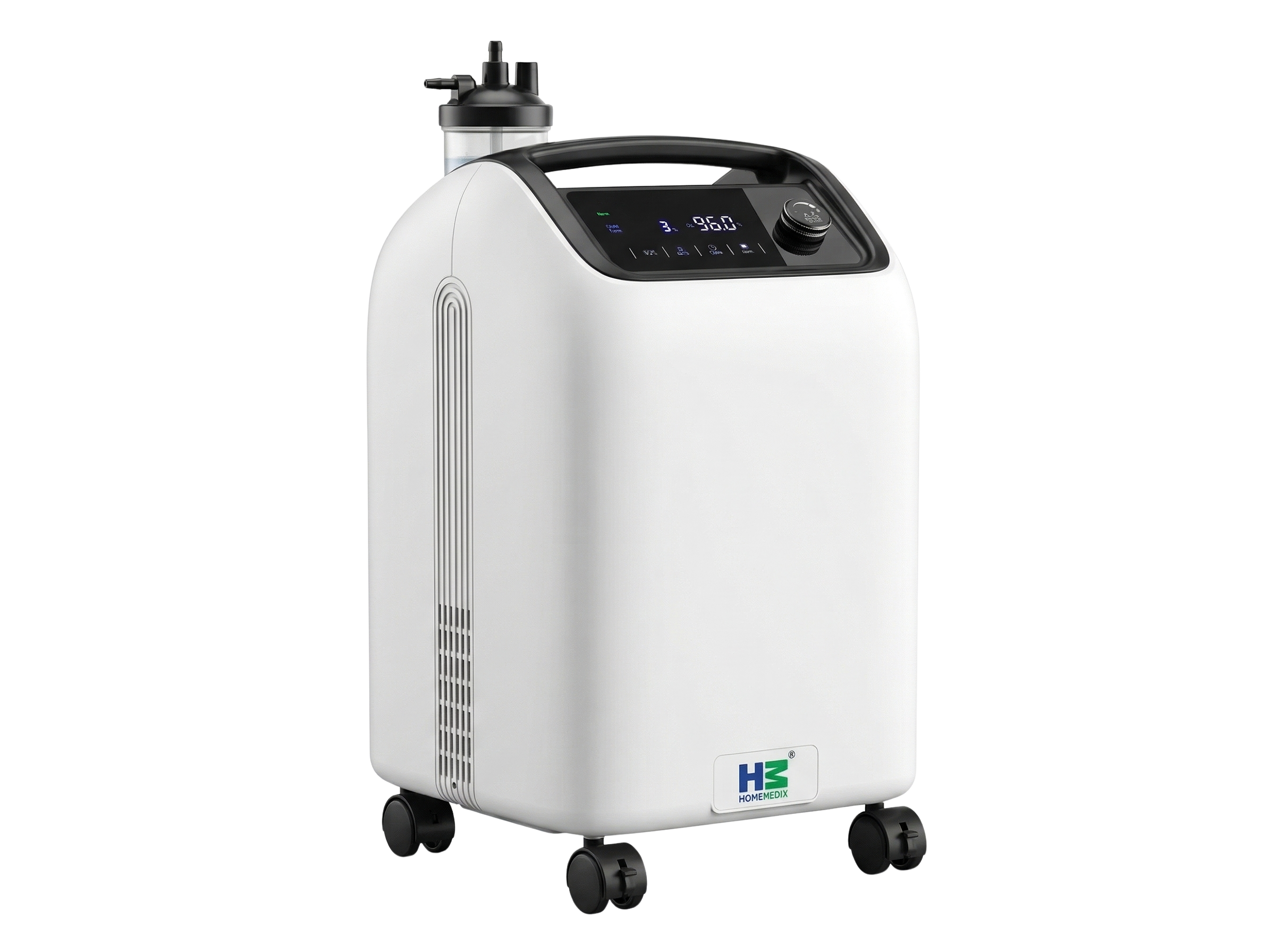
- Brand
- Home Medix
- Category
- 5 LPM
₹37,800₹54,000
Indicative pricing based on market intelligence. Varies by dealer, city, bundle, and period — confirm with a local authorised seller before buying.
HHZ SCORE 7.7/10
Yuwell 7F 5 LPM
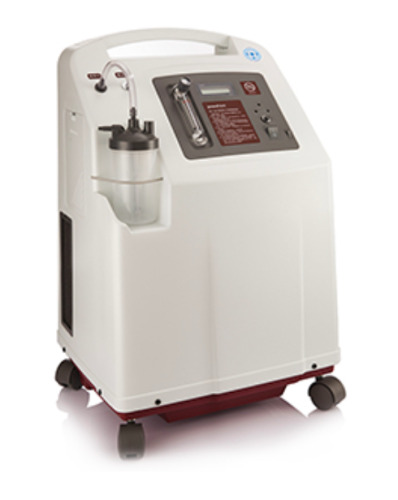
- Brand
- Yuwell
- Category
- 5 LPM
Discontinued
Indicative pricing based on market intelligence. Varies by dealer, city, bundle, and period — confirm with a local authorised seller before buying.
HHZ SCORE 5.0/10
Specifications compared
| Specification | Home Medix HM-KV 5 LPM | Yuwell 7F 5 LPM |
|---|---|---|
| Overview | ||
| Brand | Home Medix | Yuwell |
| Category | 5 LPM | 5 LPM |
| Price | ₹37,800 | ₹47,040.00 |
| MRP | 54,000 | — |
| Stock | In Stock | Discontinued |
| Key features | ||
| Purity | 93% ± 3% | 90-95% |
| Type | Home Stationary | Home Stationary |
| Continuous Flow | 0.5–5 L/min | 0.5-5LPM |
| Weight | 13 kg (lightest in the 5 LPM class) | 27kg |
| Oxygen Purity Indicator (OPI) | Yes | No |
| Power consumption | 320 VA | 500watts |
| Technical details | ||
| Purity | 93% ± 3% | 90-95% |
| Type | Home Stationary | Home Stationary |
| Continuous Flow | 0.5–5 L/min | 0.5-5LPM |
| Weight | 13 kg (lightest in the 5 LPM class) | 27kg |
| Oxygen Purity Indicator (OPI) | Yes | — |
| Power consumption | 320 VA | 500watts |
| Sound level | ≤ 40 dB (field-verified) | 53db |
| Dimensions | Compact floor-standing form factor | 36.7H x 17.5W x 14.6Dinch |
| Outlet pressure | 0.04–0.06 MPa | 10psi |
| Operating altitude | — | 6000feet |
| Additional details | ||
| Oxygen Purity % Analyzer | Yes | — |
| Loss of Power Alarm | Yes | Yes |
| System Malfunction Alarm | Yes (High Temperature) | Yes |
| No Flow Alarm | Yes (Low/No Flow) | — |
| Indian Voltage Model | Yes | Yes |
| Company Headquarters | India | China |
| Home Medix differentiators | ||
| Integrated Nebulization | Yes | — |
| Precise Electronic Flowmeter | Yes | — |
| One-Touch SOS Alert | Yes — high-volume audible alarm button for summoning a nearby attendant (local siren; no mobile app or telecom channel) | — |
| Hour Counter | User-visible running-hour display | — |
| Working Voltage | AC 230V / 50Hz, ±10% tolerance (207–253 V) | — |
| Industrial-Grade Compressor | Yes | — |
| ISO 9001 | Yes | — |
| ISO 13485 | Yes | — |
| CDSCO | Approved | — |
| Warranty | 3 years or 10,000 hours of operation, whichever comes first | — |
Analysis
An established China-volume platform meets an Indian-tuned specialist
Yuwell is one of the largest Chinese medical-device OEMs by volume, with a broad respiratory-care platform — concentrators across multiple flow ranges, nebulizers, CPAP, ventilators — distributed internationally with the manufacturing depth that comes from being a top-three concentrator producer in China by unit volume. The 7F is Yuwell’s mid-tier 5 LPM platform: 27 kg, 500 W, 53 dB, listed in the Indian market at ₹47,040.
The Home Medix HM-KV is a category-specialist Indian-HQ SKU at ₹37,800 — ₹9,240 cheaper than the Yuwell 7F — with a chassis less than half the Yuwell’s weight, a 10+ dB lower sound floor, and a documented AC ±10% voltage tolerance band tuned for Indian mains. The comparison frame the buyer should walk in with is: does Yuwell’s platform-maturity and global service infrastructure justify the ₹9,240 premium against a smaller Indian-HQ specialist that documents more on the spec sheet?
At-a-glance differences
- Price: Yuwell 7F ₹47,040 (no MRP in listing) vs HM-KV ₹37,800 (listed MRP ₹54,000) — HM-KV is ₹9,240 cheaper at current retail, roughly 20% below the Yuwell
- Weight: HM-KV 13 kg vs Yuwell 7F 27 kg — HM-KV is 14 kg lighter (52% less)
- Sound: HM-KV ≤ 40 dB(A) field-verified; Yuwell 7F 53 dB per data sheet — 13 dB louder, perceptually roughly 2.5× as loud at bedside
- Oxygen flow: Both 0.5–5 L/min continuous
- Oxygen concentration: HM-KV 93% ± 3%; Yuwell 7F 90–95% (same practical band)
- Power: HM-KV 320 VA at AC 230V ±10% tolerance (207–253 V documented); Yuwell 7F 500 W with no published AC tolerance band
- Outlet pressure: Yuwell 7F 10 psi; HM-KV 0.04–0.06 MPa (≈ 5.8–8.7 psi)
- Operating altitude: Yuwell 7F 6,000 ft (≈ 1,829 m) published; HM-KV does not publish an altitude ceiling
- Dimensions: Yuwell 7F substantially larger floor footprint per spec — 36.7H × 17.5W × 14.6D inches; HM-KV described as compact floor-standing
- Oxygen Purity Indicator / Analyzer: HM-KV documents both; Yuwell 7F data sheet lists neither
- Alarm suite: HM-KV documents Loss of Power, System Malfunction (High Temp), and Low/No Flow; Yuwell 7F documents Loss of Power and System Malfunction (No-Flow alarm field left blank)
- Warranty: HM-KV 3 years or 10,000 hours (whichever comes first); Yuwell 7F does not publish a warranty term on the listing
- Regulatory: HM-KV — CDSCO approved, ISO 9001, ISO 13485 documented. Yuwell 7F — Indian-voltage; CDSCO / ISO / CE / FDA fields not populated on the visible data sheet
- Stock status: HM-KV In Stock; Yuwell 7F listed Discontinued — direct platform-maturity counter-evidence
Where the HM-KV wins
Weight — 13 kg vs 27 kg. A 14 kg margin is the largest weight gap among the comparisons in this set, and it materially changes how the unit lives in the household. 27 kg is institutional-feeling — closer to a small hospital-cart unit than a home-LTOT device. Moving it between rooms is two-person work, and even short relocations (a delivery van for a service appointment, a household move) require lifting equipment or two adults. 13 kg fits single-person carry; the HM-KV’s chassis is genuinely portable in a way the Yuwell 7F’s is not.
Sound — ≤ 40 dB vs 53 dB. A 13 dB gap is more than two perceptual doublings; 53 dB is upper-end conversational volume territory and is intrusive at any normal bedside distance. For nocturnal LTOT in a shared bedroom, the Yuwell 7F is functionally not a bedroom-acceptable unit at its published sound floor.
Power draw — 320 VA vs 500 W. Yuwell’s 500 W draw is a 56% higher continuous load than the HM-KV. At 16 hours a day, the running-cost delta is ~2.9 kWh/day in favour of the HM-KV — roughly ~₹25/day at typical Indian residential tariff bands and ~₹9,000/year. The HM-KV’s lower draw amortises a significant fraction of the price advantage as electricity savings inside the first year of operation.
Documented AC ±10% voltage tolerance. The HM-KV publishes 207–253 V as its operating envelope. Yuwell publishes 500 W without an equivalent tolerance band. For Indian Tier-2 / Tier-3 mains, the documented envelope is the more useful spec for stabiliser sizing and shutdown-protection planning.
Documented OPI and percent analyzer. The HM-KV documents both; the Yuwell 7F data sheet documents neither. For LTOT use where purity drift over months matters clinically, the OPI is a meaningful patient-facing self-monitor.
Documented No-Flow alarm. The HM-KV publishes all three of the standard alarms (power, system, no-flow). The Yuwell 7F publishes two — Loss of Power and System Malfunction — but leaves the No-Flow field blank on the visible data sheet. A no-flow alarm is the safety-critical alert for a sleeping LTOT patient whose cannula has slipped or kinked.
Indian-voltage tuning and warranty documentation. The HM-KV publishes its 3-year / 10,000-hour warranty framework with both wall-clock and operating-hour ceilings. Yuwell 7F’s listing does not publish a warranty term — typical Indian-importer terms for Yuwell range 1–2 years, varying by importer.
₹9,240 cheaper. The HM-KV undercuts the Yuwell 7F by 20% at current retail.
Where the Yuwell 7F wins
Global brand-platform recognition. Yuwell is one of the largest Chinese respiratory-OEM manufacturers and ships into many international markets. For institutional buyers who require a globally-known brand for procurement-policy reasons, or who want the comfort that comes from a brand with a deep installed base across geographies, Yuwell’s platform recognition is genuine. This is the closest a Chinese OEM gets to brand-platform recognition in the Indian concentrator market.
Published 6,000 ft altitude ceiling. Yuwell 7F publishes an altitude operating envelope of 6,000 feet (≈ 1,829 m). HM-KV does not publish an altitude figure. For installs at the lower end of the Indian hill-station band (Manali 2,050 m is above the published Yuwell envelope; Munnar 1,500 m is below it), the documented envelope is useful planning.
10 psi outlet pressure. Yuwell 7F publishes 10 psi at outlet, sitting above the HM-KV’s 5.8–8.7 psi range. For long cannula runs (>2 m) or extended humidifier-plus-nebulizer setups, the published higher pressure is meaningful headroom.
Platform-maturity arguments for parts supply (conditional). A Yuwell unit, when actively in production and supported by an active Indian importer, benefits from large-volume parts manufacturing that should in principle make spares cheaper and more available than a smaller specialist’s. The conditional matters: the Yuwell 7F’s Discontinued stock status undercuts this argument significantly for the specific 7F SKU at the moment.
Indian-market considerations
Stabiliser sizing. HM-KV at 320 VA wants a 500 VA stabiliser minimum, 750 VA in Tier-2/Tier-3 mains. Yuwell 7F at 500 W (≈ 590 VA at 0.85 PF) wants a 1 kVA stabiliser, 1.5 kVA in unstable conditions — a larger and more expensive stabiliser line-item.
Electricity tariff. State residential electricity tariffs run roughly ₹6–10/kWh in the slabs LTOT patients land in; some states price the upper-tier slabs at ₹12+ for high-consumption households. Yuwell 7F’s 500 W vs HM-KV’s 320 VA produces a ~₹8K–₹12K annual running-cost gap at 16 hours/day depending on state tariff. Over a 3-year warranty window, that gap exceeds the ₹9,240 sticker-price gap and reverses the cost comparison entirely.
Altitude. For installs above 1,829 m, Yuwell 7F’s published envelope is exceeded. For installs at or below 1,500 m, both units are operable, though only Yuwell publishes the envelope.
Service network realism. Yuwell’s Indian service depth depends on importer commitment. The Discontinued stock flag on the 7F is a signal that the importer’s service commitment for this specific SKU may be in run-down. Home Medix’s service footprint is concentrated in South and West India through dealer channels; for the specific SKU in active production, both networks merit pincode-level verification.
GST. 12% GST applies to both.
Who should pick which
Pick the Yuwell 7F if: you have an existing Yuwell service contract or fleet relationship (e.g., a small clinic running multiple Yuwell units that has standardised on a single OEM for parts and service); you specifically need the 10 psi outlet pressure for a long-run cannula or extended humidifier-plus-nebulizer setup; you need a published altitude envelope at the 1,500–1,800 m band; or you have confirmed importer service commitment despite the SKU’s Discontinued listing status.
Pick the Home Medix HM-KV 5 LPM if: you are a single-unit home-LTOT buyer evaluating without pre-existing Yuwell fleet ties; you value a 14 kg lighter chassis and 13 dB quieter sound floor for nocturnal bedside use; you want documented OPI, percent analyzer, and full three-alarm coverage; you want documented Indian-voltage tolerance; you want to amortise running-cost savings against the sticker price; or you want an actively-stocked SKU with a published warranty framework over a discontinued one.
Verdict
The HM-KV wins decisively on this comparison. Yuwell 7F’s platform-maturity argument is the legitimate counter-frame Yuwell carries against smaller competitors elsewhere in the market, but it is undercut here by the specific 7F SKU’s Discontinued stock status, a heavier and louder chassis, a 56% higher power draw that wipes out the sticker-price difference in running-cost terms inside the first year, and a data sheet that runs behind the HM-KV on OPI, alarm coverage, and warranty documentation. The HM-KV’s Indian-voltage tuning closes any service-network depth gap that Yuwell might otherwise claim. Only buyers already locked into the Yuwell ecosystem through prior fleet commitments should default to the 7F.
Consult your treating pulmonologist before finalising the prescription — clinical outcome depends on flow titration; the chassis-and-running-cost comparison only matters after the prescription is right.