Home Medix HM-KV 5 LPM vs Nidek Nuvo Standard 5 LPM
EDITORIAL PICK
Home Medix HM-KV 5 LPM
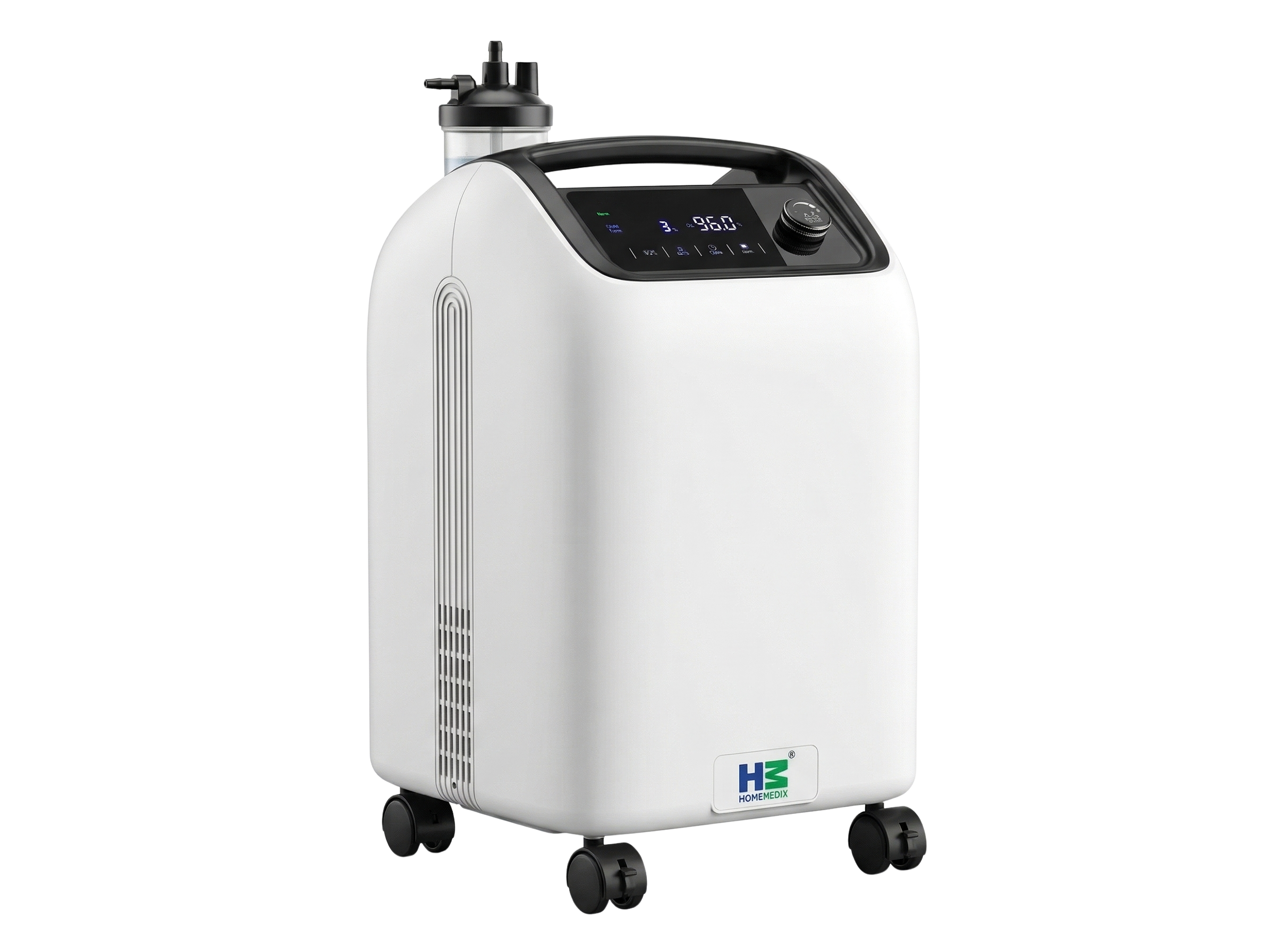
- Brand
- Home Medix
- Category
- 5 LPM
₹37,800₹54,000
Indicative pricing based on market intelligence. Varies by dealer, city, bundle, and period — confirm with a local authorised seller before buying.
HHZ SCORE 7.7/10
Nidek Nuvo Standard 5 LPM
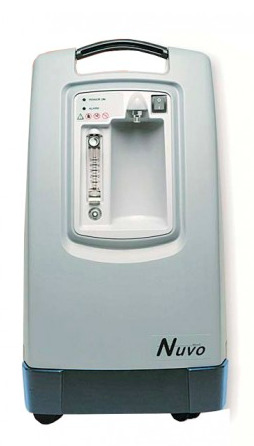
- Brand
- Nidek Medical
- Category
- 5 LPM
₹94,080
Indicative pricing based on market intelligence. Varies by dealer, city, bundle, and period — confirm with a local authorised seller before buying.
HHZ SCORE 5.9/10
Specifications compared
| Specification | Home Medix HM-KV 5 LPM | Nidek Nuvo Standard 5 LPM |
|---|---|---|
| Overview | ||
| Brand | Home Medix | Nidek Medical |
| Category | 5 LPM | 5 LPM |
| Price | ₹37,800 | ₹94,080.00 |
| MRP | 54,000 | — |
| Stock | In Stock | Out of stock |
| Key features | ||
| Purity | 93% ± 3% | 90-95% |
| Type | Home Stationary | Home Stationary |
| Continuous Flow | 0.5–5 L/min | 1-5LPM |
| Weight | 13 kg (lightest in the 5 LPM class) | 22.7kg |
| Oxygen Purity Indicator (OPI) | Yes | No |
| Power consumption | 320 VA | 420watts |
| Technical details | ||
| Purity | 93% ± 3% | 90-95% |
| Type | Home Stationary | Home Stationary |
| Continuous Flow | 0.5–5 L/min | 1-5LPM |
| Weight | 13 kg (lightest in the 5 LPM class) | 22.7kg |
| Oxygen Purity Indicator (OPI) | Yes | — |
| Power consumption | 320 VA | 420watts |
| Sound level | ≤ 40 dB (field-verified) | 48db |
| Dimensions | Compact floor-standing form factor | 27.8H x 15.6W x 15.5Dinch |
| Outlet pressure | 0.04–0.06 MPa | 7psi |
| Operating altitude | — | 8000feet |
| Additional details | ||
| Oxygen Purity % Analyzer | Yes | — |
| Loss of Power Alarm | Yes | Yes |
| System Malfunction Alarm | Yes (High Temperature) | — |
| No Flow Alarm | Yes (Low/No Flow) | — |
| Indian Voltage Model | Yes | Yes |
| Company Headquarters | India | USA |
| US FDA Approved | — | Yes |
| CE Certified | — | Yes |
| Home Medix differentiators | ||
| Integrated Nebulization | Yes | — |
| Precise Electronic Flowmeter | Yes | — |
| One-Touch SOS Alert | Yes — high-volume audible alarm button for summoning a nearby attendant (local siren; no mobile app or telecom channel) | — |
| Hour Counter | User-visible running-hour display | — |
| Working Voltage | AC 230V / 50Hz, ±10% tolerance (207–253 V) | — |
| Industrial-Grade Compressor | Yes | — |
| ISO 9001 | Yes | — |
| ISO 13485 | Yes | — |
| CDSCO | Approved | — |
| Warranty | 3 years or 10,000 hours of operation, whichever comes first | — |
Analysis
A 2.5× price multiplier in the 5 LPM stationary segment
The Home Medix HM-KV 5 LPM and the Nidek Nuvo Standard 5 LPM are both positioned as 5 LPM home stationary concentrators in the Indian market — but the price spread (₹37,800 vs ₹94,080, a 2.5× multiplier) means they are serving fundamentally different buyer profiles. The HM-KV is the Indian-brand mid-tier home-LTOT pick: lightest in class at 13 kg, ≤ 40 dB field-verified sound floor, In Stock through primary Indian channels, integrated nebulisation, CDSCO + ISO 13485 paperwork. The Nidek Nuvo Standard is the Japanese-engineered premium-tier flagship — historically the Nuvo platform sits at the top of Nidek’s stationary lineup with US FDA + CE paperwork, a documented 8,000 ft altitude ceiling, and the Nidek/CAIRE nameplate that institutional procurement specs frequently call out by name.
This is not a head-to-head price comparison. The real question is: what does the Nidek’s ₹56,280 price premium over the HM-KV actually buy, and which buyer profile is it worth it for? The honest framing: for most Indian home LTOT prescriptions, the premium is not justified; for hospital procurement, premium-tier institutional tenders, and patients who place heavy weight on Japan-brand engineering legacy, the premium has legitimate buyers.
At-a-glance differences
- Price: HM-KV ₹37,800 (listed MRP ₹54,000) vs Nidek ₹94,080 (no listed MRP available) — Nidek is ₹56,280 more expensive (~2.5× the HM-KV price)
- Stock posture: HM-KV In Stock; Nidek Nuvo Standard Out of Stock through the primary Indian channels reviewed
- Weight: HM-KV 13 kg vs Nidek 22.7 kg — HM-KV is 9.7 kg lighter (~43% lighter chassis)
- Sound: HM-KV ≤ 40 dB(A) field-verified vs Nidek 48 dB(A) — an 8 dB gap (the HM-KV is meaningfully quieter)
- Oxygen flow: HM-KV 0.5–5 L/min; Nidek 1–5 L/min — HM-KV has the lower minimum flow setting (useful for pediatric and titration scenarios)
- Oxygen concentration: HM-KV 93% ± 3% (90–96% band); Nidek 90–95% — broadly equivalent
- Outlet pressure: Nidek 7 psi documented; HM-KV 0.04–0.06 MPa (roughly 5.8–8.7 psi) — broadly equivalent at the cannula
- Power: HM-KV 320 VA at AC 230V ±10% tolerance (207–253 V); Nidek 420 W with no published AC tolerance band — Nidek draws ~31% more power
- Altitude ceiling: Nidek documents 8,000 ft (~2,438 m); HM-KV does not publish a hard ceiling
- Alarm suite: HM-KV — Loss of Power, System Malfunction (High Temperature), Low/No Flow. Nidek — Loss of Power documented in the reviewed listing; system malfunction and no-flow alarms not explicitly documented
- Oxygen purity analyzer: HM-KV documents an in-built OPI with live readout; Nidek lists OPI as “No” and does not document a percent analyzer
- Warranty: HM-KV 3 years or 10,000 hours; Nidek through Indian dealer — typically 2 years, dealer-mediated
- Regulatory: HM-KV — CDSCO approved, ISO 9001, ISO 13485. Nidek — US FDA cleared, CE Certified, CDSCO-registered
Where the HM-KV wins
₹56,280 price advantage. The HM-KV is ~₹56,000 cheaper. Put differently: the Nidek’s price premium funds two complete spare HM-KV units plus a year of operating cost on either. For an out-of-pocket home LTOT prescription where the patient is funding the unit themselves — the modal Indian home-oxygen buyer (Indian Chest Society) — the price gap is the dominant decision factor.
Availability. HM-KV In Stock; Nidek Nuvo Standard currently Out of Stock through the reviewed Indian channels. Any buyer with a near-term deployment need defaults to the HM-KV by availability alone.
9.7 kg lighter — 13 kg vs 22.7 kg. The largest weight gap in the four-comparison set. The Nidek at 22.7 kg is solidly two-person carry — the kind of chassis weight that defines an institutional unit rather than a home unit. The HM-KV at 13 kg is comfortably single-person, including up stairs. For a home installation, this gap is more than a number — it shapes whether the unit gets installed and left in one room or whether it actively moves between bedroom and living-room as the patient’s day progresses.
8 dB quieter — ≤ 40 dB vs 48 dB. An 8 dB gap is approaching a doubling-and-a-half on the perceived-loudness scale. At 48 dB, the Nidek is at the louder end of the 5 LPM class — a unit that is meaningfully audible during overnight bedside use. The HM-KV’s ≤ 40 dB field-verified floor disappears into HVAC background. For bedside overnight LTOT, this is the single largest user-experience gap between the two units.
Lower minimum flow — 0.5 L/min vs 1 L/min. The HM-KV titrates down to 0.5 L/min; the Nidek’s minimum is 1 L/min. For pediatric LTOT, mild-disease titration, or weaning protocols, the 0.5 L/min setting is clinically useful (British Thoracic Society). The Nidek’s 1 L/min floor is not a deal-breaker for adult LTOT but eliminates one clinical use case the HM-KV serves.
31% lower power draw — 320 VA vs 420 W. The Nidek’s 420 W draw means a 50% larger stabiliser, a larger UPS if backup is desired, and at Indian residential tariffs roughly 24% higher annual running cost for 16 hours/day operation. Over a 3-year life, the running-cost gap is non-trivial.
Oxygen Purity Indicator with live readout. The HM-KV documents an OPI percent readout on the front panel. The Nidek lists OPI as “No” in the additional-details block. For a patient or caregiver watching for sieve-bed wear, the live OPI percent is a clinically useful service indicator the Nidek does not provide.
Documented AC ±10% voltage tolerance. The HM-KV publishes a 207–253 V operating envelope. The Nidek’s 420 W draw has no published Indian-mains tolerance band in the reviewed listing — a US-design unit shipped to the Indian voltage spec.
Documented full alarm suite. The HM-KV documents Loss of Power, System Malfunction (High Temperature), and Low/No Flow alarms. The Nidek’s reviewed listing documents Loss of Power but does not explicitly document System Malfunction or No Flow alarms — a thinner published alarm bundle. (The platform may carry additional alarms not documented in the listing; verify with the dealer if the alarm bundle matters.)
3-year / 10,000-hour warranty. The HM-KV’s documented warranty envelope is wider than the typical 2-year Indian-dealer warranty on imported premium units.
Integrated nebuliser interface and SOS button. The HM-KV’s chassis includes an integrated nebuliser interface and a one-touch audible SOS alarm. The Nidek is a pure concentrator. For a COPD patient on home LTOT who also nebulises on exacerbation days, this is a tangible cost and counter-space saving.
Where the Nidek Nuvo Standard wins
US FDA + CE regulatory bundle. The Nidek carries both US FDA clearance and CE certification — the most complete regulatory paperwork bundle among 5 LPM stationaries available in the Indian market. The HM-KV documents CDSCO + ISO 9001 + ISO 13485 (the Indian mandatory gate plus quality-management certifications), but not FDA or CE. For institutional procurement specs that mandate FDA-cleared or CE-marked devices — hospital tenders, export-facing NGO deployments, multi-country aid procurement — the Nidek is the correct answer regardless of the other spec comparisons (US FDA).
Documented 8,000 ft altitude ceiling. The Nidek publishes 8,000 ft (~2,438 m) as a documented maximum operating altitude. Sufficient for most Indian hill-station deployments below Leh — Manali (~2,050 m), Shimla (~2,200 m), Gangtok (~1,600 m), Mussoorie (~2,000 m), Ooty (~2,200 m), Srinagar (~1,600 m) all sit below this ceiling. The HM-KV does not publish a hard altitude ceiling. For a hill-station deployment where the buyer wants a documented number rather than a “PSA concentrators generally derate at altitude” hedge, the Nidek’s spec is meaningful.
Nidek brand legacy and CAIRE network. Nidek Medical, now part of CAIRE Inc., has a multi-decade respiratory equipment platform history. The Nuvo family has been refined across many generational iterations and the platform has institutional procurement recognition in hospital channels. The HM-KV is a newer Indian-brand entry without the same multi-decade institutional name-recognition.
Japanese-engineering provenance. Whether or not it materially changes Indian-mains reliability, Nidek’s Japanese-engineering history carries weight in family-decision contexts and certain institutional procurement specs. The HM-KV doesn’t compete on this axis.
Premium-tier institutional positioning. The Nidek’s ₹94,080 sticker is consistent with the hospital-and-institutional segment where premium-tier 5 LPM stationaries compete on engineering legacy and regulatory paperwork rather than price. For a procurement officer specifying a hospital-channel unit where the institution funds the purchase out of capex rather than the patient out-of-pocket, the Nidek’s premium positioning matches the procurement context.
Who is the Nidek premium actually for?
Three specific buyer profiles where the Nidek’s ₹56,280 premium is defensible:
- Hospital procurement. Tertiary-care hospitals procuring 5 LPM stationaries for ward use, step-down units, or post-discharge loan programmes where FDA + CE paperwork is a procurement-spec requirement and the institution funds the capex. Patient out-of-pocket is irrelevant.
- Export-facing NGO deployment. Aid organisations deploying respiratory equipment across multi-country programmes where CE certification or FDA clearance is required for cross-border movement. The Nidek’s paperwork bundle clears more borders than the HM-KV’s.
- Brand-preference family decision. Patients or families where Japan-brand engineering legacy is a decision-driver. This is a real category in upper-tier urban Indian buyers who weight import provenance heavily — a legitimate preference even if it does not change in-room clinical behaviour.
For the modal Indian home LTOT prescription — a patient with COPD, post-COVID interstitial sequelae, or end-stage cardiac disease, paying out-of-pocket, running the unit 12–18 hours a day at the bedside in a single-room or small-flat configuration — the Nidek’s premium is not worth what it buys. The HM-KV serves this profile better across every operating-spec axis except documented altitude ceiling.
Indian-market considerations
Stabiliser and UPS sizing. HM-KV at 320 VA wants a 500 VA stabiliser, 750 VA for unstable mains. Nidek at 420 W wants a 750 VA minimum, 1,000 VA for unstable mains — and a correspondingly larger UPS if backup is desired. The Nidek’s higher draw cascades into a more expensive electrical-protection budget.
Altitude. The Nidek is the better-documented hill-station pick on paper. Either unit will derate at altitude — PSA concentrators generally lose 2–4 percentage points of purity per 1,000 m of elevation. For Leh (~3,500 m) neither unit is appropriate without an altitude-rated alternative.
Running cost. 16 hours/day operation at average residential tariffs across Indian states: the Nidek’s 420 W draw costs roughly ₹2,000–₹2,800 more per year than the HM-KV’s 320 VA, depending on state tariff. Over a 3-year warranty life, the cumulative gap is ₹6,000–₹8,400 in electricity alone.
GST and reimbursement. 12% GST applies to both. CGHS / ECHS reimbursement pathways accept either; FDA + CE paperwork may ease certain private-insurance claims, but CDSCO alone is the mandatory Indian gate.
Service network realism. Nidek through the CAIRE India network has metro depth in Delhi NCR, Mumbai, Bengaluru, Chennai. Home Medix is concentrated in South and West India. Either unit’s service depth must be verified at the local-dealer level before purchase — “send it to the factory” responses imply 2–6 weeks of downtime per major event.
Who should pick which
Pick the Nidek Nuvo Standard 5 LPM if: you are a hospital or institutional buyer where US FDA and CE certification are procurement-spec prerequisites; the deployment is an export-facing NGO or multi-country aid programme; the buyer is in a metro where Nidek’s CAIRE-India authorised service network materially outpaces Home Medix’s local coverage; Japan-brand engineering legacy is a heavily-weighted decision criterion; or the installation is at a documented-altitude hill-station deployment where the 8,000 ft ceiling is reassurance the buyer values.
Pick the Home Medix HM-KV 5 LPM if: the buyer is an out-of-pocket home LTOT patient; the ₹56,280 price gap is material; the unit will live at the bedside during overnight use where the 8 dB sound advantage and 9.7 kg weight advantage are user-experience-defining; you need the 0.5 L/min minimum flow for pediatric or weaning use; you value the OPI percent readout, the documented AC ±10% tolerance, the integrated nebuliser interface, and the SOS-alarm button; or you need to deploy a unit in the next two weeks and the Nidek’s current Out-of-Stock posture is a blocker.
Verdict
The Nidek Nuvo Standard 5 LPM is a premium-tier institutional 5 LPM with a regulatory paperwork bundle (US FDA + CE) and Japan-brand legacy that suits a specific procurement and brand-preference profile. The Home Medix HM-KV 5 LPM is a price-per-spec Indian-brand home-LTOT pick that wins on weight, sound, lower minimum flow, OPI, AC tolerance, warranty length, availability, and price across every dimension that defines the home-LTOT use case.
For most Indian home oxygen buyers, the HM-KV is the correct pick — the Nidek’s 2.5× premium is not worth what it buys. For hospital procurement, export-facing institutional deployment, and the specific Japan-brand-preference buyer, the Nidek retains a defensible position. Consult your treating pulmonologist before finalising prescription flow rate; both units cover the clinical 1–5 L/min range, and titration is what governs clinical outcome at the bedside.