Home Medix HM-KX 10 LPM vs Philips 10 LPM
EDITORIAL PICK
Home Medix HM-KX 10 LPM
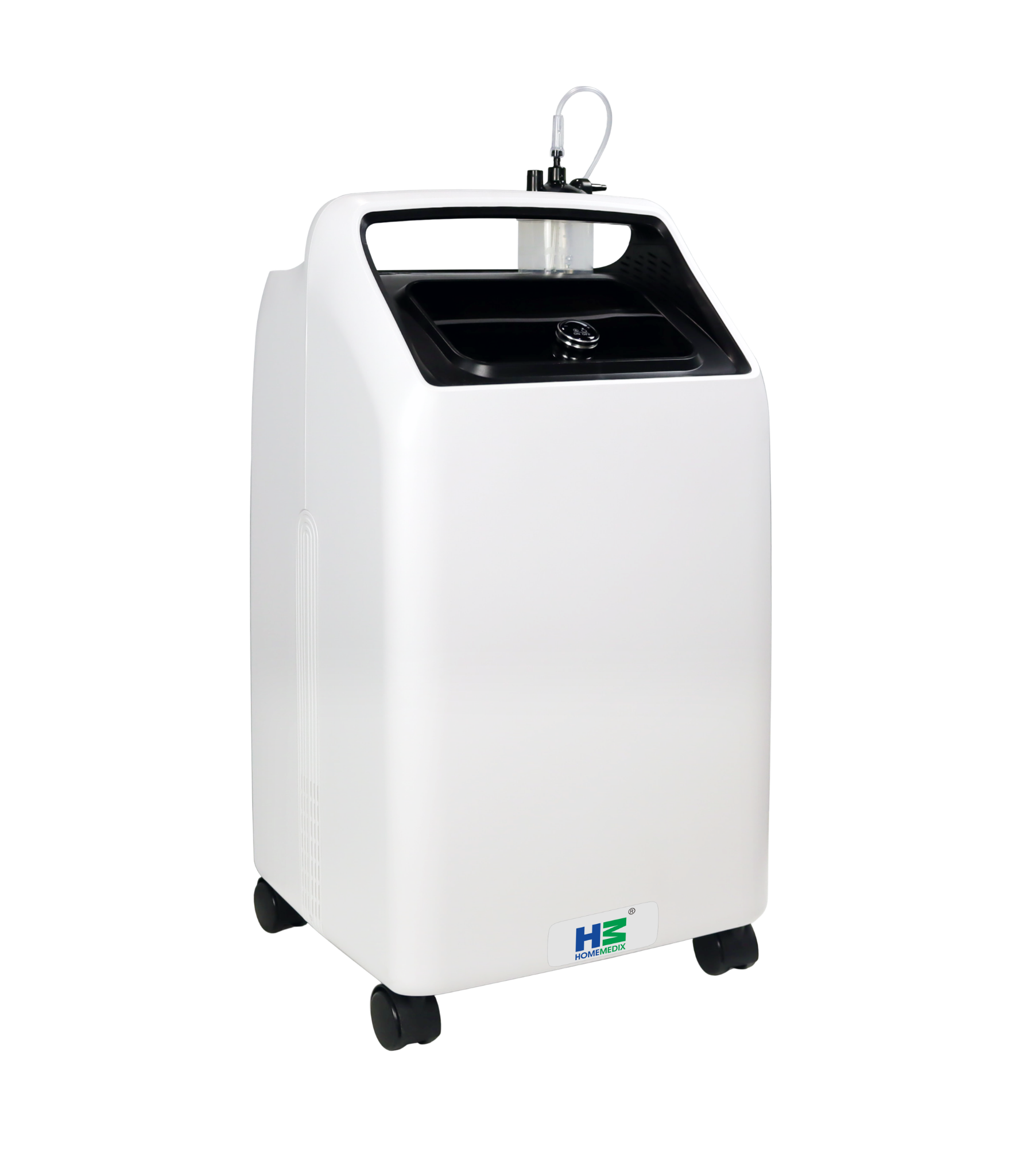
- Brand
- Home Medix
- Category
- 10 LPM
₹65,000₹85,000
Indicative pricing based on market intelligence. Varies by dealer, city, bundle, and period — confirm with a local authorised seller before buying.
HHZ SCORE 8.0/10
Philips 10 LPM
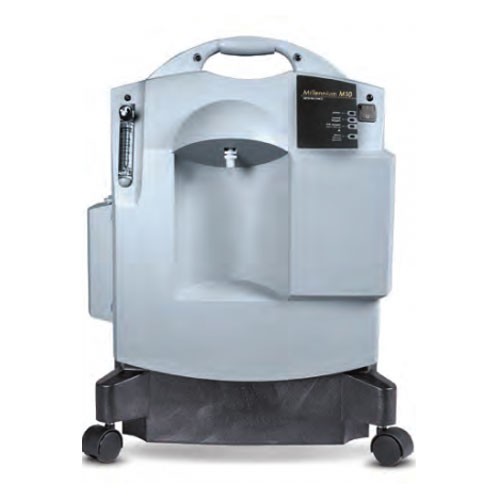
- Brand
- Philips Respironics
- Category
- 10 LPM
Discontinued
Indicative pricing based on market intelligence. Varies by dealer, city, bundle, and period — confirm with a local authorised seller before buying.
HHZ SCORE 6.2/10
Specifications compared
| Specification | Home Medix HM-KX 10 LPM | Philips 10 LPM |
|---|---|---|
| Overview | ||
| Brand | Home Medix | Philips Respironics |
| Category | 10 LPM | 10 LPM |
| Price | ₹65,000 | ₹129,600.00 |
| MRP | 85,000 | 177,600.00 |
| Stock | In Stock | Discontinued |
| Key features | ||
| Purity | 93% ± 3% | 90-95% |
| Type | Home Stationary | High Flow Stationary |
| Continuous Flow | 0.5–10 L/min | 1-10LPM |
| Weight | 25.6 kg | 24kg |
| Oxygen Purity Indicator (OPI) | Yes | Yes |
| Power consumption | 550 VA | 600watts |
| Technical details | ||
| Purity | 93% ± 3% | 90-95% |
| Type | Home Stationary | High Flow Stationary |
| Continuous Flow | 0.5–10 L/min | 1-10LPM |
| Weight | 25.6 kg | 24kg |
| Oxygen Purity Indicator (OPI) | Yes | Yes |
| Power consumption | 550 VA | 600watts |
| Sound level | ≤ 48 dB (field-verified) | 50db |
| Dimensions | 368 × 346 × 695 mm | 27H x 19W x 13Dinch |
| Outlet pressure | 0.04–0.06 MPa | 30psi |
| Operating altitude | — | 1368feet |
| Additional details | ||
| Oxygen Purity % Analyzer | Yes | — |
| Loss of Power Alarm | Yes | Yes |
| System Malfunction Alarm | Yes (High Temperature) | — |
| No Flow Alarm | Yes (Low/No Flow) | Yes |
| Indian Voltage Model | Yes | — |
| Company Headquarters | India | USA |
| US FDA Approved | — | Yes |
| CE Certified | — | Yes |
| Home Medix differentiators | ||
| Integrated Nebulization | Yes | — |
| Precise Electronic Flowmeter | Yes | — |
| One-Touch SOS Alert | Yes — high-volume audible alarm button for summoning a nearby attendant (local siren; no mobile app or telecom channel) | — |
| Hour Counter | User-visible running-hour display | — |
| Working Voltage | AC 230V / 50Hz, ±10% tolerance (207–253 V) | — |
| Industrial-Grade Compressor | Yes | — |
| Ultra-Quiet Operation | Yes (< 48 dB field-verified) | — |
| ISO 9001 | Yes | — |
| ISO 13485 | Yes | — |
| CDSCO | Approved | — |
| Warranty | 3 years or 10,000 hours of operation, whichever comes first | — |
Analysis
The Home Medix HM-KX 10 LPM and the Philips Respironics 10 LPM sit in the same high-flow stationary class but pull from opposite playbooks. HM-KX is the Indian feature-dense challenger — field-verified ≤ 48 dB(A), 550 VA draw (lowest in the 10 LPM class), integrated nebulization, dealer-validated one-touch SOS siren, and CDSCO paperwork. Philips is the American ecosystem incumbent — FDA + CE certified, with a long-established Indian service-network heritage through the Respironics name. Two non-trivial flags for the Philips 10 LPM specifically: the local datasheet shows a discontinued stock status on the scraped listing, and the unit has historically shipped to India as a US-voltage model with a step-down transformer (220V → 110V), with warranty-not-available-in-India on some SKUs. Against that backdrop, HM-KX is the stronger mainstream buy in 2026.
At a glance
- Price. HM-KX indicative retail roughly ₹65,000 in 2026 (listed MRP ₹85,000). Philips 10 LPM indicative retail roughly ₹1,30,000+ (listed MRP ₹1,77,600). HM-KX is roughly ₹65,000 cheaper.
- Weight. Philips 10 LPM 24 kg vs HM-KX 25.6 kg — Philips is 1.6 kg lighter.
- Flow range. HM-KX 0.5–10 L/min vs Philips 1–10 L/min — HM-KX covers the sub-1 L/min titration band Philips does not.
- Oxygen purity. HM-KX 93% ± 3% (90–96%) vs Philips 90–95%.
- Sound level (published). HM-KX ≤ 48 dB(A) field-verified vs Philips 50 dB — HM-KX ~2 dB quieter.
- Power consumption. HM-KX 550 VA vs Philips 600 W — HM-KX ~8% lower and the lowest in the 10 LPM class.
- Outlet pressure. HM-KX 0.04–0.06 MPa (~5.8–8.7 psi) vs Philips 30 psi — Philips the strongest in this comparison set.
- Warranty. HM-KX 3 years or 10,000 hours, whichever first. Philips 10 LPM 1 year manufacturer warranty, with local listings noting warranty-not-available-in-India on the US-voltage SKU.
- Regulatory. HM-KX ISO 9001 + ISO 13485 + CDSCO. Philips US FDA + CE.
- Supply status. HM-KX in stock. Philips 10 LPM shows discontinued on the scraped local listing — a real supply-risk flag.
Where the HM-KX wins
Price. HM-KX at roughly ₹65,000 against a Philips 10 LPM street price of roughly ₹1,30,000+ is a ~₹65,000 saving — a full purchase tier apart. For a first-time home-oxygen buyer, this is the cost of a secondary 5 LPM unit, a year of consumables, or bridge-rental budget.
Sound floor. HM-KX at field-verified ≤ 48 dB(A) against Philips at a published 50 dB — a ~2 dB edge that reads small on a datasheet but is perceptible at a bedside. Both sit well below the Chinese OEM 10 LPM cluster at 55–60+ dB, so this is an edge against a quiet incumbent rather than a rout.
Power draw. HM-KX at 550 VA against Philips at 600 W is ~8% lower and the lowest in the 10 LPM class. 24/7 at ₹8/kWh is roughly ₹3,200/month for HM-KX vs roughly ₹3,500/month for Philips — ~₹300/month spread, ~₹10,800 across three years.
Integrated nebulization. HM-KX can deliver oxygen-entrained nebulized medication through the same circuit. Philips 10 LPM does not integrate this on its published spec, so a separate compressor nebulizer stays in the home setup.
One-touch SOS alert. HM-KX ships with a factory-integrated high-volume audible SOS button — a hardwired local distress siren audible across a typical Indian home. No mobile app, no SMS, no IoT telemetry, so no tower or data-pack dependency to fail. Validated across 100+ dealer deployments. Philips has no equivalent on its 10 LPM spec.
Warranty terms. HM-KX publishes 3 years or 10,000 hours. Philips publishes 1 year manufacturer warranty, with local-channel listings explicitly noting warranty-not-available-in-India on some imported SKUs. HM-KX offers ~3× the warranty window, honoured locally.
Alarms, AC tolerance, hour counter. HM-KX publishes a full four-alarm suite (Low Oxygen Concentration, Power Failure, High Temperature, Low/No Flow), documented AC 230V ±10% (207–253 V) tolerance, and an on-panel running-hour display. Philips 10 LPM publishes Loss of Power and No Flow on the local channel — a narrower published alarm set.
Sub-1 L/min flow. HM-KX covers 0.5 L/min as its flow floor; Philips floors at 1 L/min. For paediatric high-flow weaning or post-acute recovery tapering below 1 L/min, HM-KX is the only one that delivers continuously.
Native Indian-voltage model. HM-KX is a native 230V/50Hz unit. Philips 10 LPM commonly ships to India as a US-voltage (110V/60Hz) model with a step-down transformer included — workable but added complexity, and a failure point not present on HM-KX.
Where the Philips 10 LPM wins
FDA + CE paperwork. Philips carries US FDA approval and CE certification. HM-KX carries CDSCO, ISO 9001, and ISO 13485. For procurement requiring FDA listing, Philips clears the checkbox HM-KX does not.
Outlet pressure. Philips 10 LPM publishes 30 psi against HM-KX’s 0.04–0.06 MPa (~5.8–8.7 psi) — the strongest outlet pressure in this comparison set. For long tubing runs, humidifier-bottle setups with significant back-pressure, and ventilator-bridging or high-flow mask configurations, 30 psi sustains delivered flow much more reliably at the patient end.
Weight. Philips at 24 kg is 1.6 kg lighter than HM-KX at 25.6 kg. Modest but real.
Philips service-network heritage and ecosystem consolidation. Philips Respironics has a long-established Indian service presence through the broader concentrator and CPAP / BiPAP ecosystem. For buyers already in the Philips ecosystem (an existing Philips CPAP or BiPAP in the home), staying within the Philips support channel is a convenience. HM-KX service is concentrated in South and West India; Philips reach is broader in North Indian metros.
Installed-base depth and prescription-channel pull. Philips’s historical installed base means technicians, sieve beds, filter kits, and replacement compressors move through a mature supply pipeline. Some Indian pulmonologists default to Philips as the named brand for 10 LPM prescriptions.
Indian-market considerations
- Stabiliser sizing. HM-KX at 550 VA → 825 VA servo stabiliser. Philips at 600 W → 900 VA. For the US-voltage Philips SKU, the step-down transformer also needs correct sizing — a 1.5 kVA step-down is the usual pairing, sitting upstream of the concentrator’s stabiliser. For areas with frequent outages, pair either unit with an online UPS or a pure-sine inverter — never a square-wave inverter, which damages the compressor motor.
- Electricity cost. 24/7 HM-KX at ₹8/kWh is ~₹3,200/month; Philips ~₹3,500/month — ~8–9% lower for HM-KX. The step-down transformer on the US-voltage Philips SKU adds small conversion losses on top of the rated 600 W.
- Altitude derating. Philips 10 LPM publishes a 1,368 ft (~417 m) operating altitude — the lowest ceiling in this comparison set, and a real flag for Indian hill-station residents. HM-KX does not publish an altitude rating. For Shimla (~2,200 m), Manali (~2,050 m), Leh (~3,500 m), and Gangtok (~1,600 m) residents, both units should be derated on purity expectations, but the Philips ceiling is worth asking the authorised dealer to clarify before committing.
- GST, CGHS, ECHS. 12% GST applies to both. Qualifying buyers can route through CGHS, ECHS, ESIC, or private-insurance home-medical-equipment reimbursement with a GST-invoiced purchase and a standing oxygen prescription.
- Service reach. In Delhi NCR, Mumbai, Bengaluru, Chennai, Hyderabad, Pune, Kolkata, and Ahmedabad, Philips has broader service-reach maturity. In Home-Medix-served corridors (much of South and West India) HM-KX service is credible. For tier-2 and tier-3 cities, get written warranty-turnaround and spare-parts commitments from the dealer before purchase.
- Supply status in 2026. The scraped local listing flags the Philips 10 LPM as discontinued. HM-KX is in stock. Before committing to the Philips unit, verify current-year supply through an authorised Philips dealer — a discontinued SKU means thinning spare-parts availability and potentially no manufacturer warranty path.
Who should pick which
Pick the Philips 10 LPM in a narrow set of scenarios: if the buyer already has a Philips CPAP or BiPAP in the home and wants brand-ecosystem consolidation, if the prescribing pulmonologist has specifically named the Respironics unit, if the setup involves long tubing runs or high-back-pressure pairings where 30 psi outlet pressure is a genuine clinical advantage, if procurement requires FDA-listed paperwork, or if the buyer is in a North Indian metro where Philips authorised service is materially more reachable than Home Medix service. In each of these scenarios, verify 2026-year supply status, warranty-honouring terms for the specific SKU, and confirm whether the unit is the native 230V or the US-voltage transformer-bundled SKU.
Pick the Home Medix HM-KX 10 LPM for most other mainstream Indian home LTOT buyers in 2026. The sound floor, lowest-in-class power draw, integrated nebulization, SOS siren, native-voltage design, 3-year/10,000-hour warranty, full alarm suite, sub-1 L/min flow-floor capability, and ~₹65,000 price saving add up to the better total-ownership proposition outside the narrow Philips-preferred scenarios above.
Verdict
HM-KX wins most mainstream Indian home LTOT matchups against the Philips 10 LPM on the merits in 2026. The price gap is roughly ₹65,000, the sound-floor edge is real, the 550 VA draw is the lowest in the class, the integrated nebulizer and SOS siren are HM-KX-only, the warranty is 3× longer in calendar terms, and the native 230V design avoids the step-down-transformer complexity of the US-voltage Philips SKU. Philips’s genuine wins — FDA paperwork, 30 psi outlet pressure, 1.6 kg lighter carry, and broader North-Indian-metro service reach — are real advantages in specific use cases but do not carry a typical home LTOT purchase. The discontinued status on local listings is a further flag: before committing, verify current-year supply through an authorised Philips dealer. For most buyers in most cities, HM-KX.
Before committing to any 10 LPM unit, confirm the prescription genuinely requires >5 L/min — many patients are over-specced and a 5 LPM unit covers the need at ~40% less. Consult the prescribing pulmonologist on the actual flow trajectory before the purchase.