DeVilbiss 10 LPM vs Home Medix HM-KX 10 LPM
DeVilbiss 10 LPM
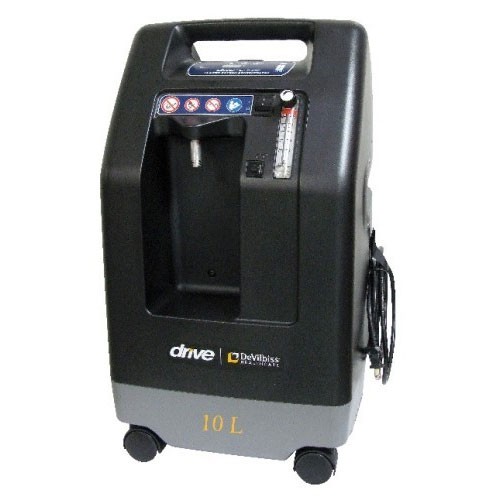
- Brand
- Drive DeVilbiss
- Category
- 10 LPM
₹109,584₹158,400
Indicative pricing based on market intelligence. Varies by dealer, city, bundle, and period — confirm with a local authorised seller before buying.
HHZ SCORE 7.0/10
Home Medix HM-KX 10 LPM
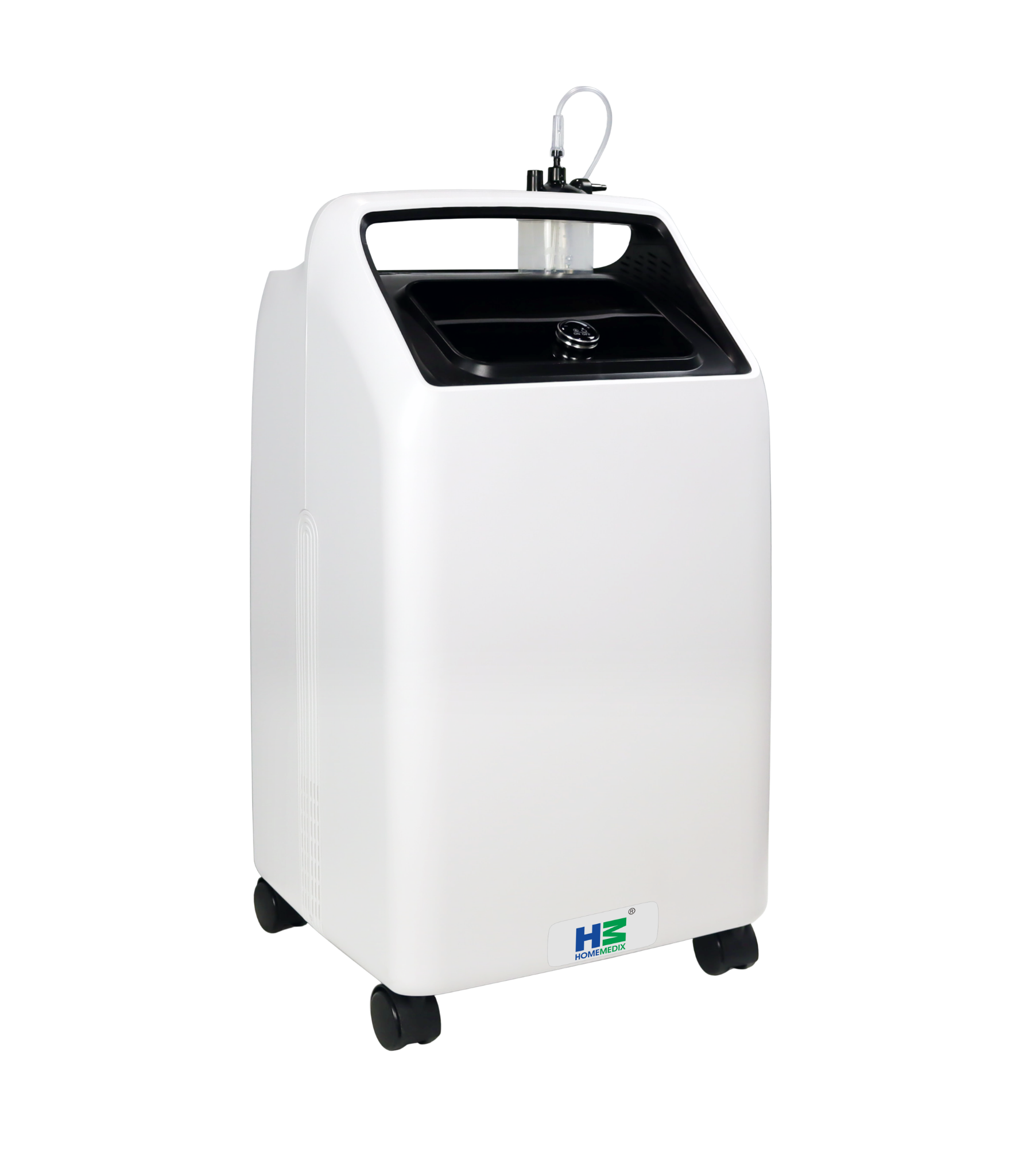
- Brand
- Home Medix
- Category
- 10 LPM
₹65,000₹85,000
Indicative pricing based on market intelligence. Varies by dealer, city, bundle, and period — confirm with a local authorised seller before buying.
HHZ SCORE 8.0/10
Specifications compared
| Specification | DeVilbiss 10 LPM | Home Medix HM-KX 10 LPM |
|---|---|---|
| Overview | ||
| Brand | Drive DeVilbiss | Home Medix |
| Category | 10 LPM | 10 LPM |
| Price | ₹109,584.00 | ₹65,000 |
| MRP | 158,400.00 | 85,000 |
| Stock | In Stock | In Stock |
| Key features | ||
| Purity | 87-96% | 93% ± 3% |
| Type | High Flow Stationary | Home Stationary |
| Continuous Flow | 2-10LPM | 0.5–10 L/min |
| Weight | 19kg | 25.6 kg |
| Oxygen Purity Indicator (OPI) | Yes | Yes |
| Power consumption | 664watts | 550 VA |
| Technical details | ||
| Purity | 87-96% | 93% ± 3% |
| Type | High Flow Stationary | Home Stationary |
| Continuous Flow | 2-10LPM | 0.5–10 L/min |
| Weight | 19kg | 25.6 kg |
| Oxygen Purity Indicator (OPI) | Yes | Yes |
| Power consumption | 664watts | 550 VA |
| Sound level | 67db | ≤ 48 dB (field-verified) |
| Dimensions | 24.5H x 13.5W x 12Dinch | 368 × 346 × 695 mm |
| Operating altitude | 5000feet | — |
| Outlet pressure | 20psi | 0.04–0.06 MPa |
| Additional details | ||
| Oxygen Purity % Analyzer | — | Yes |
| Loss of Power Alarm | Yes | Yes |
| System Malfunction Alarm | — | Yes (High Temperature) |
| No Flow Alarm | Yes | Yes (Low/No Flow) |
| Indian Voltage Model | Yes | Yes |
| Company Headquarters | USA | India |
| US FDA Approved | Yes | — |
| CE Certified | Yes | — |
| Home Medix differentiators | ||
| Integrated Nebulization | — | Yes |
| Precise Electronic Flowmeter | — | Yes |
| One-Touch SOS Alert | — | Yes — high-volume audible alarm button for summoning a nearby attendant (local siren; no mobile app or telecom channel) |
| Hour Counter | — | User-visible running-hour display |
| Working Voltage | — | AC 230V / 50Hz, ±10% tolerance (207–253 V) |
| Industrial-Grade Compressor | — | Yes |
| Ultra-Quiet Operation | — | Yes (< 48 dB field-verified) |
| ISO 9001 | — | Yes |
| ISO 13485 | — | Yes |
| CDSCO | — | Approved |
| Warranty | — | 3 years or 10,000 hours of operation, whichever comes first |
Analysis
The DeVilbiss 10 LPM and the Home Medix HM-KX 10 LPM occupy opposite ends of the high-flow stationary category in the Indian market. DeVilbiss is the American industrial-duty benchmark — FDA approved, CE certified, the lightest 10 LPM unit on Indian shelves at a published 19 kg. HM-KX is the Indian feature-dense challenger — field-verified ≤ 48 dB(A), 550 VA draw (lowest in the 10 LPM class on published specs), integrated nebulization, dealer-validated one-touch SOS siren, and CDSCO documentation. The price split is wide — HM-KX at roughly ₹65,000 street in 2026 against DeVilbiss at roughly ₹1,10,000 depending on channel. This is a context-dependent call.
At a glance
- Price. HM-KX indicative retail roughly ₹65,000 in 2026 (listed MRP ₹85,000). DeVilbiss indicative retail roughly ₹1,10,000 (listed MRP ₹1,58,400). HM-KX is roughly ₹45,000 cheaper.
- Weight. DeVilbiss 19 kg vs HM-KX 25.6 kg — DeVilbiss is 6.6 kg lighter and the lightest 10 LPM unit in class.
- Flow range. HM-KX 0.5–10 L/min vs DeVilbiss 2–10 L/min.
- Oxygen purity. HM-KX 93% ± 3% (90–96%) vs DeVilbiss 87–96%.
- Sound level (published). HM-KX ≤ 48 dB(A) field-verified vs DeVilbiss 67 dB — roughly a 19 dB gap, a very large perceived-loudness difference.
- Power consumption. HM-KX 550 VA vs DeVilbiss 664 W — HM-KX ~17% lower on published specs.
- Outlet pressure. HM-KX 0.04–0.06 MPa (~5.8–8.7 psi) vs DeVilbiss 20 psi.
- Warranty. HM-KX 3 years or 10,000 hours, whichever first. DeVilbiss 2 years on the Indian channel.
- Regulatory. HM-KX ISO 9001 + ISO 13485 + CDSCO. DeVilbiss US FDA + CE.
Where the HM-KX wins
Sound floor. HM-KX’s ≤ 48 dB(A) is field-verified and sits at the floor of the Indian 10 LPM class. DeVilbiss publishes 67 dB on its Indian listing — a ~19 dB gap, which is roughly four-times the perceived loudness. For bedside overnight placement, a concentrator running at 67 dB becomes an adjacent-room-with-tubing-extension unit in most Indian households; at ≤ 48 dB the same placement is a patient-tolerance call rather than a default exile. For a chronic LTOT patient facing 16–20 hours a day of therapy, this is the single most user-facing difference.
Power draw. HM-KX at 550 VA is the lowest in the 10 LPM class on published specs; DeVilbiss at 664 W is among the highest. At ₹8/kWh tariff, 24/7 operation of the HM-KX costs roughly ₹3,200/month against roughly ₹3,800/month for the DeVilbiss — ~₹600/month spread, ~₹7,200/year. Over three years that is ~₹22,000. Stabiliser sizing also shifts: HM-KX pairs with an 825 VA servo stabiliser; DeVilbiss needs roughly 1,000 VA in the same role.
Integrated nebulization. HM-KX can deliver oxygen-entrained nebulized medication through the same circuit. DeVilbiss 10 LPM does not integrate this, so a separate compressor nebulizer stays in the home setup budget.
One-touch SOS alert. HM-KX ships with a factory-integrated high-volume audible SOS button — a local distress siren loud enough to carry to an adjacent room or floor in a typical Indian home. No mobile app, no SMS, no telecom channel; it is a hardwired siren, and the feature has been validated across 100+ dealer deployments. Genuinely useful for bedridden or voice-weak patients whose call would not otherwise carry. DeVilbiss has no equivalent.
Price. HM-KX at roughly ₹65,000 against DeVilbiss at roughly ₹1,10,000 is a ~₹45,000 saving — effectively a secondary 5 LPM unit, a year of consumables, or bridge-rental budget.
Alarms, AC tolerance, hour counter. HM-KX publishes a full alarm suite (Low Oxygen Concentration, Power Failure, High Temperature, Low/No Flow), an AC 230V ±10% (207–253 V) tolerance window, and an on-panel running-hour display. DeVilbiss publishes Loss of Power and No Flow — a narrower published alarm set, and no hour counter on the same datasheet.
Where DeVilbiss wins
FDA + CE paperwork. DeVilbiss carries US FDA approval and CE certification. HM-KX carries CDSCO, ISO 9001, and ISO 13485. For procurement processes that explicitly require FDA listing (some corporate-buyer tenders, hospital empanelments, international rental fleets), DeVilbiss clears the checkbox HM-KX does not.
Weight. 19 kg vs 25.6 kg — DeVilbiss is 6.6 kg lighter, and the lightest 10 LPM stationary unit in this comparison. Relocation across stairs or between floors becomes a one-person job at 19 kg in a way it is not at 25.6 kg.
Outlet pressure. DeVilbiss publishes 20 psi against the HM-KX’s 0.04–0.06 MPa (~5.8–8.7 psi). For long tubing runs, humidifier-bottle setups with back-pressure, and certain ventilator-bridging configurations, 20 psi sustains delivered flow more reliably at the patient end.
Industrial-duty lineage and brand recognition. DeVilbiss is the American industrial-duty benchmark, trusted by rental fleets and institutional buyers globally. Indian pulmonologists, hospital biomedical-equipment teams, and rental-fleet operators recognise the name — prescription-channel pull and institutional procurement preference both favour DeVilbiss where the decision-maker is not the end patient.
Wider FDA-aligned service channel. DeVilbiss’s global service footprint means authorised-channel parts move through an older, deeper supply pipeline than HM-KX’s domestic channel — relevant for buyers outside Home-Medix-served cities.
Indian-market considerations
- Stabiliser sizing. HM-KX at 550 VA → 825 VA servo stabiliser (1.5× rated). DeVilbiss at 664 W needs a 1,000 VA unit. Factor roughly ₹3,500–₹6,500 into either setup. For areas with frequent outages, pair with an online UPS or a pure-sine inverter — never a square-wave inverter, which damages the compressor motor.
- Electricity cost. 24/7 HM-KX at ₹8/kWh is ~₹3,200/month; DeVilbiss ~₹3,800/month — ~18–19% lower for HM-KX. Over 36 months of LTOT, operating cost narrows the upfront gap but does not close it.
- Altitude derating. Both units see a 2–4% purity drop above 2,000 m. DeVilbiss publishes 5,000 ft (~1,525 m); HM-KX does not publish an altitude rating. For Leh, Manali, Gangtok, and Shimla residents, this is a flag for both units.
- GST, CGHS, ECHS. 12% GST applies to both. Qualifying buyers can route through CGHS, ECHS, ESIC, or private-insurance home-medical-equipment reimbursement with a full GST-invoiced purchase and a standing oxygen prescription.
- Service reach. DeVilbiss’s Indian authorised channel runs through established biomedical distributors with metro-heavy coverage. HM-KX service is concentrated in South and West India with thinner reach into the North-East and hill belts. For buyers outside either footprint, get written warranty-turnaround and spare-parts commitments from the dealer before purchase.
Who should pick which
Pick the DeVilbiss 10 LPM if FDA-listed paperwork is a procurement requirement, if the unit is destined for heavy institutional duty where compressor longevity reputation carries the purchase, if the setup involves long tubing runs or high-back-pressure pairings where 20 psi outlet pressure matters, or if the 6.6 kg weight saving is load-bearing for the household layout. DeVilbiss is the right answer for rental fleets, nursing-home deployments, and institutional-procurement buyers anchored to FDA listing.
Pick the Home Medix HM-KX 10 LPM if the buyer is a home LTOT patient in a Home-Medix-served city, if overnight sound floor is a first-order concern, if the patient is also on nebulized medication and the integrated nebulizer removes the need for a second compressor, if the caregiver-presence dynamic makes the SOS siren genuinely useful, if a sub-2 L/min flow prescription is part of the picture, or if the ~₹45,000 price saving is meaningful to the budget.
Verdict
Context-dependent tie on the merits. DeVilbiss wins for FDA-paperwork, institutional-duty, long-tubing, and lightest-carry use cases. HM-KX wins for quiet home LTOT, concurrent-nebulization, caregiver-presence, and value-first use cases. Neither unit is universally better; the purchase axis decides. For heavy-institutional FDA-required buyers, DeVilbiss. For home LTOT value, HM-KX.
Before committing to any 10 LPM unit, confirm the prescription genuinely requires >5 L/min — many patients are over-specced and a 5 LPM unit covers the need at ~40% less. Consult the prescribing pulmonologist on the actual flow trajectory before the purchase.