Home Medix HM-KX 10 LPM vs Oxymed 10 Litre Oxygen Concentrator (Dual Flow)
EDITORIAL PICK
Home Medix HM-KX 10 LPM
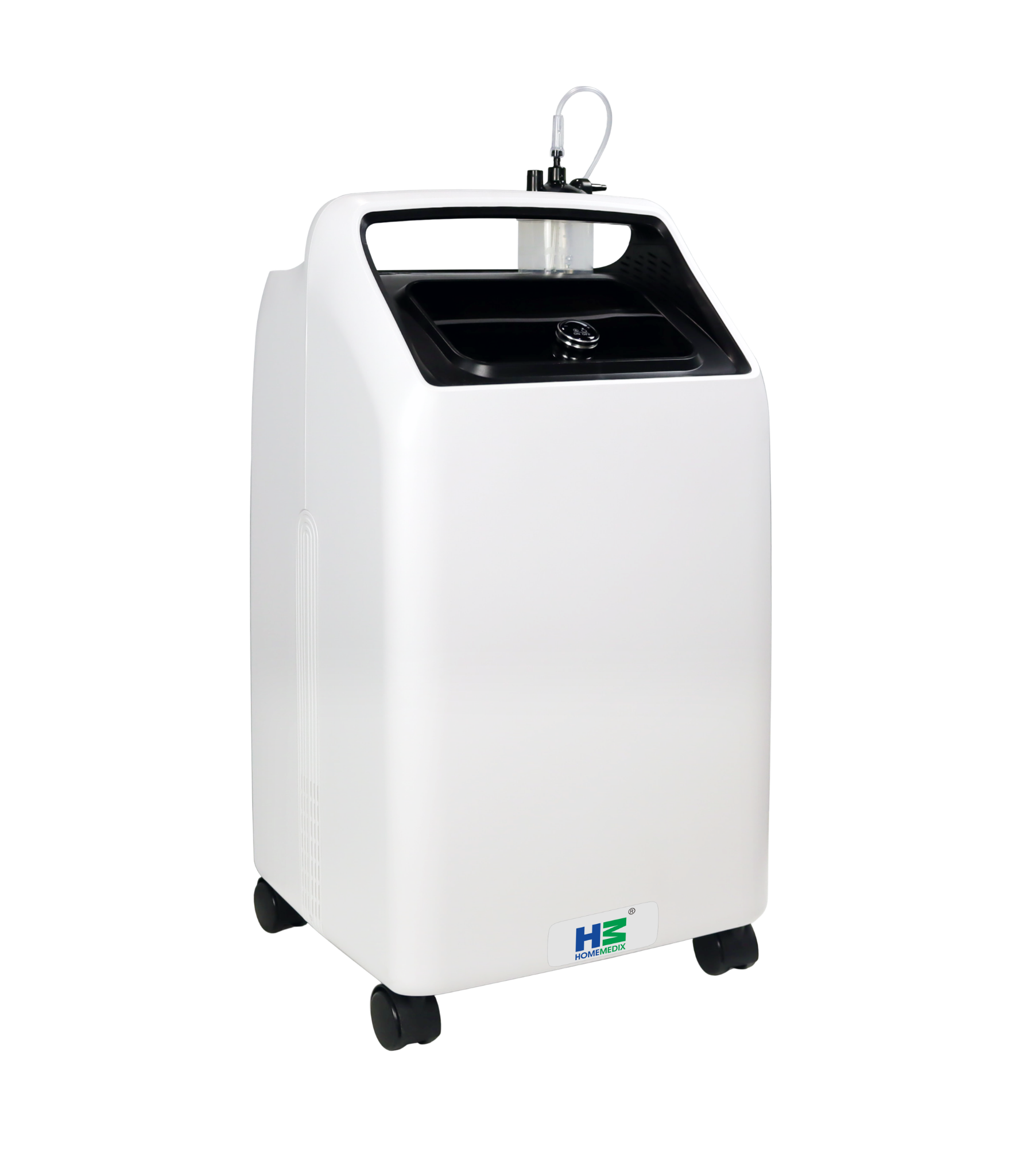
- Brand
- Home Medix
- Category
- 10 LPM
₹65,000₹85,000
Indicative pricing based on market intelligence. Varies by dealer, city, bundle, and period — confirm with a local authorised seller before buying.
HHZ SCORE 8.0/10
Oxymed 10 Litre Oxygen Concentrator (Dual Flow)
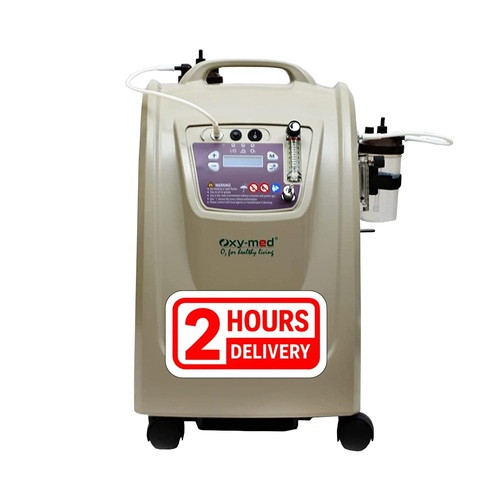
- Brand
- Oxymed
- Category
- 10 LPM
₹50,990₹95,000
Indicative pricing based on market intelligence. Varies by dealer, city, bundle, and period — confirm with a local authorised seller before buying.
HHZ SCORE 7.8/10
Specifications compared
| Specification | Home Medix HM-KX 10 LPM | Oxymed 10 Litre Oxygen Concentrator (Dual Flow) |
|---|---|---|
| Overview | ||
| Brand | Home Medix | Oxymed |
| Category | 10 LPM | 10 LPM |
| Price | ₹65,000 | ₹50,990.00 |
| MRP | 85,000 | 95,000.00 |
| Stock | In Stock | In Stock |
| Key features | ||
| Purity | 93% ± 3% | 90-96% |
| Type | Home Stationary | High Flow Stationary |
| Continuous Flow | 0.5–10 L/min | 1-10LPM |
| Weight | 25.6 kg | 24kg |
| Oxygen Purity Indicator (OPI) | Yes | Yes |
| Power consumption | 550 VA | 610watts |
| Technical details | ||
| Purity | 93% ± 3% | 90-96% |
| Type | Home Stationary | High Flow Stationary |
| Continuous Flow | 0.5–10 L/min | 1-10LPM |
| Weight | 25.6 kg | 24kg |
| Oxygen Purity Indicator (OPI) | Yes | Yes |
| Power consumption | 550 VA | 610watts |
| Sound level | ≤ 48 dB (field-verified) | 50db |
| Dimensions | 368 × 346 × 695 mm | 26.77H x 15.74W x 14.72Dinch |
| Outlet pressure | 0.04–0.06 MPa | 14.5psi |
| Additional details | ||
| Oxygen Purity % Analyzer | Yes | — |
| Loss of Power Alarm | Yes | Yes |
| System Malfunction Alarm | Yes (High Temperature) | Yes |
| No Flow Alarm | Yes (Low/No Flow) | Yes |
| Indian Voltage Model | Yes | Yes |
| Company Headquarters | India | India |
| Home Medix differentiators | ||
| Integrated Nebulization | Yes | — |
| Precise Electronic Flowmeter | Yes | — |
| One-Touch SOS Alert | Yes — high-volume audible alarm button for summoning a nearby attendant (local siren; no mobile app or telecom channel) | — |
| Hour Counter | User-visible running-hour display | — |
| Working Voltage | AC 230V / 50Hz, ±10% tolerance (207–253 V) | — |
| Industrial-Grade Compressor | Yes | — |
| Ultra-Quiet Operation | Yes (< 48 dB field-verified) | — |
| ISO 9001 | Yes | — |
| ISO 13485 | Yes | — |
| CDSCO | Approved | — |
| Warranty | 3 years or 10,000 hours of operation, whichever comes first | — |
Analysis
Two Indian-brand 10 LPM units at nearly the same price
The Home Medix HM-KX and the Oxymed 10 Litre Dual Flow are the two most serious Indian-domestic 10 LPM concentrators competing head-to-head at roughly the same price point — HM-KX at indicative retail ~₹65,000 in 2026, Oxymed at indicative retail ~₹50,000–₹65,000 depending on channel and configuration. Both are CDSCO-registered; neither carries CE or US FDA on its published spec sheet. Both ship Indian-voltage; both are 1–10 L/min continuous-flow high-flow stationary units; both target the chronic-COPD, ILD-progression, and post-discharge high-flow segments.
This is the closest same-price matchup in the Indian 10 LPM class and the decision turns on deployment specifics rather than a decisive spec gap. Each unit has a genuine structural advantage the other cannot match.
HHZ’s verdict on the matchup: for single-patient LTOT where integrated nebulization, field-verified low sound, and 3-year warranty coverage matter, the HM-KX is the better pick. For dual-patient households, buyers prioritising the broadest-in-Indian-10-LPM-class authorised service network, and cases where the 14.5 psi outlet pressure is clinically required, the Oxymed 10 Litre Dual Flow is the better pick. On balance for the single-patient home-LTOT default case, HHZ calls this to the HM-KX.
At-a-glance differences
- Price: Roughly comparable — HM-KX ~₹65,000 indicative retail vs Oxymed ~₹50,000–₹65,000 indicative retail in 2026, channel-dependent
- Weight: Oxymed 24 kg vs HM-KX 25.6 kg — Oxymed is 1.6 kg lighter, the lightest Indian-brand 10 LPM in its class
- Sound: HM-KX ≤48 dB(A) field-verified vs Oxymed 50 dB (published) — HM-KX is ~2 dB quieter with field-verification
- Power: HM-KX 550 VA vs Oxymed 610 W — HM-KX is ~10% lower draw
- Flow range: HM-KX 0.5–10 L/min vs Oxymed 1–10 L/min — HM-KX reaches lower continuous flows
- Outlet pressure: Oxymed 14.5 psi vs HM-KX 0.04–0.06 MPa (~5.8–8.7 psi) — Oxymed is substantially higher, matters for dual-flow splitting and enrichment circuits
- Dual-flow capability: Oxymed yes (supports two-patient routing); HM-KX no (single-patient only)
- Purity: HM-KX 93% ± 3% (~90–96%) vs Oxymed 90–96% — equivalent PSA-chemistry ceiling
- Altitude: Oxymed published altitude spec not on datasheet; HM-KX not altitude-spec’d either
- Certifications: Both ISO / CDSCO-documented; neither carries CE or US FDA on record
- Warranty: HM-KX 3 years / 10,000 hours vs Oxymed 2 years — HM-KX is a full year longer
- Alarm suite: Both cover loss-of-power, system-malfunction, and no-flow. HM-KX adds named Low Oxygen Concentration and High Temperature alarms plus a one-touch SOS audible-siren alarm (loud local buzzer for summoning an attendant — not a mobile app, SMS, or telecom channel); Oxymed has an OPI (Oxygen Purity Indicator)
- Service network: Oxymed 40+ authorised city service centres (broadest in the Indian 10 LPM class); Home Medix dealer network concentrated in South and West India
- Integrated nebulization: HM-KX yes; Oxymed no
Where the HM-KX wins
Field-verified sound — ≤48 dB(A) vs Oxymed’s 50 dB. 2 dB on its own is a modest difference in perceived loudness, but the HM-KX’s figure is field-verified across its dealer deployments rather than only manufacturer-published. At the quiet end of the 10 LPM class, both units are tolerable for same-room nocturnal placement, but the HM-KX sits closer to the class-tied-quietest floor (alongside the Nidek Nuvo 10) while the Oxymed sits a step above.
Power consumption — 550 VA vs 610 W — lowest-in-class vs middle-of-class. The HM-KX is the lowest-power 10 LPM on the Indian market; the Oxymed sits in the middle of the class. Over 24/7 LTOT duty at ₹8/kWh, the HM-KX saves roughly ₹250–₹350/month vs the Oxymed. Over a 3-year warranty period, that is ₹9,000–₹13,000 of cumulative electricity delta. Not decisive on its own, but a genuine operational advantage.
Integrated nebulization. The HM-KX can deliver oxygen-entrained nebulized medication through the same circuit. The Oxymed is a pure oxygen concentrator — concurrent nebulized bronchodilators or steroids require a separate compressor nebulizer. For severe-COPD and post-discharge patients on combined high-flow oxygen plus nebulized medications (a common clinical pattern), the HM-KX simplifies the home setup by one device, one power socket, and one cleaning routine.
Warranty calendar — 3 years / 10,000 hours vs 2 years. A full extra calendar year on the HM-KX. For chronic LTOT patients running 20+ hours/day, the 10,000-hour clause often trips before the 3-year mark, but the extra calendar year adds value for lighter-duty users. The HM-KX’s user-visible hour counter lets the patient always know how close they are to the warranty threshold — an operational feature the Oxymed datasheet does not publish.
Documented AC voltage tolerance — ±10% (207–253 V). The HM-KX explicitly publishes its voltage-window behaviour: out-of-tolerance voltage triggers shutdown rather than compressor damage. The Oxymed datasheet does not publish a comparable tolerance figure. In Indian Tier-2 and Tier-3 cities where 160–260 V mains variance is routine, this is a real spec advantage.
Lower-end flow range — 0.5 L/min vs 1 L/min. Most 10 LPM prescriptions sit between 4 and 10 L/min, but the HM-KX’s wider low-end range supports titration-down on good days and makes the unit functionally useful as a bridge-down device if the clinical picture stabilises.
Full named alarm suite plus SOS siren. The HM-KX’s spec table explicitly names Low Oxygen Concentration, Power Failure, High Temperature, and Low/No Flow alarms, plus the one-touch SOS alert — a factory-integrated high-volume audible-alarm button dealer-validated across 100+ field deployments. The SOS is a local distress siren loud enough to carry to a caregiver in an adjacent room or on another floor; it is not a mobile-app notification, not an SMS trigger, not a telecom channel, and doesn’t depend on a mobile tower or data pack. The Oxymed 10 Litre datasheet lists loss-of-power, system-malfunction, and no-flow alarms plus an OPI, but no equivalent patient-summon audible-alarm feature.
Where the Oxymed 10 Litre Dual Flow wins
Dual-flow routing — the headline structural differentiator. Oxymed’s dual-flow architecture allows the single concentrator to feed two independent patient circuits simultaneously, typically at lower per-circuit flow rates. For households with two oxygen-dependent patients (not uncommon in joint-family Indian homes with elderly couples), the dual-flow Oxymed replaces two separate concentrators with one. This is structurally not something the HM-KX can do — the HM-KX is single-patient only. For the specific dual-patient use case, the Oxymed is not just better; it is the only serious Indian-brand answer in the class at this price point.
14.5 psi outlet pressure — substantially higher than the HM-KX. Oxymed’s 14.5 psi compares to the HM-KX’s 0.04–0.06 MPa (~5.8–8.7 psi). For long cannula runs, for bubble-humidifier performance, for dual-flow splitting (which divides the single pressure output across two patient circuits), and for enrichment circuits where the oxygen feeds into a secondary ventilator or high-flow nasal cannula interface, the higher outlet pressure is a real operational advantage. This is the most measurable single spec where the Oxymed beats the HM-KX on a clinically-relevant axis.
Service network — broadest in the Indian 10 LPM class. Oxymed Medical operates 40+ authorised city service centres across India, with specific dealer-trained technicians on the Oxymed compressor platform. Home Medix’s dealer network is concentrated in South and West India with thinner reach in the North-East and hill belt. For a 10 LPM LTOT unit that breaks down in rural Assam, rural Odisha, or a hill station outside the Home Medix corridor, the Oxymed’s service footprint is a real safety layer — it is the difference between a three-day and a three-week warranty repair, or between renting a bridge unit for ₹2,500/week and not needing one.
Weight — 24 kg vs 25.6 kg. 1.6 kg is a modest gap but puts the Oxymed at the lightest end of the Indian 10 LPM class. On castors over hard flooring this is negligible; on stairs or across carpet, the lighter chassis is marginally easier to handle.
Institutional procurement depth. Oxymed’s 40+ authorised service centres translate directly into institutional-procurement ease — nursing homes, home-care services, and CGHS/ECHS bulk-purchase contexts generally find the Oxymed paperwork and service SLAs easier to close than a newer brand. For home-care operators managing a fleet of 10 LPM units across multiple cities, the Oxymed’s service uniformity is a genuine operational value.
Indian-market context
Both brands are Indian-HQ and CDSCO-registered. Neither carries CE or US FDA on its published spec sheet — both units are positioned for Indian domestic home use at the applicable CDSCO regulatory floor, and neither offers export-grade CE/FDA paperwork. For Indian home prescriptions this is the right regulatory tier; for institutional buyers chasing CE or FDA on the hardware itself, neither unit clears the gate.
Service-network reality is the structural differentiator. Oxymed’s 40+ city footprint is among the broadest in the Indian 10 LPM class, meaningfully wider than Home Medix’s South-and-West-concentrated dealer corridor. For buyers in Kolkata, Guwahati, Bhubaneswar, Ranchi, Patna, Lucknow, Chandigarh, Jaipur, Ahmedabad, and cities beyond the Home Medix core, the Oxymed’s service reach is a real operational advantage. Buyers in Bangalore, Chennai, Hyderabad, Mumbai, Pune, and the South-West corridor get serviceable reach from either brand.
Warranty reality. HM-KX 3 years / 10,000 hours is honoured through the Home Medix authorised-dealer network with in-house trained technicians on the HM-KX compressor platform. Oxymed 2 years is honoured through the broader 40+ city service network with dealer-trained technicians on the Oxymed compressor platform. For a chronic high-flow LTOT patient running 20+ hours/day, the HM-KX’s 10,000-hour clause will often trip before the 3-year mark, making the calendar advantage less decisive than it first appears.
Stabiliser sizing. HM-KX at 550 VA → 825 VA servo stabiliser (1.5× rated draw). Oxymed at 610 W → 915 VA servo stabiliser. Both must pair with an online UPS or pure-sine inverter in outage-prone areas — never a square-wave inverter, which damages compressor motors on either platform.
Altitude-derating reality. Neither unit publishes a clean altitude envelope. Buyers above ~2,000 m residence (Leh, Manali, Mussoorie, Shimla, Ooty, Darjeeling, Gangtok, Srinagar) should expect 2–4% purity derating on either unit and may be better served by an altitude-spec’d import like the AirSep Intensity 10.
Humidity and coastal-belt corrosion apply equally — the compressor-plus-sieve-bed architecture in both units is sensitive to Mumbai, Chennai, Kochi, Kolkata, and Visakhapatnam humidity, and a dehumidifier running in the same room during monsoon months extends compressor life on either platform.
GST at 12% applies to both. Both qualify for CGHS / ECHS / ESIC / private-insurance reimbursement where the payer accepts GST-invoiced home-medical-equipment purchases with a standing oxygen prescription.
Who should pick which
Pick the HM-KX if: the prescription is single-patient, the patient needs concurrent nebulized medications and you want single-device simplicity, field-verified low sound matters for bedroom placement, 24/7 electricity cost is a long-horizon consideration, the 3-year / 10,000-hour warranty with documented AC-voltage tolerance matters, you value the dealer-validated SOS audible-siren alarm for bedridden-patient safety, or you are in a Home Medix served city (South/West India corridor). For single-patient Indian home LTOT in a Home-Medix-served pincode, the HM-KX is the right pick.
Pick the Oxymed 10 Litre Dual Flow if: the household has two oxygen-dependent patients (the single strongest case for this unit), the 14.5 psi outlet pressure is clinically required for a specific ventilator or enrichment circuit, you are in a pincode where Home Medix service is thin but Oxymed’s 40+ city network reaches, you are an institutional or home-care-fleet buyer prioritising service-network uniformity across India, or you need the lightest-in-Indian-10-LPM-class 24 kg chassis. For dual-patient or network-reach-dependent deployment, the Oxymed is the right pick.
Consider alternatives if: neither unit fits. The Nidek Nuvo 10 at ~₹1,25,000–₹1,45,000 adds Japanese clinical reputation and an import-tier warranty reputation for buyers where brand recognition among pulmonologists matters for prescription-channel pull. The Philips 10 LPM and DeVilbiss 10 LPM cover similar premium-import territory with broader global service footprints.
Verdict
This is the closest same-price Indian-brand 10 LPM matchup on the market and the decision is genuinely contextual. Neither unit sweeps the comparison. The HM-KX leads on integrated nebulization, field-verified low sound (≤48 dB field-verified vs 50 dB published), lowest-in-class power draw (550 VA vs 610 W), warranty calendar (3 years vs 2 years), documented AC-voltage tolerance, and the dealer-validated SOS audible-siren alarm. The Oxymed leads on the three structural differentiators that matter in specific deployment contexts: dual-flow capability (unique at this price point), 14.5 psi outlet pressure (substantially higher), and 40+ city authorised service network (broadest in the Indian 10 LPM class).
For the single-patient home-LTOT default case — which is the overwhelming majority of 10 LPM purchases in the Indian market — HHZ’s call is to the HM-KX on the strength of integrated nebulization, field-verified quieter sound, lowest-in-class power draw, and 3-year warranty. For dual-patient households, for institutional and home-care-fleet deployments, for buyers outside the Home Medix service corridor, and for cases where 14.5 psi outlet pressure is clinically required, the Oxymed is the correct pick and the HM-KX’s spec-sheet lead does not apply.
Either way, both units clear the CDSCO regulatory floor, both are Indian-voltage-tuned, and both are genuine domestic-brand 10 LPM options at a price point well below the Nidek / Philips / AirSep / DeVilbiss import tier. For buyers who would otherwise be choosing between a Chinese rebadge at ₹50,000 and a premium import at ₹1.25L+, both of these are the more responsible intermediate answer.
Before committing to any 10 LPM unit, confirm the prescription is genuinely >5 L/min — the 5 LPM class covers most Indian home-oxygen prescriptions at ~40% less. Consult your treating pulmonologist on the prescribed flow rate and the single-patient vs dual-patient deployment question before finalising the purchase.