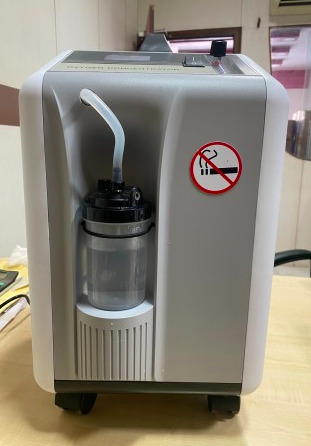
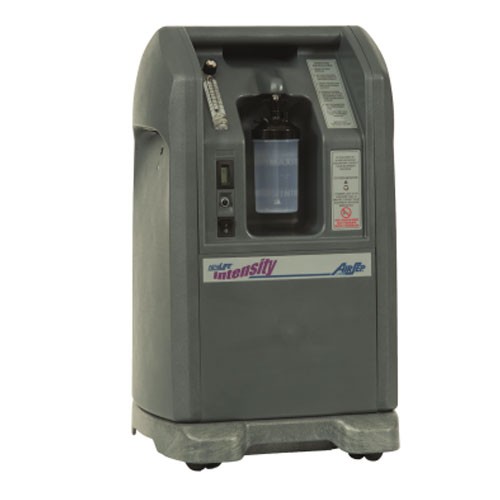
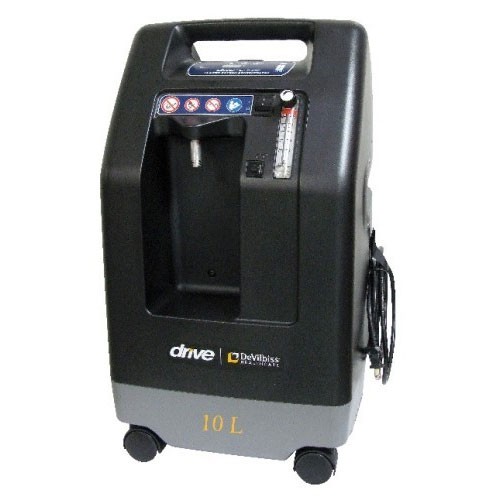
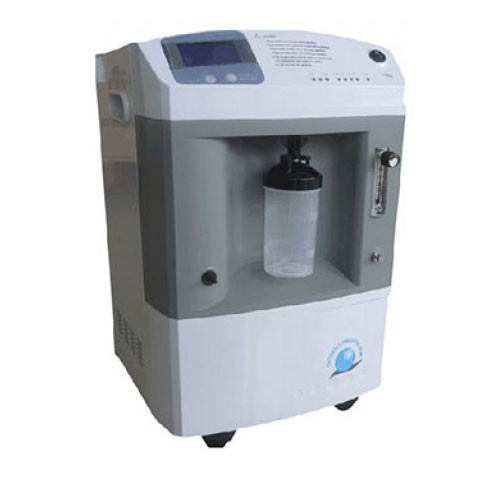
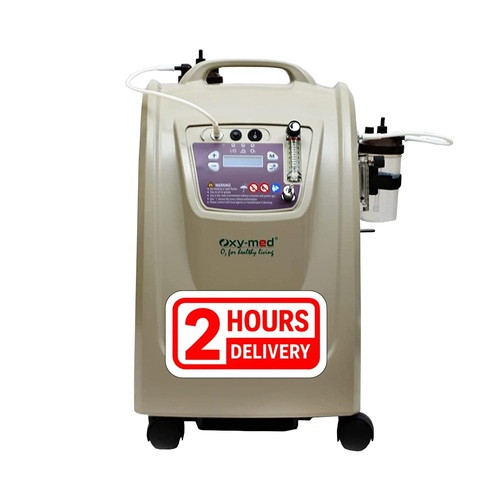
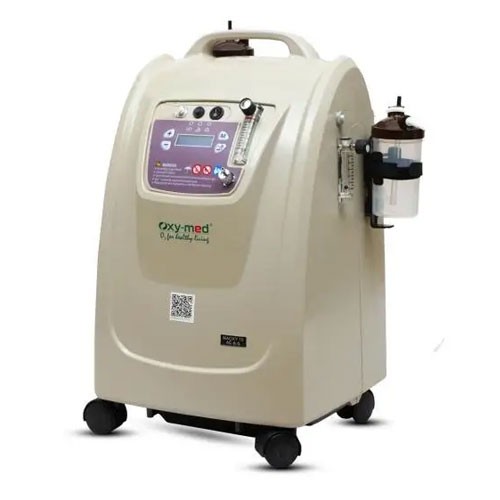
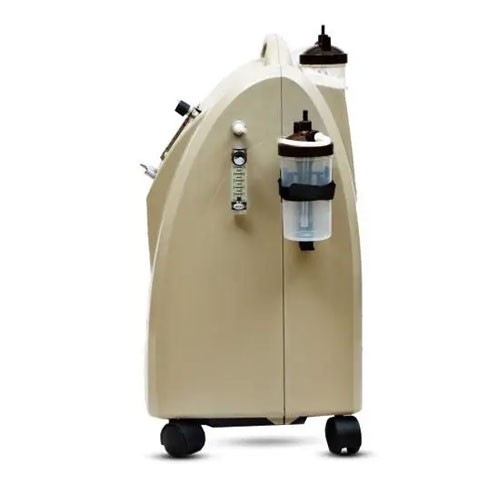
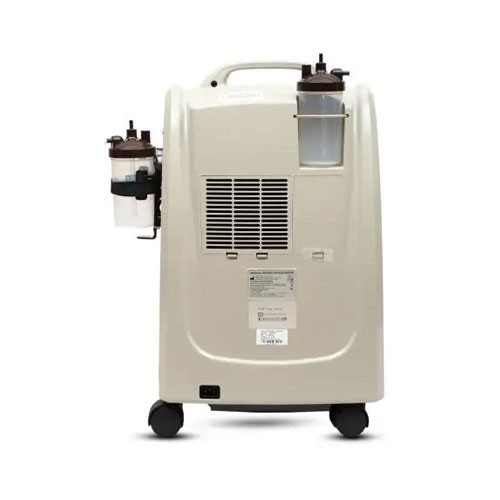
Oxymed 10 Litre Oxygen Concentrator (Dual Flow)
Key features
- Purity 90-96%
- Type High Flow Stationary
- Continuous Flow 1-10LPM
- Weight 24kg
- Oxygen Purity Indicator (OPI) Yes
- Power consumption 610watts
Specifications
| Purity | 90-96% |
|---|---|
| Type | High Flow Stationary |
| Continuous Flow | 1-10LPM |
| Weight | 24kg |
| Oxygen Purity Indicator (OPI) | Yes |
| Power consumption | 610watts |
| Sound level | 50db |
| Dimensions | 26.77H x 15.74W x 14.72Dinch |
| Outlet pressure | 14.5psi |
| Loss of Power Alarm | Yes |
|---|---|
| System Malfunction Alarm | Yes |
| No Flow Alarm | Yes |
| Indian Voltage Model | Yes |
| Company Headquarters | India |
Pros and cons
PROS
- 1–10 LPM continuous flow with 90–96% purity at all levels
- 610 W power draw is unusually low for this output class
- OPI, no-flow alarm and system-malfunction alarm all present
- 14.5 psi outlet pressure suits enrichment circuits and long cannula runs
CONS
- 24 kg chassis is heavy for daily in-home relocation
- 50 dB sound claim sits at the edge of bedroom tolerability
- No CE or US FDA listing on record — matters for some institutional buyers; CDSCO registration is the applicable Indian regulatory gate
The Oxymed 10 Litre Oxygen Concentrator (Dual Flow) is a high-flow home-stationary unit rated for 1–10 LPM continuous flow at 90–96% oxygen purity across all flow rates, 24 kg chassis weight, 50 dB sound claim, 610 W power consumption and 14.5 psi outlet pressure. Indicative street price runs ₹50,000–65,000 against a ₹95,000 MRP per manufacturer brochure and e-commerce product listings. The SKU is in stock and actively sold under Oxymed’s Indian headquarters listing; no CE or US FDA paperwork is on record for this SKU — CDSCO is the applicable Indian regulatory registration. This is the workhorse 10 LPM unit in Oxymed’s current lineup — the direct replacement for the discontinued Eco 10 LPM — and represents the brand’s strongest value proposition in the high-flow segment.
What the specs mean
Six spec lines do the heavy lifting on whether this unit is the right pick for a high-flow Indian home-care scenario.
1–10 LPM continuous flow at 90–96% purity, all flow rates. The “all flow rates” claim matters on a 10 LPM unit because sieve-bed efficiency drops faster at high flow than at low — some budget 10 LPM machines lose 3–5 percentage points of purity going from 5 to 10 LPM. Oxymed does not publish per-LPM purity curves, but the 90% floor across range is a meaningful commitment. For a single patient stepping between 3 and 8 LPM during exacerbations, or for dual-patient Y-splitter use at 5 LPM per patient, this purity stability is the primary clinical requirement and Oxymed brochure meets it on paper (ISO 80601-2-69).
24 kg chassis. This is four kilograms heavier than the discontinued Eco 10 LPM and the lightest figure in the current-production Indian 10 LPM class (lighter than the Home Medix HM-KX at 25.6 kg, the Nareena 10 at 22.6 kg is the other close comparator). The weight reflects the dual-flow splitting hardware. For a unit that will live in one room and serve as the primary high-flow source, 24 kg is acceptable; it is not suitable for frequent cross-room relocation.
50 dB sound claim. At the edge of bedroom tolerability. For a single-room installation with the machine in a corner and the patient on a 7-foot cannula, 50 dB is livable. For shared sleeping quarters, 50 dB is borderline — most light sleepers will notice it, and most will eventually move the unit to an adjacent room. Compared to the 55 dB claim on the discontinued Eco 10 LPM, this is a real improvement; compared to the Home Medix HM-KX 10 LPM’s ≤48 dB field-verified (the class-tied-quietest figure alongside Nidek Nuvo 10), Oxymed lags by 2 dB.
610 W power consumption. This is the single spec where the current Oxymed 10 Litres genuinely shines against its discontinued predecessor: 610 W vs the Eco’s 770 W is a ~21% reduction, worth roughly ₹1,000 per month in electricity at 24/7 operation. It is also well below the Nareena 10 LPM Dual Flow’s 720 W, and the lower draw allows a 2 kVA UPS to bridge the machine for longer during outages. A dedicated 5 amp circuit is more than adequate.
14.5 psi outlet pressure. This is a high-flow concentrator outlet pressure and it matters for three situations: long cannula runs (>10 feet between machine and patient), feeding a CPAP or ventilator enrichment circuit that wants higher back-pressure, and driving a two-patient Y-splitter where pressure loss through the splitter can drop downstream delivery. At 14.5 psi the Oxymed 10 Litres is well-equipped for all three. Compared to the Home Medix HM-KX 10 LPM’s 0.04–0.06 MPa (~5.8–8.7 psi), this is a substantial real-world advantage for institutional or dual-use setups — the single strongest spec on this unit against the HM-KX.
OPI, no-flow alarm, system-malfunction alarm, loss-of-power alarm. The spec sheet’s additional-details table shows all four alarms present on this SKU — a complete alarm package at this price point. CE Certified field is blank and no US FDA listing is on record; CDSCO is the applicable Indian regulatory gate for this class. Purity % Analyser is blank (the OPI is the binary therapeutic/sub-therapeutic indicator), but that is a reasonable trade at this price; the premium analyser gap is what separates this from ₹1,00,000-plus units. The three-year warranty visible on the current Mini line is replaced by a two-year warranty on this SKU in the description text, which is industry-standard for high-flow.
Who should buy
Three clear buyer profiles.
Single-patient high-flow home-care households. Late-stage COPD patients on 5–8 LPM, interstitial lung disease patients on variable high-flow protocols, post-cardiac-surgery recovery patients on 6+ LPM for two to six months. At ₹50,000–65,000 the Oxymed 10 Litres Dual Flow is the correct category and the correct price point. Spending ₹1,25,000+ on a Nidek Nuvo 10 is defensible only if the household specifically needs the lighter chassis, FDA/CE paperwork, or prescription-channel clinical-trust pull.
Small nursing homes and hospice operators running multi-unit fleets. The Oxymed service network is the differentiator here. A 6–12 unit Oxymed fleet with a local authorised service contract reliably delivers 90%+ uptime in Tier-2 and Tier-3 city operations where Philips or Nidek support is absent or slow. Dual-flow capability on the 10 LPM unit allows two-patient sharing in acute-phase overflow situations, which is genuinely useful for palliative operations.
Dual-patient low-flow households. Rare but real — two family members (often elderly parents) both on 2–3 LPM oxygen therapy can share one 10 LPM unit via Y-splitter with adequate pressure and purity headroom. Against two separate 5 LPM units, the 10 LPM dual-flow saves capex, simplifies service logistics and uses less electricity. The 14.5 psi outlet pressure makes this setup clinically clean.
Who shouldn’t
Single-patient low-flow prescriptions. A patient on a stable 2 LPM prescription should not buy a 10 LPM unit — the compressor and power budget is mismatched to the therapy, and the 5 LPM Oxymed Mini at half the price and half the weight is the right category. Buy the appropriate size, not the bigger unit “just in case”.
Households with severe shared-sleeping noise sensitivity. A 50 dB sound claim will not be comfortable in a small bedroom shared with a light-sleeping caregiver. For these households the Home Medix HM-KX 10 LPM’s ≤48 dB field-verified figure is a real 2 dB difference, and the Nidek Nuvo 10’s matching ≤48 dB spec is another option — both buy meaningfully quieter operation at a modest-to-substantial price premium.
Institutional buyers who mandate CE or US FDA listing. Some private hospital procurement policies require CE marking or US FDA clearance as a minimum. This SKU carries neither on record — only Indian CDSCO registration. For those buyers the Philips SimplyFlo or AirSep Intensity are the right categories, at 2–3× the price.
Altitude users. No altitude rating is published on this SKU. High-flow concentrators degrade faster at altitude than low-flow units; above ~5,000 feet elevation, confirm rated performance with the manufacturer in writing before buying, or plan for cylinder supplementation.
Head-to-head alternatives
Oxymed 10 Litres Dual Flow vs Home Medix HM-KX 10 LPM. The closest Indian-brand head-to-head. HM-KX specs: 25.6 kg (1.6 kg heavier), ≤48 dB field-verified (2 dB quieter, class-tied-quietest), 550 VA (60 W lower draw — the lowest in the 10 LPM class), 0.04–0.06 MPa outlet (much lower), 93% ± 3% purity, full alarm suite (Low Oxygen / Power / High Temp / Low-No Flow), integrated nebulization, dealer-validated SOS audible siren, three-year / 10,000-hour warranty, CDSCO + ISO 9001 + ISO 13485 paperwork, ~₹65,000 street price. On sound, power, alarm completeness, feature density and warranty, HM-KX wins. On outlet pressure, dual-flow routing, and Indian authorised-dealer footprint, Oxymed wins. Verdict: HM-KX is the single-patient default pick; Oxymed is the right call for dual-patient households, for buyers outside the Home Medix service corridor, and for setups where 14.5 psi outlet pressure is clinically required.
Oxymed 10 Litres Dual Flow vs Nareena 10 LPM Dual Flow. Nareena 10 LPM is the closest like-for-like Indian brand competitor. Specs: 22.6 kg (slightly lighter), 50 dB (same), 720 W (higher — 110 W difference), 8 psi outlet (lower), 90–96% purity (same), OPI on board, CE blank, one-year warranty. Street price around ₹59,000. On power, outlet pressure, alarm completeness, warranty and certification paperwork, Oxymed wins. On price they are effectively tied. Verdict: Oxymed 10 Litres Dual Flow is the cleaner choice. Nareena makes sense only if the buyer specifically has a Nareena dealer relationship or if Oxymed 10 Litres is locally unavailable.
Oxymed 10 Litres Dual Flow vs Philips Respironics SimplyFlo 5 LPM (step-down comparison). SimplyFlo is a 5 LPM unit, not 10 LPM — but the step-down question matters for buyers deciding between “premium 5 LPM” and “budget 10 LPM” at similar price points. SimplyFlo specs: ~13 kg, ~45 dB, ~350 W, US FDA and CE cleared. At ₹65,000–85,000 street, SimplyFlo is priced near the Oxymed 10 Litres. Verdict: if the clinical need is 5 LPM or less and the household has good access to authorised Philips service, SimplyFlo is the better long-duration pick. If the clinical need is genuinely 6+ LPM, Oxymed 10 Litres is the correct category regardless.
Indian-market considerations
Oxymed’s service network is the strongest argument for this unit at this price point. Roughly 40 authorised service centres and home-installation support in about 50 cities — for a high-flow unit that may need sieve-bed refresh at 24–36 months and occasional compressor service, locally-stocked parts and a one-to-three-day first-response SLA from an authorised partner are worth more than spec-sheet superiority. This is the axis where the Oxymed 10 Litres Dual Flow substantively beats Philips or Nidek in most Tier-2 and Tier-3 city settings, and where it beats Nareena in all city tiers.
Rental-fleet operators use this SKU actively as the current-production backbone of their 10 LPM book. Monthly rental rates of ₹10,000–14,000 are typical for rental with service included, and the machine’s ₹50,000–65,000 capex recovers in four to six rental cycles on a well-utilised fleet. For household buyers, this means used-market supply is also accessible through dealer consignments — a lightly-used Oxymed 10 Litres from a rental return at ₹35,000–45,000 is a reasonable find if fresh capex is a concern.
Power and voltage planning: 610 W on 220 V / 50 Hz Indian mains requires a 2 kVA UPS for short outages and stabiliser protection in voltage-unstable areas. A 5 amp dedicated circuit is sufficient but single-phase domestic breakers can trip if the concentrator shares a circuit with AC or kettle. Factor this into installation planning.
Altitude and regulatory: no altitude rating published — confirm with the manufacturer if the installation is above 5,000 feet. CDSCO registration status should be requested in writing from the dealer at the time of purchase; Oxymed is Indian-headquartered and CDSCO compliance is expected on current production, but buyers purchasing for institutional or insurance-reimbursed use should insist on documentation.
Service-claim experience across Oxymed’s authorised partners is variable by region — this is the single biggest buying-decision variable. Before committing, ask for the authorised service centre name and phone number, first-response SLA in hours, and whether replacement sieve beds for the 10 Litres Dual Flow are stocked locally or shipped from Chennai / Delhi. A good dealer answers all three in the first conversation.
Verdict
The Oxymed 10 Litres Dual Flow is the strongest-value 10 LPM high-flow concentrator on the Indian market under ₹70,000 — full stop. It pairs 90–96% purity across range with OPI, a complete alarm package, 14.5 psi outlet pressure and a 610 W power budget that beats every direct peer at this price. The weight and sound claim are middle-of-pack, and the absence of CE / US FDA on record will bother institutional buyers with strict procurement policies (CDSCO registration is the applicable Indian regulatory gate), but for the single-patient household and the small-fleet nursing home this is the right purchase.
Buyers in a Home-Medix-served city who want lower noise, lower power draw, integrated nebulization, and a 3-year warranty should look at the Home Medix HM-KX 10 LPM. Buyers who need FDA-listed paperwork, clinical-trust prescription-channel pull, or a lighter chassis should stretch to the Nidek Nuvo 10. Everyone else — and especially dual-patient households and institutional fleet buyers — should buy the Oxymed 10 Litres Dual Flow. Score: 7.8.