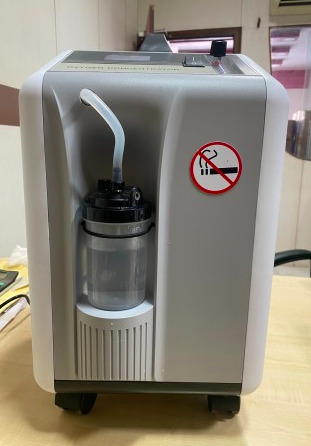
Dr Diaz 10 LPM
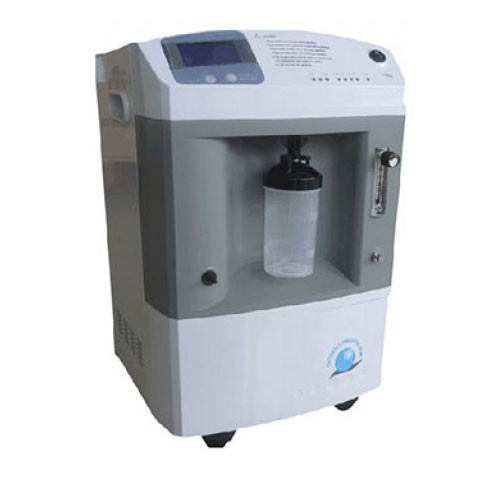
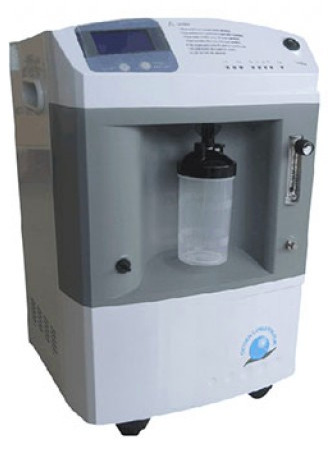
Key features
- Purity 90-95%
- Type High Flow Stationary
- Continuous Flow 1-10LPM
- Weight 27kg
- Oxygen Purity Indicator (OPI) No
- Power consumption 550watts
Specifications
| Purity | 90-95% |
|---|---|
| Type | High Flow Stationary |
| Continuous Flow | 1-10LPM |
| Weight | 27kg |
| Power consumption | 550watts |
| Sound level | 50db |
| Dimensions | 23.6H x 14.7W x 14.3Dinch |
| Outlet pressure | 20psi |
| Loss of Power Alarm | Yes |
|---|---|
| Indian Voltage Model | Yes |
| Company Headquarters | China |
Pros and cons
PROS
- ₹42,240 current price is class-leading for a true 1-10 LPM unit
- 550 W power draw is efficient for the category
- 20 psi outlet pressure is high — good for mask delivery or long cannula runs
- Hemodiaz India-headquartered per brochure
CONS
- No OPI — a regression from the 5 LPM sibling
- Only loss-of-power alarm listed; no malfunction or no-flow alarms
- No CE, FDA, FAA, or CDSCO markers on the spec sheet
- 27 kg chassis is heavy but not especially reinforced for 10 LPM duty
The Dr Diaz 10 LPM is listed at a current price of ₹42,240 against an MRP of ₹81,600 — a 48% discount and one of the cheapest 10 LPM concentrators on the Indian market. On price alone it is disruptive. It undercuts every Chinese-OEM 10 LPM from every Indian-branded supplier, and it is roughly half the cost of a Philips Respironics Millennium M10 or a Nidek Nuvo 10. The spec sheet, however, shows the 10 LPM unit stripped of features that the Dr Diaz 5 LPM sibling has — notably the oxygen purity indicator and the malfunction/no-flow alarms. This makes the 10 LPM a different product proposition from the 5 LPM, and a more conditional recommendation.
What the specs mean
The Dr Diaz 10 LPM is a true 1–10 LPM continuous-flow stationary, with 90–95% purity, 50 dB sound level, 550 W power draw, and a 27 kg chassis at 23.6H x 14.7W x 14.3D inches. These basics are all in range for a 10 LPM stationary unit and roughly comparable to Philips M10 or Nidek Nuvo 10 on the headline numbers.
The 550 W draw is genuinely efficient. Philips M10 is 600 W, Nidek Nuvo 10 is around 590 W, and Home Medix HM-KX publishes 550 VA. At 550 W the Dr Diaz sits among the lowest-draw 10 LPM options. For a patient running 16 hours a day at ₹9/kWh this translates to roughly ₹2,100-2,400 per month — materially below the 720 W Nareena 10 LPM.
The 50 dB sound level is standard for the category. Loud but acceptable in an adjacent room. Positioning in a hallway or adjacent room with a 2 m cannula extension is the typical approach.
Outlet pressure at 20 psi is the headline spec worth examining. Most 10 LPM concentrators deliver 5-10 psi. A 20 psi outlet pressure is unusually high and suggests the machine is designed for higher-resistance downstream delivery — long tubing runs, mask therapy, or driving ancillary equipment. For a patient using a standard nasal cannula this is irrelevant; for a clinical setup with extensive tubing or a CPAP/BiPAP interface, the extra pressure is useful. Verify against the cannula or interface manufacturer specs — some cannulas are rated for <15 psi input.
The 27 kg chassis is heavier than the Home Medix HM-KX (25.6 kg) and roughly matches the Philips M10 (26 kg). Heavier correlates with better compressor mounting and vibration damping, which matters for a machine that runs 16+ hours a day for years.
The critical weaknesses: no OPI. The 5 LPM sibling has one; the 10 LPM does not. This is odd and is the single most important spec gap on this unit. At 10 LPM, sieve bed degradation is faster than at 5 LPM (the beds are cycled harder), and a machine without an OPI running at 10 LPM for 18 hours a day will produce slowly-degrading oxygen purity across 12-24 months with no patient-facing warning. For LTOT this is a concern.
Alarms: only loss-of-power is confirmed. No system malfunction, no no-flow. The 5 LPM sibling has all three. This gap in the 10 LPM product is hard to explain commercially.
CE, FDA, FAA, CDSCO: all blank. The brand is listed as Indian-headquartered. For insurance reimbursement, confirm CDSCO status with the dealer directly before purchase.
Who should buy it
The Dr Diaz 10 LPM makes sense as a lowest-capital-cost entry point for a patient who genuinely needs 10 LPM continuous flow but cannot afford ₹95,000+ for a Nidek or Philips. The target buyer is someone on a fixed budget who needs high-flow oxygen for a defined period — 3 to 12 months post-COVID recovery, bridging from ICU-level support to a lower-flow chronic state, or supporting a hospitalised family member at home between clinical visits.
The 20 psi outlet pressure also suggests utility for clinical or para-clinical setups — small nursing-home or home-care-agency use where the machine is feeding a longer tubing run or a mask interface.
Price-sensitive buyers running a paired-patient setup (two low-flow patients sharing a Y-split cannula at 4-5 LPM each) may also consider this, though in that case the missing OPI becomes more of a concern because the machine is effectively at full load.
Who shouldn’t
Long-term LTOT patients at 8-10 LPM should not buy this as primary machine. The combination of high flow (fast sieve degradation) and no OPI (no early warning) is a patient-safety risk on multi-year timelines. Buy a Nidek Nuvo 10 or Philips M10.
Patients who need CDSCO paperwork for insurance reimbursement. Verify separately.
Buyers in hill stations above 2,500 m — no altitude rating is published for the 10 LPM unit (the 5 LPM has 12,000 ft, but the 10 LPM brochure is silent). Do not assume parity.
Buyers whose budget can absorb ₹75,000-90,000 should consider the BPL Oxy-10 Neo for the Indian-brand warranty-claim advantage, or the Nidek Nuvo 10 for the Japanese-build reliability story.
Head-to-head alternatives
Philips Respironics Millennium M10 (₹1,15,000-1,30,000). The reference. 50 dB, 600 W, OPI, full alarm suite, 26 kg, 3-5 year documented compressor life in daily field use. Philips is 2.7x the price of Dr Diaz 10 and buys a genuinely different machine — OPI, alarms, and a service network that covers all 28 Indian states. For long-term high-flow LTOT, Philips is the correct buy. For short-term post-discharge at 10 LPM, Dr Diaz is the price-sensible option.
Nidek Nuvo 10 Litre (₹95,000-1,05,000). Japanese build, 48 dB, 590 W, OPI, full alarms, 28 kg. Against Dr Diaz, Nidek is 2.2x the price and materially better on everything that matters for reliability: OPI, alarms, compressor durability, metro service network. For patients on 12+ month high-flow use, Nidek is the correct buy.
BPL Oxy-10 Neo (₹75,000-85,000). The Indian-brand 10 LPM with the strongest warranty-claim reality in India. BPL has decades of medical-device experience and national service coverage (though concentrator-specific service depth is thinner than Philips). CDSCO-registered, fully documented. Against Dr Diaz, BPL Oxy-10 is roughly 80% more expensive and buys a materially more bullet-proof warranty experience. For risk-averse buyers, BPL is the smarter Indian-brand pick in the sub-₹90,000 10 LPM tier.
Indian-market considerations
Hemodiaz is India-headquartered per the brochure, which is useful but does not by itself guarantee a strong service network. Authorised-service-centre documentation for the brand is thin. For a 10 LPM machine whose patient depends on 16+ hours of uptime daily, this is the biggest risk factor. Buy only from an established medical-equipment dealer with a written service SLA — ideally an annual maintenance contract (AMC) with guaranteed spare-parts availability and on-site engineer response within 48-72 hours.
Warranty: typically 1 year from the dealer. Extended warranties may or may not be available; ask before purchase.
Voltage: Indian-voltage model confirmed. A 1 kVA dedicated stabiliser is mandatory for a 550 W compressor running continuously on Indian mains.
Altitude: not published for the 10 LPM. Do not deploy above ~1,500 m without asking the dealer for derating data. A 10 LPM unit at altitude without derating data may deliver 6-7 LPM actual flow at the rated 10 LPM setting — a real problem for a patient whose prescription assumes 10 LPM delivered.
CDSCO: not indicated. If insurance reimbursement is a factor, verify directly.
Price context: ₹42,240 current vs ₹81,600 MRP is a 48% discount. The MRP is optimistic relative to the spec sheet — a 10 LPM without OPI and with only one alarm should not be MRP’d at ₹81,600. But the current price is a genuine bargain for the capability delivered.
Additional Dr Diaz 10 LPM considerations
The 5 LPM vs 10 LPM spec comparison inside the brand. Hemodiaz sells both 5 LPM and 10 LPM variants. Comparing the spec sheets reveals an odd pattern:
- 5 LPM: OPI yes, three alarms (power + malfunction + no-flow), 12,000 ft altitude rating, 13 psi outlet pressure
- 10 LPM: OPI no, one alarm (power only), no altitude rating listed, 20 psi outlet pressure
The 10 LPM is stripped of safety features that the 5 LPM has, despite being a machine running at higher continuous load and therefore needing more monitoring. Commercial explanations: (a) the 10 LPM is a different OEM chassis than the 5 LPM (different Chinese supplier with different feature set), (b) the 10 LPM price point required feature cuts to maintain margin, or (c) the 5 LPM safety features were added in a revision that hasn’t yet propagated to the 10 LPM line. None of these reasons reflect a good outcome for the 10 LPM buyer.
Practically: the 5 LPM is the correct pick from the Hemodiaz brand portfolio if the prescription allows. The 10 LPM is the compromise pick.
The 20 psi outlet pressure in context. 20 psi is exceptionally high for a 10 LPM concentrator. Most 10 LPM units run 5-10 psi. The 20 psi outlet suggests Dr Diaz 10 LPM is designed for clinical or para-clinical applications — driving Venturi masks, BiPAP/CPAP circuits, or ancillary respiratory equipment. For a standard home nasal-cannula user, this is unused headroom and potentially a liability (high input pressure on a standard cannula can produce discomfort or nose-bleed risk on sensitive mucosa — the unit should be run at lower flow settings to avoid delivering the full 20 psi).
The 20 psi spec is useful differentiator if the use case calls for it. For most home users at low-flow cannula delivery, it is a cost-driven design choice that may or may not align with the buyer’s actual needs.
The 27 kg chassis build quality. At 27 kg, Dr Diaz 10 LPM is heavier than Home Medix HM-KX (25.6 kg) and Nareena 10 LPM (22.6 kg), roughly matches Philips M10 (26 kg), and is lighter than Nidek Nuvo 10 (28 kg). The heavier chassis suggests more substantial compressor mounting and larger sieve beds — positive for reliability at continuous 10 LPM load. Heavier is not automatically better, but in the 10 LPM class it correlates with better vibration damping and longer compressor service life.
The 550 W power efficiency. 550 W is among the lowest power draws in the 10 LPM class we track. Philips M10: 600 W. Nidek Nuvo 10: 590 W. Home Medix HM-KX: 550 VA. Nareena 10: 720 W. Dr Diaz at 550 W is class-leading efficient — materially below Nareena. Over a year of 16-hour daily operation this works out to ₹23,800/year at ₹9/kWh, vs ₹31,100/year for Nareena — a ₹7,300/year running cost advantage. Over 3 years of typical LTOT horizon, Dr Diaz’s efficiency saves ₹22,000 vs Nareena.
The efficiency may come at some cost — very-efficient compressors at the lower end of the power envelope for a given flow rate can suggest either (a) advanced compressor technology (good) or (b) undersized compressor pushing close to its operational limit (bad). For Dr Diaz specifically, we cannot distinguish between these without bench data. The spec is reported as published.
The 48% discount off MRP. The ₹42,240 current price against ₹81,600 MRP is a 48% discount — among the deepest we see in the Indian home-oxygen segment. This may reflect (a) clearance pricing, (b) aggressive market-entry pricing to build volume, or (c) aspirational MRP setting that was never intended to be realistic. Regardless of cause, the current price is the transaction-relevant number.
CDSCO registration status. Not explicitly indicated on the brochure. For insurance-reimbursement buyers, this is a verification item before purchase. Hemodiaz as an India-HQ brand should have CDSCO registration for medical-device sales; confirm the specific registration number with the dealer and cross-check against CDSCO’s online device registry.
Service network reality for Dr Diaz 10 LPM specifically. The 10 LPM unit is a harder-to-service machine than the 5 LPM — larger chassis, twin compressors in some variants, more complex sieve architecture. If Hemodiaz’s Indian service network is thin on 5 LPM units, it will be thinner on 10 LPM where volume is lower and technician exposure is rarer. Buy only from a dealer with documented experience servicing Dr Diaz 10 LPM specifically, not just the 5 LPM.
The 23.6H x 14.7W x 14.3D inch dimensions. Near-identical to Nareena 10 LPM Dual Flow (24.4H x 16.9W x 12.6D) and Home Medix 10 LPM (same Home Medix common chassis dimensions). This 10 LPM chassis family is widely used across Chinese-OEM rebadge brands in the Indian market. Spare parts for Dr Diaz 10 LPM are likely cross-compatible with other 10 LPM units in this chassis family — a practical pro for post-warranty service.
Paired-patient use case
Some buyers consider a 10 LPM unit for paired-patient scenarios — two patients each at 4-5 LPM off one machine via Y-connector. For this use case, Dr Diaz 10 LPM at ₹42,240 is the cheapest credible option on the Indian market. Considerations:
- The missing OPI is a higher-stakes gap when two patients depend on the output
- The 20 psi outlet pressure is useful for driving two branches of tubing at adequate flow
- The 27 kg chassis is stable enough for continuous paired operation
- A bacterial filter on each branch is essential for cross-contamination control (budget ₹400-600 per filter, change quarterly)
For paired-patient setups, the Nareena 10 LPM Dual Flow at ₹59,040 is architecturally better (two independent outlets with separate flow meters) but ₹16,800 more expensive.
Verdict
The Dr Diaz 10 LPM is a price-driven product. At ₹42,240 it is the cheapest credible 10 LPM on the Indian market from an Indian-registered brand. The gaps — no OPI, no system-malfunction alarm, no altitude rating, no CE/CDSCO paperwork — are real and push the score well below what the base specs (flow rate, power draw, outlet pressure, weight) alone would justify. For a short-duration high-flow use case in an urban setting with a responsive dealer, this is a rational buy. For long-term LTOT at 8-10 LPM, spend the extra money on a Nidek, Philips, or BPL. Notably, the 5 LPM sibling has a materially better spec sheet at similar relative discount; if the prescription allows, buy the 5 LPM instead. Score: 6.0/10.