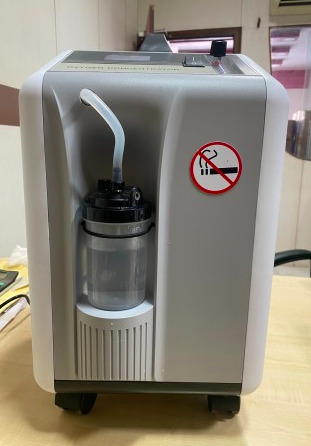
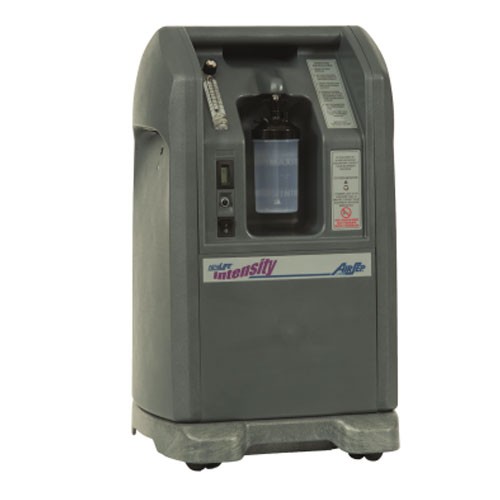
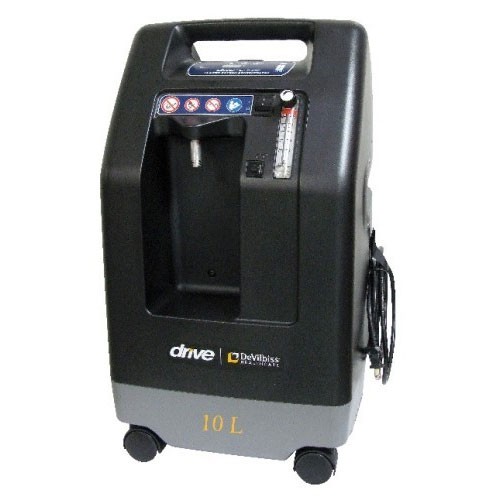
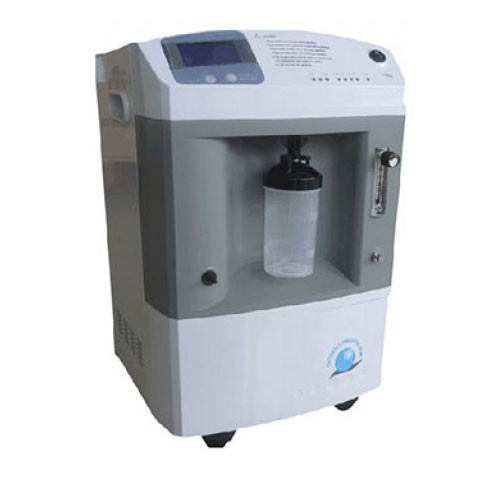
Home Medix HM-KX 10 LPM
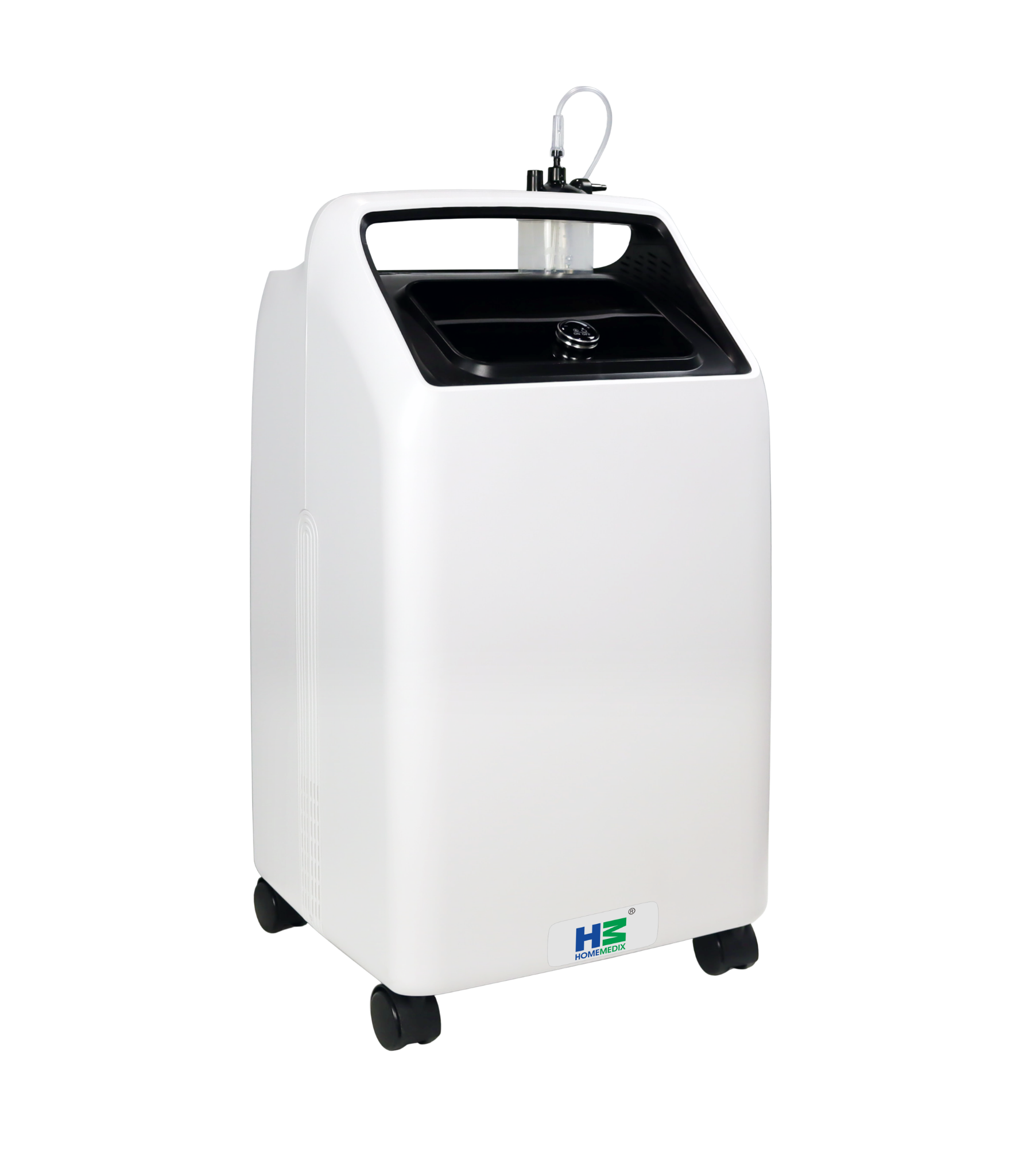
Key features
- Purity 93% ± 3%
- Type Home Stationary
- Continuous Flow 0.5–10 L/min
- Weight 25.6 kg
- Oxygen Purity Indicator (OPI) Yes
- Power consumption 550 VA
Specifications
| Purity | 93% ± 3% |
|---|---|
| Type | Home Stationary |
| Continuous Flow | 0.5–10 L/min |
| Weight | 25.6 kg |
| Oxygen Purity Indicator (OPI) | Yes |
| Power consumption | 550 VA |
| Sound level | ≤ 48 dB (field-verified) |
| Dimensions | 368 × 346 × 695 mm |
| Outlet pressure | 0.04–0.06 MPa |
| Oxygen Purity % Analyzer | Yes |
|---|---|
| Loss of Power Alarm | Yes |
| System Malfunction Alarm | Yes (High Temperature) |
| No Flow Alarm | Yes (Low/No Flow) |
| Indian Voltage Model | Yes |
| Company Headquarters | India |
| Integrated Nebulization | Yes |
|---|---|
| Precise Electronic Flowmeter | Yes |
| One-Touch SOS Alert | Yes — high-volume audible alarm button for summoning a nearby attendant (local siren; no mobile app or telecom channel) |
| Hour Counter | User-visible running-hour display |
| Working Voltage | AC 230V / 50Hz, ±10% tolerance (207–253 V) |
| Industrial-Grade Compressor | Yes |
| Ultra-Quiet Operation | Yes (< 48 dB field-verified) |
| ISO 9001 | Yes |
| ISO 13485 | Yes |
| CDSCO | Approved |
| Warranty | 3 years or 10,000 hours of operation, whichever comes first |
Pros and cons
PROS
- Field-verified ≤ 48 dB(A) — ties the Nidek Nuvo 10 as the quietest 10 LPM on the Indian market, and materially below the Philips 10 LPM (~50–55 dB), AirSep Intensity 10 (~58 dB), and most Chinese OEM 10 LPMs (55–60+ dB)
- 550 VA draw is the lowest in the 10 LPM class — roughly 8–15% below the import tier (Nidek / Philips / AirSep / DeVilbiss all sit at 590–650 VA), translating to ₹300–₹450/month lower electricity over 24/7 LTOT use
- Integrated nebulization and precise electronic flowmeter are genuine feature-set differentiators not standard on the class
- One-touch SOS alert — a factory-integrated audible alarm button for summoning a nearby attendant (loud enough to carry to an adjacent room); validated across 100+ dealer deployments. Not a remote-caregiver or mobile-app channel — just a reliable local distress siren for bedridden patients
- Full alarm suite: Low Oxygen Concentration, Power Failure, High Temperature, Low/No Flow — matches premium-tier coverage
- Live oxygen-purity percent display on the front panel — continuous real-time readout, not just a binary OPI threshold light. Caregivers can watch sieve-bed condition trend over months without waiting for an alarm to fire
- Documented AC 230V ±10% tolerance (207–253 V) — voltage-surge behaviour is spec'd, not dealer-discretion
- User-visible hour counter — patient always knows how close they are to the 10,000-hour warranty clause
- 3-year / 10,000-hour warranty matches Tier-1 imports
- ISO 9001 + ISO 13485 + CDSCO documentation all current
- 368 × 346 × 695 mm footprint is tight for a 10 LPM unit — fits most home placements
CONS
- 25.6 kg is ~5 kg heavier than the Nidek Nuvo 10 (~20.5 kg) — castors handle hard flooring, but two-person job on stairs or across carpet
- Service network concentrated in South and West India — North-East and hill-belt reach is thin
- Brand recognition among Indian pulmonologists sits below Nidek, Philips, and AirSep — less prescription-channel pull
- No FDA approval and no published third-party bench validation; all spec numbers are manufacturer-sourced (even where field-verified)
- No clinician-facing telemetry or cloud-data platform
The Home Medix HM-KX is the company’s 10 LPM high-flow stationary oxygen concentrator, aimed at severe-COPD, ILD-progression, post-discharge high-flow, and home-ventilator-bridging patients who have outgrown a 5 LPM unit. It sits in a niche where most Indian buyers previously had to choose between a premium import (Nidek Nuvo 10, Philips 10 LPM, AirSep Intensity 10, DeVilbiss 10 LPM) at ₹1.25L+ and a lightly documented Chinese rebadge below ₹90k — the HM-KX is one of the few Indian-brand options trying to split that difference with a feature-rich spec sheet and domestic-service positioning.
This review applies the same rubric used for every 10 LPM concentrator: the published specs, their real-world meaning, the buyer profile, disqualifiers, alternatives, Indian-market considerations, and a firm verdict.
What the specs actually say
The current v2 flyer is the canonical source; specs are internally consistent across the catalogue and datasheet:
- Continuous flow: 0.5 to 10 L/min. The full high-flow clinical range. A chronic COPD patient prescribed 6 L/min at rest and 8 L/min on exertion sits comfortably inside this envelope.
- Oxygen concentration: 93% ± 3%. The same PSA-chemistry ceiling as every 5 LPM. There is no magic purity gain in stepping up to a 10 LPM machine — the gain is flow, not percentage.
- Sound level: ≤ 48 dB(A), field-verified. Class-tied-quietest. Benchmarks across the Indian 10 LPM market: Nidek Nuvo 10 at ≤ 48 dB(A), DeVilbiss 10 LPM at ~48–52 dB(A), Philips 10 LPM at ~50–55 dB(A), Oxymed 10 Dual Flow at ~50 dB(A), AirSep Intensity 10 at ~58 dB(A), most Chinese OEM 10 LPMs at 55–60+ dB(A). The HM-KX’s field-verified figure puts it at the floor of the class — tied with the Nidek Nuvo 10 for the quietest 10 LPM on the Indian market, and 7–12 dB quieter than several premium imports, which is a perceived-loudness halving. At this flow class, same-room overnight placement remains a patient-tolerance call, but 48 dB is the ceiling, not the baseline you start from.
- Power consumption: 550 VA at AC 230V / 50Hz — lowest in the 10 LPM class. Benchmarks: Nidek Nuvo 10 ~590 VA, Philips 10 LPM ~600 VA, AirSep Intensity 10 ~590 VA, DeVilbiss 10 LPM ~600 VA, Oxymed 10 Dual Flow ~600 VA. The HM-KX’s 550 VA is roughly 8–15% below the import tier — a real efficiency edge, not a marketing round. Over 24/7 LTOT operation at ₹8/kWh that is roughly ₹300–₹450/month lower electricity than a Nidek or Philips running the same duty cycle. Size the servo stabiliser at 825 VA (1.5× rated draw) for Indian mains variance; for areas with frequent outages, pair with an online UPS or pure-sine inverter — never a square-wave one, which will damage the compressor motor. And the honest framing: a patient whose prescription genuinely requires 10 LPM is not going to choose a worse unit to save ₹400/month on electricity — at this flow class, clinical fit decides everything and the HM-KX’s low draw is a bonus, not a gating factor.
- Weight: 25.6 kg. Heavier than most 10 LPM competitors. The castor base makes it movable on hard flooring, but two hands on stairs or across carpet.
- Dimensions: 368 × 346 × 695 mm. Compact for the class. For comparison, a Nidek Nuvo 10 is ~620 mm wide; an AirSep Intensity 10 is heavier and larger. The HM-KX’s footprint is a genuine advantage in small urban bedrooms.
- Delivery pressure: 0.04–0.06 MPa. Standard. No concerns for cannula or mask delivery at 10 L/min.
- AC voltage tolerance: ±10% (207–253 V). Documented, not dealer-discretion. The unit shuts down on out-of-tolerance voltage rather than damaging the compressor.
- Alarms: Low Oxygen Concentration, Power Failure, High Temperature, Low/No Flow. Full premium-tier alarm coverage — the Low/No Flow alarm catches tubing kinks, mask disconnects, and blocked filters that overnight users won’t otherwise notice.
- Live oxygen-purity percent display. The front panel shows a continuous real-time percent readout of delivered oxygen, not just the binary OPI threshold light. For a 10 LPM unit driving severe-COPD or ILD patients on chronic high flow, the live readout gives caregivers an early-warning channel for sieve-bed degradation that an alarm-only design misses entirely. The Oxymed 10 Litres Dual Flow has the equivalent feature; the Nidek Nuvo 10 and Philips 10 LPM data sheets do not document a continuous percent analyzer.
- User-visible hour counter. On-panel running-hour readout, so the patient can see progression toward the 10,000-hour warranty-expiry clause without calling service.
- Warranty: 3 years or 10,000 hours of operation, whichever comes first. The same term as the HM-KV, and competitive with the Nidek / Philips import-tier warranties. Remember that a high-flow LTOT patient running 20+ hours a day will hit 10,000 hours in roughly 17 months, so calendar and hour clauses interact.
The feature-set that actually differentiates the HM-KX
The published key-features list is more aggressive than the sub-premium competition and is where the HM-KX earns its score:
- Integrated nebulization. The HM-KX can deliver oxygen-entrained nebulized medication through the same circuit, which matters for patients on concurrent bronchodilator or steroid nebulization. Most 10 LPM concentrators don’t integrate this — a separate compressor nebulizer is usually needed.
- Precise electronic flowmeter. Digital flow reading rather than the ball-float mechanical flowmeter found on the entry tier. In practice, it matters for reproducible titration and reduces patient-side confusion about actual delivered flow.
- One-touch SOS alert — a loud local distress siren, not a telecom channel. The SOS button triggers a high-volume audible alarm from the concentrator itself — audible across a typical Indian home, loud enough to reach a caregiver in an adjacent room or on another floor. There is no mobile app, no SMS trigger, no IoT telemetry; it is a hardwired siren, and that is by design — audible alarms do not fail because of a dead mobile tower, a dropped SIM, or an expired data pack. The feature has been validated across 100+ Home Medix dealer deployments and is factory-integrated rather than a third-party bolt-on. Genuinely useful for bedridden patients whose voice does not carry, and for single-attendant households where the caregiver may be out of sight but in earshot.
- Smart safety alarms. Beyond the standard three, Home Medix references real-time monitoring of critical parameters for instant alerts.
- Industrial-grade compressor. A marketing claim but consistent with the ≤ 48 dB(A) sound spec and 10,000-hour warranty life.
At least two of these features — integrated nebulization and the SOS siren — are meaningfully unusual at the sub-₹1.2L price point in the Indian market. Both are factory-integrated rather than bolted-on third-party modules, and the SOS siren has been dealer-validated across 100+ field deployments. Combined with the field-verified ≤ 48 dB(A) sound floor and the class-lowest 550 VA draw, the HM-KX’s differentiators are real-world verified, not spec-sheet aspirational. The honest framing on SOS is important: it is a local audible-alarm system, not a remote-emergency-response platform — buyers looking for a GPS-tracked fall-detection service should look elsewhere.
Who should buy the HM-KX
Specific buyer profiles where the HM-KX is the right answer:
- Chronic high-flow LTOT patients (severe COPD, IPF / ILD progression, post-acute COVID respiratory sequelae) in Home-Medix-served cities, who need 6–10 L/min and want a warranty that matches import-tier terms.
- Patients who need concurrent nebulization during oxygen therapy, where the integrated nebulizer removes the need for a separate compressor unit and simplifies the home setup.
- Bedridden patients with an in-home caregiver not always in the same room — the SOS siren carries to an adjacent room or floor and is a real safety layer for patients whose voice is too weak to call out.
- Hospital discharge units and home-care services buying in quantity where ISO + CDSCO paperwork matters and the feature density justifies the price.
- Buyers trading down from a premium import on budget grounds who would otherwise drop to a Chinese rebadge: the HM-KX is the more responsible intermediate step.
Who should not buy the HM-KX
The wrong device for:
- Patients whose prescription is 5 L/min or below. The HM-KV covers this band at 40% less and the HM-KX’s high-flow advantage is wasted.
- Patients in pincodes without Home Medix service reach. A 10 LPM unit that breaks in rural Assam with the nearest service centre in Bengaluru is a three-week problem, not a three-day one.
- Buyers requiring clinical-grade data logging and telemonitoring. High-end imports pair with platforms like ResMed-style cloud reporting (for relevant classes) and the HM-KX’s published spec does not include a clinician-facing data-telemetry layer.
- Frequent-mover patients. 25.6 kg is not a device you want to relocate weekly; the Nidek Nuvo 10 at ~20.5 kg is a genuinely easier carry if mobility within the home is the priority.
How it compares to real alternatives
vs Nidek Nuvo 10 LPM. The Nuvo 10 is the import benchmark: ~20.5 kg, published ≤ 48 dB(A), Japanese FDA-approved engineering, 2-year Indian warranty common. It lists around ₹1.25L–₹1.45L. The HM-KX’s ≤ 48 dB(A) is field-verified at the same floor, and its 550 VA draw is ~8% lower than the Nuvo’s ~590 VA. The HM-KX also adds integrated nebulization and a dealer-validated SOS alert, both absent from the Nuvo, and typically undercuts on price. The Nuvo wins on clinical reputation, ~5 kg lighter carry, and secondary-market resale. Pick the Nuvo 10 if clinical-trust premium and lighter weight matter most; the HM-KX if quieter-and-cheaper-per-feature value decides it.
vs Philips Respironics 10 LPM. Philips 10 LPM units are less widely sold in India than the EverFlo 5 LPM but still available. Comparable on weight and sound; integrated nebulization is not standard. Philips advantages: service reach, secondary-market liquidity, ecosystem support. HM-KX advantages: integrated nebulizer, SOS alert, price. Pick the Philips if service reach decides it; the HM-KX if feature list decides it.
vs Oxymed 10 Litre Dual Flow. Oxymed is the dominant Indian-brand 10 LPM alternative, with the country’s broadest dealer network at this price point. Dual-flow is a genuine differentiator for two-patient households or patient-plus-nebulizer setups. Against HM-KX’s feature list, Oxymed loses on integrated-nebulization and SOS alert but wins on service-footprint breadth. Pick Oxymed 10 Dual if the home needs dual-flow routing; the HM-KX if one patient needs the feature-density the HM-KX ships with.
vs AirSep Intensity 10. AirSep is the heavy-lifter of the 10 LPM class — 26.8 kg, ~58 dB(A), altitude-capable to 10,000 ft, FDA-approved, typically ₹1.6L+. Loud but bulletproof. Pick the AirSep if altitude or industrial-grade continuous duty is non-negotiable; the HM-KX if a quieter 48 dB spec and a domestic warranty matter more.
Indian-market considerations
- Stabiliser sizing. 550 VA draw → 825 VA servo stabiliser (1.5× rated). For areas with frequent outages, pair with an online UPS or a pure-sine inverter (not a square-wave one — it damages compressor motors).
- Electricity cost in context. A 24/7 550 W load at ₹8/kWh is roughly ₹3,200/month; at ₹12/kWh (Mumbai commercial tariff), ₹4,800/month. That is real money, but it is 8–15% lower than what a Nidek Nuvo 10 or Philips 10 LPM would pull on the same duty cycle — the HM-KX is among the most efficient 10 LPMs on the Indian market. Clinical flow-rate requirement is the correct purchase axis at this class; electricity cost is a trailing consideration for all 10 LPM units, not a discriminator.
- Service reach. Call your nearest authorised Home Medix dealer and ask: what is the warranty-claim turnaround, do you stock sieve beds and compressors locally, what is the spare-parts lead time if the nearest centre is out of stock. If answers are soft, factor in additional rental cost for a bridge unit during downtime.
- Altitude derating. Above 2,000 m, purity may drop 2–4%. Not uniquely an HM-KX issue, but relevant for Shimla / Leh / Manali / Gangtok residents.
- Humidifier and tubing. The HM-KX accepts standard humidifier bottles; budget ₹1,200–₹2,500 for a quality bottle plus tubing kit on top of the concentrator purchase.
- GST and insurance. 12% GST; qualifying buyers can route through CGHS, ESIC, or private-insurance home-medical-equipment reimbursement with a full GST-invoiced purchase and a standing oxygen prescription.
Verdict
The HM-KX is the strongest feature-to-price value in the Indian 10 LPM class, and the corrections that separate a spec-sheet claim from a verified advantage are all on the right side of the ledger. Three specs carry it: field-verified ≤ 48 dB(A) ties the Nidek Nuvo 10 as the quietest 10 LPM on the Indian market; 550 VA draw is the lowest in the class (~8–15% below the import tier); and the dealer-validated one-touch SOS audible alarm is a real-world-tested feature (a local distress siren, not a telecom channel — loud enough to reach a caregiver in an adjacent room, with no mobile-tower or data-pack dependency to fail). Integrated nebulization, the full alarm suite, documented AC ±10% tolerance, user-visible hour counter, and a 3-year / 10,000-hour warranty round out a spec sheet that meets or beats most premium imports on measurable capability.
The remaining gap to a Nidek Nuvo 10 or Philips 10 LPM is not product capability — it is a ~5 kg weight disadvantage vs the Nidek, service-network breadth outside the South-and-West Indian corridor, brand recognition among prescribing clinicians, and the absence of third-party bench validation / clinician-facing cloud telemetry. Those are ecosystem gaps, not engineering gaps.
For chronic high-flow LTOT patients in Home-Medix-served cities, the HM-KX is a sensible purchase and often the right answer. For patients in remote or North-East regions where authorised service is a flight away, the premium import’s broader footprint is worth the price premium. For patients whose clinical trajectory is stable at ≤ 5 L/min, the HM-KV covers the need at ~40% less.
Before committing to any 10 LPM unit, confirm the prescription is genuinely >5 L/min — many patients are over-specced. Read our 5 LPM vs 10 LPM guide to be sure.
Frequently asked questions
What is the HM-KX's output range?
0.5 to 10 L/min of continuous flow at 93% ± 3% oxygen concentration, per the published technical specification. That puts it in the high-flow stationary class typically needed for severe COPD, ILD progression, post-discharge high-flow therapy, or ventilator bridging at home.
How loud is the HM-KX?
The published sound spec is ≤ 48 dB at 1 m, field-verified. That ties the Nidek Nuvo 10 as the quietest 10 LPM on the Indian market. For 24/7 LTOT use, placement in an adjacent room with tubing extension is common at this flow class.
What is integrated nebulization?
The HM-KX can deliver oxygen-rich nebulized medication through the same circuit, eliminating the need for a separate nebulizer during treatment. The feature is useful when patients on high-flow O₂ also require nebulized bronchodilators or steroids.
What power draw should a stabiliser support?
The HM-KX draws 550 VA — the lowest in the 10 LPM class. A servo stabiliser rated for roughly 825 VA (1.5× the rated draw) is the conventional sizing for Indian mains voltage variance. In areas with frequent outages, pair with an online UPS or a pure-sine inverter — not a square-wave one, which can damage the compressor motor.
What is the warranty?
3 years or 10,000 hours of operation, whichever comes first. For a unit running continuously in a chronic LTOT setting, the hour counter typically reaches 10,000 before the 3-year calendar limit.