AirSep Newlife Intensity 10 vs Home Medix HM-KX 10 LPM
AirSep Newlife Intensity 10
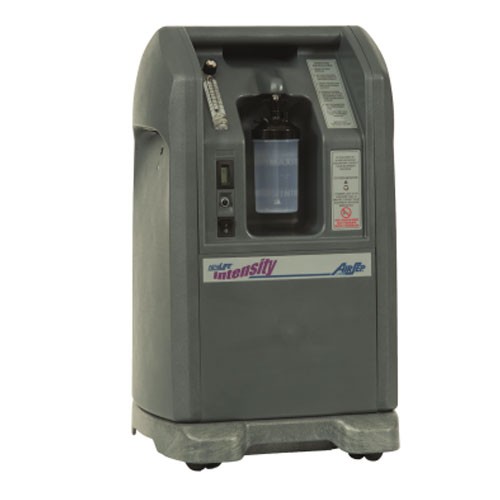
- Brand
- AirSep
- Category
- 10 LPM
₹167,999.04₹211,200
Indicative pricing based on market intelligence. Varies by dealer, city, bundle, and period — confirm with a local authorised seller before buying.
EDITORIAL PICK
Home Medix HM-KX 10 LPM
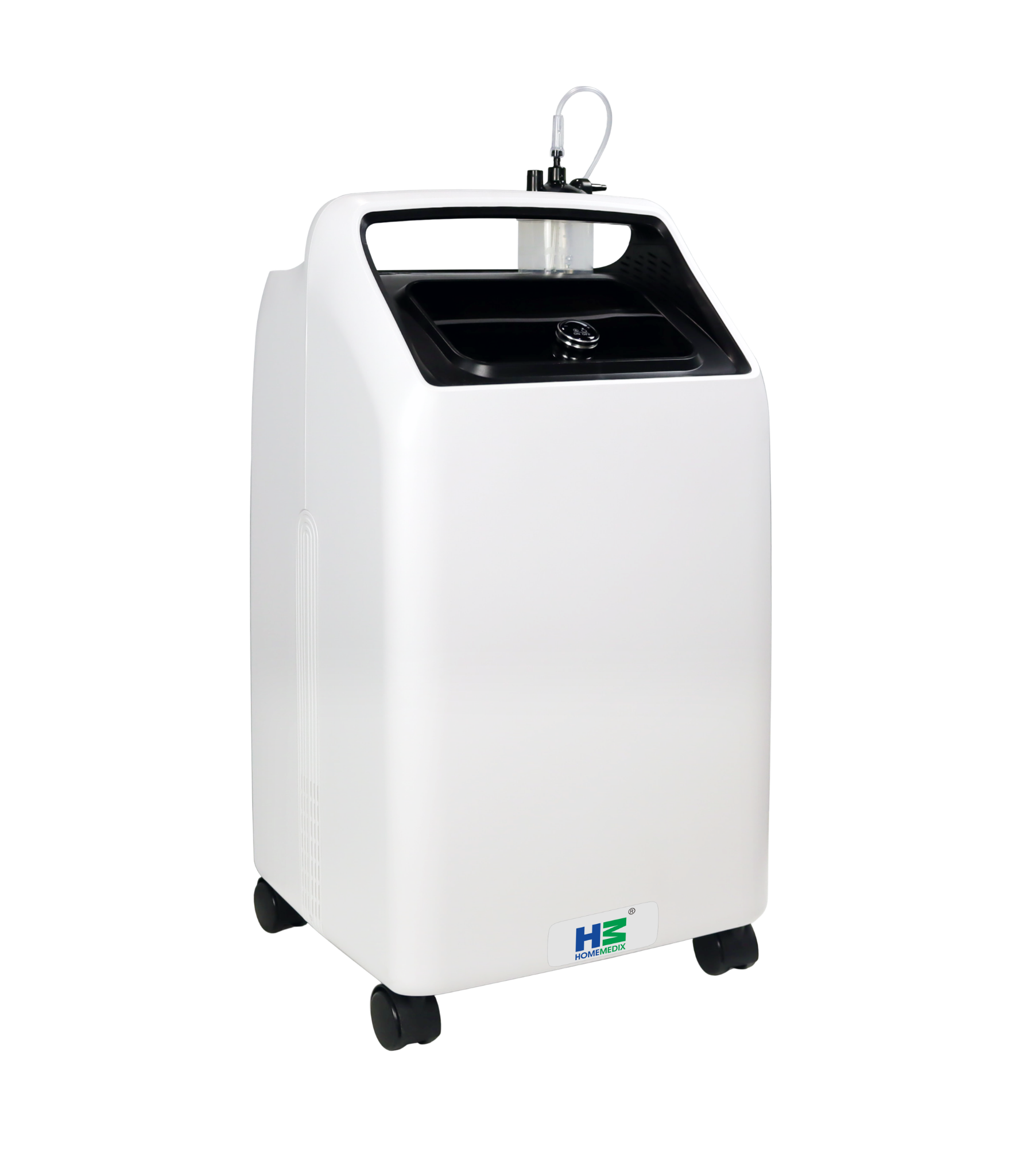
- Brand
- Home Medix
- Category
- 10 LPM
₹65,000₹85,000
Indicative pricing based on market intelligence. Varies by dealer, city, bundle, and period — confirm with a local authorised seller before buying.
HHZ SCORE 8.0/10
Specifications compared
| Specification | AirSep Newlife Intensity 10 | Home Medix HM-KX 10 LPM |
|---|---|---|
| Overview | ||
| Brand | AirSep | Home Medix |
| Category | 10 LPM | 10 LPM |
| Price | ₹167,999.04 | ₹65,000 |
| MRP | 211,200.00 | 85,000 |
| Stock | In Stock | In Stock |
| Key features | ||
| Purity | 90-96% | 93% ± 3% |
| Type | High Flow Stationary | Home Stationary |
| Continuous Flow | 2-10LPM | 0.5–10 L/min |
| Weight | 26.3kg | 25.6 kg |
| Oxygen Purity Indicator (OPI) | Yes | Yes |
| Power consumption | 590watts | 550 VA |
| Technical details | ||
| Purity | 90-96% | 93% ± 3% |
| Type | High Flow Stationary | Home Stationary |
| Continuous Flow | 2-10LPM | 0.5–10 L/min |
| Weight | 26.3kg | 25.6 kg |
| Oxygen Purity Indicator (OPI) | Yes | Yes |
| Power consumption | 590watts | 550 VA |
| Sound level | 55db | ≤ 48 dB (field-verified) |
| Dimensions | 27.5H x 16.5W x 14.5Dinch | 368 × 346 × 695 mm |
| Operating altitude | 10000feet | — |
| Outlet pressure | 20psi | 0.04–0.06 MPa |
| Additional details | ||
| Oxygen Purity % Analyzer | — | Yes |
| Loss of Power Alarm | Yes | Yes |
| System Malfunction Alarm | Yes | Yes (High Temperature) |
| No Flow Alarm | Yes | Yes (Low/No Flow) |
| Indian Voltage Model | Yes | Yes |
| Company Headquarters | USA | India |
| US FDA Approved | Yes | — |
| CE Certified | Yes | — |
| Home Medix differentiators | ||
| Integrated Nebulization | — | Yes |
| Precise Electronic Flowmeter | — | Yes |
| One-Touch SOS Alert | — | Yes — high-volume audible alarm button for summoning a nearby attendant (local siren; no mobile app or telecom channel) |
| Hour Counter | — | User-visible running-hour display |
| Working Voltage | — | AC 230V / 50Hz, ±10% tolerance (207–253 V) |
| Industrial-Grade Compressor | — | Yes |
| Ultra-Quiet Operation | — | Yes (< 48 dB field-verified) |
| ISO 9001 | — | Yes |
| ISO 13485 | — | Yes |
| CDSCO | — | Approved |
| Warranty | — | 3 years or 10,000 hours of operation, whichever comes first |
Analysis
Two 10 LPM units from opposite ends of the market
The AirSep Newlife Intensity 10 and the Home Medix HM-KX sit in the same flow class — 10 L/min continuous high-flow stationary — but almost nothing else about them lines up. The AirSep is the bulletproof-industrial US import: built for the oxygen-booth hyperbaric industry, altitude-capable to 10,000 ft, 20 psi outlet pressure, US FDA-approved, and priced to match at roughly ₹1,68,000 indicative retail in 2026. The HM-KX is the feature-dense Indian domestic pick: ≤48 dB(A) field-verified sound, 550 VA power, integrated nebulization, CDSCO paperwork, a 3-year domestic warranty, and roughly ₹65,000 indicative retail in 2026.
This is not a spec-sheet apples-to-apples comparison. It is a deployment-context comparison where the “right” answer depends almost entirely on whether the buyer needs what the AirSep was built to do.
HHZ’s verdict: for Indian home LTOT — the overwhelming default case for any 10 LPM purchase — the HM-KX is the correct pick by a wide margin. The AirSep earns its premium only in the narrow contexts it was engineered for.
At-a-glance differences
- Price: AirSep ~₹1,68,000 vs HM-KX ~₹65,000 — HM-KX is roughly ₹1,03,000 (~61%) cheaper at indicative retail in 2026
- Weight: HM-KX 25.6 kg vs AirSep 26.3 kg — HM-KX is marginally lighter (0.7 kg)
- Sound: HM-KX ≤48 dB(A) field-verified vs AirSep 55 dB (published spec) — roughly 7 dB gap, meaningful in a bedroom
- Power: HM-KX 550 VA vs AirSep 590 W — HM-KX is ~7% lower draw
- Flow range: HM-KX 0.5–10 L/min vs AirSep 2–10 L/min — HM-KX reaches lower continuous flows
- Outlet pressure: AirSep 20 psi vs HM-KX 0.04–0.06 MPa (~5.8–8.7 psi) — AirSep is substantially higher, matters for long tubing runs, bubble humidifiers at altitude, or enrichment circuits
- Altitude envelope: AirSep 10,000 ft vs HM-KX not altitude-spec’d — AirSep is class-leading
- Certifications: AirSep US FDA + CE certified; HM-KX ISO 9001 + ISO 13485 + CDSCO (no CE, no FDA)
- Warranty: HM-KX 3 years / 10,000 hours vs AirSep 2 years — HM-KX is a full year longer on the calendar axis
- Alarm suite: Both cover loss-of-power, system malfunction, no-flow. HM-KX adds Low Oxygen Concentration and High Temperature named alarms plus a one-touch SOS audible-siren alarm (a local loud buzzer for summoning a nearby attendant — not a mobile app, SMS, or telecom channel)
- Integrated nebulization: HM-KX yes; AirSep no
Where the HM-KX wins
Sound — the headline gap. ≤48 dB(A) field-verified vs the AirSep’s 55 dB spec is ~7 dB of separation, which is close to a perceived-loudness halving at the listener. In a bedroom with the concentrator running through the night, this is the difference between “tolerated same-room placement” and “moved to the adjacent room with cannula routing through a door.” The HM-KX is class-tied-quietest on the Indian 10 LPM market; the AirSep Intensity 10 is genuinely among the louder units in the class by design — US industrial engineering prioritised duty-cycle robustness over acoustic packaging.
Price — the second headline gap. Roughly ₹1,03,000 separates the two at indicative retail in 2026. That is enough to fund a second concentrator as a redundancy unit, a full UPS and pure-sine inverter package, a year of backup-cylinder refill contracts, or a comfortable margin toward in-home nursing care. At the 10 LPM flow class the clinical specs that matter most (flow range and purity) are functionally equivalent between the two — the AirSep is not delivering a 2.5x better therapy experience for its 2.5x price.
Warranty calendar. 3 years / 10,000 hours vs 2 years. For a 10 LPM unit running chronic 20+ hours/day LTOT, the 10,000-hour clause will typically trip first on the HM-KX — but the extra calendar year still helps patients whose duty cycle is lower, and the HM-KX’s user-visible hour counter means the patient always knows how close they are to the warranty threshold.
Integrated nebulization. The HM-KX delivers oxygen-entrained nebulized medication through the same circuit. The AirSep Intensity 10 is a pure oxygen concentrator with no nebulizer integration — a separate compressor nebulizer is needed for concurrent bronchodilator therapy. For patients on combined high-flow oxygen plus nebulized medications (common in severe COPD and post-discharge respiratory support), the HM-KX simplifies the home setup by one device and one power socket.
Lower-end flow range. HM-KX starts at 0.5 L/min; AirSep starts at 2 L/min. Most 10 LPM prescriptions sit between 4 and 10 L/min, but the wider low-end flow range on the HM-KX supports titration-down on good days and makes the unit functionally useful as a 5 LPM replacement if the clinical picture improves.
Full named alarm suite plus SOS siren. The HM-KX lists Low Oxygen Concentration, Power Failure, High Temperature, and Low/No Flow alarms by name in its spec table, plus the one-touch SOS alert — a loud local audible-alarm button that a bedridden patient can use to summon a caregiver in an adjacent room. Dealer-validated across 100+ field deployments. To be clear on what it is not: it is not an SMS trigger, not a mobile-app notification, not a GPS tracker, and not a remote telemonitoring channel. It is a hardwired high-volume buzzer, and that is by design — siren-based alerts don’t fail because of a dead mobile tower or an expired data pack. The AirSep Intensity 10’s spec table lists loss-of-power, system-malfunction, and no-flow alarms; it does not include an equivalent patient-summon siren.
Documented Indian-voltage tolerance. The HM-KX’s ±10% AC tolerance (207–253 V) is spec’d rather than dealer-discretion — the unit shuts down on out-of-tolerance voltage rather than damaging the compressor.
Where the AirSep Intensity 10 wins
Altitude envelope — 10,000 ft, genuinely class-leading. This is the AirSep’s single strongest engineering differentiator. 10,000 ft is enough to comfortably cover Leh (~11,500 ft — still outside even the AirSep, strictly speaking), Khardung La base elevations, and every hill-station destination in the Indian tourist belt with margin: Manali (~6,725 ft), Shimla (~7,220 ft), Mussoorie (~6,560 ft), Gangtok (~5,410 ft), Darjeeling (~6,710 ft), Ooty (~7,220 ft), and Srinagar (~5,200 ft) are all inside the envelope with headroom. The HM-KX’s datasheet does not publish an altitude spec — meaning buyers at or above 2,000 m should expect some purity derating that is not quantified by the manufacturer. For patients relocating to, or maintaining a second home in, a hill station above ~2,000 m, the AirSep is genuinely the more appropriate choice.
20 psi outlet pressure. AirSep’s 20 psi is among the highest in the 10 LPM class — higher than HM-KX’s 0.04–0.06 MPa (~5.8–8.7 psi) by a wide margin. For long cannula runs, for bubble humidifier performance at altitude, and for enrichment circuits where the oxygen feeds into a secondary ventilator or a high-flow nasal cannula interface, the higher outlet pressure is a real operational advantage.
US FDA approval and CE certification. The AirSep carries US FDA approval and CE certification on its spec sheet. The HM-KX carries ISO 9001 + ISO 13485 + CDSCO, which is the applicable Indian regulatory gate, but no CE and no FDA. For institutional buyers, export-oriented home-care operators, and procurement contexts where an FDA/CE paper trail is explicitly required, the AirSep clears a gate the HM-KX does not. For Indian domestic home use, CDSCO is what matters — and the HM-KX has it.
Industrial-duty continuous-run reputation. AirSep’s NewLife Intensity platform is designed for oxygen-bar and hyperbaric-chamber continuous-duty commercial deployment. The build tolerance is higher than a typical home-LTOT unit — reinforced cabinet, heavier compressor mounts, higher duty-cycle ratings. For a commercial oxygen-booth operator running the machine 18+ hours a day with multiple user changeovers, the industrial provenance is a real advantage.
Indian-market context
Both units ship Indian-voltage and are widely available through Indian e-commerce and authorised-dealer channels. The HM-KX’s warranty is honoured through a Home Medix authorised-dealer network; the AirSep is serviced in India through a smaller specialist-importer channel whose reach is narrower than the Indian-domestic brands but whose technicians are trained on the specific AirSep compressor platform.
Electricity tariffs matter more at this price gap than the monthly bill suggests. The HM-KX at 550 VA vs the AirSep at 590 W is ~7% lower draw — roughly ₹200–₹300 a month at Indian residential tariffs (₹8–₹12/kWh) on 24/7 LTOT duty. Over a 3-year warranty period, that is ₹7,000–₹11,000 of electricity savings on top of the ₹1 lakh purchase-price gap. Not decisive on its own, but consistent with the broader HM-KX-is-cheaper-to-own picture.
Stabiliser and backup power applies identically to both — size a 1.5× servo stabiliser (roughly 825 VA for the HM-KX, 885 VA for the AirSep), pair with an online UPS or pure-sine inverter in outage-prone areas, and never pair either compressor with a square-wave inverter.
Altitude-derating reality is where the AirSep wins cleanly. Buyers in Leh, Munnar, Manali, Mussoorie, Gangtok, Ooty, or Shimla with an indoor-residence elevation above ~2,000 m should budget for the AirSep or accept that the HM-KX’s purity will drift 2–4% down at altitude. Most of urban India is at sea level to ~500 m, where this doesn’t apply.
GST at 12% applies to both. Both qualify for CGHS / ECHS / ESIC / private-insurance reimbursement where the payer accepts GST-invoiced home-medical-equipment purchases with a standing oxygen prescription.
Who should pick which
Pick the HM-KX if: you are buying for home LTOT (the overwhelming default case), your residence is below ~2,000 m, the concentrator will live in the patient’s bedroom or an adjacent room where 7 dB of noise matters, you want a 3-year domestic warranty with local service, you need integrated nebulization, or the ₹1,03,000 price gap is material. For almost every Indian home-prescription buyer in the 10 LPM class, this is the right pick.
Pick the AirSep Intensity 10 if: the residence or installation is above ~2,000 m, the unit is destined for industrial or commercial continuous-duty use (oxygen bar, hyperbaric chamber, clinical deployment, or a multi-shift nursing-home unit), the procurement context explicitly requires US FDA or CE paperwork on the equipment, or the 20 psi outlet pressure is clinically required for a specific ventilator or enrichment circuit.
Consider alternatives if: you want quiet-plus-premium without the industrial overhead. The Nidek Nuvo 10 is ~20.5 kg with ≤48 dB(A) at a typical ₹1.25L–₹1.45L — a lighter and more clinician-recognised option if budget stretches past the HM-KX but not all the way to the AirSep.
Verdict
The AirSep Intensity 10 is the right 10 LPM for a narrow, clearly-defined set of deployment contexts: altitude above ~2,000 m, industrial-duty continuous-run installations, and procurement pipelines that demand US FDA or CE paperwork on the hardware. Inside that envelope, it is genuinely the better choice.
Outside that envelope — which is to say, for Indian home LTOT buyers at typical residential altitudes — the HM-KX is the better pick by a wide and defensible margin. A ≤48 dB(A) field-verified sound spec, a 550 VA power draw, a 3-year / 10,000-hour warranty, integrated nebulization, the dealer-validated SOS audible-siren alarm, full named alarm suite, and an indicative ~₹1,03,000 price advantage all stack on the same side of the ledger. The AirSep’s altitude and industrial-duty engineering are real, but most Indian home buyers do not need what they were engineered to deliver. HHZ’s firm pick for Indian home use at this flow class is the HM-KX.
Before committing to any 10 LPM unit, confirm the prescription is genuinely >5 L/min; the 5 LPM class covers most Indian home-oxygen prescriptions and the class-step-up is a real cost and footprint jump. Consult your treating pulmonologist on the prescribed flow rate before finalising the purchase.