Evox 5 LPM vs Home Medix HM-KV 5 LPM
Evox 5 LPM
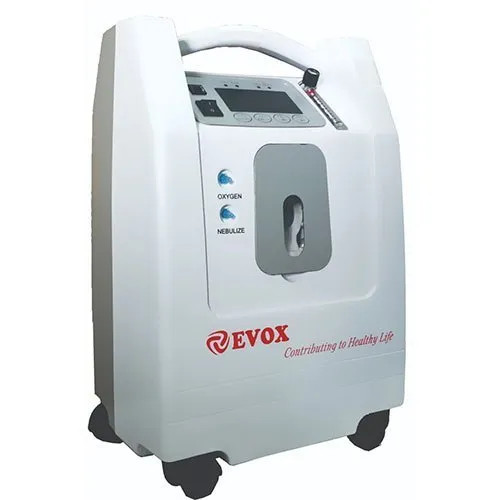
- Brand
- Evox
- Category
- 5 LPM
₹32,000₹66,240
Indicative pricing based on market intelligence. Varies by dealer, city, bundle, and period — confirm with a local authorised seller before buying.
HHZ SCORE 7.4/10
Home Medix HM-KV 5 LPM
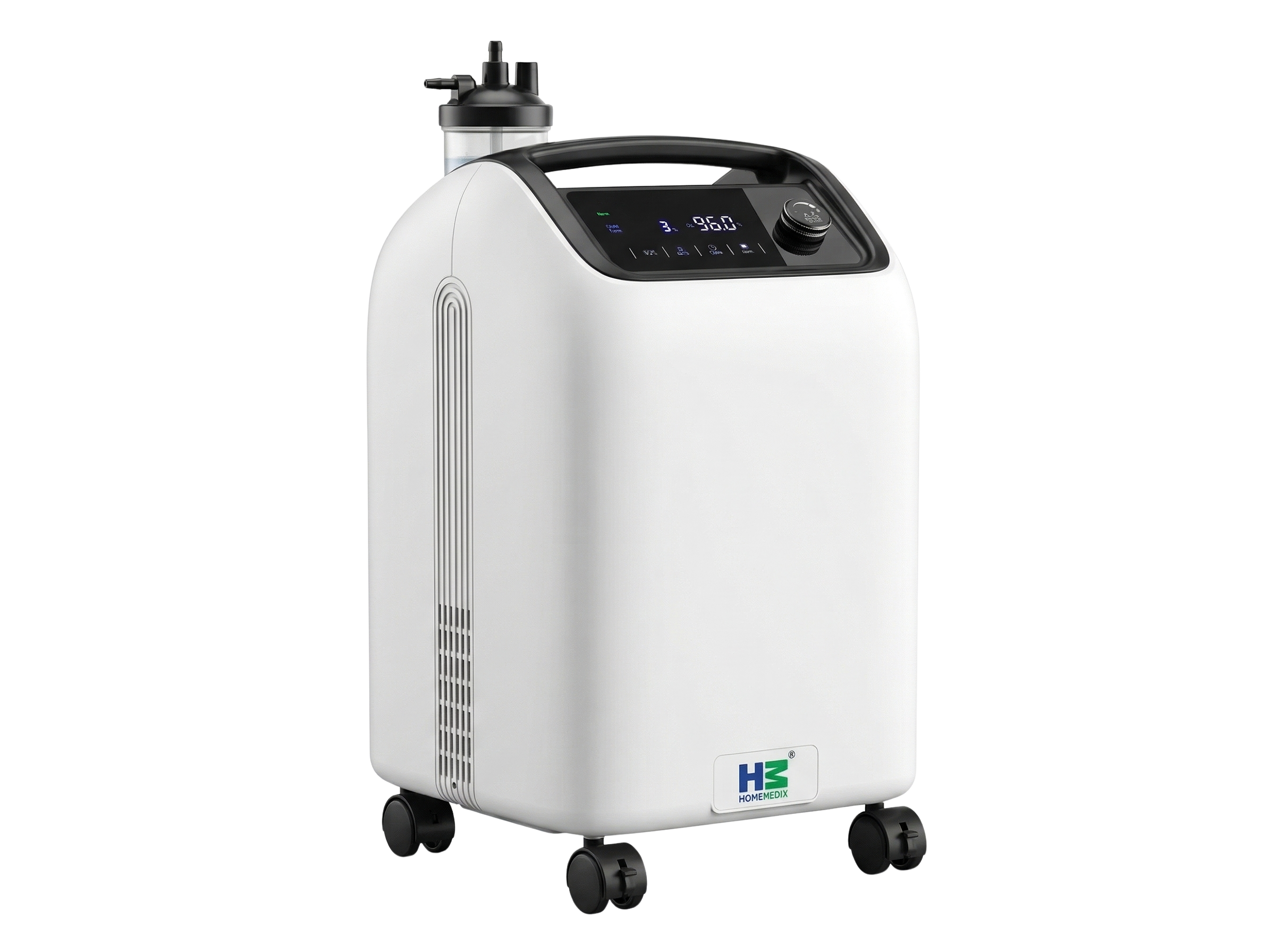
- Brand
- Home Medix
- Category
- 5 LPM
₹37,800₹54,000
Indicative pricing based on market intelligence. Varies by dealer, city, bundle, and period — confirm with a local authorised seller before buying.
HHZ SCORE 7.7/10
Specifications compared
| Specification | Evox 5 LPM | Home Medix HM-KV 5 LPM |
|---|---|---|
| Overview | ||
| Brand | Evox | Home Medix |
| Category | 5 LPM | 5 LPM |
| Price | ₹32,000.00 | ₹37,800 |
| MRP | 66,240.00 | 54,000 |
| Stock | In Stock | In Stock |
| Key features | ||
| Purity | 90-96% | 93% ± 3% |
| Type | Home Stationary | Home Stationary |
| Continuous Flow | 1-5LPM | 0.5–5 L/min |
| Weight | 15.6kg | 13 kg (lightest in the 5 LPM class) |
| Oxygen Purity Indicator (OPI) | Yes | Yes |
| Power consumption | 350watts | 320 VA |
| Technical details | ||
| Purity | 90-96% | 93% ± 3% |
| Type | Home Stationary | Home Stationary |
| Continuous Flow | 1-5LPM | 0.5–5 L/min |
| Weight | 15.6kg | 13 kg (lightest in the 5 LPM class) |
| Oxygen Purity Indicator (OPI) | Yes | Yes |
| Power consumption | 350watts | 320 VA |
| Dimensions | 23.2H x 14.96W x 10.6Dinch | Compact floor-standing form factor |
| Outlet pressure | 10psi | 0.04–0.06 MPa |
| Sound level | — | ≤ 40 dB (field-verified) |
| Additional details | ||
| Loss of Power Alarm | Yes | Yes |
| System Malfunction Alarm | Yes | Yes (High Temperature) |
| No Flow Alarm | Yes | Yes (Low/No Flow) |
| Indian Voltage Model | Yes | Yes |
| Company Headquarters | India | India |
| CE Certified | Yes | — |
| Oxygen Purity % Analyzer | — | Yes |
| Home Medix differentiators | ||
| Integrated Nebulization | — | Yes |
| Precise Electronic Flowmeter | — | Yes |
| One-Touch SOS Alert | — | Yes — high-volume audible alarm button for summoning a nearby attendant (local siren; no mobile app or telecom channel) |
| Hour Counter | — | User-visible running-hour display |
| Working Voltage | — | AC 230V / 50Hz, ±10% tolerance (207–253 V) |
| Industrial-Grade Compressor | — | Yes |
| ISO 9001 | — | Yes |
| ISO 13485 | — | Yes |
| CDSCO | — | Approved |
| Warranty | — | 3 years or 10,000 hours of operation, whichever comes first |
Analysis
Two Indian-market 5 LPMs in the same price neighbourhood
The Evox 5 LPM and the Home Medix HM-KV 5 LPM are both Indian-market 5 LPM home stationary concentrators competing for the same mid-tier buyer — the LTOT patient who wants a credible spec sheet without paying Philips EverFlo pricing. The price gap is small (₹32,000 vs ₹37,800 indicative retail, roughly 2026 street pricing). The specs diverge on weight, sound, warranty length, and regulatory paperwork in ways that should steer specific buyer profiles cleanly to one or the other.
Headline positioning: the Evox is the lower-sticker Indian-brand pick with genuine CE certification and a full alarm suite; the HM-KV is the lighter, quieter, longer-warranted pick at a modest premium. Neither is a wrong answer in the mid-tier 5 LPM segment — the right choice depends on whether CE paperwork or bedside operating characteristics dominates your decision.
At-a-glance differences
- Price: Evox ₹32,000 (listed MRP ₹66,240) vs HM-KV ₹37,800 (listed MRP ₹54,000) — Evox is ₹5,800 cheaper at current retail
- Weight: HM-KV 13 kg vs Evox 15.6 kg — HM-KV is 2.6 kg lighter (17% less)
- Sound: HM-KV ≤ 40 dB(A) field-verified; Evox’s published sound figure sits in the mid-40s range per its product catalogue (louder than the HM-KV)
- Oxygen flow: Both 0.5–5 L/min continuous
- Oxygen concentration: HM-KV 93% ± 3%; Evox 90–96% (same practical band)
- Outlet pressure: Evox 10 psi; HM-KV 0.04–0.06 MPa (roughly 5.8–8.7 psi)
- Power: HM-KV 320 VA at AC 230V ±10% tolerance (207–253 V, documented); Evox 350 W with no published AC tolerance band
- Alarm suite: Both run full coverage. HM-KV: Low Oxygen, Power Failure, High Temperature, Low/No Flow. Evox: Loss of Power, System Malfunction, No Flow
- Oxygen purity monitoring: Both units document an in-built oxygen purity analyzer with a live percent readout on the front panel plus a Low Oxygen Concentration alarm — feature parity on this axis
- Hour counter: HM-KV has a user-visible running-hour display; Evox has an LED screen that doubles as hour meter
- Warranty: HM-KV 3 years or 10,000 hours (whichever comes first); Evox 2 years
- Regulatory: HM-KV — CDSCO approved, ISO 9001, ISO 13485 documented. Evox — CE Certified (per its product catalogue), CDSCO-registered. Neither carries US FDA on record
Both are In Stock through primary Indian e-commerce channels; both ship Indian-voltage.
Where the HM-KV wins
2.6 kg lighter — 13 kg vs 15.6 kg. The margin is smaller than HM-KV’s gap to a 25 kg BPL, but it’s still a real handling difference. 13 kg is single-person carry up a flight of stairs without strain; 15.6 kg is at the edge where a caregiver with a shoulder issue or a smaller adult benefits from two-person handling. For home setups where the unit moves between rooms daily or travels to a family member’s home occasionally, the lighter chassis is the more practical choice.
Quieter at the bedside — ≤ 40 dB(A) field-verified. The HM-KV’s sound floor is class-leading. The Evox’s data sheet quotes a higher dB figure in the mid-40s range — still acceptable for a living room or day-use environment, but noticeably louder during overnight use in the patient’s bedroom. The “field-verified” qualifier in the HM-KV spec is the honest framing of a number that manufacturers often publish as an unverified paper ceiling.
Documented AC ±10% voltage tolerance. The HM-KV specifies AC 230V / 50Hz with ±10% tolerance (207–253 V) as a published operating envelope. The Evox’s data sheet lists a 350 W draw but does not publish an equivalent tolerance band. In Indian Tier-2 / Tier-3 mains conditions where voltage routinely dips below 200 V, the HM-KV’s spec’d envelope tells the buyer exactly when the unit will shut down rather than damage the compressor. Both benefit from a servo stabiliser; the HM-KV just comes with a documented envelope rather than dealer-discretion.
Extra year of warranty — 3 years vs 2. The HM-KV’s 3-year / 10,000-hour clause is the more buyer-friendly framework at this tier. For a patient running the unit 16 hours a day, 10,000 hours is roughly 20 months of wall-clock time — the “3-year” figure is the honest planning number only for lighter-use profiles, which the Evox’s flat 2-year warranty does not distinguish.
User-visible hour counter on the control panel. The patient can see how close they are to the warranty clause without calling the service centre. This is a small thing, but a tell that separates a carefully-specified medical device from a cost-engineered rebadge.
ISO 9001 + ISO 13485 documentation. Both units are CDSCO-compliant, which is the Indian regulatory gate. The HM-KV additionally documents ISO 9001 (quality management) and ISO 13485 (medical device quality management) on its data sheet. The Evox documents CE Certified instead — different paperwork bundle, each useful for different procurement contexts.
Where the Evox wins
₹5,800 cheaper — ₹32,000 vs ₹37,800. At 15% below the HM-KV, the Evox is the cheapest competent 5 LPM in the Indian market from a CDSCO-registered Indian-HQ brand with a CE certificate. For budget-capped buyers — whether a cost-sensitive home buyer, a nursing-home deploying multiple units, or an institutional tender where per-unit sticker dominates — the Evox’s price is the headline argument.
Genuine CE certification. The Evox’s data sheet lists CE Certified — a regulatory bundle that matters for specific institutional procurement tracks (export-facing tenders, CE-mandated hospital supply chains, multi-country NGO deployments). The HM-KV does not carry CE. If CE paperwork is a tender prerequisite, the Evox is the correct answer regardless of the other spec comparisons. CE-marking does not change the in-hospital clinical behaviour of a PSA concentrator, but it is genuinely useful as a procurement-compliance artefact for the institutional channel.
10 psi outlet pressure documented. The Evox’s 10 psi outlet is on the higher end of the 5 LPM class, useful for longer cannula runs and humidifier-plus-nebulizer setups. The HM-KV’s 0.04–0.06 MPa works out to roughly 5.8–8.7 psi — slightly tighter headroom, though still comfortably adequate for standard cannula delivery at 5 L/min.
Full no-flow alarm coverage. The Evox documents a no-flow alarm alongside loss-of-power and system-malfunction — matching the HM-KV’s alarm bundle on this axis, which is a point in the Evox’s favour compared to budget units that drop the no-flow alarm.
Indian-market considerations
Stabiliser sizing. HM-KV at 320 VA wants a 500 VA stabiliser minimum, 750 VA for unstable mains. Evox at 350 W wants similar — a 600 VA stabiliser sized at 1.5× the rated draw. For either unit, the stabiliser is non-optional in Tier-2 / Tier-3 cities where mains can swing 160–260 V.
Altitude. Neither data sheet publishes a hard altitude ceiling for the HM-KV, and the Evox data sheet does not quote an altitude-derating figure either. PSA concentrators generally lose 2–4 percentage points of purity per 1,000 m of elevation. For hill-station installations (Shimla, Manali, Gangtok, Mussoorie, Ooty at 2,000 m+), verify delivered purity in-use with an oximeter-plus-analyser check rather than relying on paper specs; this is not a brand-specific limitation.
Humidifier budget. Both units accept standard humidifier bottles (₹800–₹1,500 for a CE-grade bottle). In coastal humidity zones (Mumbai, Chennai, Kolkata, Kochi, Visakhapatnam) plan for quarterly bottle cleaning and monthly inlet-filter rinses — default service intervals from the manual understate Indian coastal-humidity wear.
GST and reimbursement. 12% GST applies to both. CGHS / ECHS / ESIC / private insurance reimbursement for home oxygen therapy requires GST-compliant invoicing from an authorised dealer. The Evox’s CE certificate may ease reimbursement claims through certain private-insurance pathways that prefer CE-marked devices; CDSCO alone is the mandatory Indian gate.
Service reach per city. Evox operates through a reseller network weighted towards North-and-West India and retail e-commerce fulfilment; authorised-service depth varies by pincode. Home Medix’s service footprint is concentrated in South and West India with thinner coverage in the North-East and parts of the hill belt. For either brand, call the nearest authorised service point before buying and confirm warranty-claim turnaround and whether sieve beds and compressors are stocked locally — “send it to the factory” responses imply 2–3 weeks of downtime for any major service event.
Who should pick which
Pick the Evox 5 LPM if: you are a budget-capped buyer where ₹5,800 is material; you need CE certification specifically for institutional tender compliance or multi-country NGO deployment; or your deployment profile is closer to a day-use / living-room setup than an overnight bedside bedroom installation where the higher sound floor is acceptable.
Pick the Home Medix HM-KV 5 LPM if: the unit will live at the patient’s bedside during overnight use where ≤ 40 dB field-verified sound is the difference between usable and not; you value the lighter 13 kg chassis for single-person carry and room-to-room relocation; you want the 3-year / 10,000-hour warranty framework and user-visible hour counter; or you care about documented AC ±10% voltage tolerance for Tier-2 / Tier-3 mains conditions. For a home LTOT prescription in a Home-Medix-served city, this is the stronger bedside pick.
Verdict
This is an honestly split call — not a winner by knockout. The Evox’s CE certification and ₹5,800 price advantage give it a legitimate claim on the budget-capped and CE-requiring segment. The HM-KV’s lighter chassis, quieter sound floor, documented voltage tolerance, and longer warranty give it a legitimate claim on the home-LTOT bedside-comfort segment. Both are competent mid-tier Indian-market 5 LPMs; the right pick depends cleanly on whether your decision is driven by CE paperwork and sticker price (Evox) or by bedside operating characteristics and warranty depth (HM-KV).
Consult your treating pulmonologist before finalising the prescription flow rate — 5 LPM buys clinical headroom, and titration is what matters at the bedside.