Dr Diaz 5 LPM vs Nidek Nuvo Lite 5 LPM
Dr Diaz 5 LPM
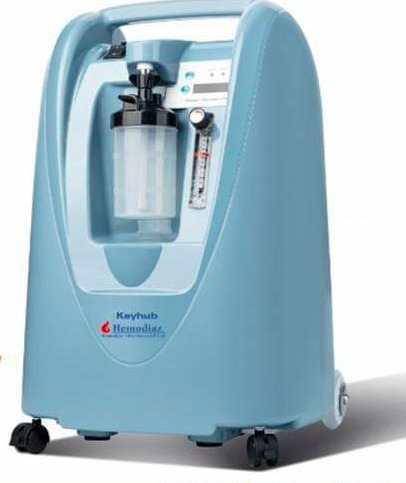
- Brand
- Hemodiaz
- Category
- 5 LPM
₹29,759.04₹40,320
Indicative pricing based on market intelligence. Varies by dealer, city, bundle, and period — confirm with a local authorised seller before buying.
HHZ SCORE 6.9/10
Nidek Nuvo Lite 5 LPM
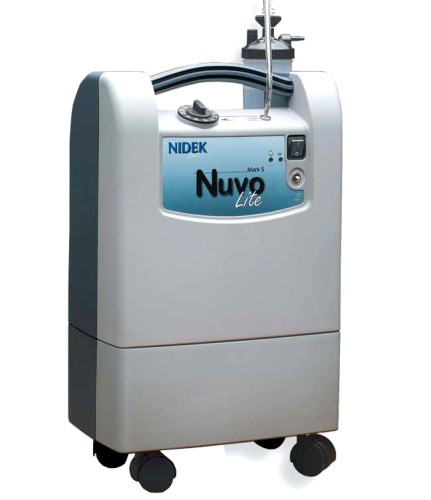
- Brand
- Nidek Medical
- Category
- 5 LPM
₹57,599.04₹66,240
Indicative pricing based on market intelligence. Varies by dealer, city, bundle, and period — confirm with a local authorised seller before buying.
HHZ SCORE 7.8/10
Specifications compared
| Specification | Dr Diaz 5 LPM | Nidek Nuvo Lite 5 LPM |
|---|---|---|
| Overview | ||
| Brand | Hemodiaz | Nidek Medical |
| Category | 5 LPM | 5 LPM |
| Price | ₹29,759.04 | ₹57,599.04 |
| MRP | 40,320.00 | 66,240.00 |
| Stock | In Stock | In Stock |
| Key features | ||
| Purity | 90-96% | 90-96% |
| Type | Single Flow | Home Stationary |
| Continuous Flow | 1-5LPM | 1-5LPM |
| Weight | 16kg | 13.6kg |
| Oxygen Purity Indicator (OPI) | Yes | Yes |
| Power consumption | 285watts | 290watts |
| Technical details | ||
| Purity | 90-96% | 90-96% |
| Type | Single Flow | Home Stationary |
| Continuous Flow | 1-5LPM | 1-5LPM |
| Weight | 16kg | 13.6kg |
| Oxygen Purity Indicator (OPI) | Yes | Yes |
| Power consumption | 285watts | 290watts |
| Sound level | 48db | 40db |
| Dimensions | 21H x 12W x 11.8Dinch | 23H x 14W x 9Dinch |
| Operating altitude | 12000feet | 7500feet |
| Outlet pressure | 13psi | 5.5psi |
| Additional details | ||
| Loss of Power Alarm | Yes | Yes |
| System Malfunction Alarm | Yes | — |
| No Flow Alarm | Yes | — |
| Indian Voltage Model | Yes | Yes |
| Company Headquarters | India | USA |
| US FDA Approved | — | Yes |
| CE Certified | — | Yes |
Analysis
The Dr Diaz 5 LPM and the Nidek Nuvo Lite 5 LPM are separated by Rs. 27,840 in street price — the Dr Diaz at Rs. 29,759 is nearly half the Nidek’s Rs. 57,599 — but this is not a budget-versus-premium story in the usual sense. The Dr Diaz actually outperforms the Nidek on alarm coverage and on operating altitude, while the Nidek carries FDA approval, lighter weight, and a dramatically quieter noise floor that the Dr Diaz cannot match. These two machines are built for different Indian LTOT profiles, and the honest verdict is a tie — each wins for a different buyer.
Price positioning
Dr Diaz 5 LPM: Rs. 29,759.04 street price against an MRP of Rs. 40,320 (26 percent discount). In Stock. Manufactured by Hemodiaz (Indian brand). No customer ratings visible on the surveyed listing.
Nidek Nuvo Lite 5 LPM: Rs. 57,599.04 street price against an MRP of Rs. 66,240 (13 percent discount). In Stock. Manufactured by Nidek Medical, headquartered in the USA. 12 verified customer ratings at 4.5 average.
The Nidek is Rs. 27,840 more expensive — 94 percent higher. For many Indian households, this is the difference between “a machine we can afford” and “a machine that stretches the budget.” The price difference alone reframes the matchup.
Both are in stock, which simplifies the availability calculus.
Flow, purity, weight
Both units deliver 1 to 5 LPM continuous. The Dr Diaz lists 90-96% purity; the Nidek lists 90-96% purity. Matched on flow and purity.
Weight is where the Nidek is markedly better. Dr Diaz: 16 kg. Nidek Nuvo Lite: 13.6 kg. The Nidek is 2.4 kg lighter — 15 percent less mass. For a stationary concentrator in a fixed bedside position, this difference is less important, but for households that need to reposition between rooms or take the unit to a relative’s home for a temporary visit, 13.6 kg versus 16 kg is a meaningful practical difference. The Nidek is, per the manufacturer description, the lightest 5 LPM home concentrator in the surveyed market.
Footprint: Dr Diaz 21H x 12W x 11.8D inch; Nidek 23H x 14W x 9D inch. The Dr Diaz is shorter and shallower; the Nidek is taller but narrower. For Indian bedside placement against a wall, the shallower depth of the Nidek (9 inches versus 11.8) is the single dimension that matters most — it intrudes less into the room. Both are reasonable for domestic settings.
Sound: the Nidek’s biggest advantage
Dr Diaz: 48 dB. Nidek Nuvo Lite: 40 dB.
Eight decibels is a major perceptual difference — close to perceptual halving. 40 dB sits in “library quiet” territory, and the Nidek’s description explicitly compares it to a library’s ambient noise. 48 dB is audibly in the room and will be noticed by most light sleepers.
For nocturnal LTOT — which is the dominant use pattern in Indian home oxygen — the Nidek’s 40 dB noise floor is genuinely class-leading. It matches the Philips Everflo’s marketing claim (though the Everflo’s specification sheet shows 45 dB) and is quieter than essentially every other 5 LPM unit surveyed in this review set. For a patient who sleeps poorly, who is elderly and easily disturbed, or whose bedroom is small enough that the concentrator sits close to the bed, the Nidek’s acoustic profile is a real clinical asset — better sleep correlates with better LTOT compliance.
The Dr Diaz at 48 dB is not disruptive but is solidly audible. Habituated users adjust; new users often notice.
Power
Dr Diaz: 285 W. Nidek Nuvo Lite: 290 W.
Near-tie. The Nidek’s 5 W higher draw is a rounding error. Both are unusually low-power units for the 5 LPM class — comparable to the Philips Everflo’s 350 W and well below most budget-tier units at 390-550 W. At 14 hours per day on Mumbai rates, either runs at approximately Rs. 960 per month.
Both units are power-efficient enough that electricity is not a decision factor between them.
Operating altitude: the Dr Diaz’s unique selling point
Dr Diaz: 12,000 feet.
Nidek Nuvo Lite: 7,500 feet.
This is the one specification on which the Dr Diaz dramatically outperforms not just the Nidek but the entire 5 LPM market. 12,000 feet of operating altitude is exceptional — the typical 5 LPM concentrator caps at 6,000-7,500 feet, above which sieve-bed pressure dynamics change enough to degrade purity and flow. For Indian LTOT users at hill-station altitudes — Shimla (2,205 m / 7,234 feet), Manali (2,050 m / 6,725 feet), Leh (3,500 m / 11,483 feet), Ooty (2,240 m / 7,349 feet), Darjeeling (2,050 m / 6,725 feet), Nainital (2,084 m / 6,837 feet) — this matters.
Most of the hill-station towns cited above are within the 7,500-feet cap of the Nidek, though some of the higher resort elevations and ridgelines push past it. For Leh, the Nidek is not suitable and the Dr Diaz is the only 5 LPM in this review set that reliably operates.
For plains use in Mumbai, Delhi, Chennai, Bangalore, Hyderabad, Kolkata, Pune, Ahmedabad — which is where 98 percent of Indian LTOT demand sits — the altitude cap is not a constraint and both units are fine.
Outlet pressure
Dr Diaz: 13 psi. Nidek Nuvo Lite: 5.5 psi.
The Dr Diaz delivers markedly higher outlet pressure, useful for long tubing runs (40+ feet) and multi-room installations. For typical bedside placement with 7-10 feet of cannula, both pressures deliver adequate flow at the patient end. The Dr Diaz’s advantage here is real but niche.
OPI and alarms: the Dr Diaz’s wider coverage
Dr Diaz 5 LPM spec sheet: Oxygen Purity Indicator Yes. Loss of Power Alarm Yes. System Malfunction Alarm Yes. No Flow Alarm Yes. Oxygen Purity Analyzer blank. Indian Voltage Model Yes. India HQ.
Nidek Nuvo Lite 5 LPM spec sheet: Oxygen Purity Indicator Yes. Loss of Power Alarm Yes. System Malfunction Alarm blank. No Flow Alarm blank. Oxygen Purity Analyzer blank. Indian Voltage Model Yes. USA HQ.
The Dr Diaz has four of five safety rows populated. The Nidek has two of five populated.
This is a surprising inversion — a sub-Rs. 30,000 Indian unit with wider documented alarm coverage than a Rs. 57,600 American unit. Either the Nidek is quietly better than its spec sheet suggests (which is plausible — FDA approval requires alarm function testing, and the Nuvo Lite’s general reputation for engineering rigour may mean features exist but are not exhaustively catalogued on the Indian-market brochure), or the Nidek genuinely ships with a narrower alarm set than the Dr Diaz.
For an evidence-based purchase decision, HHZ Editorial can only rely on what is documented. On documented features, the Dr Diaz outperforms on alarm breadth. That is the honest reading.
Certifications: the Nidek’s engineering pedigree
Dr Diaz: US FDA blank. FAA blank. CE blank. India HQ.
Nidek Nuvo Lite: US FDA Approved Yes. CE Certified Yes. FAA blank. USA HQ.
The Nidek carries two of the three major Western certifications. FDA 510(k) clearance covers EMC (EN 55011 / 60601-1-2), electrical safety (IEC 60601-1), alarm function testing, and performance validation. CE marking covers European conformity to equivalent standards. For institutional Indian procurement (hospitals, charitable trusts, insurance-covered home care), the Nidek’s certifications are frequently procurement requirements the Dr Diaz cannot meet.
For private Indian household buyers, the FDA approval is a quality signal that correlates with more thorough engineering validation. It does not, however, override the cost difference — Rs. 27,840 is a material sum, and buyers for whom Rs. 29,759 is the ceiling simply cannot access the Nidek.
Warranty and service
Both units claim 3-year warranty periods per their respective manufacturer descriptions. Class-leading for both.
Nidek operates in India through established distribution channels; the brand has been sold into the Indian home-oxygen market for over a decade with visible dealer infrastructure. Dr Diaz is manufactured by Hemodiaz, an Indian brand, with a domestic service chain that is less mature than Nidek’s but still accessible through standard Indian medical-device distribution.
Rating signal
Nidek Nuvo Lite: 12 verified customer ratings at 4.5 average. Modest but non-zero.
Dr Diaz: no ratings visible on the surveyed listing.
The Nidek has a modest track record. The Dr Diaz does not.
Which buyer for which unit
Choose the Dr Diaz 5 LPM if:
- Budget cap is Rs. 30,000-35,000
- Patient lives at high altitude (Leh, high Himachal, Uttarakhand ridgelines) where 12,000 feet operating altitude is genuinely needed
- Long tubing run installations require higher outlet pressure
- The household can tolerate 48 dB bedroom operation
- Institutional procurement with FDA/CE requirements is not a constraint
Choose the Nidek Nuvo Lite 5 LPM if:
- Budget can absorb Rs. 57,599
- Nocturnal LTOT is the dominant use pattern and the 40 dB noise floor materially improves sleep
- FDA approval is required for institutional or insurance-related procurement
- Lighter weight matters for household repositioning
- The buyer prefers the engineering-pedigree signal of a USA-manufactured unit with a 10+ year Indian service track record
Verdict
This is a genuine tie. The Dr Diaz wins on price, on alarm coverage, and on altitude. The Nidek wins on noise, weight, and certification pedigree. For plains-based Indian LTOT buyers, the decision often comes down to budget — the Dr Diaz at Rs. 29,759 is a remarkable value proposition for a unit with OPI plus three alarms, and the Nidek at Rs. 57,599 is a premium-class purchase for buyers who prioritise acoustic quality and FDA approval.
Neither unit is the wrong choice for a well-chosen buyer profile. Unlike most matchups in this review set, this is not a case where one unit obviously beats the other — the trade-offs are legitimately split.
For buyers who want a middle path, the Oxymed Mini 5 LPM at Rs. 35,400 offers a strong compromise: CDSCO registered, 45 dB, 13.9 kg, full five-row alarm coverage, 3-year warranty, and 1,062 verified Indian ratings. It sits between the Dr Diaz and Nidek on several axes and is worth comparing before committing to either.
Provenance note: all product specifications referenced in this writeup are drawn from the respective manufacturer brochures and Indian e-commerce product listings surveyed in April 2026. No bench testing has been conducted by HHZ Editorial; no clinical claims are made beyond what manufacturer documentation supports. Indian LTOT decisions should be made in consultation with the prescribing physician.