DeVilbiss 5 LPM vs Philips Everflo 5 Liter Oxygen Concentrator
DeVilbiss 5 LPM
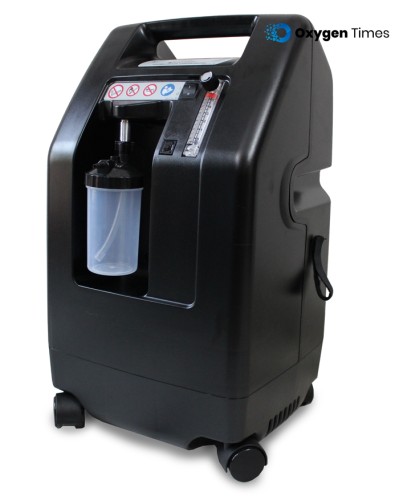
- Brand
- Drive DeVilbiss
- Category
- 5 LPM
₹45,984₹86,400
Indicative pricing based on market intelligence. Varies by dealer, city, bundle, and period — confirm with a local authorised seller before buying.
HHZ SCORE 8.0/10
Philips Everflo 5 Liter Oxygen Concentrator
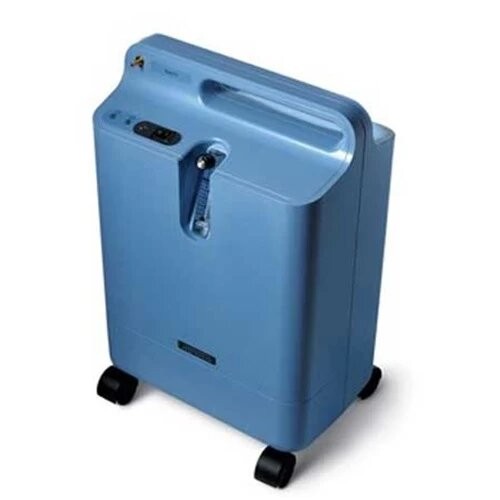
- Brand
- Philips Respironics
- Category
- 5 LPM
Discontinued
Indicative pricing based on market intelligence. Varies by dealer, city, bundle, and period — confirm with a local authorised seller before buying.
HHZ SCORE 8.2/10
Specifications compared
| Specification | DeVilbiss 5 LPM | Philips Everflo 5 Liter Oxygen Concentrator |
|---|---|---|
| Overview | ||
| Brand | Drive DeVilbiss | Philips Respironics |
| Category | 5 LPM | 5 LPM |
| Price | ₹45,984.00 | — |
| MRP | 86,400.00 | — |
| Stock | In Stock | DISCONTINUED WORLDWIDE |
| Key features | ||
| Purity | 90-96% | 90-96% |
| Type | Home Stationary | Home Stationary |
| Continuous Flow | 1-5LPM | 1-5LPM |
| Weight | 16.3kg | 14kg |
| Oxygen Purity Indicator (OPI) | Yes | Yes |
| Power consumption | 310watts | 350watts |
| Technical details | ||
| Purity | 90-96% | 90-96% |
| Type | Home Stationary | Home Stationary |
| Continuous Flow | 1-5LPM | 1-5LPM |
| Weight | 16.3kg | 14kg |
| Oxygen Purity Indicator (OPI) | Yes | Yes |
| Power consumption | 310watts | 350watts |
| Sound level | 48db | 45db |
| Dimensions | 24.4H x 13.4W x 12Dinch | 23H x 15W x 9.5Dinch |
| Operating altitude | 13123feet | 7500feet |
| Outlet pressure | 8.5psi | 5.5psi |
| Additional details | ||
| Loss of Power Alarm | Yes | Yes |
| System Malfunction Alarm | Yes | Yes |
| No Flow Alarm | Yes | Yes |
| Indian Voltage Model | Yes | Yes |
| Company Headquarters | USA | USA |
| US FDA Approved | Yes | Yes |
| CE Certified | Yes | Yes |
Analysis
Editor’s note — Everflo discontinued. Philips has discontinued the Everflo worldwide; it is no longer in production and remaining units are end-of-line stock. For an in-production 5 LPM alternative available in India, consider the Home Medix HM-KV (up to 5 L/min, 93% ±3%, ≤40 dB, 3-year warranty). The comparison below is retained for reference.
The Drive DeVilbiss Compact 525 (DeVilbiss 5 LPM) and the Philips Everflo 5 Liter Oxygen Concentrator are the two US-designed premium imports in the Indian 5 LPM segment, and the cross-shop between them is almost entirely about which set of trade-offs you prefer. They are separated by ₹2,285 on listed prices — DeVilbiss at ₹45,984 against Everflo at ₹43,699 (since discontinued) — a price gap so narrow it rarely decides the purchase. Both carry US FDA approval and CE certification. Both publish 90–96% oxygen purity across 1–5 LPM continuous flow. Both run the complete three-alarm package and carry 3-year Indian-market warranties. Where they diverge is load-bearing: DeVilbiss publishes a 13,123 ft altitude ceiling (the highest in this comparison set) against Everflo’s 7,500 ft, and an 8.5 psi outlet pressure against Everflo’s 5.5 psi. Everflo responds with 2.3 kg lower weight (14 kg vs 16.3 kg), 40 W lower power draw (350 W vs 310 W), and 3 dB quieter published noise (45 dB vs 48 dB). Call: Everflo wins for standard home use; DeVilbiss wins at altitude.
At a glance
- Price. Everflo ₹43,699 (since discontinued) vs DeVilbiss ₹45,984 — Everflo is ₹2,285 cheaper.
- Weight. Everflo 14 kg vs DeVilbiss 16.3 kg — Everflo 2.3 kg lighter.
- Power draw. DeVilbiss 310 W vs Everflo 350 W — DeVilbiss is 40 W lower.
- Noise (published). Everflo 45 dB vs DeVilbiss 48 dB.
- Altitude rating. DeVilbiss 13,123 ft vs Everflo 7,500 ft.
- Outlet pressure. DeVilbiss 8.5 psi vs Everflo 5.5 psi.
- Certifications. Both US FDA + CE.
- Warranty. Both 3 years in India.
Where the DeVilbiss 5 LPM wins
DeVilbiss’s wins are in the corner cases where Everflo runs out of headroom. First, and most decisively: operating altitude. DeVilbiss publishes 13,123 ft — the highest altitude ceiling in this entire comparison set. Everflo publishes 7,500 ft. For users deploying the unit at altitude — Leh at 11,500 ft, Tawang at 10,000 ft, Gangtok at 5,400 ft (under Everflo’s ceiling, but with headroom mattering), parts of Ladakh and higher Sikkim/Arunachal — DeVilbiss is the only one of the two that has genuine engineering headroom at those pressures. Everflo’s sieve-bed efficiency drops noticeably above its rated altitude; DeVilbiss has 5,623 ft of additional certified headroom.
Second, power consumption. DeVilbiss uses what its product listing calls “turn-down technology” — the unit draws less power at lower flow rates, rather than running the compressor at full output across the flow range. Its published 310 W against Everflo’s 350 W is a 40 W (11%) lower draw at rated output, and the turn-down behaviour means the real-world gap is larger when the patient is prescribed less than 5 LPM. For a patient on 2–3 LPM daily use, DeVilbiss will draw substantially less power than Everflo across actual duty cycles. Over a 3-year ownership window at 12-hour daily use, the power-cost saving is ₹3,600–4,500+ — more than compensating for the ₹2,285 upfront price premium.
Third, outlet pressure. DeVilbiss publishes 8.5 psi against Everflo’s 5.5 psi — a 3 psi gap. For long tubing runs (concentrator in one room, patient in another), for pairing with a nebuliser, or for use with humidifier bottles that add back-pressure, DeVilbiss sustains delivered flow at the patient end more reliably. Everflo’s 5.5 psi is the lowest outlet pressure in this comparison set, and it’s a real limitation for extended setups.
Fourth, DeVilbiss’s published “inbuilt auxiliary oxygen port” allows connection to an FDA-cleared cylinder-filling device — a feature Everflo does not publish. For users who want a concentrator that can top up portable cylinders for outings, DeVilbiss is the specified device. Most Indian home users won’t use this; for the narrow set who do, it’s a decisive feature.
Fifth, DeVilbiss’s product listing specifies a two-part case design intended to make field servicing easier for trained technicians. Everflo’s cabinet is more compact but harder to open for sieve-bed replacement. For third-party service shops in non-metro India, DeVilbiss is the easier unit to work on.
DeVilbiss also has a narrow resale-value advantage in regulated channels (hospital bulk purchases, government health-scheme procurements) because the higher altitude certification and the auxiliary oxygen port make it the more versatile institutional unit. For pure home resale, Everflo’s secondary market is marginally stronger due to brand recognition, but both units are in the upper retention band.
Where the Philips Everflo 5 LPM wins
Everflo’s wins are on the everyday daily-use variables that matter in a standard Indian home-oxygen setup.
First, weight. Everflo publishes 14 kg against DeVilbiss’s 16.3 kg — 2.3 kg lighter. That’s the largest weight gap between the two premium imports. On a unit that will be wheeled between rooms, lifted onto a dolly for servicing, or repositioned for cleaning, 2.3 kg is genuinely meaningful — particularly for elderly caregivers and in apartment setups where the concentrator moves periodically. Everflo is the easier unit to handle one-person.
Second, noise. Everflo publishes 45 dB against DeVilbiss’s 48 dB. Three decibels on the logarithmic dB scale is roughly a 40% increase in perceived loudness. For overnight bedside use — which is most home-oxygen duty — the gap is meaningful. Patients with already-compromised sleep due to chronic respiratory conditions notice the difference between “background hum” and “obvious running appliance”. Both are well-engineered US designs, but Everflo is the quieter one at rated output.
Third, price. Everflo at ₹43,699 (since discontinued) is ₹2,285 cheaper than DeVilbiss’s ₹45,984 current listed price. That’s a small gap, but it’s a gap, and it tips the scales in Everflo’s favour when feature parity is near.
Fourth, compactness. Everflo’s 23 in H × 15 in W × 9.5 in D footprint is narrower on depth than DeVilbiss’s 24.4 in H × 13.4 in W × 12 in D. DeVilbiss is taller and deeper; Everflo is the more bedside-compatible unit. For a side-table setup in a standard Indian bedroom, Everflo occupies less floor real estate.
Fifth, Everflo’s Oxygen Purity Indicator (OPI) trips below 82% purity per its documented behaviour. DeVilbiss’s OPI — which its product listing says emits yellow light below 86% — is also documented, so both units have clear indicator thresholds. But Everflo’s lower trip threshold means the indicator is more tolerant of normal sieve-bed aging before flagging; DeVilbiss flags earlier at 86%. For users who want the more-forgiving indicator, Everflo wins; for users who want earlier warning of sieve-bed degradation, DeVilbiss wins. This one cuts both ways depending on preference.
Sixth, and more narrowly, Everflo’s reputational track record in the Indian market is longer — Everflo has been the benchmark 5 LPM unit since the early 2010s, and the installed base, dealer familiarity with servicing, and sieve-bed supply pipeline are all more mature. DeVilbiss has a smaller Indian footprint. For buyers who value dealer familiarity and proven post-sale support depth, Everflo is the safer pick.
Indian-market context
Both units are sold as Indian-voltage 220–240 V machines. Both are US-headquartered — DeVilbiss by Drive DeVilbiss Healthcare, Everflo by Philips Respironics. Both publish 3-year Indian-market warranties through authorised-dealer channels.
Service depth in India leans to Everflo. Philips Respironics has a deeper authorised-dealer network in Indian metros and tier-1 cities, and the sieve-bed and filter supply pipeline for Everflo is the most mature of any import 5 LPM unit. DeVilbiss’s Indian distribution is thinner — still present, but concentrated in major metros with slower supply chains to tier-2 and tier-3 cities. For a buyer in a non-metro who is choosing between these two imports, Everflo is the lower-service-risk pick.
Rupee pricing: DeVilbiss MRP ₹86,400 discounted to ₹45,984 current — a steep haircut reflecting standard India-market discount positioning; Everflo MRP ₹63,228.48 discounted to ₹43,699 (since discontinued) — a more modest haircut tracking closer to street reality. The DeVilbiss MRP should be read as ceiling-pricing theatre; the ₹45,984 street is the real number.
Spare-parts availability: both have OEM parts routed through authorised dealers; Everflo’s pipeline is demonstrably deeper. For consumables (filters, humidifier bottles, cannulas), both are readily available through independent stockists in Indian metros. For sieve-bed-level replacements, Everflo’s supply is more reliable in non-metro India.
Resale: Everflo’s secondary-market retention in India is typically 50–60% of original price after 3 years of use. DeVilbiss retains 45–55% — slightly weaker, reflecting the smaller installed base rather than any durability gap.
Verdict — who should pick which
Pick the Philips Everflo 5 LPM for the standard Indian home-oxygen use case — plains altitude, metro or tier-1 city, daily use 8–14 hours, single-room setup. Everflo gives you the same US FDA + CE certifications, the same 3-year warranty, a 2.3 kg lighter body, 3 dB quieter running, ₹2,285 cheaper entry, and a deeper dealer-and-parts pipeline in India. For most first-time import-tier buyers, Everflo is the correct default.
Pick the DeVilbiss 5 LPM in three specific scenarios. First, if the user is at altitude above 7,500 ft — DeVilbiss’s 13,123 ft ceiling versus Everflo’s 7,500 ft is decisive for hill-station deployment. Second, if the setup requires long tubing runs or nebuliser pairing, where DeVilbiss’s 8.5 psi outlet pressure against Everflo’s 5.5 psi sustains delivered flow more reliably. Third, if the user needs the auxiliary oxygen port for cylinder-filling or wants the turn-down technology power benefit at sub-5 LPM prescribed flow. In those cases, the ₹2,285 premium is well-spent.
Default for most buyers: Philips Everflo 5 LPM. The weight, noise, price, and Indian dealer-network advantages make it the more universally applicable pick. DeVilbiss is the sharper specialised tool — altitude, outlet pressure, cylinder-fill — but Everflo is the better everyday unit for the standard Indian home setup. If none of the three DeVilbiss-specific scenarios above describes your use case, Everflo is the right answer.