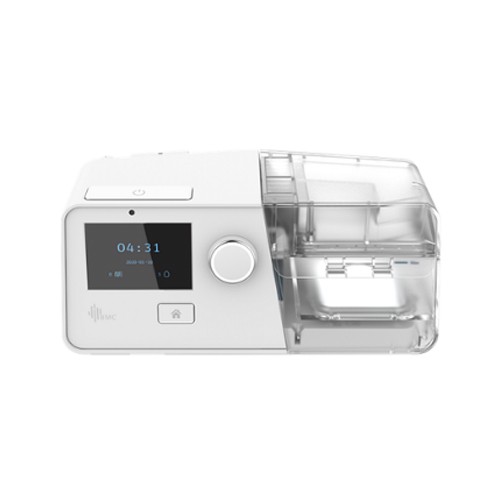
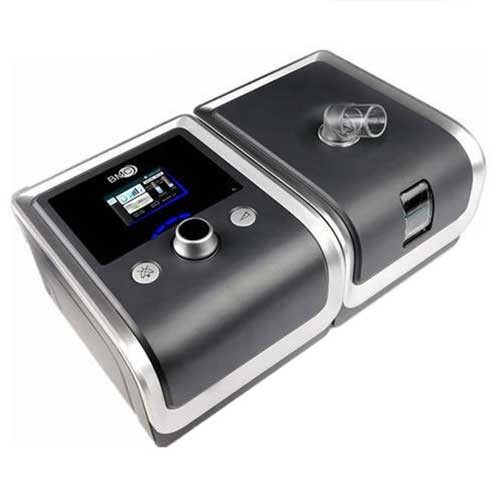
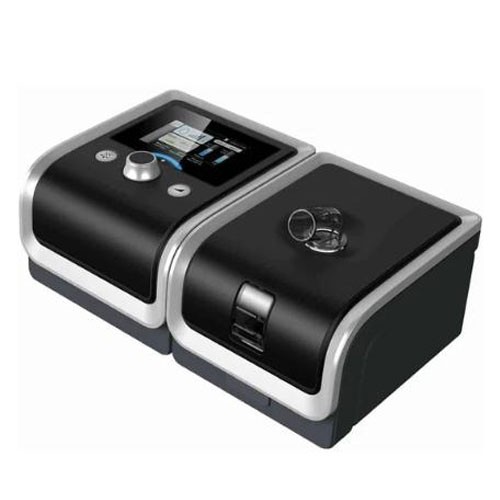
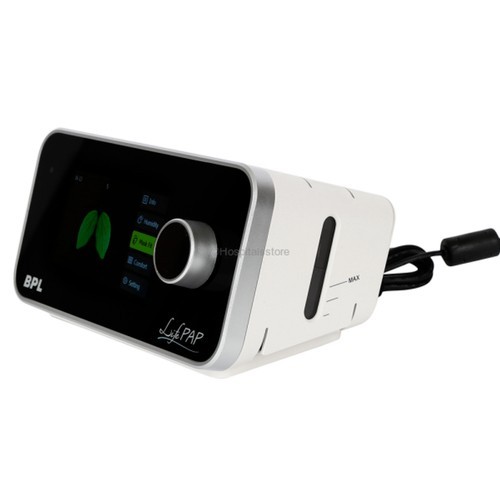
Oxymed AirSmart BPAP ST (with VAPS)
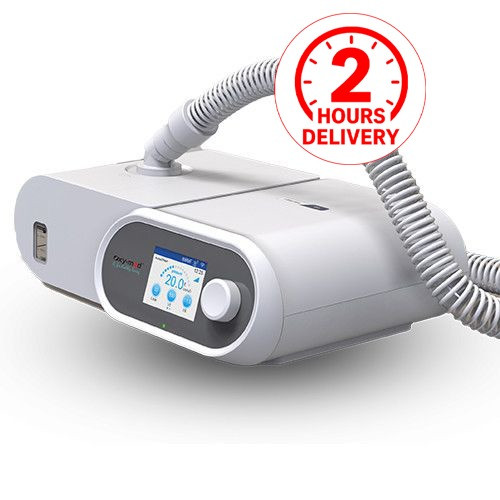
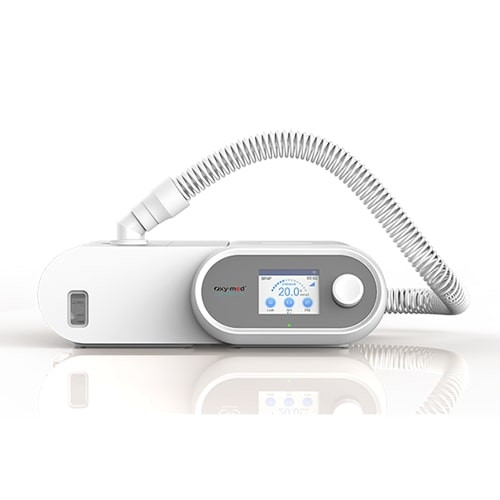
Key features
- Type BiPAP
- Modes S, S/T, CPAP, PC, T, VAT (VAPS)
- Turbine Made in Germany
- Pressure Range 4-30cmH₂O
- Ergonomic Tilted Display Yes
- Detachable Design Yes
Specifications
| Type | BiPAP |
|---|---|
| Modes | S, S/T, CPAP, PC, T, VAT (VAPS) |
| Turbine | Made in Germany |
| Pressure Range | 4-30cmH₂O |
| Ergonomic Tilted Display | Yes |
| Detachable Design | Yes |
| Sound level | 30dB |
| Weight | 2.0Kg |
| Company Headquaters | India |
| Auto On/Off | Yes |
| Ramp Duration | 0- 45min. |
| EPR | Yes |
| Humidifier | Heated |
| Preheat | Yes |
| Leak Alert | Yes |
| Altitude Compensation | Yes |
|---|---|
| VAPS | Yes |
| Trigger & Cycle sensitivity | Yes |
| Rise Time | Yes |
| Ti(inspiration time) | Yes |
| Pressure Support | Yes |
| Back up rate | Yes |
| SpO2 Monitoring Compatibility | Yes |
| Leakage Compensation | Yes |
| SD card | Yes |
| Cloud connectivity/Wifi | Yes |
| CE | Yes |
Pros and cons
PROS
- ₹37,490 current price is roughly 25–40% of the ResMed Lumis 150 VPAP ST (~₹1.4–1.6L) and Philips DreamStation BiPAP AVAPS tier
- VAT (VAPS-class) mode with adjustable pressure support, IPAP, EPAP and back-up rate covers the core chronic-respiratory-failure use case
- Six modes — CPAP, S, S/T, PC, T, VAT — provide genuine titration flexibility from CPAP through T-mode ventilation
- Trigger, cycle sensitivity, rise time and Ti are all exposed as clinician-adjustable parameters
CONS
- No published peer-reviewed validation of the VAT algorithm against established VAPS benchmarks (Philips AVAPS, ResMed iVAPS)
- No central-apnea-treatment mode — CSA/CompSA with need for ASV-class therapy is out of scope for this machine
- FDA, CDSCO, waterless humidification, heated-tube compatibility are not stated in the published key features or additional details
The Oxymed AirSmart BPAP ST is the Indian-brand answer to the question “what do I buy if the prescription is BiPAP ST with VAPS and the budget is ₹40,000?” At ₹37,490 against an MRP of ₹59,999, it puts a six-mode Bi-Level machine — CPAP, S, S/T, PC, T, and VAT (the Oxymed VAPS-class mode) — into the same 2.0 kg chassis and German turbine used across the AirSmart family. The pressure envelope is 4–30 cmH2O, noise is published at 30 dB, and the warranty is 3 years with PAN-India home service. The machine is listed as In Stock, ships with CE certification per the manufacturer brochure and e-commerce product listings, and is the only sub-₹50,000 BiPAP in India with any form of VAPS-class volume-targeted pressure support on the spec sheet.
What the specs actually mean
The six modes matter more than most spec comparisons acknowledge. CPAP and S (spontaneous Bi-Level) are the entry points; S/T adds a timed back-up breath when the patient misses one; PC (pressure control) delivers fully-controlled breaths at a set rate; T (timed) is the fully-controlled mode used in some neuromuscular-disease protocols; and VAT (Oxymed’s label for volume-assured pressure support) adds a targeted tidal-volume loop on top of the pressure-support envelope. For a chronic-respiratory-failure patient — the canonical BiPAP-ST-with-VAPS use case — you need S/T plus VAT (or the equivalent of AVAPS/iVAPS in the ResMed/Philips premium tier). The AirSmart BPAP ST covers that core requirement.
What the spec sheet does not include: central-apnea treatment, ASV (adaptive servo-ventilation) mode, or any form of the Cheyne-Stokes or CompSA-targeted algorithms that ResMed calls AirCurve 10 ASV or that Philips calls BiPAP AutoSV. If the patient’s sleep study shows treatment-emergent CSA, CompSA or Cheyne-Stokes respiration, the AirSmart BPAP ST is the wrong machine — step up to the ResMed AirCurve V Auto or a category-equivalent ASV device.
The 4–30 cmH2O pressure envelope is adequate for essentially any adult Bi-Level prescription short of the most extreme obesity-hypoventilation cases where IPAP peaks above 28. For pediatric neuromuscular disease, confirm the minimum-pressure floor and Ti-range with your clinician before specifying.
Trigger and cycle sensitivity are configurable. Rise time is adjustable. Ti (inspiration time) is adjustable. Pressure support is adjustable. Back-up rate is marked as a yes. All four of these parameters are genuinely load-bearing for a clinician trying to synchronise the machine with a spontaneously-breathing patient with reduced compliance — COPD, neuromuscular disease, restrictive lung disease. The fact that Oxymed exposes them at all, in a sub-₹40,000 device, is a meaningful step up from the cheaper Indian BiPAPs that lock these parameters internally.
What Oxymed has not published: bench-validation data for the VAT algorithm against any published VAPS benchmark. In the premium tier, Philips AVAPS and ResMed iVAPS both have a literature of clinical-trial and bench-test publications documenting how the algorithm tracks a targeted tidal volume under variable patient effort. Oxymed has not published equivalent data for VAT. For a prescription that is ethically dependent on VAPS (for example, a neuromuscular patient with progressive respiratory weakness), the premium tier remains the clinically-defensible buy. For a less-critical application — obesity hypoventilation with a cooperative adherent patient — the AirSmart BPAP ST is a credible budget option.
The 30 dB sound level is quiet enough for bedroom use. The 2.0 kg weight with detachable humidifier is practical for domestic travel. Leak compensation to 60 LPM, altitude compensation, heated humidifier with preheat, SpO2 monitoring compatibility, SD card data and Bluetooth app are all published.
Who should buy it
The AirSmart BPAP ST is the right machine for an Indian patient prescribed BiPAP ST with VAPS whose household budget cannot stretch to a ResMed Lumis 150 VPAP ST (~₹1.4–1.6L) or Philips DreamStation BiPAP AVAPS. That applies to a large share of Indian chronic-respiratory-failure prescriptions: kyphoscoliosis, post-tubercular sequelae, neuromuscular disease with slow-progressing weakness, stable COPD with hypercapnia, and adherent obesity-hypoventilation-syndrome cases.
It is the right machine for an adult patient on long-term Bi-Level at home where the primary goal is night-time ventilation of adequate tidal volume at target pressure support, with a back-up rate for missed spontaneous breaths. For that clinical goal, six modes plus VAT plus adjustable trigger/cycle/Ti is functionally sufficient.
It is the right machine for a household that needs the 3-year PAN-India home-service warranty. A BiPAP ST running 8–10 hours a night will accumulate 3,000+ hours a year and will need filter replacement, humidifier chamber replacement, and likely at least one warranty service event inside the 3-year window. Home service is not a luxury feature on a device this load-bearing — it is part of the clinical safety net.
Who shouldn’t
Anyone prescribed ASV for treatment-emergent CSA, Cheyne-Stokes, or CompSA should not buy this machine. The AirSmart BPAP ST does not have an ASV mode, full stop. The correct category is ResMed AirCurve V Auto / AirCurve 10 ASV or Philips BiPAP AutoSV.
Anyone with a progressive neuromuscular disease — ALS/MND, late-stage Duchenne, SMA — where night-time ventilation is the primary life-extending intervention should not buy a budget VAPS device. In that population, the AVAPS or iVAPS algorithm matters clinically, not just comfortably. The clinical-safety case for the ResMed Lumis 150 or Philips DreamStation AVAPS is strong enough to make the ₹1-lakh price delta defensible.
Anyone whose pulmonologist is running a cloud-based titration workflow on AirView or DreamMapper should not buy this machine. The data story is standalone app plus SD card.
Anyone with a pediatric Bi-Level prescription should discuss the pressure floor, Ti range and trigger sensitivity with a paediatric pulmonologist before specifying an Indian-brand BiPAP ST. The paediatric titration envelope is tighter and most budget devices are designed around adult parameters.
How it compares to real alternatives
AirSmart BPAP ST vs ResMed Lumis 150 VPAP ST / AirCurve 10 ST-A
The ResMed Lumis 150 VPAP ST and the AirCurve 10 ST-A are the category benchmark. They publish iVAPS or iBR-algorithm clinical data, have deep sleep-medicine literature, push compliance and waveform data to AirView, and offer ClimateLineAir heated tubing for rainout-free operation. Street prices are ₹1,35,000–₹1,70,000. For the extra ₹1,00,000+, you get algorithmic clinical validation, cloud data, and the best service network in India. If the prescription is ALS, late-stage COPD requiring consistent PaCO2 correction, or complex chronic respiratory failure with variable adherence, buy ResMed. If budget is the binding constraint or the patient profile is simpler, AirSmart BPAP ST is the pragmatic Indian buy.
AirSmart BPAP ST vs Philips DreamStation BiPAP AVAPS
Philips DreamStation BiPAP AVAPS historically occupied the same premium-ST-with-VAPS slot at ₹1,30,000–₹1,50,000. Post-2021 recall, Indian availability has been inconsistent; where still stocked, street prices hold above ₹1,20,000. The AirSmart BPAP ST’s price advantage is large; the DreamStation’s AVAPS algorithm has a longer clinical-validation track record. For a new 2026 prescription where supply continuity matters, we would not recommend DreamStation AVAPS over the ResMed Lumis 150; and we would not recommend DreamStation AVAPS over AirSmart BPAP ST if budget forces a sub-₹50,000 decision.
AirSmart BPAP ST vs BMC G3 B30VT (VAPS)
BMC G3 B30VT is the closest imported-OEM competitor in the sub-₹80,000 BiPAP ST-with-VAPS tier. BMC publishes VAPS-algorithm documentation, has a mature global OEM customer base, and is typically priced ₹65,000–₹80,000 street. Against AirSmart BPAP ST, BMC wins on algorithmic transparency and OEM pedigree; AirSmart wins on price by ₹25,000–₹40,000 and on 3-year home-service warranty. For a straightforward obesity-hypoventilation prescription, the Oxymed machine is defensible. For a complex chronic-respiratory-failure case with evolving titration needs, BMC is the safer tier-step.
AirSmart BPAP ST vs Deckmount VT 200 (VAPS)
Deckmount VT 200 is the closest Indian-brand competitor — both are domestic-manufactured BiPAPs with VAPS on the spec sheet, both target a sub-₹35,000 street price. Deckmount’s VT 200 is ₹27,552 (street) against AirSmart’s ₹37,490. The Deckmount is cheaper; the AirSmart has a German turbine, more modes exposed on the UI, 60 LPM leak compensation documented, and a broader warranty/service footprint. For a prescription where the clinician will actually use S/T plus VAT, the AirSmart’s parameter exposure matters. For a household that only needs CPAP-plus-Bi-Level basic function and price is dominant, the Deckmount VT 200 is the cheaper alternative.
Indian-market considerations
The machine inherits the German turbine used across the AirSmart family — 43,000-RPM, branded, serviceable. This is the single strongest component-level argument for Oxymed over unbranded-turbine Indian BiPAPs at similar price points.
Voltage: 220V/50Hz, stabiliser recommended. Budget ₹3,000–5,000 for a 1-kVA stabiliser appropriate for a BiPAP drawing up to 90 W peak during inspiration.
CDSCO approval status is not stated in the published key features or additional details (CDSCO Medical Device Registry). CE is marked, FDA is not marked. For a ventilator-class prescription (BiPAP ST falls into a more stringent regulatory category than CPAP in most Indian hospital-procurement workflows), confirm CDSCO Class B/C registration with the dealer before purchase. A CGHS/ECHS/insurance claim will typically require documented CDSCO approval.
Humidifier and tubing: heated humidifier, preheat, 60 LPM leak compensation are published. Heated-tube compatibility is not listed. For north-Indian winter use (December–February in Delhi, Lucknow, Chandigarh), expect to run humidifier output at level 3–4 and accept some condensate in the hose if the hose routes along a cold wall or window. Insulating hose sleeves (~₹400) are cheap insurance against rainout waking the patient.
Data infrastructure: SD-card plus Bluetooth app. For a clinician reviewing downloaded SD-card reports in an OSCAR-class tool, this is sufficient. For cloud-pushed AirView/DreamMapper-style workflows, the AirSmart BPAP ST is not a drop-in; plan on manual report review at clinic visits.
Warranty: 3 years on the machine, PAN-India home service, documented by Oxymed. This is the longest standard warranty in the sub-₹50,000 BiPAP ST class. Confirm the home-service commitment with the specific authorised dealer at point of sale — the brand-level promise is stronger than the dealer-level execution in tier-3 cities.
Verdict
For an Indian adult patient prescribed BiPAP ST with VAPS, where the household budget is under ₹50,000 and the clinical profile is a stable chronic-respiratory-failure case (obesity hypoventilation, post-tubercular restrictive disease, stable COPD with hypercapnia, slow-progressing neuromuscular disease), the Oxymed AirSmart BPAP ST is the only legitimate buy. The premium alternatives (ResMed Lumis 150, Philips DreamStation AVAPS) deliver real clinical value in the most complex cases, but for the majority of Indian BiPAP-ST prescriptions where budget is the binding constraint, this machine’s six-mode-plus-VAT feature set is functionally sufficient.
Score it 7.0 out of 10. Points off for the unvalidated VAT algorithm against published VAPS benchmarks, the absence of any ASV-class mode, the unstated FDA/CDSCO status on this SKU, and the missing heated-tube compatibility for north-Indian winter use. In a complex chronic-respiratory-failure case where the algorithm matters clinically, step up to the ResMed Lumis 150. For everything else at this price, this is the pragmatic, defensible buy — and the warranty-plus-home-service economics make it a machine that will still be serviceable three years in.