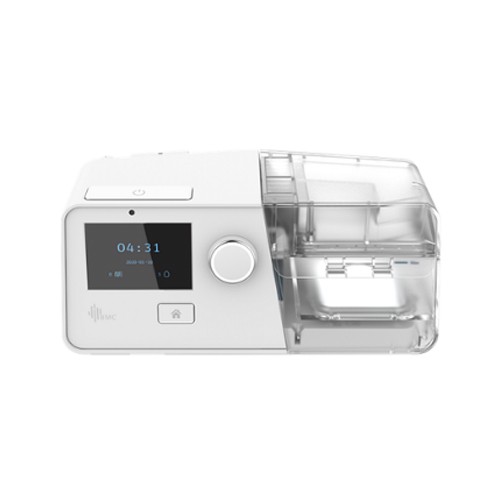
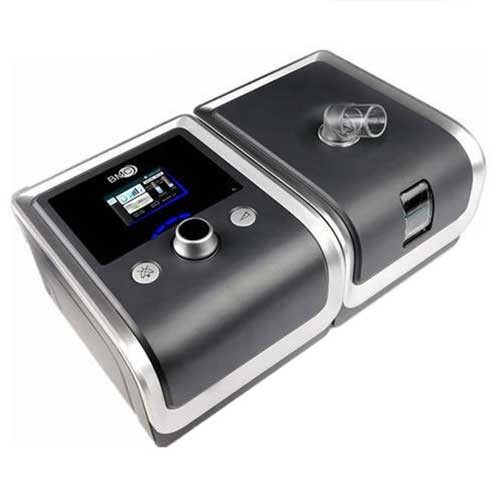
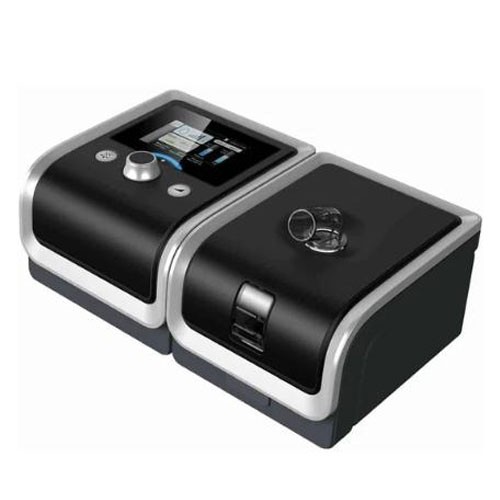
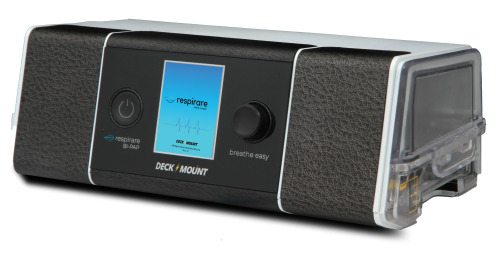
BPL LifePAP 25STA BiPAP Machine with Auto-EPAP
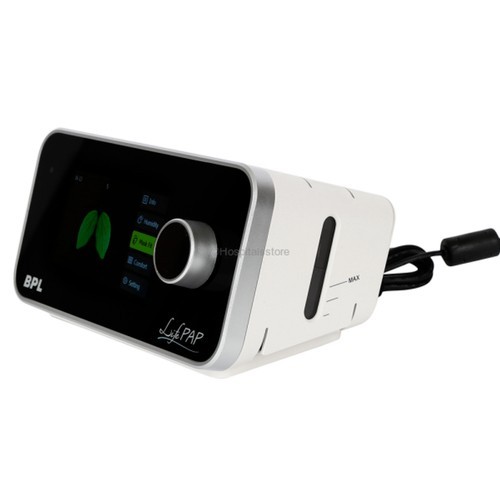
Key features
- Type BiPAP
- Modes eVAPS, S, T, ST, CPAP, AutoEPAP
- Pressure Range 4-25cmH₂O
- Sound level 28dB
- Weight 1.55Kg
- Dimensions 235 × 148× 125mm
Specifications
| Type | BiPAP |
|---|---|
| Modes | eVAPS, S, T, ST, CPAP, AutoEPAP |
| Pressure Range | 4-25cmH₂O |
| Sound level | 28dB |
| Weight | 1.55Kg |
| Dimensions | 235 × 148× 125mm |
| Company Headquaters | India |
| Auto On/Off | Yes |
| Ramp Duration | 0-60min. |
| Ramp Down | No |
| EPR | Yes |
| Humidifier | Heated |
| Preheat | Yes |
| Adaptive Humidification | Yes |
| Mask Fit | Yes |
| Leak Alert | Yes |
|---|---|
| Altitude Compensation | Yes |
| VAPS | Yes |
| Trigger & Cycle sensitivity | Yes |
| Ti Control | Yes |
| Rise Time | Yes |
| Ti(inspiration time) | Yes |
| Pressure Support | Yes |
| Back up rate | Yes |
| SD card | Yes |
Pros and cons
PROS
- eVAPS (extended volume-assured pressure support) plus Auto-EPAP on a single SKU is a combination no other Indian-brand sub-₹75,000 BiPAP offers
- 4–25 cmH2O pressure envelope with adjustable trigger, cycle, rise time, Ti and back-up rate exposes the full BiPAP parameter set to the clinician
- 1.55 kg weight is the lightest BiPAP ST chassis available in India at this price
- BPL Medical's established Indian hospital-channel footprint simplifies CGHS, ECHS and insurance procurement paths
CONS
- eVAPS algorithm is not independently validated against published VAPS benchmarks (Philips AVAPS, ResMed iVAPS)
- CE and FDA approvals are not stated in the published key features or additional details
- No cloud-connected data infrastructure marked — SD card is the published data path
The BPL LifePAP 25STA is the most ambitious spec sheet on any Indian-brand BiPAP ST available in 2026. It publishes six modes on a single SKU — eVAPS (extended volume-assured pressure support), S (spontaneous), T (timed), ST (spontaneous-timed with back-up rate), CPAP, and AutoEPAP — at a 4–25 cmH2O pressure envelope, 28 dB published sound level, and 1.55 kg weight. The street price is ₹70,080 against an MRP of ₹97,920, which places it at roughly half the cost of the ResMed Lumis 150 VPAP ST (~₹1.4–1.6L) and at a similar discount to the Philips DreamStation BiPAP AVAPS tier. The machine is listed as In Stock, ships with heated humidifier integrated, and is published to cover the full ST-plus-VAPS-plus-Auto-EPAP use case on a single device. For an Indian pulmonology practice that wants a ventilator-class Bi-Level with genuine feature breadth from a known Indian medical-device brand, the LifePAP 25STA is the most interesting spec-per-rupee proposition in this class.
What the specs actually mean
The mode list is the headline. eVAPS is BPL’s label for volume-assured pressure support — the same algorithmic category as Philips AVAPS, ResMed iVAPS and Oxymed VAT. The goal is to target a prescribed tidal volume regardless of the patient’s effort, by dynamically adjusting inspiratory pressure within an operator-set envelope. This is the core feature that differentiates a premium BiPAP ST from a budget fixed-pressure BiPAP for chronic-respiratory-failure use cases. BPL including eVAPS on a ₹70,080 machine is genuinely notable; the nearest sub-₹75,000 Indian competitor (Oxymed AirSmart BPAP ST at ₹37,490) includes VAT but lacks Auto-EPAP.
AutoEPAP is the second notable addition. In a spontaneous-breathing OSA patient with residual obstructive events on fixed-EPAP therapy, an AutoEPAP algorithm titrates the expiratory pressure in response to detected upper-airway obstruction — effectively running an APAP logic on the EPAP side while the IPAP delivers pressure support above. ResMed’s VAuto algorithm implements this concept on the AirCurve 10 VAuto; Philips’s BiPAP Auto does the same. The LifePAP 25STA publishing AutoEPAP on a ST-class machine means the same machine can be used for both chronic-respiratory-failure ventilation (S/T with eVAPS) and residual-OSA auto-titration (AutoEPAP with pressure support) — a combination that otherwise requires two separate machines in the mid-premium tier.
Six modes, plus configurable trigger, cycle sensitivity, rise time, Ti (inspiratory time), pressure support and back-up rate, give the clinician an uncommonly complete parameter surface for a ₹70,080 machine. In the Indian market below ₹1 lakh, this level of parameter exposure is rare; it is the ResMed Lumis 150 / AirCurve 10 ST-A feature envelope, delivered at roughly half the price.
What is missing from the spec sheet: no ASV (adaptive servo-ventilation) mode, no central-apnea-treatment-labelled algorithm, no cloud data connectivity marked (SD card is the published path), no RERA reporting, no heated-tube compatibility explicitly listed, no FDA approval marked, no CE approval marked. The ASV absence is intentional and category-correct (ASV is a distinct device class); the cloud-connectivity absence is a real gap for clinics running remote-compliance workflows; the regulatory-approval absence on the listed spec data is a documentation issue that a dealer can resolve at point of sale.
The 4–25 cmH2O pressure envelope is adequate for the large majority of adult Bi-Level prescriptions. For extreme obesity-hypoventilation cases where IPAP routinely peaks above 25 cmH2O, the LifePAP 25STA is too narrow; those cases need the 30 cmH2O envelope of the Oxymed AirSmart BPAP ST or the ResMed Lumis 150.
The 28 dB published sound is class-competitive — meaningfully quieter than the Oxymed AirSmart BPAP ST (30 dB) and on par with the ResMed and BMC premium tiers. For a machine expected to run 8+ hours a night for years, 2 dB matters over time.
The 1.55 kg weight matches the Harmony Auto chassis (this is clearly the same BPL internal platform reused for the Bi-Level SKU) and is the lightest BiPAP ST available in India at this price. For a patient who needs to move the machine between bedroom and travel case, this is a real advantage over the 1.8–2.2 kg range of competing Bi-Levels.
Adaptive humidification and mask-fit feedback are marked — features that matter most in the first 30 nights of therapy where adherence is established. Leak compensation is marked yes. Leak alert, altitude compensation and pressure-support exposure are all on the spec sheet.
Who should buy it
The LifePAP 25STA is the right machine for an Indian patient prescribed BiPAP ST with VAPS, whose clinician wants eVAPS-class algorithmic pressure support, whose AHI mix includes some residual OSA burden that would benefit from AutoEPAP titration, and whose budget falls between the ₹40,000-range Indian-brand BiPAPs and the ₹1.4L+ premium imports. That covers a substantial chunk of Indian chronic-respiratory-failure prescriptions where eVAPS is clinically preferred but premium-brand budget is not available — the ₹70,080 LifePAP is the defensible middle choice.
It is the right machine for a hospital-channel or CGHS/ECHS-reimbursed purchase where BPL Medical’s procurement relationships matter. BPL’s footprint in Indian public and private hospital purchasing is deeper than any other Indian-brand CPAP/BiPAP manufacturer; if the buyer’s reimbursement path runs through a procurement officer who already buys BPL ECG, monitors and ultrasound, the LifePAP flows through the same channel without friction.
It is the right machine for a household that needs both a BiPAP ST for chronic respiratory failure and an AutoEPAP-capable device for a co-existing OSA diagnosis — rather than running two separate devices, the LifePAP handles both on one chassis. This is the single strongest clinical argument for this machine over the cheaper Oxymed AirSmart BPAP ST.
Who shouldn’t
Anyone whose prescription requires ASV for treatment-emergent CSA, Cheyne-Stokes, or CompSA should not buy the LifePAP. It has no ASV mode. The correct category is ResMed AirCurve V Auto or AirCurve 10 ASV.
Anyone whose IPAP prescription routinely exceeds 25 cmH2O should not buy it. The 4–25 envelope is too narrow for severe obesity-hypoventilation. Step up to the ResMed Lumis 150 (30 cmH2O) or the Oxymed AirSmart BPAP ST (30 cmH2O).
Anyone whose pulmonologist needs cloud-pushed compliance and waveform data into AirView or DreamMapper should not buy this machine. The published data path is SD card only.
Anyone with a progressive neuromuscular disease — ALS, late-stage Duchenne, SMA — where night-time ventilation is the primary life-sustaining intervention should consider paying the premium for the ResMed Lumis 150 VPAP ST or Philips DreamStation AVAPS, because the clinical-validation literature on those algorithms is substantially deeper than on BPL’s eVAPS.
Anyone shopping on the basis of peer-reviewed algorithm validation should not buy the LifePAP 25STA. eVAPS is not documented in the published-clinical-trial literature the way AVAPS and iVAPS are. For a ventilator-dependent patient, that absence is a real clinical consideration.
How it compares to real alternatives
LifePAP 25STA vs Oxymed AirSmart BPAP ST (VAPS)
Oxymed AirSmart BPAP ST is ₹37,490 — roughly half the LifePAP’s price — with six modes including VAT (VAPS-class), configurable trigger/cycle/rise/Ti, 4–30 cmH2O envelope, 30 dB sound, 2.0 kg chassis, German turbine, 3-year PAN-India home-service warranty. The LifePAP has a wider feature set (AutoEPAP + adaptive humidification + mask-fit feedback), a quieter and lighter chassis, BPL brand heritage, and a 2-year warranty. For a pure chronic-respiratory-failure prescription where AutoEPAP is not needed, Oxymed is cheaper by ~₹32,000 and delivers the core VAPS-plus-ST feature set. For a dual OSA-plus-CRF prescription where AutoEPAP adds real value, LifePAP is the single-device answer.
LifePAP 25STA vs ResMed Lumis 150 VPAP ST / AirCurve 10 ST-A
ResMed sits at ₹1,35,000–₹1,70,000 street. iVAPS is clinically validated across multiple peer-reviewed trials; ClimateLineAir heated tubing, AirView cloud data, and the deepest Indian service network all come standard. For complex chronic-respiratory-failure cases — ALS, advanced COPD with hypercapnia, kyphoscoliosis with marginal tolerance — ResMed remains the defensible clinical buy. The LifePAP 25STA saves ₹60,000–₹1,00,000 for a similar mode map but on an unvalidated VAPS algorithm. For a stable chronic-respiratory-failure case where the prescription is titrated and patient adherence is established, the LifePAP may suffice; for a complex case where the algorithm matters, ResMed is worth the premium.
LifePAP 25STA vs Philips DreamStation BiPAP AVAPS
DreamStation AVAPS post-recall is a constrained Indian SKU. Where available, street prices hold above ₹1,20,000. AVAPS has the longest clinical-validation track record of any VAPS algorithm. The LifePAP price advantage is large; the AVAPS clinical heritage is stronger but supply continuity is uncertain. For a new 2026 BiPAP purchase, we would not recommend DreamStation AVAPS over the LifePAP on supply grounds alone.
LifePAP 25STA vs BMC G3 B30VT
BMC G3 B30VT is the closest imported-OEM competitor at ₹70,000–₹85,000 street. BMC publishes VAPS-algorithm documentation, has mature global Bi-Level OEM relationships, and offers 4–30 cmH2O pressure envelope (5 cmH2O wider than LifePAP). BPL wins on brand footprint inside India (CGHS/ECHS procurement), on weight (1.55 kg vs ~1.7 kg), and on AutoEPAP availability. BMC wins on pressure envelope width and algorithm documentation. For a procurement-driven buy, BPL. For a clinical-feature-driven buy, BMC is a coin-flip.
Indian-market considerations
BPL Medical headquarters in Bengaluru. Service network coverage for this Bi-Level SKU is through the same authorised network as the Harmony Auto. Turnaround for warranty claims is typically 7–10 working days from machine-arrival at the authorised service centre; home service is not the published standard on the LifePAP per the data we reviewed. For a Bi-Level ST device running 8+ hours a night on a dependent patient, the lack of published home-service commitment is a real consideration — factor the possibility of a 10–14 day in-service downtime into your purchase decision and consider keeping a backup device (rented or loaned) available for chronic-respiratory-failure patients.
Voltage: 220V/50Hz. For a BiPAP with an integrated heated humidifier drawing up to ~100 W peak, use a 1.5-kVA automatic voltage stabiliser. The adapter’s tolerance to Indian voltage swings is not disclosed; stabilisation is not optional at this machine class.
CE and FDA status is not stated in the published key features or additional details for this SKU. BPL as a company has strong CDSCO footprint across its broader portfolio; confirm this specific Bi-Level SKU’s CDSCO Class B/C registration at point of sale, which will matter for any hospital-procurement or insurance-reimbursed purchase.
Integrated heated humidifier is published. Adaptive humidification is marked yes. Preheat is marked yes. Heated-tube compatibility is not listed — plan on running humidifier at level 3 during north-Indian winter and level 5 during coastal monsoon, with insulating hose sleeves (₹400) as cheap rainout insurance.
Data: SD card is the published path. No mobile app or Wi-Fi cloud upload is marked. For a clinician on an SD-card-download workflow, this is workable. For clinics running cloud-based remote-compliance programmes, it is a gap that may justify stepping up to a ResMed SKU.
Warranty: 2 years on the machine per the published brochure and listings. 1 year shorter than the Oxymed home-service warranty. On a ₹70,080 machine running 3,000 hours a year, the 3rd-year repair exposure is a real cost — expect ₹5,000–₹10,000 of out-of-warranty service to be a realistic year-3 budget.
Verdict
The BPL LifePAP 25STA is the most feature-complete Indian-brand BiPAP ST at its price point, and the combination of eVAPS plus AutoEPAP plus full S/T plus configurable trigger/cycle/rise/Ti genuinely differentiates it from every other sub-₹75,000 Indian BiPAP. For a clinically-stable chronic-respiratory-failure patient with a dual OSA component, or for a hospital-channel procurement where BPL’s Indian brand presence simplifies the paperwork, this is the defensible buy at ₹70,080.
Score it 7.5 out of 10. Points off for the unvalidated eVAPS algorithm against published VAPS benchmarks, the unstated CE/FDA status on this SKU, the shorter 2-year warranty without published home-service commitment, and the SD-card-only data infrastructure that is behind the cloud workflows of the premium imported alternatives. For a complex or progressive-disease BiPAP-dependent patient where the algorithm matters clinically, step up to the ResMed Lumis 150 VPAP ST. For everyone else in this price band who needs eVAPS plus AutoEPAP on one chassis, the LifePAP 25STA is the cleanest single-device answer the Indian market offers.