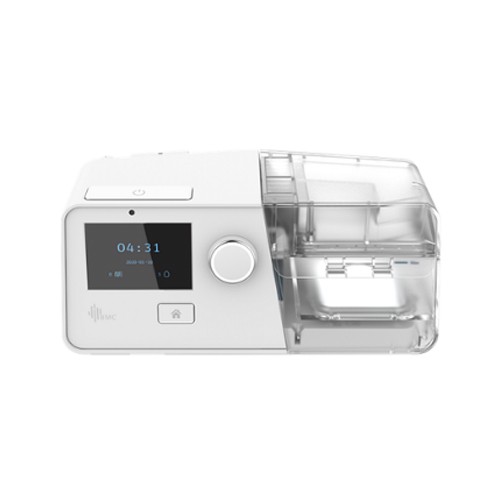
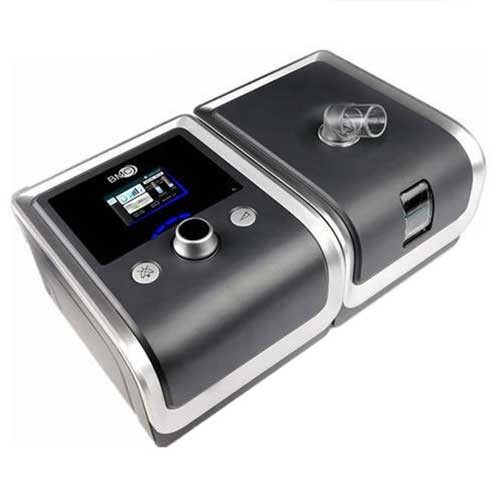
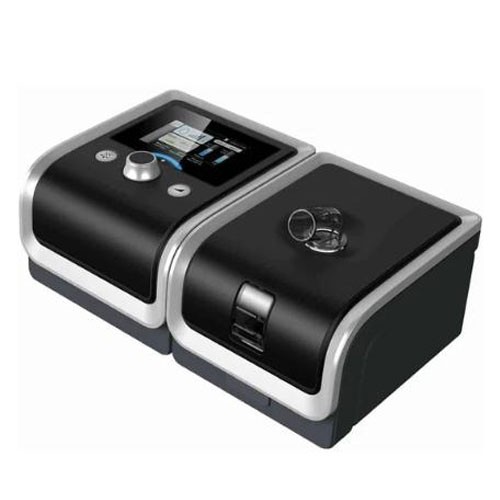
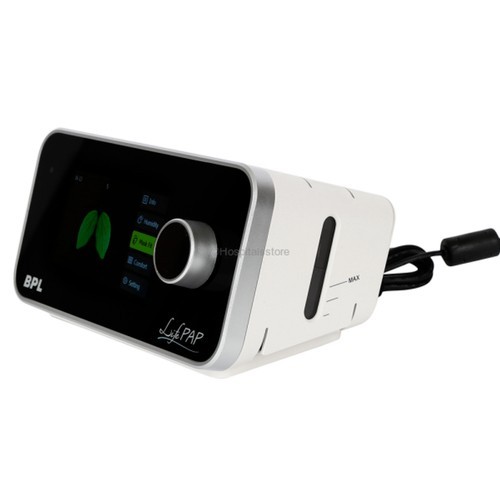
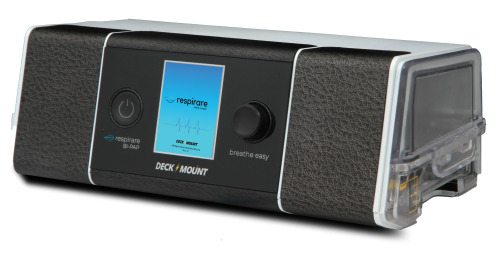
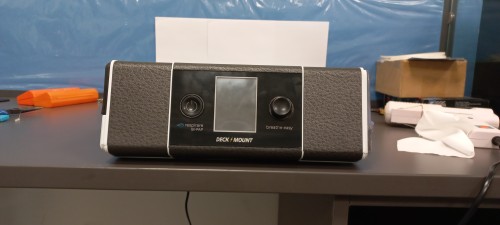
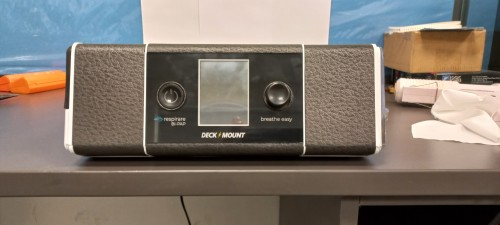
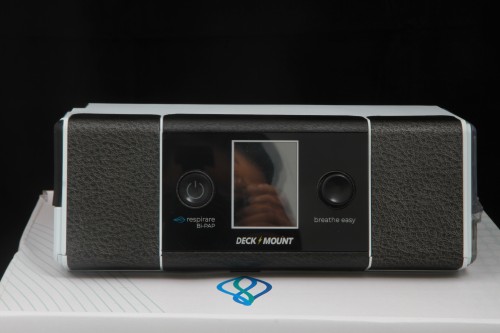
Deckmount VT 200 (VAPS) BiPAP Machine
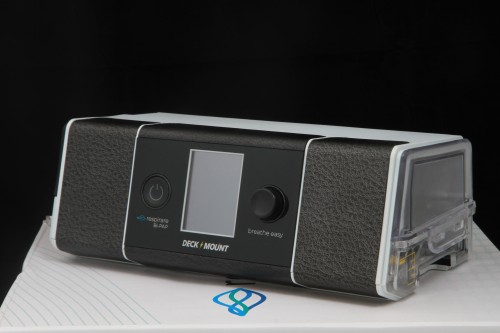
Key features
- Type BiPAP
- Modes CPAP , S, ST, T , PC, VAPS, Auto CPAP
- Turbine Made in India
- Pressure Range 4-30cmH₂O
- Ergonomic Tilted Display Yes
- Detachable Design No
Specifications
| Type | BiPAP |
|---|---|
| Modes | CPAP , S, ST, T , PC, VAPS, Auto CPAP |
| Turbine | Made in India |
| Pressure Range | 4-30cmH₂O |
| Ergonomic Tilted Display | Yes |
| Sound level | 28dB |
| Weight | 1.8Kg |
| Dimensions | 290x160x110mm |
| Company Headquaters | India |
| Auto On/Off | Yes |
| Ramp Duration | 0-45min. |
| Auto Ramp | Yes |
| Ramp Down | No |
| EPR | Yes |
| Humidifier | Heated |
| Central Apnea Detection | Yes |
|---|---|
| Leak Alert | Yes |
| Altitude Compensation | Yes |
| VAPS | Yes |
| Trigger & Cycle sensitivity | Yes |
| Ti Control | Yes |
| Rise Time | Yes |
| Ti(inspiration time) | Yes |
| Pressure Support | Yes |
| SpO2 Monitoring Compatibility | Yes |
| Leakage Compensation | No |
| SD card | Yes |
| QR code | Yes |
Pros and cons
PROS
- ₹27,552 current price is the lowest for a VAPS-marked BiPAP in the Indian dealer channel today
- Seven modes on a single SKU (CPAP, S, ST, T, PC, VAPS, Auto CPAP) provide unusual titration flexibility at this price
- Configurable trigger, cycle sensitivity, rise time, Ti and pressure support — parameter exposure usually reserved for premium machines
- Central-apnea detection IS marked on the VT 200 spec sheet, a notable addition over the cheaper VT50 CPAP
CONS
- Leakage compensation is explicitly marked 'No' — a significant operational gap for a BiPAP running higher pressures and longer tubing
- Back-up rate is NOT marked — ST mode without a published back-up rate control is a functional limitation for chronic-respiratory-failure use
- CE, FDA and cloud-connectivity are not stated in the published key features or additional details; SD card plus QR code is the data path
The Deckmount VT 200 (VAPS) BiPAP is the cheapest BiPAP in the Indian dealer channel that marks VAPS on its spec sheet. At ₹27,552 against an MRP of ₹72,000, it offers seven modes (CPAP, S, ST, T, PC, VAPS, Auto CPAP), a 4–30 cmH2O pressure envelope, and a configurable trigger, cycle sensitivity, rise time, Ti and pressure support parameter set. The machine is 1.8 kg, published at 28 dB sound level, domestically manufactured with a Made-in-India turbine, and listed as In Stock with CE marking not stated and a warranty period not clearly disclosed in the listing data we reviewed. For an Indian buyer who needs a BiPAP with VAPS-mode labelling at an absolute-minimum price, the VT 200 is the price-leader. It is also, on close reading of the spec sheet, a device with some honest limitations that matter clinically.
What the specs actually mean
The seven-mode list is the VT 200’s headline. CPAP (fixed pressure), S (spontaneous Bi-Level), ST (spontaneous-timed), T (fully timed), PC (pressure control), VAPS (volume-assured pressure support), and Auto CPAP — this is a functional superset of almost every Bi-Level prescription category short of ASV. At ₹27,552, having this many modes on one SKU is unusual in the Indian market.
The 4–30 cmH2O pressure envelope is the full adult Bi-Level range. It covers every obesity-hypoventilation, chronic-respiratory-failure, and overlap-syndrome prescription short of the tiny subset requiring >30 cmH2O IPAP (which is a ventilator-class case, not a home BiPAP case).
Configurable trigger, cycle sensitivity, rise time, Ti and pressure support on the spec sheet is a genuine parameter surface for the clinician. These are the parameters that determine patient-device synchrony on a Bi-Level, and they are normally gated into premium machines. The VT 200 exposes them — whether the exposure is through a clinician-password-protected menu or a dealer-accessible configuration utility, the data we have suggests they are user-settable.
Central-apnea detection IS marked on this SKU (unlike the cheaper VT50 CPAP). That matters. A BiPAP without CSA detection that is responding with pressure escalation to treatment-emergent CSA events is actively dangerous; the VT 200 marks the feature, so the machine can at least recognise a CSA event and log it.
Now the gaps. Leakage compensation is explicitly marked “No” in the spec sheet. This is a significant operational limitation for a BiPAP. Leak compensation is the feature that adjusts delivered pressure upward when mask leak reduces the pressure actually reaching the patient. A Bi-Level running at IPAP 18 and EPAP 8 with no leak compensation will, under significant mask leak, deliver substantially less than the prescribed pressure — which for a ST/VAPS patient on a dependent prescription is a clinical-safety concern, not a comfort issue. Oxymed AirSmart BPAP ST, BPL LifePAP 25STA and ResMed/Philips premium BiPAPs all mark leak compensation as a yes, and typically to 60 LPM. The VT 200 at “No” is a real outlier.
Back-up rate is NOT marked. This is directly contradictory with the listed ST and T modes, which functionally require a back-up rate parameter to operate. Either the spec sheet is incomplete (the most likely reading, given that ST mode is listed) or the back-up rate is internally fixed to a default value and not user-adjustable. Either interpretation should be confirmed with the dealer at point of sale before specifying the VT 200 for a ST/VAPS-prescribed patient.
Altitude compensation, heated humidifier, auto ramp, EPR (exhalation pressure relief) are all marked yes. Heated-tube compatibility, adaptive humidification, mask-fit feedback are not marked.
Data: SD card yes, QR code yes. Bluetooth, Wi-Fi, cloud app are not marked. Leak alert is marked yes (even though leakage compensation is marked no — the machine can detect leaks but cannot compensate for them).
SpO2 monitoring compatibility is marked yes.
Who should buy it
The VT 200 is the right machine for a ₹30,000-budget-ceiling BiPAP purchase where the patient profile is:
- Stable, cooperative, mask-tolerant (so that the “no leak compensation” gap does not translate into repeated delivered-pressure shortfalls)
- Established pressure prescription without ongoing titration pressure (so that the machine does not need to auto-respond to evolving needs)
- Simple ST or S mode prescription (not requiring VAPS-class clinical algorithm validation)
- Hospital-channel or institutional purchase where Deckmount’s established procurement relationships apply
For those carefully-scoped use cases, the VT 200 is a legitimate buy. At ₹27,552 it is ~₹10,000 cheaper than the next Indian-brand BiPAP with a documented VAPS-class mode (Oxymed AirSmart BPAP ST at ₹37,490).
It is the right machine for an institutional deployment — a dharmshala, a public-sector hospital transitional-care unit, a sleep-study clinic — where the unit cost is the dominant procurement variable and the patients using the machine will be under clinical supervision that compensates for the machine’s instrumentation gaps.
It is the right machine for a cost-constrained rental or trial unit in a dealer’s demo fleet, where the machine will be deployed for short periods under supervised titration.
Who shouldn’t
Anyone prescribed ST mode with a specified back-up rate (e.g., 12 breaths/minute for neuromuscular respiratory support) should not buy the VT 200 without first confirming with the dealer that the listed ST mode has a user-configurable back-up rate. The spec sheet leaves this ambiguous.
Anyone with a known mask-fit problem, mouth-breathing tendency, or pattern of significant mask leak on prior PAP therapy should not buy the VT 200. The “No” on leakage compensation means the machine cannot correct for those leaks, and delivered pressure will be systematically lower than prescribed on nights with significant leak. For a dependent ST/VAPS prescription that is a safety concern.
Anyone whose prescription is VAPS for critical chronic-respiratory-failure ventilation — ALS, late-stage COPD with hypercapnia, progressive neuromuscular disease — should not buy the VT 200. The VAPS algorithm is not independently validated, back-up rate and leak compensation both have spec-sheet gaps, and the clinical-safety envelope is simply too narrow for dependent patients. Pay up for the BPL LifePAP 25STA (₹70,080) or the ResMed Lumis 150 (₹1.4L+).
Anyone whose pulmonologist wants cloud-pushed compliance data should not buy this machine.
Anyone whose prescription is simpler Auto BiPAP without VAPS should consider the Oxymed AirSmart Bi-Level Auto (₹33,990) instead — for ₹6,438 more, the Oxymed machine has 60 LPM leak compensation, explicit back-up rate where needed, and an app-connected data story. That’s meaningful incremental value.
How it compares to real alternatives
VT 200 vs Oxymed AirSmart BPAP ST (VAPS)
The closest Indian-brand competitor. Oxymed AirSmart BPAP ST is ₹37,490, six modes (including VAT/VAPS), 60 LPM leak compensation marked, back-up rate marked, German turbine, 30 dB sound, 3-year PAN-India home-service warranty. VT 200 is ₹27,552, seven modes, leak compensation explicitly “No”, back-up rate unmarked, Made-in-India turbine, 28 dB sound, warranty unclear. Oxymed wins on leak compensation (a critical functional spec), back-up rate explicitness, turbine provenance and warranty. VT 200 wins on price (₹9,938 cheaper), mode count, and 2 dB of quietness. For any clinical prescription that actually uses VAPS or ST seriously, Oxymed is the defensible buy. For cost-constrained simple-S-mode deployments, VT 200 saves money.
VT 200 vs BPL LifePAP 25STA
BPL LifePAP is ₹70,080, six modes (eVAPS + AutoEPAP + S + T + ST + CPAP), leak compensation marked, back-up rate marked, adaptive humidification marked, 28 dB, 1.55 kg. VT 200 is a ₹42,528 price saving for a similar mode count but with material functional gaps (leak compensation, back-up rate). For a chronic-respiratory-failure prescription, the BPL’s feature completeness justifies the premium. For an institutional low-cost deployment, the VT 200 is the cheaper option.
VT 200 vs ResMed Lumis 150 VPAP ST / AirCurve 10 ST-A
ResMed is ₹1,35,000+ with iVAPS clinical validation, ClimateLineAir heated tubing, AirView cloud data, and the deepest Indian service network. For dependent BiPAP ST patients where the algorithm matters, ResMed is the only defensible buy. The VT 200 saves roughly ₹1,00,000+; that saving reflects genuine clinical-capability differences.
VT 200 vs Philips DreamStation BiPAP AVAPS
DreamStation AVAPS post-recall is an uncertain Indian SKU. Where still listed, prices hold above ₹1,00,000. VT 200’s price advantage is ~₹75,000+; Philips AVAPS has a longer clinical heritage but Indian supply continuity is the issue. For new 2026 purchases, we would default-favour BPL LifePAP 25STA or Oxymed AirSmart BPAP ST over either VT 200 or DreamStation AVAPS.
Indian-market considerations
Deckmount’s Made-in-India turbine and domestic assembly mean spares availability is structurally easier than on an imported premium machine. A turbine or chamber replacement in year 3 is a conceivable ₹4,000–₹8,000 repair on a Deckmount; the same repair on a ResMed or Philips can run ₹15,000+ including imported-parts cost and authorised-service-centre markup.
Voltage handling: 220V/50Hz, 1.5-kVA stabiliser recommended for BiPAP-class power draw. Non-negotiable for Indian residential supply.
CE and FDA are not stated in the published key features or additional details for this SKU (CDSCO Medical Device Registry). For hospital-channel purchase where CDSCO Class B/C registration matters for procurement-compliance, confirm at point of sale.
Service network: Deckmount’s service footprint is hospital-channel-weighted, strongest in metros and tier-2 cities with existing Deckmount customer relationships. Tier-3 home service is thinner. For a dependent BiPAP patient in a smaller city, the Oxymed machine’s documented PAN-India home-service commitment is meaningfully better post-sale infrastructure.
Data: SD card plus QR-code export. For a clinician comfortable reading downloaded SD-card reports, workable. For cloud-pushed compliance programmes, not fit-for-purpose.
Warranty length: not clearly stated in the listing data we reviewed for this SKU. Confirm with the specific authorised Deckmount dealer at point of sale before purchase.
Verdict
The Deckmount VT 200 is the cheapest VAPS-marked BiPAP on the Indian dealer channel at ₹27,552, and it offers an unusually broad seven-mode list with configurable clinical parameters for its price. For a carefully-scoped use case — stable cooperative patient, established simple prescription, institutional purchase where cost dominates, clinical supervision compensating for machine instrumentation gaps — it is a legitimate buy.
Score it 6.6 out of 10. Points off heavily for the “No” on leakage compensation (a real functional gap for BiPAP operation at higher pressures), the unmarked back-up rate despite ST and T modes being listed, the unstated CE/FDA status, the SD-card-plus-QR-code data infrastructure, the unclear warranty terms, and the weaker non-metro service footprint versus Oxymed’s documented home-service commitment. For any dependent VAPS or ST prescription where the algorithm and the leak-compensation safety envelope matter clinically, step up to the Oxymed AirSmart BPAP ST (₹37,490) or the BPL LifePAP 25STA (₹70,080). For cost-constrained simple-prescription institutional purchases, the VT 200’s price floor is the reason to buy it — with eyes open on the spec gaps.