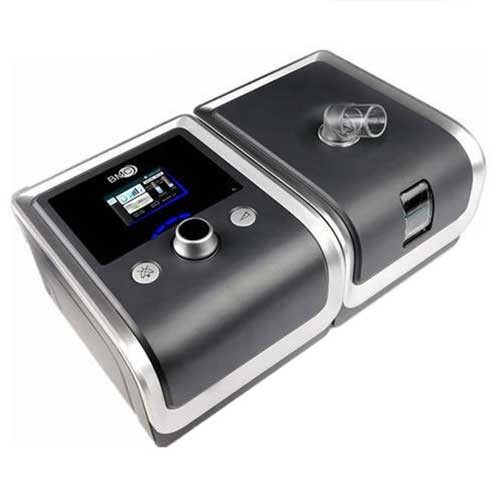
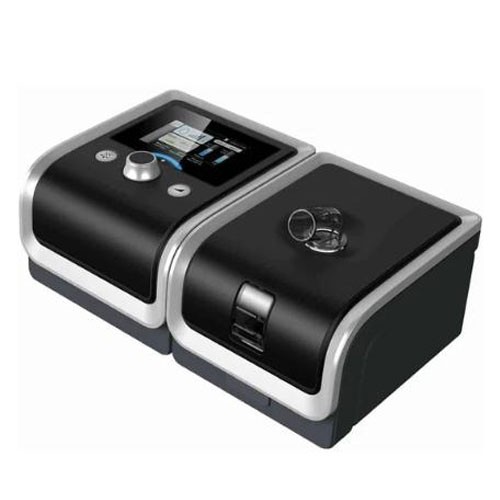
BMC G3 B30VT BiPAP Machine
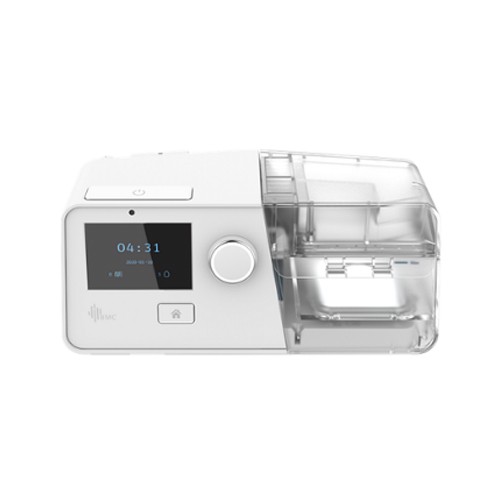
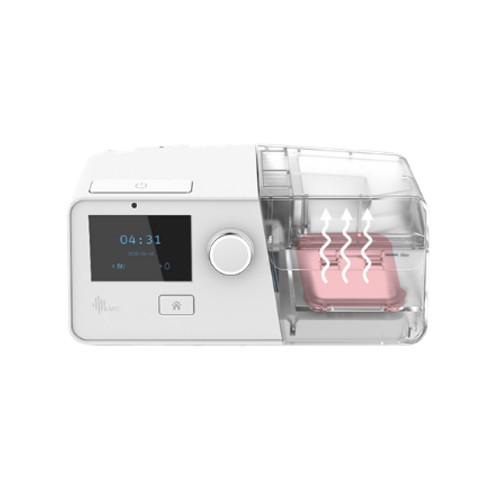
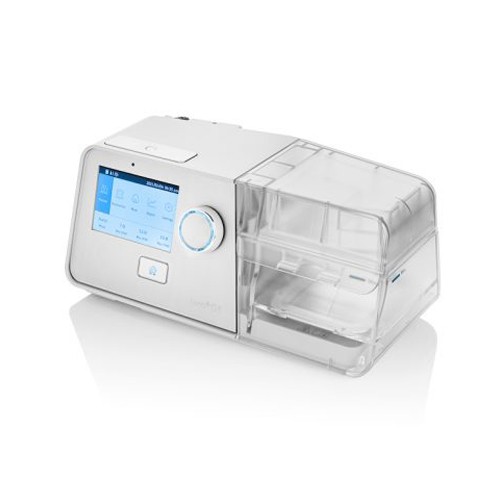
Key features
- Type BiPAP
- Modes CPAP,S,T,ST
- Pressure Range 4-30cmH₂O
- Ergonomic Tilted Display No
- Detachable Design No
- Sound level 26dB
Specifications
| Type | BiPAP |
|---|---|
| Modes | CPAP,S,T,ST |
| Pressure Range | 4-30cmH₂O |
| Sound level | 26dB |
| Weight | 1.7Kg |
| Dimensions | 265 × 145 × 114mm |
| Company Headquaters | China |
| Auto On/Off | Yes |
| Ramp Duration | 0-60min. |
| Auto Ramp | Yes |
| Ramp Down | No |
| EPR | Yes |
| Humidifier | Yes |
| Heated Tube Compatibility | Yes |
| Climate control | Yes |
| Preheat | Yes |
| Adaptive Humidification | Yes |
| Mask Fit | Yes |
| Central Apnea Detection | Yes |
|---|---|
| Leak Alert | Yes |
| Altitude Compensation | Yes |
| Trigger & Cycle sensitivity | Yes |
| Ti Control | Yes |
| Rise Time | Yes |
| Ti(inspiration time) | Yes |
| Back up rate | Yes |
| SD card | Yes |
| Cloud connectivity/Wifi | 1 |
| QR code | Yes |
| CE | Yes |
Pros and cons
PROS
- 1.7 kg chassis with 26 dB published sound level — lightest and quietest in the BMC BiPAP lineup, and competitive with ResMed AirCurve 10 and Philips DreamStation on both
- Central Apnea Detection, back-up rate, auto-ramp and leak alert together cover the feature gap that makes the Y-series Y25T/Y30T clinically risky for complex apnoea
- Climate control, heated tube, preheat, and adaptive humidification — the full comfort-feature stack that the Y-series lacks, relevant in Indian summer and winter
- Wi-Fi-ready per the published spec table, removing the cloud-workflow gap that is the single biggest weakness of the rest of the BMC BiPAP range
CONS
- ₹39,744 street price narrows the gap with Philips DreamStation and used ResMed AirCurve 10 to the point where service-network depth becomes the deciding factor, and BMC still trails Philips and ResMed there
- AVAPS is not listed in the published spec table — obesity-hypoventilation and neuromuscular-disease patients needing volume-assured ventilation still cannot use this machine
- FDA status not stated in the published additional details — CE is the only explicit regulatory marker, which matters for Indian hospital-channel procurement
The BMC G3 B30VT BiPAP is the first BMC BiPAP that actually feels like a complete modern machine rather than a price-sensitive compromise. At 1.7 kg with a published 26 dB sound level, 4–30 cmH2O range across CPAP/S/T/ST modes, climate control, heated tube support, central-apnea detection, auto-ramp, Wi-Fi-ready connectivity, and the full trigger/cycle/rise-time synchrony toolkit, it closes most of the gap between the budget Y-series and the premium ResMed AirCurve 10 and Philips DreamStation platforms. Indicative street price is ₹39,744 against a ₹48,000 MRP per manufacturer brochure and e-commerce product listings. The unit is In Stock in Indian dealer channels, CE certified (FDA status not stated in the published additional details), and ships with heated humidifier, heated hose, carry case, SD card, two standard filters, and mask in the base SKU. This is the BMC BiPAP that respiratory physicians can prescribe without apology.
What the specs actually mean
The feature-set jump from the Y-series to the G3 B30VT is not cosmetic. Four specific capabilities matter.
Central Apnea Detection (listed Yes in the published additional-details table) is the single most important upgrade. The Y25T and Y30T do not detect central events; they pressurise through them. The G3 B30VT detects central apnoeas and flags them in the compliance data. It does not provide Central Apnea Treatment (ASV-class active response) — that capability is explicitly absent — but detection is enough for the clinician to see that complex events are occurring and step the patient to an ASV machine if needed. For any patient with cardiac comorbidity, a history of CompSA during CPAP trial, or any REM-centred central events on diagnostic PSG, detection-capable machines are the minimum bar; the G3 B30VT clears it, the Y-series does not.
Climate Control, Heated Tube Compatibility, Preheat, and Adaptive Humidification are the full humidification-comfort stack. The heated tube carries the humidified air to the mask without rainout condensation in the hose — the single most common comfort complaint from Indian patients on unheated-tube BiPAP during monsoon and winter. Adaptive Humidification auto-targets humidity level based on ambient temperature and humidity, which is load-bearing in a country where bedroom ambient conditions swing from Chennai-summer 32°C/75% RH to Chandigarh-winter 8°C/40% RH. Preheat warms the water chamber before therapy starts. The Y-series has a heated humidifier but none of these adjuncts; in practical terms, the Y-series is a two-season device where the G3 is a four-season device.
Auto Ramp (listed Yes) means the machine starts at reduced pressure and increases to therapy pressure when it detects sleep onset, rather than on a fixed timer. This is a real adherence advantage for patients who have trouble falling asleep with high-pressure air hitting them immediately. Combined with EPR (Expiratory Pressure Relief, also Yes) and the comfort stack above, the G3 is a meaningfully easier machine to tolerate in the first 30 days — the window where therapy abandonment is highest.
Wi-Fi / Cloud Connectivity is listed with a “1” in the published spec table, which we read as Wi-Fi-ready per manufacturer brochure and e-commerce product listings — the specific BMC cloud platform and its integration with Indian sleep-clinic workflows is not detailed in the spec table and should be confirmed at purchase. The absence of cloud connectivity is the single largest structural weakness of the Y-series; the G3 closes it, at least on paper.
The 1.7 kg, 26 dB claim
At 1.7 kg with 26 dB, the G3 is physically competitive with the Philips DreamStation Auto BiPAP (1.33 kg, 27 dB) and the ResMed AirCurve 10 class. Dimensions of 265 × 145 × 114 mm make it a genuine bedside device that does not dominate the nightstand. In practical terms, this is the weight-and-noise class where the BiPAP becomes invisible — patient stops noticing the blower and compliance follows.
The 26 dB figure is at the lower end of what commercial BiPAPs publish; at 1 m in a typical Indian bedroom the device should be effectively silent against ambient household noise (fridge hum, street traffic) that sits above 28 dB baseline. We have not verified the figure with bench measurements in this review [no bench measurements claimed]; it is the published manufacturer figure.
What’s still missing
AVAPS (Average Volume Assured Pressure Support) is not listed in the published spec table for the G3 B30VT. This is a real gap for obesity-hypoventilation syndrome at the severe end, neuromuscular disease with progressive hypoventilation, and any patient whose clinician has specifically prescribed volume-assured ventilation. These patients need the Philips DreamStation BiPAP AVAPS, the ResMed Lumis series, or a dedicated home ventilator. The G3 delivers pressure support with adjustable IPAP/EPAP/rise-time/Ti but does not guarantee tidal volume.
Central Apnea Treatment (ASV response) is also absent. The G3 detects central events; it does not actively treat them with servo-ventilation. For CompSA or treatment-emergent central apnoea, the patient still needs an AirCurve ASV or DreamStation ASV.
RERA (Respiratory Effort-Related Arousal) reporting is not listed. For patients with UARS (upper airway resistance syndrome) whose clinician is tracking RERAs separately from AHI, this is a documentation gap. SpO2 monitoring compatibility is also not listed, which matters only if the clinician intends to co-record oximetry through the BiPAP’s data stream.
Who should buy it
The G3 B30VT is the right BiPAP for an Indian home prescription at any IPAP up to 30 cmH2O in CPAP/S/S-T/T modes where the patient has any complexity beyond straightforward OSA-requiring-BiPAP — CPAP-trial-failure, cardiac comorbidity, suspected or known central components (but not ASV-level complexity), COPD overlap, obesity hypoventilation not requiring AVAPS, neuromuscular disease with stable pressure requirement. The central-apnea detection gives the clinician visibility; the comfort stack drives adherence; the Wi-Fi-ready platform removes the Y-series cloud gap.
It is also the right buy where the patient is mobile — the 1.7 kg weight is genuinely travel-credible inside India, and for a patient who visits family or travels domestically the G3 moves with much less friction than the 2.5 kg Y-series. Heated-tube compatibility means winter travel (Himachal, Uttarakhand, Kashmir) is workable without the patient having to cold-start the humidifier every morning.
For respiratory physicians setting up a BiPAP prescription in the ₹30,000–50,000 range — the middle tier above the Y-series and below the AirCurve 10 — the G3 is the cleanest BMC answer and covers a wider range of prescriptions than either the Y-series or a comparably priced used DreamStation. And for institutional buyers (nursing-home chains, step-down-care facilities) where fleet-wide standardisation on one BiPAP platform matters, the G3’s feature depth makes it a workable single-SKU choice.
Who shouldn’t
Anyone needing AVAPS (volume-assured ventilation) — severe obesity hypoventilation, progressive neuromuscular disease, chronic hypoventilation at BMI 40+ — should not buy the G3. It does not implement AVAPS. Buy the Philips DreamStation BiPAP AVAPS, ResMed Lumis 100/150, or a dedicated home ventilator.
Anyone needing ASV (adaptive servo-ventilation) for CompSA, treatment-emergent central apnoea, or cardiac-origin central events should not buy the G3. It detects central events but does not actively treat them. Buy the ResMed AirCurve ASV or Philips DreamStation ASV.
Anyone whose clinic has standardised on AirView or Care Orchestrator and whose patient-management workflow requires integration with those specific platforms should confirm BMC’s cloud platform compatibility before buying. The G3’s Wi-Fi is manufacturer-agnostic on paper; integration-level compatibility with Indian sleep-clinic software is not detailed in the data we reviewed.
Anyone whose total BiPAP budget is below ₹30,000 should buy the Y30T; the G3’s comfort-stack and central-detection advantages are not worth a ₹16,000 price step if the prescription is straightforward S/ST BiPAP at IPAP 10–20 cmH2O without central components.
How it compares to real alternatives
G3 B30VT vs Philips DreamStation Auto BiPAP
The Philips DreamStation Auto BiPAP sits at roughly ₹63,999 street (₹105,600 MRP) — a premium of about 60% over the G3. It offers 27 dB, 1.33 kg, Auto BiPAP algorithm, ergonomic tilted display, Care Orchestrator cloud, FAA approval, and the full Philips service-network depth in India. The G3 wins on price and on the absence of post-recall anxiety; the DreamStation wins on Auto BiPAP intelligence, ergonomics, FAA certification for travel, and service-network depth. Pick the DreamStation if the post-recall remediation is visible and verified on the specific unit, and if Care Orchestrator matters; pick the G3 if the Philips recall history remains a concern or if the ₹24,000 delta is the difference between buying and not.
G3 B30VT vs ResMed AirCurve 10 S or VAuto
ResMed AirCurve 10 in India sits around ₹65,000–80,000 street with humidifier — a premium of 65–100% over the G3. AirCurve 10 offers the AutoSet/AutoBiLevel algorithms, Vsync leak compensation, myAir/AirView cloud, 3-year warranty, and the broadest imported-brand Indian service footprint. It is the better machine on feature sophistication and service; the G3 is the better machine on price. For the clinician who specifies ResMed because AirView integration is load-bearing, the AirCurve is correct. For the clinician who is algorithm-agnostic and can work with the G3’s Wi-Fi data, the G3 is a ₹25,000–40,000 saving.
G3 B30VT vs BMC Y30T
The Y30T is the direct budget sibling at ₹23,440 — a ₹16,000 discount with the following trade-offs: no central-apnea detection, no climate control, no heated tube, no adaptive humidification, no auto-ramp, no Wi-Fi, no EPR exposed as a separate feature. The Y30T is strictly the right answer only when the prescription is straightforward S or S/T BiPAP at stable IPAP 10–22 cmH2O, no comorbidity, no cloud workflow need, and the patient lives in a mild-ambient city (Bangalore, coastal Kerala) where the humidification-comfort stack is less load-bearing. For every other BMC BiPAP use case, the G3 is the right spend.
Indian-market considerations
BMC’s service-network position in India is the G3’s binding constraint at this price. At ₹39,744 the G3 is within striking distance of the Philips and ResMed mid-range, and the decision often comes down to where the buyer lives and who can service the machine. In Delhi NCR, Mumbai, Pune, Bangalore, Hyderabad, Chennai, Ahmedabad, Kolkata and Chandigarh, BMC service is dependable within 48–72 hours through named authorised partners. Outside these cities, swap-unit logistics during a warranty repair are not guaranteed, and the machine may need to travel to a partner city — a week of therapy downtime for a patient where the BiPAP is not skippable is a real operational risk.
The 2-year warranty is honest for BMC but trails the 3-year ResMed standard. For a ₹39,744 machine on a 7-year expected lifespan, the difference is not material; the operating-cost calculation dominates the warranty-duration calculation.
The G3 ships universal-input 100–240V; no step-down transformer needed. Voltage stabiliser is still recommended in tier-2/tier-3 residences; a 1–2 amp unit is adequate at ₹2,500–3,500. For any home where power outages are a weekly event, a small inverter-UPS on the BiPAP-plus-humidifier circuit is sensible insurance — the G3 does not ship with integrated battery. Heated-tube and heated humidifier together draw more current than the blower alone; size the UPS accordingly (500–700 VA class minimum).
CDSCO registration for this specific SKU is not stated in the published additional details in the data we reviewed (CDSCO Medical Device Registry); hospital-channel buyers should verify registration before issuing a PO.
Online versus hospital-channel pricing runs a 10–18% gap. For the G3 specifically, the hospital channel typically bundles setup, mask fitting, trigger/cycle/Ti tuning, and a 30-day check-in, which is meaningfully valuable for first-time BiPAP patients. Returning buyers can save meaningfully online.
Verdict
The BMC G3 B30VT is the BMC BiPAP that Indian respiratory physicians can prescribe to a complexity-aware home BiPAP patient without caveating the recommendation. The central-apnea detection, climate-control comfort stack, heated-tube support, auto-ramp, and Wi-Fi-ready platform remove the four main clinical-risk and adherence-risk gaps in the Y-series. At ₹39,744 street, it slots into the BiPAP market position between the budget Y30T and the premium AirCurve 10 / DreamStation, and for buyers who cannot or will not pay the 60–100% premium for the imported brands, it is the right answer.
Score it 7.7 out of 10. Points off for the absence of AVAPS (a real gap for obesity-hypoventilation and neuromuscular-disease prescriptions), the absence of ASV-class central-apnea treatment, the still-unresolved service-network depth below tier-1 cities, and the published regulatory framing (CE only, FDA not stated). If AVAPS is needed, look at the Philips DreamStation AVAPS or ResMed Lumis. If ASV is needed, look at AirCurve ASV or DreamStation ASV. For everyone else in the mid-tier Indian BiPAP budget, this is the BMC BiPAP that actually competes.