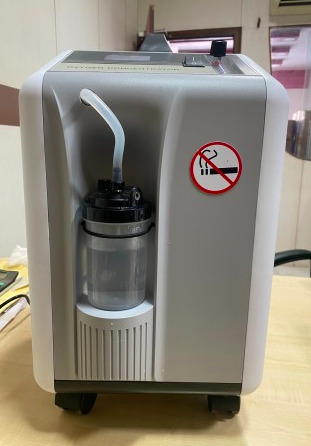
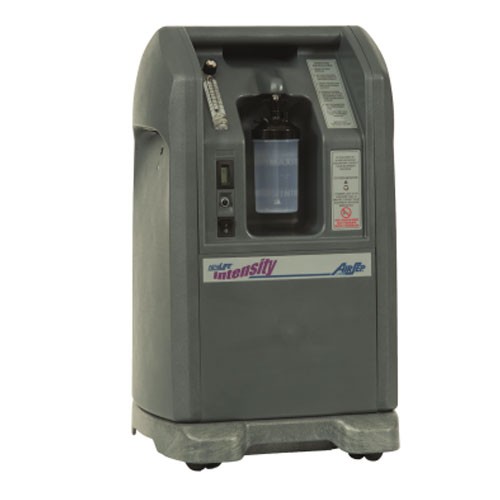
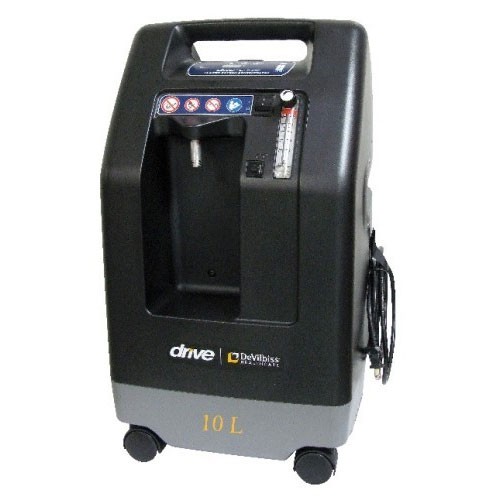
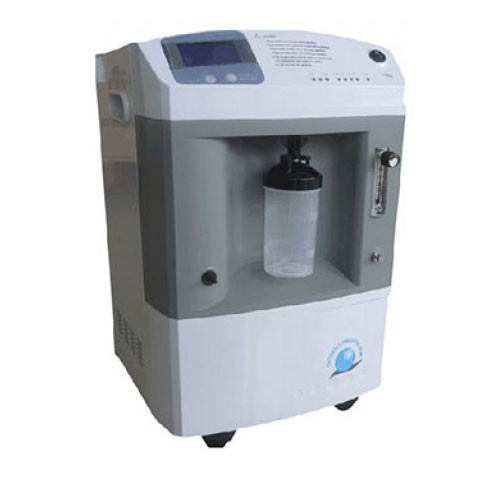
Oxybliss 10 LPM
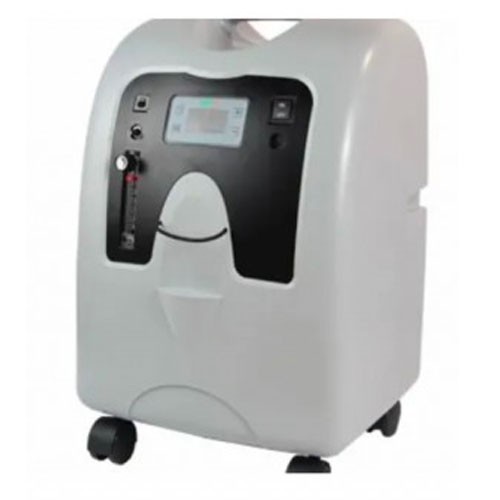
Key features
- Purity 90-95%
- Type High Flow Stationary
- Continuous Flow 1-10LPM
- Weight 18.8kg
- Oxygen Purity Indicator (OPI) No
- Power consumption 580watts
Specifications
| Purity | 90-95% |
|---|---|
| Type | High Flow Stationary |
| Continuous Flow | 1-10LPM |
| Weight | 18.8kg |
| Power consumption | 580watts |
| Sound level | 50db |
| Dimensions | 22.5H x 14.4W x 13.46Dinch |
| Outlet pressure | 12psi |
| Indian Voltage Model | Yes |
|---|---|
| Company Headquarters | Taiwan |
Pros and cons
PROS
- 18.8 kg — the lightest 10 LPM in this review cycle, a genuine differentiator
- 580 W power draw matches the Philips 10 LPM
- 50 dB noise floor is respectable for a 10 LPM home/clinical unit
- 12 psi outlet pressure supports extended tubing runs and dual-patient split
- Indian-voltage confirmed on the brochure
CONS
- No power-loss, system-malfunction or no-flow alarm markings on the brochure — unacceptable for 10 LPM use
- No FDA, FAA or CE certifications published on the Indian spec sheet
- Near-zero Indian service network — Oxybliss is sold through small importers
- No published operating altitude — blank field on a 10 LPM unit is a data gap
- Listed at ₹91,200 — Philips 10 LPM at similar street price is categorically better supported
Oxybliss’s 10 LPM is the lightest in the cohort, but numbers don’t mean support
The Oxybliss 10 LPM is an unusual unit in the Chinese OEM high-flow category because its chassis is genuinely lighter than most competitors. The manufacturer brochure and e-commerce product listings HHZ reviewed show 18.8 kg weight, 580 W power and 50 dB noise — a spec trio that broadly matches the Philips 10 LPM. At ₹91,200 list price the Oxybliss is directly competitive with Tier-1 pricing.
The problem is the same as with the Oxybliss 5 LPM: every interesting spec on the paper spec sheet is undermined by the brochure’s silence on alarms, certifications and operating altitude, and by the brand’s effectively non-existent Indian service network. A 10 LPM clinical-grade machine without a published alarm set is harder to justify than a 5 LPM home unit with the same documentation gap. High-flow clinical deployments are precisely the setting where alarm failures cause the most damage.
What the specs actually mean
Continuous flow 1–10 LPM, purity 90–95 %. Standard spec. Per-flow table not published.
Weight 18.8 kg. The lightest 10 LPM in this review cycle. Yuwell 10 LPM is 33 kg, Niscomed 10 LPM 30 kg, Fitmate 10 LPM 25.5 kg, AAYOU 10L 21 kg. Against Tier-1 alternatives (Philips 10 LPM ~24 kg, DeVilbiss 10 LPM ~27 kg) the Oxybliss is also lighter. For institutional or home deployment the 18.8 kg is a meaningful operational benefit — a single person can reposition the unit without help.
Power 580 W. Matches the Philips 10 LPM. Among the most efficient 10 LPM units available in India at any price. At 16 hrs/day and ₹7/unit that is ~₹1,100/month — class-leading. The Oxybliss’s two strongest specs (weight and power) are genuinely competitive with Tier-1 hardware.
Noise 50 dB. Respectable. Quieter than Yuwell 10 LPM (60 dB), Fitmate 10 LPM (55 dB). Matches the Philips 10 LPM’s 50 dB brochure value and the Niscomed 10 LPM’s 50 dB. Usable in an adjacent room with tubing run.
Outlet pressure 12 psi. Higher than most 10 LPMs in this cohort. Supports dual-patient split with a Y-connector at 5 LPM per patient without significant pressure drop, and supports extended tubing runs for distant bed placement.
Alarms: all blank. Same issue as the Oxybliss 5 LPM, more serious in a 10 LPM context. The brochure’s loss-of-power, system-malfunction and no-flow alarm fields are empty. For clinical or high-dependency deployment this is unacceptable without explicit written confirmation from the importer that alarms are fitted on the actual unit.
Certifications: blank. No FDA, no FAA, no CE on the Indian brochure. For a high-flow clinical unit this is harder to accept than on a 5 LPM home unit. Institutional procurement teams should require written certification per batch before purchase.
Operating altitude: blank. Unpublished. For a 10 LPM unit this is a meaningful data gap. Buyers at altitude should assume the unit is rated similarly to other Chinese OEM 10 LPMs (6,000–7,500 ft) and confirm in writing before purchase.
Dimensions 22.5 × 14.4 × 13.46 inches (H×W×D) — compact vertical box, notably smaller than most 10 LPMs.
Who should buy it
Buyers who specifically need the lightest 10 LPM they can find. If weight and footprint are the dominant requirements — say, a clinic that moves the unit between rooms daily, or a home where floor space is constrained — the Oxybliss 10 LPM’s 18.8 kg is a real advantage and nothing else in this review cycle matches it.
Buyers with existing Oxybliss importer relationships. If you have already bought Oxybliss products and have a service relationship with a specific Indian importer, the marginal 10 LPM unit is rational.
Electricity-constrained deployments. The 580 W draw is class-leading and meaningful over extended operation. For a facility running multiple 10 LPM units 24/7 the savings add up.
Taiwan-origin-preference buyers who accept the alarm documentation gap. This is a narrow, specific profile.
Who should not buy it
Clinical deployments requiring documented alarms. Any hospital, nursing home or ICU step-down environment needs a published alarm set. The Oxybliss brochure does not provide it.
LTOT patients in home unsupervised operation. No alarms means no fail-safe.
Remote buyers without metro service access. Oxybliss service outside major metros is essentially non-existent.
Institutional buyers requiring certifications for accreditation. Not published.
High-altitude deployments without written altitude rating confirmation.
Alternatives that beat the Oxybliss on specific axes
Philips Respironics 10 LPM (EverFlo Q), ~₹95,000–1,10,000 street. At almost the same list price as the Oxybliss, Philips delivers 24 kg / 580 W / 50 dB with FDA + CE certifications, OPI present, full alarm set, 3-year warranty through Philips Home Healthcare. The Oxybliss is 5 kg lighter; everything else favours the Philips. For any clinical or LTOT deployment the Philips is the default answer at this price.
Oxymed 10 LPM, ~₹60,000–70,000 street. Indian-branded with 40+ city service footprint. Heavier than the Oxybliss but with OPI, full alarms, CDSCO registration, a 3-year warranty and a far more credible Indian support story. At two-thirds the Oxybliss price the Oxymed is the rational budget-conscious choice.
DeVilbiss 10 LPM (1025 series), ~₹85,000–1,00,000 street. 27 kg, 600 W, 48 dB, FDA-approved. Heavier but better-supported. For institutional buyers the DeVilbiss is a defensible step up.
Home Medix HM-KX 10 LPM, ~₹65,000 street. Indian-made 10 LPM with ≤48 dB field-verified sound (class-tied-quietest), 550 VA draw (lowest in the 10 LPM class), full alarm suite, integrated nebulization, a dealer-validated SOS audible siren, and a 3-year / 10,000-hour warranty. At roughly two-thirds the Oxybliss price the HM-KX is the stronger current-production feature-density pick for buyers in Home-Medix-served cities.
Indian-market considerations
Oxybliss’s Indian distribution for the 10 LPM is even thinner than for its 5 LPM. The unit is carried by a very small number of importers, and those importers are not generally equipped to service or provide spare parts for 10 LPM compressors and sieve banks. A failed Oxybliss 10 LPM outside metro areas is a multi-month problem without a backup oxygen source.
CDSCO MD-14 licensing for the importer is mandatory; verify the licence number and the importer’s current active status before purchase. (CDSCO)
Spare-parts supply for 10 LPM compressors specifically is a narrower market than for 5 LPM. Independent biomed shops in Mumbai and Delhi may be able to source cross-compatible compressors (many Chinese 10 LPM platforms share tooling) but at longer lead times — typically 4–6 weeks versus 2–3 weeks for 5 LPM service. Compressor replacement cost on a 10 LPM is ₹15,000–22,000; sieve-bed service ₹8,000–12,000. These are significant expenses against a ₹91,200 purchase.
Voltage regulation is essential. The 580 W draw is manageable but typical Indian voltage variation in Tier-2 cities can stress the compressor. Budget ₹5,000 for a 1 kVA servo-stabilised AVR.
The Oxybliss 10 LPM’s 12 psi outlet pressure is a genuine clinical feature — for dual-patient deployments in small nursing homes the higher pressure supports two-patient operation through a Y-connector without the pressure drop issues that plague lower-outlet-pressure units. That is a real operational positive that partially offsets the documentation and service concerns.
Verdict
The Oxybliss 10 LPM has the best weight figure in the Chinese OEM 10 LPM category and a power draw that matches Tier-1 leaders. If those two specs were supported by a published alarm set, documented certifications and a credible Indian service network, the unit would earn a much higher score. As specified on the Indian brochure, with blank alarm and certification fields and negligible service infrastructure, it cannot be recommended for clinical deployment at its ₹91,200 list price. Tier-1 alternatives exist at the same price with fundamentally better support. The 5.6 score reflects genuine engineering merit and honest concern about the Indian ownership experience. If you can buy the Oxybliss 10 LPM at a steep discount (₹60,000 or below) with an importer willing to commit in writing to spare parts and service, the weight and efficiency specs make it defensible. At list price, pick the Philips, the Oxymed, or the BPL instead.