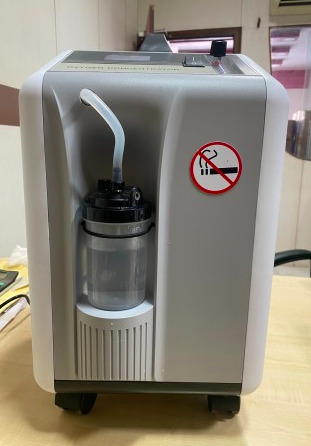
Niscomed 10 LPM
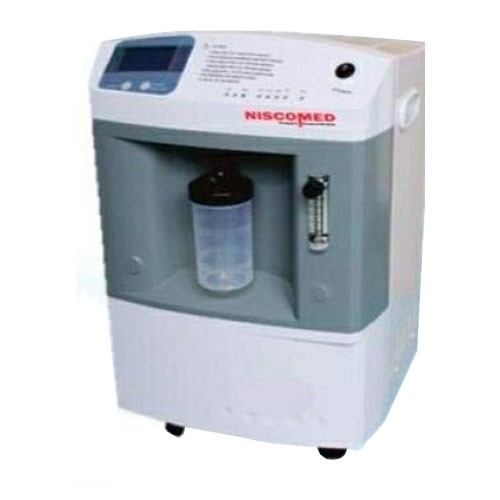
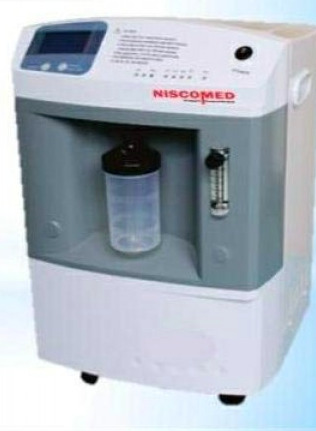
Key features
- Purity 90-95%
- Type High Flow Stationary
- Continuous Flow 1-10LPM
- Weight 30kg
- Oxygen Purity Indicator (OPI) No
- Power consumption 530watts
Specifications
| Purity | 90-95% |
|---|---|
| Type | High Flow Stationary |
| Continuous Flow | 1-10LPM |
| Weight | 30kg |
| Power consumption | 530watts |
| Sound level | 50db |
| Dimensions | 23.6H x 14.7W x 14.3Dinch |
| Outlet pressure | 10psi |
| Indian Voltage Model | Yes |
|---|---|
| Company Headquarters | China |
Pros and cons
PROS
- ₹91,200 price is ₹40,000+ below branded 10 LPM competitors
- 1-10 LPM continuous flow supports dual-patient low-flow or single-patient high-flow use
- 10 psi outlet pressure supports Y-split dual-cannula configurations
- 50 dB noise is quieter than Fitmate 10 at 55 dB
- Indian-voltage model per brochure
CONS
- ZERO certifications declared — US FDA, FAA, CE all blank
- ZERO alarms declared — power, malfunction, and no-flow all blank
- 30 kg chassis is heaviest in the 10 LPM comparison set
- 530 W power draw is only moderately efficient
- No Indian service network and no CDSCO notification in public listing
The Niscomed 10 LPM is the kind of machine that exists because some segment of the Indian market specifically wants a 10 LPM oxygen concentrator under ₹1 lakh, and the compliance-and-alarm-free Chinese import category is willing to serve that demand. At ₹91,200 per the manufacturer brochure and e-commerce product listings, the Niscomed undercuts the Fitmate 10 (₹1,34,400), the Philips 10 (₹1,50,000+), and the Nidek Nuvo 10 (₹1,60,000+) by substantial margins. What it does not undercut is the clinical and safety expectations that come with a 10 LPM high-flow unit. The spec sheet is conspicuously empty — every single certification row is blank, every single alarm row is blank, and the dealer effectively ships the buyer a high-voltage compressor-driven device with no declared safety net. For almost every Indian buyer, this is not the right machine.
What the specs actually mean in Indian homes
The Niscomed 10 LPM delivers 90-95% oxygen purity at a continuous flow range of 1 to 10 LPM. The 1 LPM floor (rather than 0.5 LPM) cuts out the lowest paediatric and adult nocturnal-only prescriptions, but for a 10 LPM high-flow machine the typical use case is 3-10 LPM, so this is not a major limitation. Where it matters is in dual-patient Y-split setups where one patient might need 0.5-1 LPM and the other 2-3 LPM — the Niscomed’s 1 LPM floor means the 0.5 LPM patient cannot be accommodated.
Weight is 30 kg. This is the heaviest 10 LPM in our comparison set — heavier than the Fitmate 10 (25.5 kg) and Invacare Platinum 10 (roughly 25 kg). 30 kg means four-person lifts and unit-install services that many dealers do not include in the purchase price. For home installation in upper-floor flats or homes with stairs, budget ₹500-1,500 for professional moving service. Once installed the machine generally stays in place — it is too heavy for routine shifting.
Power consumption of 530 W is moderate for a 10 LPM unit. Lower than the Fitmate 10 (600 W), higher than the Philips 10 (around 400 W). At Indian domestic tariff of ₹8-10 per kWh, 530 W continuous is ₹102-128 per day or ₹37,000-46,000 per year at 18 hours/day. Over a 3-year service life at 18 hours/day, electricity cost hits ₹110,000-140,000 — higher than the purchase price of the machine. A 400 W unit saves ₹25,000-30,000 over that period. 530 W is workable on a 2 kVA stabiliser; budget ₹5,000-8,000 for a V-Guard or Microtek 2 kVA AVR unit.
Noise at 50 dB is better than the Fitmate 10’s 55 dB and the Oxybliss 10’s 50 dB (identical). Still too loud for bedroom placement at night. 50 dB approximates the ambient noise level of a running refrigerator compressor — fine for living-room daytime use, intrusive for sleeping patient use. Place the unit in an adjacent room, balcony, or dedicated utility space.
Dimensions of 23.6 × 14.7 × 14.3 inches are standard — identical to the Fitmate 10 and similar to most Chinese 10 LPM units. The unit fits into a typical Indian medium-sized room corner.
Outlet pressure of 10 psi is strong — higher than the Fitmate 10’s 5.25 psi and comparable to branded 10 LPM units. For Y-split dual-cannula use the 10 psi supports better flow balance between the two branches than a lower-pressure unit. For NIV or HFNC downstream device feed, 10 psi is in the adequate range.
The compliance section is the review-defining element. Every single row in the Additional Details section is blank except for Indian Voltage Model (Yes) and Company Headquarters (China). Oxygen Purity Analyzer: blank. Loss of Power Alarm: blank. System Malfunction Alarm: blank. No Flow Alarm: blank. US FDA: blank. FAA: blank. CE Certified: blank. This is a 10 LPM high-flow medical device that declares zero certifications and zero alarms on its public specification. For a Class B notified medical device under Indian Medical Devices Rules this is non-compliant by default — the manufacturer or importer is required to declare at minimum the ISO 13485 manufacturing standard, electrical safety compliance, and regulatory notification status.
Who should buy the Niscomed 10 LPM
The Niscomed 10 LPM is defensible only for a very narrow use case: a technical operator (trained clinical staff or an industrial-use buyer) who needs a cheap 10 LPM unit for continuous-monitoring use in an environment where the absence of alarms is compensated by direct human oversight. That means a staffed clinic, a small nursing home with 24/7 attendant presence, or a respiratory therapist who is running a short-term step-down setup where she is continuously present. For a buyer who matches this profile and who specifically needs 10 LPM output at under ₹1 lakh, the Niscomed fits. For any home-use scenario without 24/7 trained human monitoring, it does not.
Who should not buy the Niscomed 10 LPM
Home users with any life-dependent patient should not buy this machine. Paediatric users should not — a paediatric 10 LPM setup requires demonstrable safety certifications. Elderly-alone users should not — no alarms means silent failure. Hospice care should not — service network reliability is critical for hospice and Niscomed has no declared national network. Tier-2 city buyers should not — dealer service capacity is limited and parts turnaround is long. Any buyer who cannot name a specific technical operator monitoring the machine continuously should not.
How it compares: Niscomed 10 vs Fitmate 10 vs Oxybliss 10 vs Philips 10
Niscomed 10 vs Fitmate 10 LPM — Fitmate is listed at ₹1,34,400 (₹43,200 more). Fitmate has CE declared, loss-of-power and system-malfunction alarms declared, 25.5 kg weight (lighter by 4.5 kg), 600 W power (higher), 55 dB noise (louder), and 5.25 psi outlet pressure (lower than Niscomed’s 10 psi). The ₹43,200 gap buys CE certification, two declared alarms, and lighter weight. For any home-use buyer the Fitmate is meaningfully safer. Verdict: Fitmate wins for home use; Niscomed only wins for specific dealer-trust/industrial-use profiles.
Niscomed 10 vs Oxybliss 10 LPM — Oxybliss is listed at ₹91,200 (identical price, suggesting shared OEM lineage). Oxybliss is Taiwan-headquartered, weighs 18.8 kg (11.2 kg lighter), draws 580 W (higher), and runs at 50 dB (identical). Oxybliss has the same completely blank compliance and alarm rows. At identical price, Oxybliss is the clear winner on weight and manufacturing origin (Taiwan typically has tighter QA than generic Chinese imports). Verdict: Oxybliss wins at same price by wide margin — Niscomed is not the rational pick.
Niscomed 10 vs Philips 10 LPM — Philips 10 LPM is listed at ₹1,50,000-1,80,000 (₹58,000-90,000 more). Philips is the benchmark 10 LPM with US FDA plus CE plus full alarm coverage, 13.6 kg weight (less than half of Niscomed), 400 W power (lighter draw), 45 dB noise (much quieter), and a nationwide Indian service network. Over a 3-year service life the Philips’s efficiency saves ₹25,000-35,000 in electricity; the lower weight and noise improve quality of life; the full compliance protects the patient. Verdict: Philips is worth the ₹58,000-90,000 premium for any serious home-use case.
Indian-market considerations
The Niscomed brand is primarily known in Indian retail for blood pressure monitors, nebulisers, and general health accessories — similar consumer-brand trajectory to Healthgenie. The oxygen concentrator line is a secondary product range, which matters because the primary retail brand recognition does not translate to clinical-grade medical device support. Buyers who have seen the Niscomed name on a pharmacy shelf and assume brand trust transfers to a ₹91,200 concentrator should correct that assumption — the two product categories have different supply chains and service realities.
Power infrastructure: 530 W requires a 2 kVA AVR stabiliser (₹5,000-8,000). 24/7 continuous use additionally benefits from a 2 kVA inverter UPS with 30-minute backup (₹18,000-25,000). Total infrastructure cost on top of the ₹91,200 machine price is ₹23,000-33,000 — pushing total landed cost to ₹115,000-125,000.
CDSCO notification: not declared in the public Niscomed listing (CDSCO). For a ₹91,200 purchase this is a critical gap. Medical Devices Rules 2020 require Class B notified device registration for all oxygen concentrators sold in India. Buyers should demand the notification number; absence should be a deal-breaker.
Service network reality: Niscomed has no declared national service network for its concentrator line. Warranty service routes through the importing distributor. Parts turnaround for sieve beds, compressors, and solenoid valves is typically 4-8 weeks from China. For a 10 LPM unit supporting a life-dependent patient, this service window is not acceptable — dealers should provide loaner units during any service window, and this should be written into the purchase contract.
Stock status is marked “Out of stock” on the primary listing, which may indicate either temporary stock issues or that the product has been partially discontinued. Buyers should verify current availability and confirm the exact current-batch spec sheet, since Chinese OEM exports frequently change internal components between production batches.
Verdict
The Niscomed 10 LPM is a machine that exists to fill a price slot, and it does so at the cost of declared safety and compliance. With zero alarms, zero certifications, and 30 kg chassis weight, it cannot be recommended for home use. Its natural comparison at identical price is the Oxybliss 10 LPM, which wins on weight by a wide margin. Its natural comparison in compliance terms is the Fitmate 10 LPM, which costs ₹43,200 more but delivers CE certification and two declared alarms. Its natural comparison for life-dependent patients is the Philips 10 LPM, which costs ₹58,000-90,000 more but delivers the full compliance and service network that any serious 10 LPM installation requires. At no point in the decision tree does the Niscomed 10 emerge as the rational pick for a normal Indian home-oxygen buyer. Score: 4.4 out of 10.