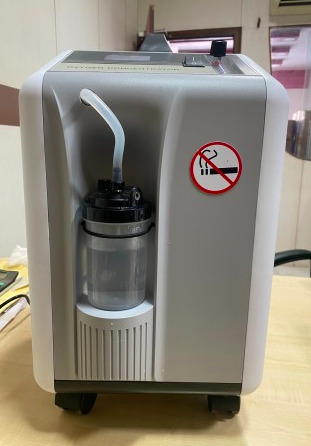
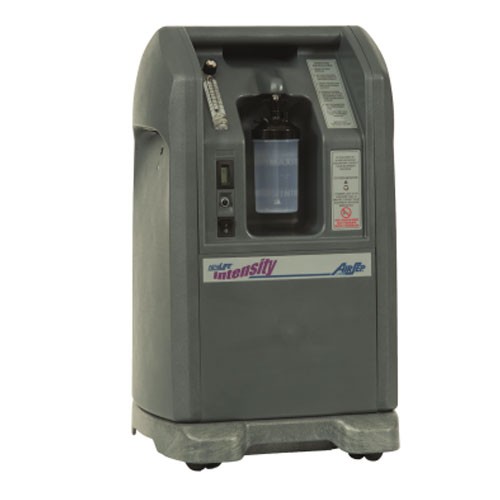
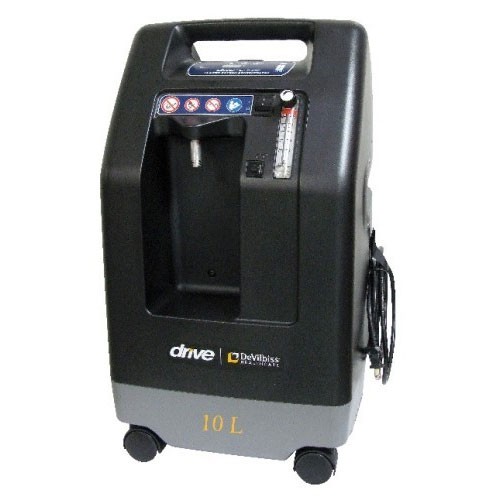
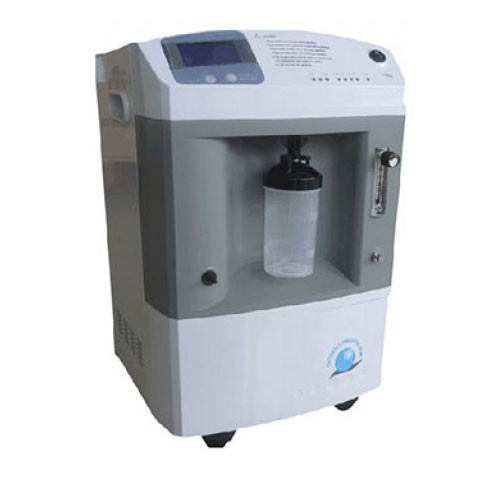
Nidek Nuvo 10 LPM
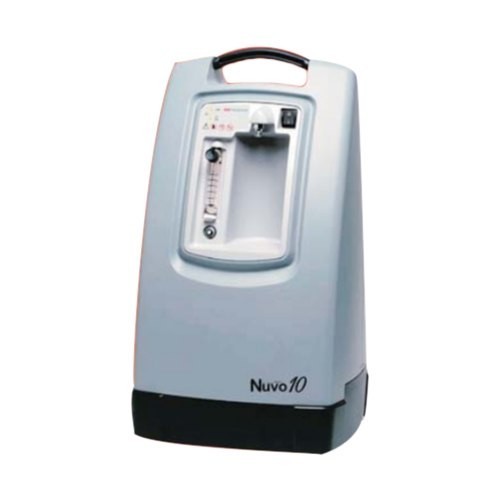
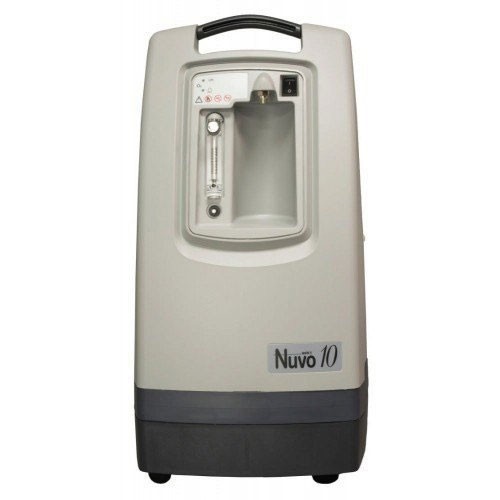
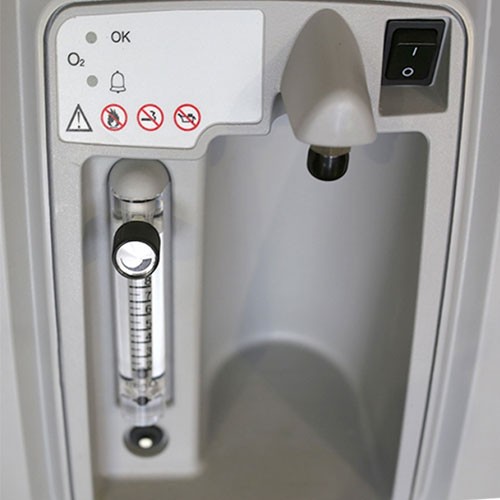
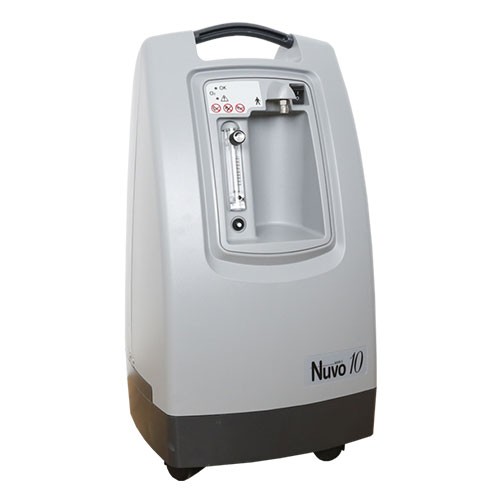
Key features
- Purity 87-95%
- Type High Flow Stationary
- Continuous Flow 2-10LPM
- Weight 29.26kg
- Oxygen Purity Indicator (OPI) Yes
- Power consumption 600watts
Specifications
| Purity | 87-95% |
|---|---|
| Type | High Flow Stationary |
| Continuous Flow | 2-10LPM |
| Weight | 29.26kg |
| Oxygen Purity Indicator (OPI) | Yes |
| Power consumption | 600watts |
| Sound level | 58db |
| Dimensions | 27.8H x 15.6W x 15.5Dinch |
| Operating altitude | 5000feet |
| Outlet pressure | 15psi |
| Loss of Power Alarm | Yes |
|---|---|
| System Malfunction Alarm | Yes |
| No Flow Alarm | Yes |
| Indian Voltage Model | Yes |
| Company Headquarters | USA |
| US FDA Approved | Yes |
| CE Certified | Yes |
Pros and cons
PROS
- 10 LPM ceiling with full continuous titration from 2 LPM, covering the heaviest non-hospital prescriptions
- Complete alarm set listed — loss of power, system malfunction, and no-flow — absent from the Nuvo 8's published sheet
- 15 psi outlet pressure supports transfill rigs and long tubing without pressure drop at high flow
- Street price of Rs. 94,079 is roughly 14% below the DeVilbiss 10 LPM's Rs. 109,584 for the same flow ceiling
CONS
- Sound level of 58 dB is 11 dB louder than the Nuvo 8 — not suitable for a patient's bedroom without wall separation
- Operating altitude of 5,000 ft is substantially worse than the Nuvo 8's 7,500 ft and the Nuvo Lite's 7,500 ft
- Power draw of 600 W is 20% higher than the Nuvo 8 — roughly Rs. 325/month extra at Tier-1 urban tariffs
- Purity floor of 87% is lower than the Nuvo 8's 90% — the -3% tolerance at 10 LPM brings worst-case to 84%
The Nuvo 10 is the workhorse high-flow machine in the Indian home oxygen market — the unit that ends up on the discharge form when a fibrotic lung patient needs 8-10 LPM continuously and the family’s decision-making window is measured in days. It is not the quietest, not the smallest, not the most altitude-tolerant 10 LPM option, but it is widely stocked, reasonably priced, and the spares pipeline works. At Rs. 94,079 it is also the cheapest real 10 LPM in this review — every competitor is either more expensive or makes meaningful compromises somewhere else.
What it is not is a unit to order speculatively for a 4 LPM prescription. The noise and electricity penalty over a Nuvo Lite or Nuvo 8 is real, and running a 10 LPM machine at 3 LPM is not where its zeolite bed wants to live.
What the specs mean in practice
Continuous flow: 2-10 LPM. The floor at 2 LPM matters for a subset of patients. If an ILD patient was previously on a 5 LPM machine at 0.5-3 LPM and gets stepped up to a 10 LPM for exertional desaturation reasons, they lose the ability to titrate below 2 LPM on this unit. In practice this rarely bites because anyone on a 10 LPM is, by prescription logic, running well above 2 LPM most of the time. For paediatric or neonatal applications the Nuvo 10 is unsuitable regardless — the Nuvo Lite’s 0.125 LPM floor is what you want.
Purity: 87-95%. Lower than the Nuvo 8’s 90-96%. This is the most consequential small spec on the sheet. At 10 LPM the -3% tolerance pulls worst-case delivery to 84%, which is below the OPI trigger threshold of 86%. In practice this means the OPI can and will flash yellow at maximum flow on some units, and patients on 9-10 LPM should expect intermittent purity warnings even with a healthy machine. This is normal for 10 LPM class concentrators — the physics of high-volume PSA with an OPI alarm floor at 86%.
Sound: 58 dB. 11 dB louder than the Nuvo 8. In a typical Indian 10x12 ft bedroom, 58 dB at the machine becomes roughly 52-54 dB at the pillow, which is in the range of normal conversation. For a patient who can sleep through refrigerator noise this is survivable; for light sleepers it is not, and the right answer is to put the machine in an adjacent room with longer tubing to the bed.
Power: 600 W. At 14 h/day, 8.4 kWh/day, around Rs. 1,960/month at Mumbai rates. If the machine runs 20 h/day (near-continuous), that climbs to Rs. 2,800/month. Over a three-year therapy period at 20 h/day, the Nuvo 10’s electricity cost is roughly Rs. 100,000 — approximately equal to its purchase price. Families quoting for this machine should read the electricity cost as roughly a second purchase over the equipment lifetime.
Outlet pressure: 15 psi. Same as the Nuvo 8. Enough for transfill, for long tubing, for most accessories. Below the DeVilbiss 10 LPM’s 20 psi and the Invacare Platinum Mobile’s 28.5 psi, but within normal range for home applications.
Altitude: 5,000 ft. This is the Nuvo 10’s worst spec. The Nuvo Lite is 7,500 ft, the Nuvo 8 is 7,500 ft, the DeVilbiss 10 LPM is also 5,000 ft. There is simply no 10 LPM concentrator in this review with a better altitude rating. Hill-station 10 LPM is a market gap. Shimla, Ooty, Mussoorie, even Munnar at 5,200 ft are all marginal-to-off-brief.
Alarms: loss of power, system malfunction, no-flow, all listed. This is where the Nuvo 10 improves on the Nuvo 8 sheet. A 10 LPM machine running critical flow for a patient with chronic hypoxaemia needs the full alarm suite, and the Nuvo 10 has it.
Who should buy it
A patient whose clinician has written 8-10 LPM continuous or spiking to 10 LPM on exertion. Late-stage pulmonary fibrosis, severe COPD with pulmonary hypertension, post-pulmonary-embolism rehabilitation cases needing prolonged supplemental oxygen.
Patients transitioning from hospital to home on nasal high-flow protocols at 8-15 LPM who need the 10 LPM home equivalent as a step-down. For these buyers the alternative is renting an H-type cylinder pair and doing weekly refills, which is more expensive and less reliable than buying a Nuvo 10 outright.
Households where the bedroom setup allows a wall between the machine and the patient — an adjacent kitchen or balcony with a window — and where power is reliable enough to take 600 W continuous load without stabiliser-tripping.
Who shouldn’t
Patients on 2-4 LPM stable prescriptions. The Nuvo 10 is over-specced, louder, and more expensive to run than a Nuvo Lite.
Patients on 5-7 LPM prescriptions. The Nuvo 8 is the correct machine — quieter, cheaper to run, adequate headroom.
Hill-station buyers above 5,000 ft. There is no good 10 LPM answer here; the honest move is dual 5 LPM machines at Y-connector, or prescription review with the pulmonologist.
Patients in a single-bedroom flat sharing the bedroom with the machine. 58 dB is not acceptable for long-term nocturnal use in this configuration.
Alternatives, head-to-head
Nidek Nuvo 10 vs DeVilbiss 10 LPM. The DeVilbiss is 10 kg lighter (19 vs 29.26 kg), 9 dB louder (67 vs 58 dB), has a 20 psi outlet (vs 15 psi), draws more power (664 vs 600 W), and is priced around Rs. 109,584 against the Nuvo 10’s Rs. 94,079. The DeVilbiss wins on weight and outlet pressure; the Nuvo 10 wins on noise and price. For a patient who needs to move the machine occasionally and has acoustic tolerance for a very loud unit, the DeVilbiss is a reasonable buy. For the more common scenario of a stationary installation where noise is the dominant daily complaint, the Nuvo 10 is the better choice and Rs. 15,500 cheaper to start.
Nidek Nuvo 10 vs Invacare Platinum 10. The Platinum 10 at Rs. 91,200 is nominally cheaper but is marked “Out of stock” on Indian listings at review date, and its published sheet shows no FDA, CE, or OPI marks, alongside a 585 W power draw (15 W below the Nuvo 10) and 58 dB noise (matching the Nuvo 10). The missing certifications and missing OPI are disqualifying for institutional buyers and concerning for home buyers who want the audit trail. The Nuvo 10 is Rs. 2,879 more expensive but has the paperwork and alarms in order, and Nidek’s dealer network has been steadier than Invacare’s since 2023.
Nidek Nuvo 10 vs Nidek Nuvo 8. Covered in detail in the Nuvo 8 review. In short: the Nuvo 8 is quieter (47 vs 58 dB), draws less power (500 vs 600 W), is 4 kg lighter (25.2 vs 29.26 kg), extends to 8 LPM versus 10 LPM. For prescriptions up to 8 LPM the Nuvo 8 is the better machine. For prescriptions above 8 LPM the Nuvo 10 is obligatory.
Indian-market considerations
Voltage: 220V/50Hz stated. A 600 W continuous draw requires a 2 kVA servo stabiliser for anything worse than clean metro-grid supply. Budget Rs. 6,500-9,500. Stabiliser-less operation in Delhi NCR during summer peak-load conditions, when grid voltage commonly drops to 180-190V, will cause compressor trip and can damage the unit over repeated cycles.
UPS/inverter: 600 W is at the upper end of what home inverters handle gracefully. A 2.5 kVA sine-wave inverter with 300 Ah battery bank will give roughly 50 minutes at full load. For patients in areas with multi-hour daily outages, a small diesel genset (3 kVA+) is sometimes the practical answer — but a genset with unregulated output can damage the concentrator’s electronics. Always pair the genset with a stabiliser-grade line conditioner.
CDSCO: US FDA and CE marks stated on the manufacturer sheet. No CDSCO number visible on surveyed collateral — request from the importer.
Altitude: 5,000 ft. Plains use only.
Service: Nidek India handles Nuvo 10 compressor servicing at their own service centres in Delhi, Mumbai, Chennai, Kolkata, Bengaluru, and Hyderabad. Sieve-bed replacement is Rs. 18,000-24,000 at year 3-4.
Warranty: 1 year stated. Extended warranty packages at Rs. 8,000-12,000 for 2 additional years are common from Tier-1 dealers. For the Nuvo 10 specifically, the extended warranty is worth taking — compressor service at year 2-3 without warranty can exceed Rs. 30,000, which erases the saving on declining the extension.
Electricity cost planning: Over a 5-year deployment at 14 h/day, the Nuvo 10 draws roughly Rs. 117,600 in electricity on Mumbai-tier tariffs. At 20 h/day (near-continuous operation common for end-stage ILD or late COPD), this rises to roughly Rs. 168,000. Families committing to 10 LPM therapy for multi-year durations should budget for this as an ongoing operating cost, not just the capital investment.
Clinical stepping-down: Patients who stabilise on 10 LPM therapy and subsequently improve to 5-6 LPM prescription often ask whether to keep the Nuvo 10 or sell and replace with a smaller unit. The economics depend on expected future deterioration — if the clinician anticipates re-elevation of prescription within 1-2 years, the Nuvo 10 is worth keeping. If the improvement is expected to be sustained (post-COVID recovery, for example), trading down to a Nuvo Lite saves Rs. 700-1,000/month in electricity, which over 3 years covers the unit swap.
Accessories and ancillaries: A 10 LPM machine running concurrent humidification requires a heated humidifier chamber sized for high-flow output. Standard bubble humidifiers sold with 5 LPM units are inadequate at 10 LPM — water consumption climbs to 100-150 mL/hour and the humidifier needs refilling every 2-3 hours. Plan for a Fisher & Paykel or similar heated humidifier (Rs. 15,000-25,000) and a compatible heated breathing circuit if the clinical need justifies it.
Installation considerations: The Nuvo 10 at 29.26 kg plus a stabiliser plus possible UPS battery bank is a substantial floor-space commitment — budget a 3 ft x 3 ft floor patch with clearance for airflow on at least two sides, plus a 15 A mains socket within 2 metres. Retrofitting older Indian homes with 5 A socket infrastructure may require an electrical-licensed installer to upgrade the circuit, adding Rs. 3,000-8,000 to installation cost.
Long-tubing performance: For larger houses where the Nuvo 10 sits centrally and tubing runs 40-60 feet to a bedside, the 15 psi outlet pressure is adequate to maintain 9-10 LPM at the delivery end without measurable flow loss. Longer runs beyond 60 feet start to show pressure drop — beyond 80 feet the DeVilbiss 10 LPM’s 20 psi outlet is preferable. Most Indian homes do not need runs this long, but villa and farmhouse installations should plan tubing length versus outlet pressure explicitly.
Verdict
The Nuvo 10 is the default buy for a genuine 9-10 LPM prescription in the Indian plains. At Rs. 94,079 it undercuts the DeVilbiss 10 LPM by Rs. 15,000 while delivering a quieter acoustic signature and a complete alarm set, and it avoids the certification and stock-availability issues that make the Invacare Platinum 10 hard to recommend at the time of this review. The real constraints are noise (58 dB is a different machine than a 5 LPM unit in a shared bedroom), altitude (5,000 ft cap cuts off most Indian hill stations), and electricity (Rs. 2,000/month at 14 h/day in Tier-1 cities). Buy it when a clinician has specifically written 8-10 LPM, install it in a room with a wall between the machine and the bed, budget for a 2 kVA stabiliser, and accept that this is a real medical appliance, not a quiet bedroom companion. Score 7.2.