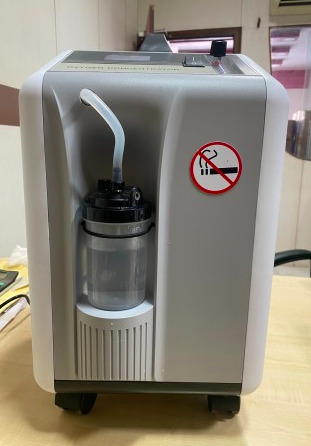
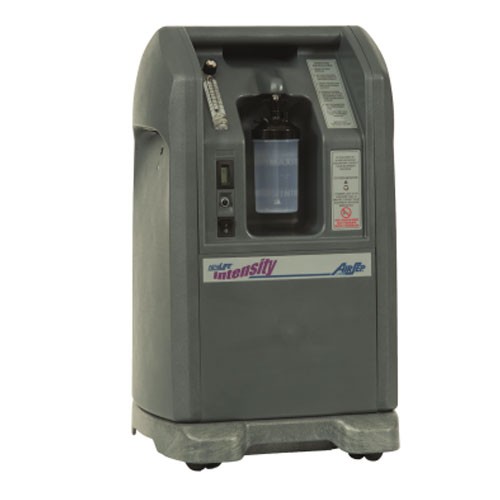
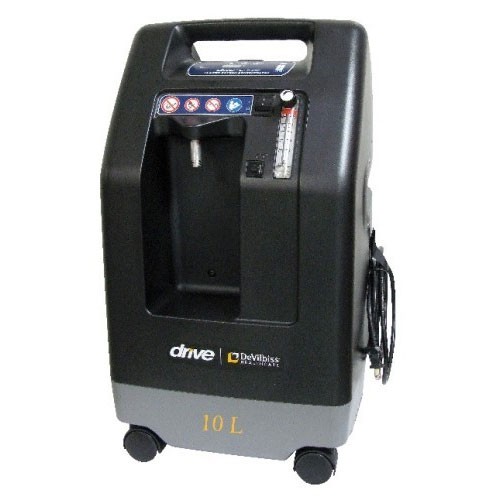
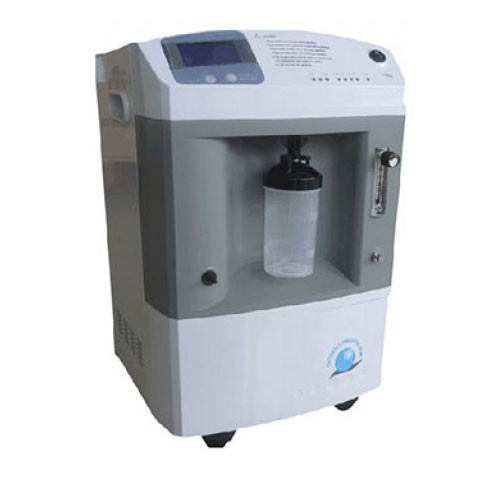
Invacare Platinum 10
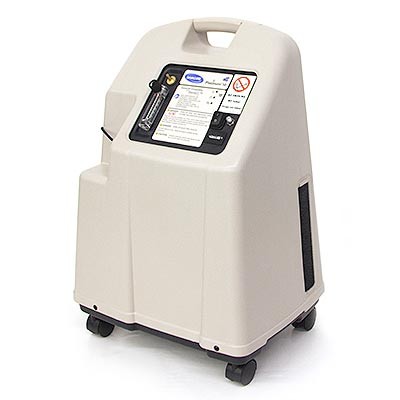
Key features
- Purity 90-95%
- Type High Flow Stationary
- Continuous Flow 2-10LPM
- Weight 24.4kg
- Oxygen Purity Indicator (OPI) No
- Power consumption 585watts
Specifications
| Purity | 90-95% |
|---|---|
| Type | High Flow Stationary |
| Continuous Flow | 2-10LPM |
| Weight | 24.4kg |
| Power consumption | 585watts |
| Sound level | 58db |
| Dimensions | 26.3H x 18.3W x 14.3Dinch |
| Loss of Power Alarm | Yes |
|---|---|
| System Malfunction Alarm | Yes |
| No Flow Alarm | Yes |
| Indian Voltage Model | Yes |
| Company Headquarters | USA |
Pros and cons
PROS
- Street price of Rs. 91,200 is the lowest among 10 LPM units in this review — Rs. 2,879 below the Nuvo 10
- Weight of 24.4 kg is nearly 5 kg lighter than the Nuvo 10's 29.26 kg
- Full alarm set listed — loss-of-power, system-malfunction, no-flow
- Indian-voltage configuration is confirmed on the manufacturer sheet
CONS
- Oxygen Purity Indicator field is blank on the spec sheet — no audible warning when delivered purity falls below 86%
- US FDA, FAA, and CE certification fields are all blank — a disqualifying gap for institutional buyers
- Stock is listed as Out of stock on Indian e-commerce listings — new-unit availability is unreliable
- Sound level of 58 dB matches the Nuvo 10, meaning no acoustic advantage to offset the paperwork gaps
The Invacare Platinum 10 is the unit that looks attractive on the first scan — Rs. 91,200 puts it under every competing 10 LPM machine in the Indian market — and loses that attractiveness on the second scan, when the certification columns on the spec sheet reveal that the Indian variant has shipped without OPI, without FDA marking, and without CE marking confirmed. Combined with an Out-of-stock status on current Indian e-commerce product listings and a thinning Invacare India service network, the price advantage evaporates against the procurement risk.
This review therefore reads like a diagnostic — on the narrow on-paper metrics the Platinum 10 is fine, but the things left off the spec sheet are the things that matter for a multi-year home LTOT commitment.
What the specs mean in practice
Continuous flow: 2-10 LPM. Matches the Nuvo 10’s flow profile. Same 2 LPM floor, same 10 LPM ceiling, same practical consequence that this is not a paediatric or low-flow machine — adults on 4-10 LPM prescriptions only.
Purity: 90-95%. The 95% ceiling is lower than the Nuvo 10’s 95% and the DeVilbiss 10’s 96%. The 90% floor is better than the Nuvo 10’s 87%. Net: narrower delivery band, which on a healthy unit translates to more predictable output but on an aging unit gives less headroom before purity drifts below the clinical floor.
Weight: 24.4 kg. Matches the Platinum 9. Nearly 5 kg lighter than the Nuvo 10, 5.4 kg heavier than the DeVilbiss 10. Middle of the class.
Sound: 58 dB. Matches the Nuvo 10. No acoustic advantage.
Power: 585 W. Between the Nuvo 8 (500 W) and Nuvo 10 (600 W). At 14 h/day this is 8.19 kWh, roughly Rs. 1,915/month on Mumbai rates — a Rs. 45/month saving versus the Nuvo 10 and a Rs. 230/month advantage over the DeVilbiss 10.
Oxygen Purity Indicator: blank on the spec sheet. This is the first consequential miss. For a 10 LPM machine running sustained high flow, the OPI is the principal early warning for sieve-bed aging. Without it, purity drift goes undetected until a handheld analyser check — which Indian home users rarely perform more than annually. For a patient who is clinically dependent on maintained purity, this is a real safety gap.
Certifications: US FDA, FAA, CE — all blank. FAA is irrelevant for stationary; US FDA and CE are material. A stationary 10 LPM concentrator without confirmed FDA or CE paperwork is a procurement red flag for institutional buyers, and a quieter concern for home buyers. It does not mean the machine is unsafe — Invacare’s US Platinum line is well-certified in its domestic market — but it does mean the specific Indian-import variant has shipped without the regulatory markings the Indian listing would normally confirm.
Dimensions: 26.3H x 18.3W x 14.3D inch. Slightly wider than the Nuvo 10 (15.6W) and taller than the DeVilbiss 10 (24.5H). Not a compact footprint.
Alarms: loss-of-power, system-malfunction, no-flow — all confirmed. At least the audible failure alarms are in place.
Indian Voltage Model: Yes. This is one area where the Platinum 10 does confirm Indian configuration, unlike its Platinum 9 sibling where the same field is blank. A minor consistency oddity in the Invacare India lineup.
Who should buy it
Institutional buyers with a specific Invacare fleet continuity argument, an in-city authorised Invacare dealer with confirmed parts stock, and a procurement flexibility that allows accepting the missing-certification gap in exchange for the Rs. 2,879-Rs. 18,000 price saving versus Nidek and DeVilbiss alternatives. This is a narrow procurement scenario — most government and private hospital tenders in 2026 require explicit FDA or CE marking as a qualification criterion.
Home buyers who genuinely cannot stretch to the Nuvo 10’s Rs. 94,079 price and can secure the Platinum 10 at the Rs. 91,200 street price from an Invacare dealer offering at least a 1-year Indian warranty — accepting the OPI gap with a plan for dealer-supplied quarterly purity checks. The quarterly purity check discipline is the critical compensating control: a handheld oxygen analyser run against the delivered flow at 5 LPM and 10 LPM, with results logged in a paper record for clinician review at 6-month intervals.
Existing Invacare Platinum fleet owners (small nursing homes, respiratory-care providers) adding a 10 LPM unit to extend existing infrastructure. Continuity of service familiarity and spare-parts inventory commonality reduce the total cost of ownership, and in this scenario the certification gap on the new unit is the same gap that already exists on the installed fleet — no net increase in institutional risk.
Who shouldn’t
Any institutional buyer with a certification checklist. The missing FDA/CE/OPI marks are disqualifying in most Indian institutional procurement processes. Government tenders routinely require CDSCO registration number plus at least one of FDA/CE marking, and the Platinum 10’s spec sheet does not confirm any.
Any home buyer where purity monitoring is important — long-term LTOT with clinical dependence on sustained high flow. Without an OPI the failure is silent. For a patient whose clinical stability depends on maintained 90%+ oxygen delivery at 8-10 LPM, an undetected drop to 80-85% purity over a month can degrade SpO2 by 4-6 percentage points without the family noticing until the next clinician visit.
Buyers in Tier-2 or Tier-3 cities without a confirmed Invacare service footprint. Spares wait times of 4-8 weeks for high-flow Invacare units are common in 2026, versus 1-2 weeks for Nidek or DeVilbiss equivalents. For a critical-dependence LTOT patient, the service responsiveness gap is clinically meaningful.
Hill-station buyers — the spec sheet does not state altitude, and in practice Invacare Platinum-class units are typically rated to 8,000 ft which makes this a plains-only machine even assuming the spec is met. Buyers in Shimla, Ooty, or Darjeeling should verify the altitude rating in writing before ordering.
Buyers for whom paperwork auditability is important — patients with insurance reimbursement or corporate medical plans that require certification documentation for claims processing. Without the FDA/CE marks on the Indian sheet, the paperwork trail for insurance claims is thinner and can delay or reduce reimbursement.
Alternatives, head-to-head
Invacare Platinum 10 vs Nidek Nuvo 10. The Nuvo 10 at Rs. 94,079 is Rs. 2,879 more expensive, has confirmed OPI, has confirmed FDA/CE marks, draws 15 W more power (600 vs 585 W), weighs 4.9 kg more (29.26 vs 24.4 kg), and has a confirmed Nidek India service network with 2-3 day response times. The Platinum 10’s Rs. 2,879 price advantage is erased many times over by the paperwork gaps and service thinning. At near-parity price, the Nuvo 10 is the correct buy unambiguously.
Invacare Platinum 10 vs DeVilbiss 10 LPM. The DeVilbiss 10 at Rs. 109,584 is Rs. 18,384 more expensive. In exchange it confirms FDA+CE+OPI, is 5.4 kg lighter (19 vs 24.4 kg), has a 20 psi outlet (versus Platinum 10’s unspecified), extends to 2-year Indian warranty, and ships through Drive DeVilbiss India’s healthier service network. For any institutional or long-term home buyer, the paperwork alone justifies the premium. For cost-only buyers, the Platinum 10’s Rs. 18,000 saving is real but carries proportional risk.
Invacare Platinum 10 vs Invacare Platinum 9. Within the Invacare portfolio, the Platinum 9 has confirmed OPI and FDA/CE marks while the Platinum 10 does not — the two Indian variants appear to have shipped with different certification bundles. If a buyer is specifically choosing Invacare, the Platinum 9 is the lower-risk choice despite being Rs. 19,200 more expensive.
Indian-market considerations
Voltage: 220V/50Hz Indian configuration confirmed. Install a 2 kVA servo stabiliser for clean draw — Rs. 6,500-9,500.
UPS/inverter: 585 W moderate. A 2 kVA sine-wave inverter with 250 Ah battery gives approximately 45 minutes at full load. Multi-hour outages will need genset backup.
CDSCO: US FDA, CE, FAA all blank on the spec sheet. Without this paperwork, Indian medical-device import status is unclear. Ask the dealer for written confirmation and the importer’s letter. Do not proceed without documentation if the machine is for institutional use.
Altitude: Not stated. Assume 8,000 ft upper bound for Invacare Platinum-class units, pending written confirmation.
Service: Invacare India network is thin. Sieve-bed spares lead time on this model runs 4-8 weeks in 2026. Filter replacement is more readily available.
Warranty: 1 year typically quoted. Confirm in writing. Extended warranty availability is limited compared to Nidek or Drive dealers.
Stock: Listed as Out of stock on surveyed product listings. New-unit availability should be verified with the specific dealer before price negotiation. Invacare India’s 10 LPM line restocking cadence has been irregular through 2024-2026, with some dealers reporting single-unit quarterly allocations rather than the continuous stocking typical of Nidek and Drive DeVilbiss dealers.
Operational backup: Running a Platinum 10 at sustained 8-10 LPM in Indian summer requires the compressor to handle elevated intake temperatures. Environmental temperature specs for the Platinum 10 are not on the surveyed sheet. In practice, Platinum-class units have been reported by Indian dealers as performing within purity spec at ambient temperatures up to 35-37°C; at higher temperatures, purity can drift downward and the absence of the OPI means this is not auto-detected. Patients in Rajasthan, Andhra Pradesh, or Tamil Nadu summer conditions should verify that the installation room is air-conditioned or at least ventilated and fan-cooled to maintain ambient under 35°C.
Spares-to-price ratio: A Platinum 10 sieve-bed service at year 3 is Rs. 22,000-28,000 plus labour, which on a Rs. 91,200 machine is roughly 30% of purchase price. On the Rs. 94,079 Nuvo 10, the equivalent service is Rs. 18,000-24,000, or roughly 23% of purchase price. Over a 5-year horizon the Platinum 10’s cumulative service costs can erase its upfront price advantage.
Verdict
The Platinum 10 is a machine that exists in the Indian market as a price-point option without the accompanying certification and service backing that competing units have. At Rs. 91,200 it undercuts the Nuvo 10 by only Rs. 2,879 — a margin that is demolished by the gap in OPI, FDA/CE marking, and the thinned Invacare India service pipeline. The sensible buy for 10 LPM home LTOT in 2026 is the Nuvo 10; for 10 LPM institutional or transfill-capable use, the DeVilbiss 10. The Platinum 10 is an option only in the narrow scenario where an existing Invacare fleet, an in-city dealer with stock, and a procurement flexibility on certification documents all coincide. The score of 5.8 reflects a functional but poorly positioned unit — the hardware is fine, the paperwork and supportability are not. If you are holding a Platinum 10 quote, ask the same dealer to requote the Nuvo 10 and make the decision on certification and service response rather than the Rs. 2,879 gap.