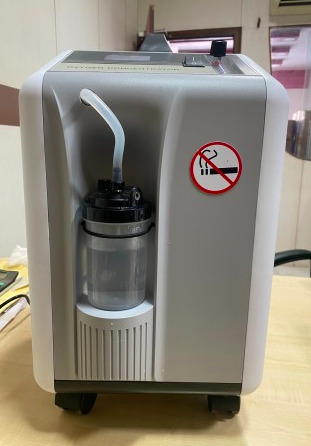
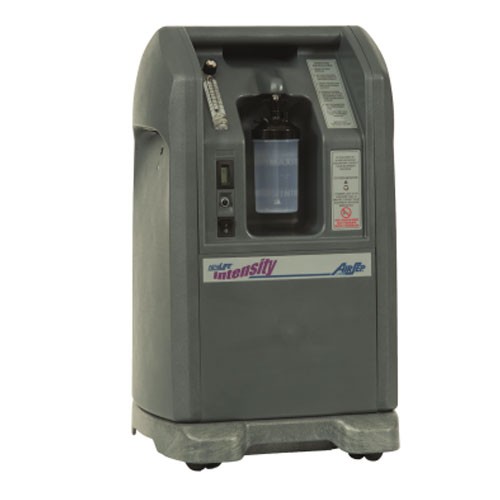
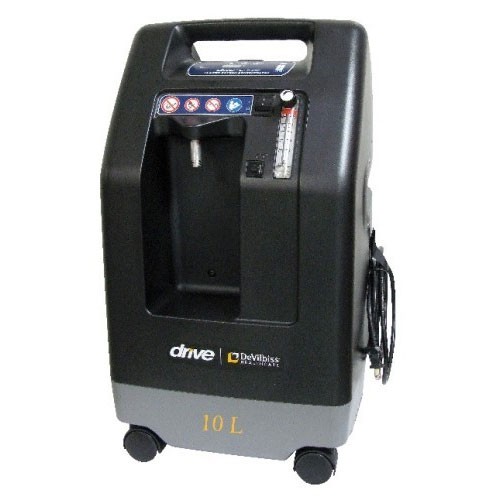
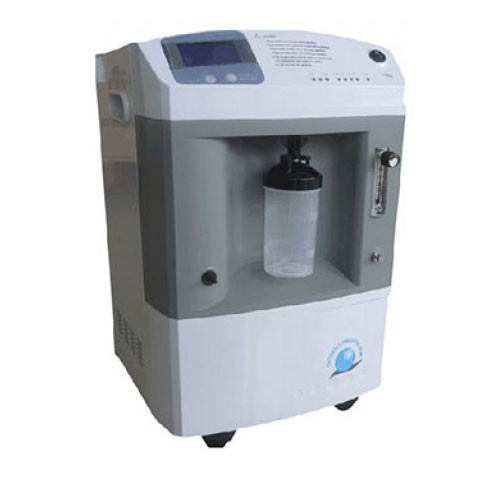
Fitmate 10LPM
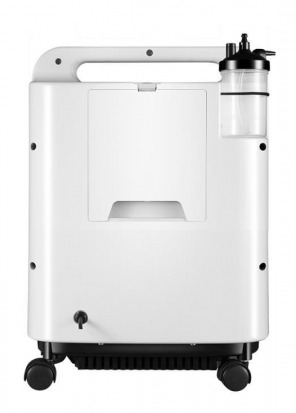
Key features
- Purity 90-95%
- Type High Flow Stationary
- Continuous Flow 0.5-10LPM
- Weight 25.5kg
- Oxygen Purity Indicator (OPI) No
- Power consumption 600watts
Specifications
| Purity | 90-95% |
|---|---|
| Type | High Flow Stationary |
| Continuous Flow | 0.5-10LPM |
| Weight | 25.5kg |
| Power consumption | 600watts |
| Sound level | 55db |
| Dimensions | 23.6H x 14.9W x 12.9Dinch |
| Outlet pressure | 5.25psi |
| Loss of Power Alarm | Yes |
|---|---|
| System Malfunction Alarm | Yes |
| Indian Voltage Model | Yes |
| Company Headquarters | China |
| CE Certified | Yes |
Pros and cons
PROS
- CE certification is declared on the spec sheet, unlike most sub-₹1.5L competitors
- ₹1,34,400 price undercuts Philips 10 LPM (₹1,50,000+) and Nidek 10 (₹1,60,000+)
- 10 LPM continuous flow supports dual-patient low-flow or single-patient high-flow use
- Loss-of-power and system-malfunction alarms both declared on brochure
- 12 psi outlet pressure supports Y-split dual-cannula configurations
CONS
- 600 W power consumption requires a 2 kVA stabiliser and pushes electricity cost
- 55 dB noise spec is loud — not suitable for bedroom placement at night
- No US FDA approval and no FAA compliance declared
- No-flow alarm row blank on spec sheet
- 25.5 kg chassis requires two-person moves
The Fitmate 10 LPM is an interesting machine because it is one of the few Chinese high-flow concentrators in the Indian market that has the CE mark declared on its spec sheet. The US FDA approval is absent, which matters less in an Indian domestic context than CE certification does, since CE is the sign that the unit has passed European IEC 60601 electrical safety and IEC 80601-2-69 oxygen-concentrator-specific compliance testing. At ₹1,34,400 per the manufacturer brochure and e-commerce product listings, the Fitmate 10 undercuts the Philips EverFlo 10, the Nidek Nuvo 10, and the Invacare Platinum 10 by ₹20,000-50,000. For Indian buyers looking at the high-flow segment, that price gap is large enough to deserve serious evaluation. The trade-offs are real but defined.
What the specs actually mean in Indian homes
The Fitmate 10 LPM delivers 90-95% oxygen purity at a continuous flow range of 0.5 to 10 LPM. The full 0.5-10 range is what makes a high-flow unit versatile in Indian clinical practice. At low flows (0.5-2 LPM) a 10 LPM machine can serve two patients simultaneously via a Y-split cannula in a dual-bed step-down ward or family home. At high flows (6-10 LPM) the machine can support a single patient on a high-flow humidified nasal cannula (HFNC) or supply oxygen to a non-invasive ventilator (NIV) circuit as an add-on source. Both use cases are real in Indian homes for patients stepping down from hospital ICU care post-COVID, post-surgical recovery, or during exacerbations of chronic respiratory failure.
Weight is 25.5 kg. This is in the heavy end of the 10 LPM class — the Philips EverFlo 10 is 13.6 kg (significantly lighter due to the newer PSA chassis design), and the Nidek Nuvo 10 is around 24 kg. 25.5 kg means two-person moves between rooms and tricky staircase navigation. For a fixed bedroom or sick-room installation this is a one-time setup issue; for a machine that needs to move with a family member across rooms or to a relative’s home during travel, 25.5 kg is a friction point.
Power consumption at 600 W is where the Fitmate 10 starts to demand specific Indian infrastructure. On domestic tariff at ₹8-10 per kWh, 600 W continuous is ₹115-145 per day or roughly ₹3,500-4,400 per month at 24/7 use. Over a three-year service life at 18 hours/day (a realistic pattern for a long-term high-flow patient) the electricity bill hits ₹60,000-75,000. That is a non-trivial lifecycle cost. More importantly, 600 W at Indian supply voltages requires a 2 kVA automatic voltage stabiliser — a 1 kVA unit will not provide enough headroom for the compressor inrush current at startup. Budget ₹5,000-8,000 for a V-Guard or Microtek 2 kVA unit. For patients who have frequent power cuts, a 2 kVA inverter UPS with 15-30 minute backup at 600 W adds another ₹18,000-25,000. These are not optional.
Noise at 55 dB is loud. This is not a bedroom-at-night machine. 55 dB is comparable to a dishwasher running in the background — fine for living-room placement during the day, not fine for bedside placement at night for a light sleeper. The Fitmate’s noise spec is roughly 5-10 dB louder than the Philips EverFlo 10 (typically 45 dB) and 5 dB louder than the Nidek Nuvo 10. For an Indian home with limited room separation between the patient and the concentrator, this is the single biggest quality-of-life differentiator. Placement options include an adjacent utility room, a bathroom with door closed, or a balcony (weather permitting). If none of those work, buyers should drop to a lower-noise machine.
Outlet pressure of 5.25 psi is modest. This is adequate for a single-patient setup with standard 7-foot cannula. For Y-split dual-patient use it is borderline — flow drops noticeably on each branch of the Y. For HFNC or NIV feed setups that require higher pressure, the Fitmate 10 may not maintain adequate flow to the downstream device, depending on circuit impedance. Before committing to HFNC/NIV use, buyers should test the specific setup with the dealer.
Compliance is the Fitmate’s strong suit in its price bracket. CE certification is declared Yes. Indian Voltage Model is declared Yes. Loss of Power and System Malfunction alarms are declared Yes. The No Flow Alarm row is blank — this is the one gap. FAA and US FDA are blank. For home use in India the FAA is irrelevant (non-portable), and the US FDA matters less than CE does in a practical regulatory sense.
Who should buy the Fitmate 10 LPM
The Fitmate 10 makes sense for an Indian family with a patient stepping down from hospital ICU care post-COVID or post-surgery who needs high-flow support for 2-6 months, where the concentrator will be placed in a dedicated sick-room or balcony away from sleeping quarters. It also fits small step-down clinics and nursing homes that need a 10 LPM unit for ward use rather than bedroom use. Dual-patient home setups (for instance, an elderly couple both on low-flow oxygen) where one 10 LPM unit with Y-split can serve both patients at 3-4 LPM each — the Fitmate handles this at a lower capital cost than buying two separate 5 LPM units, with the caveat that both patients must be on stable prescriptions and the split cannula requires careful setup.
Who should not buy the Fitmate 10 LPM
Patients needing bedside placement at night should avoid — 55 dB is too loud. Patients on HFNC or NIV feed setups should test compatibility first — 5.25 psi outlet pressure may be insufficient. Elderly-alone home setups should prefer a machine with a declared no-flow alarm — the Fitmate’s blank row on no-flow is a risk at high flows where cannula dislodgement is more likely. Hospices and palliative-care home setups should pick machines with more complete service networks — the Fitmate’s Indian service footprint is dealer-dependent, not brand-dependent. Buyers planning frequent relocations (cross-city moves, shifting between ancestral and current homes) should prefer lighter 10 LPM units like the Philips EverFlo 10.
How it compares: Fitmate 10 vs Philips 10 LPM vs Niscomed 10 vs Oxybliss 10
Fitmate 10 vs Philips 10 LPM — The Philips 10 LPM (EverFlo-based) is the long-standing benchmark in this segment. At ₹1,50,000-1,80,000 it is ₹15,000-45,000 more expensive than the Fitmate. The Philips is 13.6 kg (versus Fitmate’s 25.5 kg), draws around 350-400 W (versus Fitmate’s 600 W), and runs at 45 dB (versus Fitmate’s 55 dB). It has US FDA approval and full alarm coverage. The Philips service network is nationwide with Philips India service partners. For a life-dependent user, Philips is clearly worth the premium. For intermittent or step-down use where cost matters more, Fitmate is defensible. Verdict: Philips if the patient is on 12+ hour daily use; Fitmate if the patient is post-acute recovery with a 3-6 month horizon.
Fitmate 10 vs Niscomed 10 LPM — Niscomed is listed at ₹91,200, a full ₹43,000 cheaper than Fitmate. Niscomed weighs 30 kg (heavier), draws 530 W (lower), and has 50 dB noise (quieter). But Niscomed has all compliance rows blank — no CE, no FDA, nothing. And all alarm rows are blank. On paper Niscomed is the much cheaper option; in practice the buyer is choosing between a CE-certified Fitmate with 2 declared alarms and an uncertified Niscomed with zero declared alarms at a ₹43,000 discount. For a buyer who is uncomfortable with the compliance gap, Fitmate is worth the premium. Verdict: Fitmate wins on compliance; Niscomed wins on price alone.
Fitmate 10 vs Oxybliss 10 LPM — Oxybliss is listed at ₹91,200 (identical to Niscomed, suggesting shared OEM). Oxybliss weighs 18.8 kg (lighter than Fitmate), draws 580 W (similar), and runs at 50 dB (quieter). Oxybliss is Taiwan-headquartered; Fitmate is China-headquartered. Both have the same ₹43,000 price gap as the Fitmate vs Niscomed comparison. Oxybliss has all compliance rows blank. For buyers prioritising weight and noise, Oxybliss wins; for compliance, Fitmate wins. Verdict: Oxybliss for lightweight/quiet preference; Fitmate for CE-certified preference.
Indian-market considerations
The Fitmate 10’s 600 W power draw interacts with Indian power infrastructure in specific ways. First, the wiring in older Indian flats (pre-2000 construction) often has 5-amp circuits for bedroom outlets; 600 W is within 5-amp rated capacity but startup surge from the compressor can trip the breaker. Use a dedicated 16-amp outlet if possible. Second, voltage fluctuation: Indian domestic supply routinely swings between 180 V and 260 V. A 600 W concentrator without a stabiliser will fail prematurely from voltage stress. A 2 kVA stabiliser is mandatory. Third, heat dissipation: 600 W of continuous draw produces roughly 300-400 W of waste heat (the rest is the oxygen-separation work). In a closed room at 35°C ambient, the room temperature around the unit rises 3-5°C. Place the unit near a window or with ceiling-fan airflow.
CDSCO notification of the Fitmate 10 LPM is not declared on the public product listing (CDSCO). Buyers should demand the CDSCO notification number and manufacturer registration from the dealer; absence should be treated as a deal-breaker for a ₹1,34,400 purchase. GST on medical oxygen concentrators is 12% and is typically included in the listed price. Warranty is usually 1 year standard from the importer; extended warranty offers beyond 2 years on this price class should be evaluated carefully — a 3-year warranty that exceeds the dealer’s own tenure in business is unenforceable.
Service network: Fitmate has no Indian service footprint comparable to Philips, Nidek, Invacare, or BPL. Parts and compressor replacements route through the importing dealer, typically in Delhi, Mumbai, or Chennai. Turnaround for major parts (sieve bed replacement, compressor swap) is 3-6 weeks. For a 10 LPM machine supporting a long-term high-flow patient, this is a meaningful concern — the dealer should provide a loaner unit during any service window longer than 72 hours, and this should be written into the purchase agreement.
Verdict
The Fitmate 10 LPM is the most defensible Chinese high-flow concentrator in the ₹1,20,000-1,40,000 bracket because it is one of the few with CE certification declared and meaningful alarm coverage. It is not a Philips EverFlo 10 — the weight, noise, and power-draw gaps are real, and for a life-dependent patient those gaps matter. But for step-down home use, dual-patient low-flow setups, and short-to-medium-term high-flow support where budget is tight, the Fitmate’s ₹35,000-50,000 saving against branded alternatives is rational. It beats the uncertified Niscomed 10 and Oxybliss 10 on compliance, and it matches or approaches branded alternatives on core flow performance. Buyers must accept the noise (55 dB, place it away from sleeping areas), the power infrastructure cost (₹5,000-10,000 in stabiliser and optional UPS), and the service-network ambiguity. Within those constraints, it is a machine that holds up. Score: 6.4 out of 10.