Nidek Nuvo Lite 5 LPM vs Philips Everflo 5 Liter Oxygen Concentrator
Nidek Nuvo Lite 5 LPM
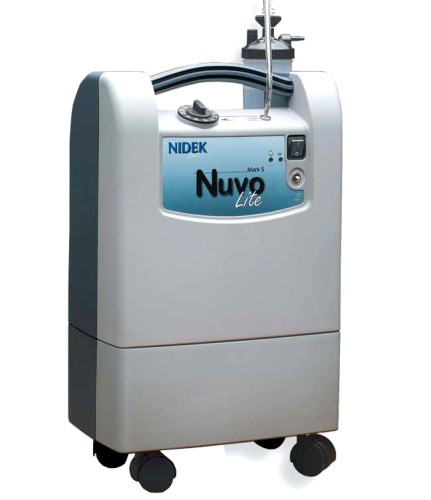
- Brand
- Nidek Medical
- Category
- 5 LPM
₹57,599.04₹66,240
Indicative pricing based on market intelligence. Varies by dealer, city, bundle, and period — confirm with a local authorised seller before buying.
HHZ SCORE 7.8/10
Philips Everflo 5 Liter Oxygen Concentrator
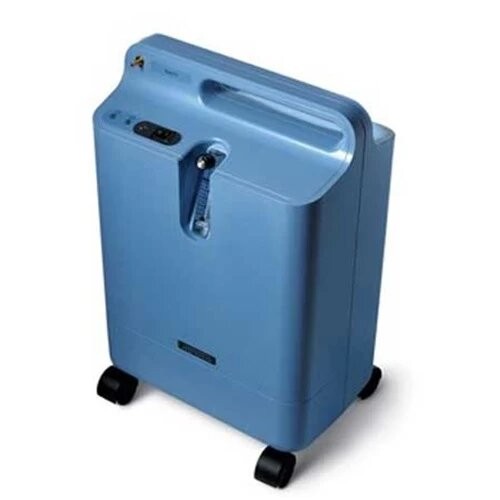
- Brand
- Philips Respironics
- Category
- 5 LPM
Discontinued
Indicative pricing based on market intelligence. Varies by dealer, city, bundle, and period — confirm with a local authorised seller before buying.
HHZ SCORE 8.2/10
Specifications compared
| Specification | Nidek Nuvo Lite 5 LPM | Philips Everflo 5 Liter Oxygen Concentrator |
|---|---|---|
| Overview | ||
| Brand | Nidek Medical | Philips Respironics |
| Category | 5 LPM | 5 LPM |
| Price | ₹57,599.04 | — |
| MRP | 66,240.00 | — |
| Stock | In Stock | DISCONTINUED WORLDWIDE |
| Key features | ||
| Purity | 90-96% | 90-96% |
| Type | Home Stationary | Home Stationary |
| Continuous Flow | 1-5LPM | 1-5LPM |
| Weight | 13.6kg | 14kg |
| Oxygen Purity Indicator (OPI) | Yes | Yes |
| Power consumption | 290watts | 350watts |
| Technical details | ||
| Purity | 90-96% | 90-96% |
| Type | Home Stationary | Home Stationary |
| Continuous Flow | 1-5LPM | 1-5LPM |
| Weight | 13.6kg | 14kg |
| Oxygen Purity Indicator (OPI) | Yes | Yes |
| Power consumption | 290watts | 350watts |
| Sound level | 40db | 45db |
| Dimensions | 23H x 14W x 9Dinch | 23H x 15W x 9.5Dinch |
| Operating altitude | 7500feet | 7500feet |
| Outlet pressure | 5.5psi | 5.5psi |
| Additional details | ||
| Loss of Power Alarm | Yes | Yes |
| System Malfunction Alarm | — | Yes |
| No Flow Alarm | — | Yes |
| Indian Voltage Model | Yes | Yes |
| Company Headquarters | USA | USA |
| US FDA Approved | Yes | Yes |
| CE Certified | Yes | Yes |
Analysis
Editor’s note — Everflo discontinued. Philips has discontinued the Everflo worldwide; it is no longer in production and remaining units are end-of-line stock. For an in-production 5 LPM alternative available in India, consider the Home Medix HM-KV (up to 5 L/min, 93% ±3%, ≤40 dB, 3-year warranty). The comparison below is retained for reference.
The matchup
The Nidek Nuvo Lite 5 LPM and the Philips Everflo 5 LPM are two USA-origin 5 LPM stationaries that anchor the middle of the imported 5 LPM market in India. Both are FDA approved, both are CE certified, both run on Indian Voltage Models, both publish 90–96% purity, and both weigh within 400 grams of each other (13.6 kg vs 14 kg). The interesting differences are in the dimensions where each manufacturer has chosen a tradeoff — the Nidek chases class-leading published sound and power specs at a premium price, while the Philips chases service ubiquity and channel depth at a more accessible price. Our verdict: the Everflo is the better default pick for most Indian buyers because Philips Respironics has the largest authorised service footprint in India and the Everflo carries the class-broadest alarm coverage. The Nidek Nuvo Lite is the better pick where its 40 dB sound rating and 290 W power draw translate to a real quality-of-life advantage.
At-a-glance spec differences
- Price (indicative retail): Nidek Nuvo Lite ₹57,599 vs Philips Everflo ₹43,699 (since discontinued) — a ₹13,900 gap, or 32% more for the Nidek
- Sound (published): Nidek Nuvo Lite 40 dB vs Philips Everflo 45 dB — a 5 dB gap; the Nidek is one of the quietest 5 LPM stationaries on the Indian market
- Power draw (published): Both 290 W on Nidek and 350 W on Philips — Nidek is 17% more efficient at full flow
- Weight (published): Nidek 13.6 kg vs Philips 14 kg — effectively identical
- Altitude envelope (published): Both 7,500 ft — identical, and this is a real constraint for both vs the DeVilbiss and Visionaire
- Flow steps: Nidek publishes 12 flow ranges from 0.125 LPM (granular paediatric-capable); Philips publishes 1–5 LPM standard
- Alarm suite: Philips publishes loss-of-power, system-malfunction, and no-flow alarms all “Yes”; Nidek publishes only loss-of-power
- Dealer network: Philips Respironics has the deepest authorised service footprint of any imported brand in India; Nidek India’s footprint is thinner
Where the Nidek Nuvo Lite 5 LPM wins
Sound at 40 dB is class-leading. The Nidek publishes 40 dB — 5 dB below the Philips Everflo’s 45 dB. In practice, a 5 dB difference is perceived as “noticeably quieter” rather than “marginally quieter.” 40 dB sits at library-levels; 45 dB is at refrigerator-hum levels. For bedside overnight placement in a typical Indian bedroom where the machine and the sleeper are 3–6 feet apart, this gap matters for sleep quality. Patients on 8+ hours of nightly supplementation with the machine in the same room will find the Nidek noticeably less disruptive.
Power draw at 290 W is class-leading. At 290 W vs 350 W on the Everflo, the Nidek is 17% more efficient at full flow. For 24x7 prescriptions on commercial tariffs at ₹9/kWh, the gap is roughly ₹390/month, or ₹14,000 over three years — meaningful, though smaller than the upfront price gap. For buyers on subsidised domestic tariffs the electricity saving is smaller. Where the 290 W spec matters more is in inverter and solar-battery backup sizing — the lower nameplate reduces inverter load and extends backup runtime.
Granular flow control down to 0.125 LPM opens paediatric and sleep-titration cases. The Nidek publishes 12 discrete flow ranges starting from 0.125 LPM. For paediatric prescriptions, for sleep-titration adult prescriptions below 1 LPM, and for prescribing physicians who specify unusual flow rates, the Nidek can actually deliver the prescribed flow. The Everflo’s 1 LPM minimum rules out those cases. This is a small but clinically real advantage.
Weight at 13.6 kg is the lightest in the imported class. Paired with the Visionaire 5 at 13.6 kg, the Nidek is tied for the lightest 5 LPM stationary. For a single elderly caregiver managing the machine solo, 13.6 kg is closer to the ergonomic line than 14 kg or 16 kg. A small difference, but a real one for daily handling.
USA origin with published turn-down implied. While the spec sheet does not explicitly publish turn-down technology, the Nidek’s 290 W figure at full flow and its published lockable flowmeter design suggest the compressor is efficiency-tuned. For buyers comparing long-term running costs rigorously, this is a Nidek advantage over the Everflo’s higher published nameplate.
Where the Philips Everflo 5 LPM wins
Service network is Philips’s single biggest advantage over every other imported 5 LPM. Philips Respironics has the broadest authorised service network in the Indian home-oxygen market — present in more than 100 cities with trained technicians, spare parts availability, and typically same-day dispatch in metros and 24–72 hour dispatch in tier-2 cities. Nidek Medical’s Indian service footprint is meaningfully thinner; dispatch times outside metros are longer and parts availability in tier-3 cities is slow. For a 5 LPM stationary expected to run 24x7 for 3+ years, the probability of a service call in years 2–3 is non-trivial, and the Philips service machinery is the reason most Indian buyers pick the Everflo despite its higher running-cost number.
Alarm suite is complete on the Everflo. Philips publishes loss-of-power, system-malfunction, and no-flow alarms all as “Yes” in the Everflo’s technical details. The Nidek publishes only loss-of-power; system-malfunction and no-flow alarms are not documented. For unattended overnight operation where the patient and caregiver may both be asleep, a kinked cannula or a failed compressor on the Nidek will not generate an audible alarm per the published spec. On the Everflo, those failure modes are monitored. This is a real clinical difference in risk coverage.
Price is ₹13,900 lower. At ₹43,699 (since discontinued) indicative retail vs ₹57,599 on the Nidek, the Everflo is 24% cheaper. That ₹13,900 swamps the Nidek’s ₹14,000 three-year electricity advantage if the buyer is on a commercial tariff, and swamps it by more on subsidised domestic tariffs. On a total-cost-of-ownership basis over three years, the two machines are within rounding distance; the upfront saving on the Everflo buys flexibility (backup cylinder, extended warranty, accessory replacements) that the Nidek’s lower running cost does not.
Brand depth in India. Philips Respironics is the most established imported respiratory-equipment brand in India, with a long history in hospital and home markets, a published rental-fleet presence at major Indian hospital chains, and a service channel that has been running for more than a decade. Nidek Medical is present but thinner. For buyers who value institutional continuity and predictable support, Philips is the safer choice on non-spec grounds.
Indian-market context
Both machines are Indian Voltage Models on 230 V / 50 Hz. Both are US FDA approved and CE certified. Both publish 7,500 ft altitude envelopes — a real constraint for buyers in Himachal or Uttarakhand above that elevation. Neither is FAA approved; neither travels on flights. Both are stationary home units on trolley-style chassis with caster wheels.
On service channels: the Philips Everflo is available through Philips Respironics India’s authorised dealer network in 100+ cities, with hospital rental fleets carrying it at most major tertiary-care institutions. Nidek’s Indian channel runs through a smaller dealer network concentrated in tier-1 cities. For a Bangalore, Mumbai, Delhi-NCR, Chennai, Hyderabad, Pune, Kolkata buyer, both are fine on service. For a Raipur, Ranchi, Jaipur, Indore, Nashik, Madurai buyer, Philips is substantially more serviceable.
On pricing mechanics: the Everflo lists at ₹63,228 MRP and typically discounts to ₹43,699 (since discontinued) online — dealer margins in tier-2 cities are modest. The Nidek lists at ₹66,240 MRP and typically discounts to ₹57,599 — dealer pricing runs at or slightly above online. Hospital rental market rates for the Everflo are around ₹4,500–6,000/month depending on city and duration; Nidek rental rates are 5–10% higher where available.
GST at 12% on Class B medical devices is included in listed prices. Both carry 3-year manufacturer warranties. Extended warranty is available for both; Philips’s extended-warranty channel is more established.
Verdict
Our recommendation is the Philips Everflo 5 LPM as the default 5 LPM stationary for most Indian buyers. The combination of the widest service network, the complete alarm suite, and the ₹13,900 lower upfront price outweighs the Nidek’s advantages on sound, power, and granular flow for the median adult home-oxygen prescription. The Everflo is the safer three-year-horizon pick; it has the service tail that keeps a machine running, and its spec gaps vs the Nidek are not binding for the majority of adult prescriptions.
Buy the Nidek Nuvo Lite 5 LPM instead when any of three conditions apply. First, when bedside placement and overnight sleep quality are the dominant concerns — a 5 dB sound advantage is real and the Nidek is genuinely among the quietest stationary 5 LPM units on the Indian market. Second, when the prescription is paediatric or calls for any flow below 1 LPM — the Nidek’s 0.125 LPM minimum with 12 discrete flow steps is the only USA-origin 5 LPM in this class that can deliver those rates accurately. Third, when the household is in a tier-1 metro with Nidek authorised service present and the incremental 17% power efficiency matters — for buyers on commercial tariffs running 24x7, the ₹14,000 three-year electricity saving is real.
For the ambiguous case — adult prescription, 2–4 LPM, tier-2 city, general-medicine patient — we tilt to the Everflo. The service depth is the decisive factor, and the Nidek’s sound and efficiency advantages are real but narrower than the Everflo’s service advantage is wide. B gets the default pick; A is the selective quality-of-life upgrade where service network is not a constraint.