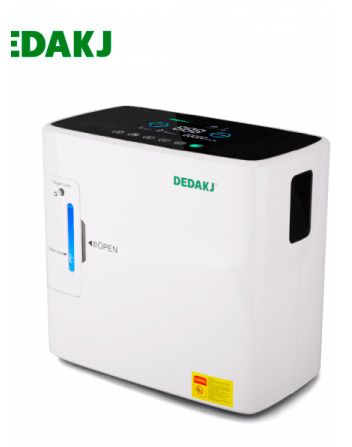
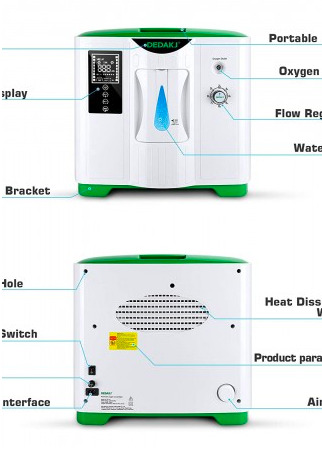
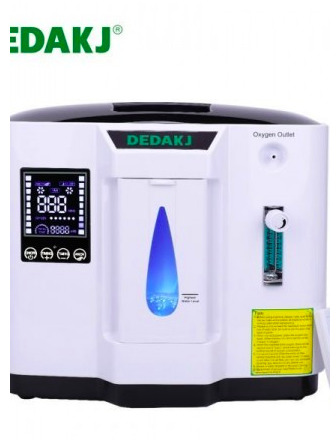
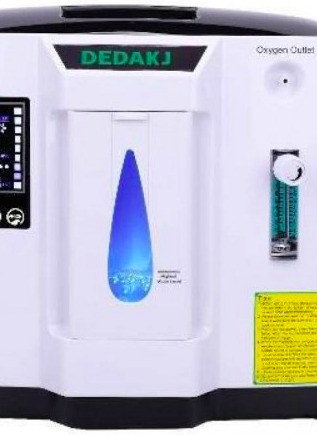
Yuwell YU300 Adjustable
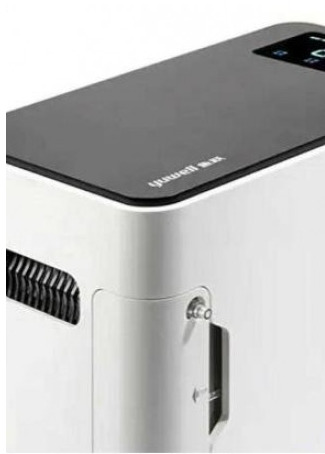
Key features
- Purity 30-90%
- Type Adjustable Purity
- Continuous Flow 1-5LPM
- Weight 7.5kg
- Oxygen Purity Indicator (OPI) No
- Power consumption 100watts
Specifications
| Purity | 30-90% |
|---|---|
| Type | Adjustable Purity |
| Continuous Flow | 1-5LPM |
| Weight | 7.5kg |
| Power consumption | 100watts |
| Sound level | 43db |
| Dimensions | 11.41H x 10.62W x 7.48Dinch |
| Indian Voltage Model | Yes |
|---|---|
| Company Headquarters | China |
Pros and cons
PROS
- Lightweight at 7.5 kg — genuinely portable within a home
- Low 100 W power draw suitable for extended operation
- 43 dB quiet operation — bedroom acceptable
- Compact 11.41 × 10.62 × 7.48 inch footprint
- Priced at ~₹27,000 street, the lowest entry point in the Yuwell range
CONS
- Purity range of 30–90 % means output purity is not medical-grade at most settings
- No published loss-of-power, system-malfunction or no-flow alarms — unsuitable for unsupervised clinical use
- No OPI, no purity analyser — you cannot verify output purity
- 1–5 LPM flow range is nominal; actual delivered oxygen at low-purity settings is far below 5 LPM O2
- No FDA, FAA or CE certification on the Indian brochure
What you are actually buying: this is not a medical oxygen concentrator
The Yuwell YU300 belongs to a category of Chinese products called “adjustable-purity oxygen concentrators” or, more honestly, “oxygen bars.” They share a chassis pattern with the Dedakj 6L, 7L and 8L units and the Yobekan and Owgels Oxystar 7L — all fundamentally the same small zeolite-PSA core, all rated 30–90 % oxygen purity depending on flow setting, all sold for wellness, altitude sickness relief, sports recovery and general “oxygen supplementation” rather than prescribed oxygen therapy.
The reason this matters is that the marketing language around these units in Indian e-commerce frequently blurs the line. A patient or family looking for a 5 LPM home oxygen concentrator for an LTOT prescription can stumble into the YU300 based on price (~₹27,000 against ₹35,000–45,000 for a real 5 LPM) and walk away with a machine that will not deliver prescribed oxygen therapy safely. Every review in this category starts with that warning. If a pulmonologist or ICU discharge team has prescribed “oxygen 2 LPM continuous” or similar, the YU300 is not the product you want. Buy a Philips Everflo, a Nidek Nuvo Lite, an Oxymed Mini, a BPL Oxy 5 Neo, a Yuwell 8F or similar. The manufacturer brochure and e-commerce product listings HHZ referenced classify the YU300 as “adjustable purity” and publish the 30–90 % range explicitly.
With that boundary drawn, there is a legitimate use-case conversation about what the YU300 actually is and who it is for.
What the specs actually mean
Purity 30–90 %. This is the decisive spec and it is how the category operates. At a given flow rate, increasing the flow reduces the purity (because the PSA cycle has less time per litre of output). At 1 LPM the machine will hit near-90 % purity — respectable but still below the 90–96 % of medical-grade units and without published verification. At 5 LPM the machine is delivering closer to 30–40 % — which is near ambient air (21 % O2) plus modest enrichment. For a prescribed 2 LPM therapy you would run the dial at its lowest flow setting to maximise purity and still not match what a dedicated medical concentrator produces.
Flow range 1–5 LPM. Nominal. Actual useful oxygen delivery is a product of flow × purity. If you run the YU300 at 5 LPM and 30 % purity you are delivering 1.5 LPM of pure O2 equivalent. At 1 LPM and 90 % purity you are delivering 0.9 LPM of O2 equivalent. The machine’s nominal 5 LPM does not map to a medical 5 LPM prescription.
Weight 7.5 kg, dimensions 11.41 × 10.62 × 7.48 inches. The unit is genuinely portable within a home — a single person lifts it easily, it fits on a side table, and room-to-room movement is trivial. This is the spec that makes adjustable-purity units attractive as wellness devices. A 14 kg Philips Everflo is not something you carry on holiday; a 7.5 kg YU300 is.
Power 100 W, noise 43 dB. Both class-leading for the adjustable-purity segment, and both largely a consequence of the small compressor that also limits purity at flow. 100 W is quarter-kitchen-light territory; 43 dB is library-quiet. For wellness use that is ideal. For medical oxygen delivery the low power matters because small compressors cannot sustain PSA cycles tight enough to guarantee purity.
Alarms: none published. The brochure’s loss-of-power, system-malfunction and no-flow alarm fields are all blank. This is the most important line item after purity. Medical oxygen concentrators have alarm packages because unsupervised oxygen delivery at home must fail safe. An adjustable-purity unit with no alarm set assumes the user is awake and monitoring — which is compatible with “30 minutes of oxygen supplementation during recovery” but incompatible with “overnight continuous oxygen delivery for a prescribed patient.”
Certifications: blank. FDA, FAA and CE fields empty on the Indian brochure. Consistent with the wellness positioning — medical certification would require purity guarantees the unit cannot make.
Who should buy it
Wellness users who understand the category. Individuals who want supplemental enriched air during post-exercise recovery, post-travel altitude adjustment, or general wellness — not medical therapy — are the correct audience. If you are in Delhi and want to breathe 30–50 % enriched air for 30 minutes after a run during peak pollution season, the YU300 does that at a price a medical concentrator cannot match.
Short-term altitude-adjustment use. Travellers going from plains to Leh, Manali or Gangtok sometimes buy adjustable-purity units for the acclimatisation window. For supplementation during headache/mild-AMS events the YU300 is defensible, though a prescribed medical concentrator rented for the trip would be the better choice if a real medical risk is present.
Sports and fitness use. Recovery-focused enriched-air sessions, athletic training at low altitude with intermittent enrichment — these are the wellness claims the category is built around. They are not medically proven but they are also not the kind of use where an under-spec unit causes harm.
Emergency-backup “some oxygen is better than no oxygen” household inventory. A small, light, low-power unit that delivers some enriched air during a respiratory emergency while waiting for professional help has a defensible household role — if and only if the buyer understands the unit is a stopgap, not a clinical solution.
Who should not buy it
Any patient on a medical oxygen prescription. This is the category-wide warning. If a doctor has prescribed oxygen at any flow rate, the YU300 is not the correct product. Purchase a medical-grade concentrator.
LTOT patients. Long-term oxygen therapy is defined by the consistency and reliability of delivered FiO2. The YU300 cannot provide that.
Sleep-apnoea or nocturnal-desaturation patients. The absence of alarms makes overnight unsupervised use unsafe.
Post-COVID or post-pulmonary-embolism patients in recovery. These patients need guaranteed 90 %+ purity at 2–4 LPM. The YU300 cannot reliably produce it.
High-altitude residents with documented SpO2 issues. A documented altitude-hypoxia case requires medical-grade oxygen. The YU300 is acceptable for prevention in a healthy traveller; it is not acceptable for treatment in a symptomatic patient.
Alternatives that are actually in the same category
Dedakj 6L/7L/8L adjustable units, ~₹10,000–30,000 street. Direct category peers. The 6L at 6 kg and 120 W is near-identical in behaviour to the YU300. Indian pricing on Dedakj is often lower than on Yuwell but service paths are thinner — Dedakj has almost no official Indian service network and is sold largely through third-party importers. Choose the Yuwell over Dedakj on service; choose the Dedakj on price.
Yobekan 2–9 L adjustable, ~₹30,000 street. Another direct peer. 7.5 kg, 100 W — specifications essentially identical to the YU300. The Yobekan’s nominal flow range is 2–9 LPM versus 1–5 LPM for the YU300, but at the upper flow the purity collapses faster. There is no meaningful differentiator between these units at the spec level.
Owgels Oxystar 7L adjustable, ~₹30,000 street. Branded in India as an “India-headquartered” importer per the spec table. 6.1 kg, 110 W, 40 dB. Slightly lighter, slightly quieter. Same category, same limitations.
OxyGo or similar portable wellness POCs (imported). A different sub-category — genuine portable oxygen concentrators with FAA approval, pulse-dose delivery, and real batteries. These are 100 %+ purity machines at dramatically higher prices (₹1,50,000+). They are the correct choice if you need genuine portable medical oxygen.
If the correct choice turns out to be a medical concentrator because the buyer’s use-case is actually clinical, the head-to-heads are:
Philips Everflo 5 LPM, ~₹43,700–50,000 street. The default LTOT answer. 14 kg, 350 W, 45 dB, FDA/CE, OPI, full alarm set.
Yuwell 8F 5 LPM with nebulizer, ~₹20,000 street. Yuwell’s own medical-grade 5 LPM at a lower street price than the YU300. For a medical buyer who wants a Yuwell this is the correct model, not the YU300.
Indian-market considerations
The adjustable-purity category has a consumer-protection problem in India. Listings on major e-commerce platforms frequently label these units as “oxygen concentrators” or “5 LPM oxygen concentrator” without the “adjustable purity” qualifier prominent. Buyers searching for a medical concentrator can be misdirected to these units by price. HHZ’s view is that any purchase in this category should be preceded by explicit confirmation, in writing, of the purity range from the seller.
CDSCO classification of adjustable-purity units is inconsistent. Some are registered as Class B medical devices (treated as concentrators), some as household appliances (not under CDSCO jurisdiction), some not registered at all. Ask the seller which CDSCO classification applies and request the registration number. (CDSCO)
Yuwell’s Indian service network covers the YU300 nominally. In practice, service for these units is rare because they are low-cost, low-margin, and typically replaced rather than repaired when they fail. Spare sieve beds and compressors for the YU300 chassis are generic and cross-compatible with Dedakj, Yobekan and Owgels Oxystar platforms — independent biomed shops can service the unit but often find it cheaper to advise replacement.
Warranty on these units in India is typically one year, sometimes two. Given the low purchase price, out-of-warranty repair costs (₹3,000–5,000 for a sieve bed rebuild, ₹4,000–6,000 for a small compressor) approach the cost of a new unit quickly.
Electricity at 100 W is genuinely low — roughly ₹150 a month at 16 hrs/day. This is an actual cost advantage over medical concentrators and should be weighed for use-cases that do not require the purity guarantees.
Verdict
The Yuwell YU300 is a competently engineered adjustable-purity unit that is the right product for wellness and recreation use and the wrong product for medical oxygen therapy. Its 5.0 score reflects both that it does its category job acceptably and that the category exists in a commercial grey zone where buyers can easily misdirect themselves into purchasing something they do not need. If you have read the purity-range caveat and understand that 30–90 % is not a medical oxygen output, the YU300 is a lightweight, quiet, low-power unit with a recognisable brand at a reasonable price. If you came to this page looking for a 5 LPM medical concentrator, please read the Yuwell 8F, Philips Everflo, or Oxymed Mini reviews instead. Buying the right category is more important than choosing between models inside the wrong category.