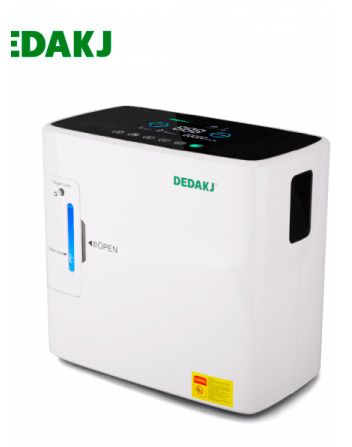
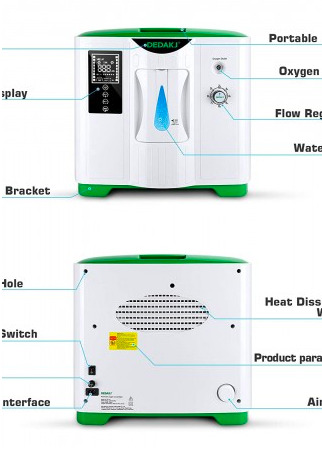
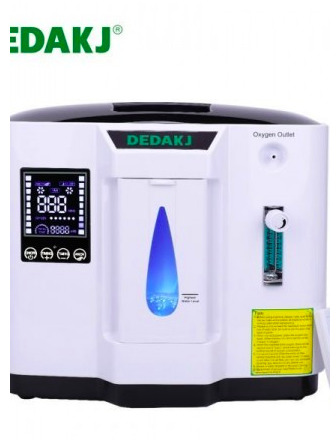
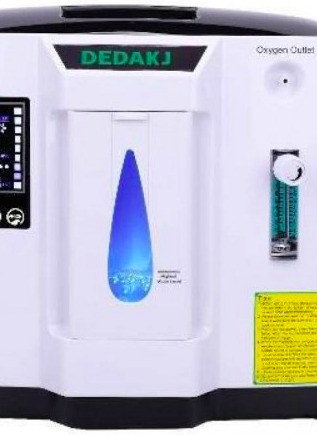
Yobekan 2 to 9L Adjustable
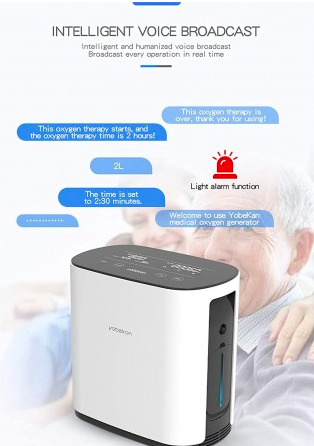
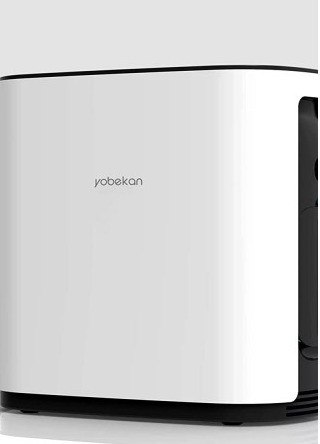
Key features
- Purity 30-90%
- Type Adjustable Purity
- Continuous Flow 1-5LPM
- Weight 7.5kg
- Oxygen Purity Indicator (OPI) No
- Power consumption 100watts
Specifications
| Purity | 30-90% |
|---|---|
| Type | Adjustable Purity |
| Continuous Flow | 1-5LPM |
| Weight | 7.5kg |
| Power consumption | 100watts |
| Sound level | 43db |
| Dimensions | 11.41H x 10.62W x 7.48Dinch |
| Indian Voltage Model | Yes |
|---|---|
| Company Headquarters | China |
Pros and cons
PROS
- 7.5 kg weight — single-person portable
- 100 W power draw is class-leading for the adjustable-purity category
- 43 dB noise floor is bedroom-acceptable
- Compact 11.41 × 10.62 × 7.48 inch footprint
- Wide 2–9 LPM flow range for air-enrichment applications
CONS
- Purity range 30–90 % is not medical-grade at most settings
- Zero alarms published on the brochure (power loss, system malfunction, no-flow all blank)
- No FDA, FAA or CE certifications
- No OPI or purity analyser
- Yobekan brand has essentially no Indian service network — importer-dependent
Yobekan is another adjustable-purity Chinese unit in the “oxygen bar” category
The Yobekan 2-to-9L adjustable is structurally identical to the Yuwell YU300, the Dedakj 6L/7L/8L family and the Owgels Oxystar 7L — same small PSA chassis, same 30–90 % purity range, same 100 W class power draw, same wellness-oriented positioning. The manufacturer brochure and e-commerce product listings HHZ reviewed show 7.5 kg weight, 43 dB noise, and a ₹29,760 Indian list price with stock currently Out of stock.
The category warning from the Yuwell YU300 review applies in full here and should be read first. Adjustable-purity 30–90 % units are not medical oxygen concentrators in the clinical sense. Their purity varies with flow and cycle time; at the top of the flow range they are barely enriching ambient air. They are sold for wellness, altitude acclimatisation, sports recovery and general supplementation — not for prescribed oxygen therapy. Any buyer with a physician’s oxygen prescription should skip the entire adjustable-purity category and buy a medical-grade 5 LPM instead.
What differentiates Yobekan from its category peers is mostly branding. The hardware is near-interchangeable with competing adjustable-purity units at similar prices.
What the specs actually mean
Purity 30–90 % (variable with flow setting). The defining spec. At the lowest flow (2 LPM) the unit will approach 90 % purity — usable for short recreational enrichment. At 9 LPM it is near 30 % — marginal enrichment over ambient air (21 % O2). There is no published table showing purity at each flow rate, so buyers should assume purity drops linearly from roughly 80 % at 2 LPM to 30 % at 9 LPM. No Oxygen Purity Indicator is fitted to verify output.
Flow 2–9 LPM. Wider than the YU300 (1–5) and similar to the Dedakj 8L (1–8) and 9L (2–9). The wider range is commercially useful only in the sense that the unit offers more settings on the dial; practically, the higher flow settings deliver lower enrichment and are of limited use.
Weight 7.5 kg. Genuinely portable. A single person carries it with one hand. For a wellness device that is the right weight class.
Power 100 W. Quarter-kitchen-light power consumption. At 8 hrs/day and ₹7/unit that is ~₹170/month — genuinely low. This is one of the commercial hooks for the adjustable-purity category: these units are cheap to run because they are not doing medical-grade PSA work.
Noise 43 dB. Library-quiet. Bedroom-acceptable for someone running the unit overnight for wellness supplementation, not that we recommend overnight unsupervised use of any unit without alarms.
Alarms: all blank. Power-loss, system-malfunction and no-flow fields all empty on the brochure. Standard for the wellness category. Unsafe for any clinical use.
Certifications: blank. No FDA, FAA or CE. Again category-standard. Adjustable-purity units cannot pass medical device certification because they do not meet the purity guarantees required.
Dimensions 11.41 × 10.62 × 7.48 inches (H×W×D) — shoebox-sized vertical chassis.
Who should buy it
Wellness and recreation users. People who want supplemental enriched air for short periods during recovery, post-exercise, or as a general wellness intervention are the correct audience.
Travellers going to high altitude for short trips. A Leh trip, a trek to Annapurna Base Camp, a visit to high-altitude pilgrimage sites — short-term travellers who want to hedge against mild altitude sickness can defensibly use an adjustable-purity unit. A proper medical concentrator would be the better choice but is harder to transport.
Athletes and fitness enthusiasts doing “enriched-air training.” The clinical efficacy of this is unproven but the practice exists. The Yobekan is one of many adjustable-purity units used for this purpose.
Buyers who understand the category and want the cheapest functional unit. At ₹29,760 with stock available on the source listing (when in stock), Yobekan is one of the cheaper entries in the adjustable-purity category, roughly similar to the Dedakj 1S 8L and below the Yuwell YU300’s ₹27,000.
Who should not buy it
Any patient on a medical oxygen prescription. The whole point of the warning. Please read this twice.
LTOT patients at any flow rate. Long-term oxygen therapy requires guaranteed 90–96 % purity and published alarms. Yobekan cannot provide either.
Sleep-apnoea, nocturnal-desaturation, or COPD patients. These patients need medical-grade oxygen with overnight alarm protection.
Post-COVID, post-pulmonary-embolism or post-ILD patients in active recovery.
Symptomatic high-altitude residents with documented SpO2 issues.
Anyone who will rely on the output as their primary clinical oxygen source.
Alternatives in the adjustable-purity category
Yuwell YU300, ~₹27,000 street. Near-identical hardware at a marginally lower price. Yuwell’s brand recognition is somewhat stronger in India than Yobekan’s. Similar caveats apply.
Dedakj 6L, 7L, 8L, 9L, ~₹10,000–30,000 street. The category originators. The Dedakj 7L at ₹10,080 (when discounted) is the cheapest entry. Dedakj has even less structured Indian service than Yobekan but is widely available through third-party importers.
Owgels Oxystar 7L, ~₹30,000 street. Branded as India-headquartered per the spec sheet though the hardware is typical Chinese OEM. 6.1 kg, 110 W, 40 dB — marginally lighter and quieter than the Yobekan.
If the correct buy turns out to be a medical concentrator, the proper heads-to-heads are:
Yuwell 8F 5 LPM with nebulizer, ~₹20,000 street. The cheapest entry to medical-grade 5 LPM in India. If your budget is ₹20,000–30,000 and you need clinical oxygen, this is the Yuwell to buy.
Oxymed Mini 5 LPM, ~₹35,000–45,000 street. The compact, reliable, Indian-supported medical 5 LPM.
Philips Everflo 5 LPM, ~₹43,700–50,000 street. Tier-1 reference for LTOT.
Indian-market considerations
Yobekan is a smaller brand than Yuwell, Longfian or even Dedakj in the Indian market. It is sold mostly through third-party e-commerce listings and a small number of importers. There is no structured Yobekan authorised service centre network in India — service relies on the importer of the specific unit being active and willing to help.
CDSCO classification for the adjustable-purity category is inconsistent. Some units are registered as Class B medical devices (oxygen concentrators), others as household enrichment appliances outside CDSCO’s explicit scope. Yobekan’s specific registration should be confirmed with the importer before purchase. (CDSCO)
Spare-parts supply for Yobekan is effectively limited to whatever the importer stocks. Since the Yobekan shares its chassis with Dedakj and similar platforms, an independent biomed technician in a major metro can often source cross-compatible replacement sieve beds (₹2,500–4,000) and small compressors (₹4,000–6,000) from parts shared across the category. This is less practical in Tier-2/Tier-3 cities.
Warranty from Yobekan importers is typically 1 year and should be treated as a courtesy rather than a commitment. Given the low purchase price (~₹30,000 category-wide) the economics of repair versus replacement favour replacement once the warranty lapses.
Electricity at 100 W is genuinely low — the most defensible commercial argument for the entire adjustable-purity category. If you are running a medical concentrator for 16 hrs/day on Indian residential power the savings a wellness unit promises do not matter because you cannot substitute it. But for the legitimate wellness user a 100 W unit is affordable to run.
Verdict
The Yobekan 2-to-9L adjustable is a competent entry in the wellness-grade adjustable-purity category and offers nothing meaningfully distinct from its category peers (Yuwell YU300, Dedakj family, Owgels Oxystar). Its 4.9 score reflects acceptable hardware for its category plus significant concerns about the category’s frequent mislabelling in Indian e-commerce as “oxygen concentrators” without the adjustable-purity qualifier. If you understand what you are buying — a wellness device that enriches air to 30–90 % purity depending on flow — the Yobekan is a defensible choice at ~₹25,000 or below. If you came here looking for a medical oxygen concentrator, please skip the entire adjustable-purity category and read the Yuwell 8F, Oxymed Mini or Philips Everflo reviews instead. This is the buying mistake HHZ most wants to prevent.